
For decades, Apple Inc. (AAPL) has served as a bellwether for the global equity markets. When investors ask, “How much is the stock for Apple?” they are rarely looking for a simple, static number. Instead, they are inquiring about the valuation, the momentum, and the underlying financial health of the world’s most influential consumer electronics company. As a cornerstone of the S&P 500 and the Nasdaq-100, Apple’s stock price is a reflection of global consumer confidence, corporate innovation, and institutional investment trends.
Understanding the price of Apple stock requires a dive into the mechanics of the stock market, the company’s capital allocation strategy, and the fundamental metrics that professional analysts use to determine whether the stock is trading at a fair value. In this guide, we will explore the financial landscape of Apple Inc. from a “Money” perspective, focusing on its market capitalization, dividend history, and the factors that drive its long-term investment appeal.
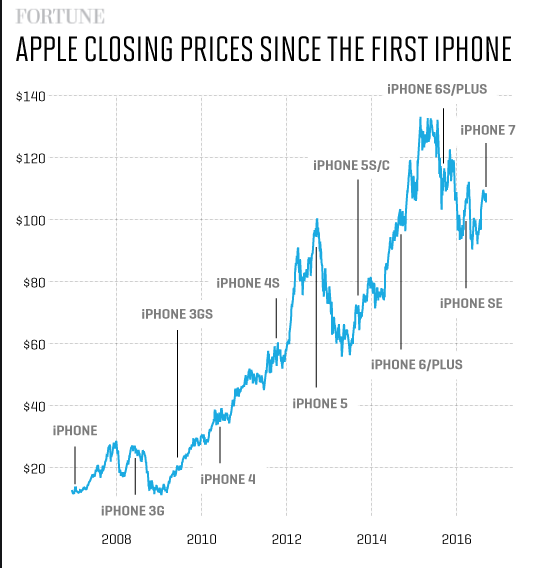
The Dynamics of Apple’s Market Valuation
The nominal price of a single share of Apple stock is only one part of a much larger financial puzzle. To understand the “cost” of Apple, one must look at the company’s total market capitalization—the total dollar market value of a company’s outstanding shares of stock.
Tracking Real-Time Price Fluctuations
The price of Apple stock changes every second during market hours. These fluctuations are driven by a variety of factors, including quarterly earnings reports, product launch cycles, and broader macroeconomic indicators like inflation data or Federal Reserve interest rate decisions. For the retail investor, the “price” is what you pay to own a small piece of the company’s future cash flows. Because Apple is one of the most liquid stocks in the world, the bid-ask spread is typically very narrow, making it an accessible entry point for both day traders and long-term “buy and hold” investors.
The Impact of Historical Stock Splits
When looking at Apple’s historical price charts, new investors are often confused by prices that seem low in the 1990s or 2000s. It is important to remember that Apple has undergone several stock splits—most recently a 4-for-1 split in 2020. Stock splits do not change the fundamental value of your investment; they simply increase the number of shares while lowering the price per share proportionally. This strategy is often used to make the stock more accessible to retail investors and to increase liquidity in the market.
Market Cap and Global Influence
Apple was the first U.S. company to hit a $1 trillion market cap, followed by $2 trillion and $3 trillion milestones. When the stock price moves even by 1%, it can represent tens of billions of dollars in market value being created or erased. This massive scale means that Apple often dictates the direction of the major indices. For many passive investors who hold S&P 500 index funds, Apple is likely their largest individual stock holding, whether they realize it or not.
Key Financial Metrics for AAPL Investors
To determine if Apple’s stock is “expensive” or “cheap,” investors look past the share price and examine fundamental financial ratios. These metrics provide a clearer picture of what you are getting for your money.
The Price-to-Earnings (P/E) Ratio
The P/E ratio is the most common metric used to value Apple. it is calculated by dividing the current share price by the company’s earnings per share (EPS). Historically, Apple traded at a lower P/E ratio when it was viewed strictly as a hardware company. However, as it transitioned into a services-oriented business with recurring revenue, its P/E multiple expanded. A higher P/E suggests that investors are willing to pay more today because they expect significant growth in the future.
Dividend Yield and Share Buybacks
For “Money”-focused investors, Apple is a powerhouse of capital return. Unlike many high-growth tech companies that hoard cash, Apple maintains a robust Capital Return Program.
- Dividends: Apple pays a quarterly dividend, providing a steady income stream for shareholders. While the yield may seem low compared to utility stocks, the consistency and growth of the dividend make it a favorite for “Dividend Growth” investors.
- Share Buybacks: Apple is famous for its aggressive share repurchase programs. By buying back its own stock, the company reduces the total number of shares outstanding, which increases the percentage of ownership for remaining shareholders and boosts Earnings Per Share.
Revenue Streams and Profit Margins
Apple’s stock price is fundamentally supported by its massive net income. Investors closely monitor the gross margins on products like the iPhone, but increasingly, they are focused on the high-margin Services segment (App Store, iCloud, Apple Music). Services revenue is viewed as more “sticky” and predictable than hardware sales, which leads to a higher valuation premium on the stock market.

Macroeconomic and Sector-Specific Drivers
No stock exists in a vacuum. Apple’s price is influenced by global economic shifts and specific trends within the technology and finance sectors.
The Shift to a Services-Oriented Model
One of the primary reasons Apple’s stock has maintained such a high valuation is its ecosystem. The “Money” story here is about Lifetime Value (LTV). Once a consumer enters the Apple ecosystem, they are likely to spend money on subscriptions and accessories for years. Wall Street rewards this predictability. Analysts often model Apple not just as a phone manufacturer, but as a fintech and services giant, which allows the stock to trade at a premium compared to traditional hardware competitors.
Interest Rates and the “Safe Haven” Status
In periods of economic uncertainty, Apple is often treated as a “safe haven” within the tech sector. Because the company has a massive cash balance and generates consistent free cash flow, it is seen as less risky than speculative growth stocks. However, the stock is still sensitive to interest rates. When the Federal Reserve raises rates, the “discount rate” applied to future earnings increases, which can put downward pressure on the stock prices of even the strongest companies like Apple.
Supply Chain and Geopolitical Risks
Because Apple’s manufacturing is heavily concentrated in certain geographic regions, geopolitical tensions or supply chain disruptions can cause immediate volatility in the stock price. Investors must weigh the company’s operational efficiency against the risks of over-reliance on specific international markets for both production and sales. Any news regarding trade tariffs or manufacturing shifts to India or Vietnam is quickly priced into the stock.
Long-Term Investment Strategy for Apple Stock
Deciding “how much” to invest in Apple depends on an individual’s financial goals, risk tolerance, and time horizon.
Evaluating the “Moat”
In the world of investing, a “moat” is a competitive advantage that protects a company from competitors. Apple’s moat is its brand loyalty and the high switching costs associated with its ecosystem. From a financial perspective, this moat ensures that Apple can maintain high profit margins even in a competitive market. Investors should look for signs that this moat is either strengthening (through new integrated services) or weakening (through regulatory challenges).
Growth vs. Value Investing
Apple is a rare stock that appeals to both growth and value investors. Growth investors are attracted to its ventures into AI, healthcare, and augmented reality. Value investors are attracted to its massive cash flow, share buybacks, and reliable balance sheet. When incorporating Apple into a portfolio, many financial advisors suggest using it as a “core” holding—a stable foundation upon which to build more speculative investments.
Portfolio Diversification and Risk Management
While Apple is a titan of industry, putting too much of one’s portfolio into a single stock carries risk. If Apple represents 20% or 30% of your total net worth, you are highly exposed to sector-specific downturns. Diversification remains the “only free lunch” in finance. Investors often balance their Apple holdings with exposure to other sectors like energy, healthcare, or consumer staples to mitigate the volatility inherent in the technology sector.

Conclusion: The Bottom Line on AAPL
When you ask “how much is the stock for apple,” the answer is a moving target that encompasses more than just a dollar sign on a trading app. It is a reflection of the company’s ability to innovate, its discipline in returning capital to shareholders, and its resilience in the face of global economic shifts.
For the disciplined investor, the current price is merely a data point in a long-term financial journey. By focusing on valuation metrics like P/E ratios, understanding the impact of share buybacks, and monitoring macroeconomic drivers, you can move beyond the “sticker price” and understand the true value of Apple as a financial asset. Whether you are looking for capital appreciation or steady dividends, Apple remains a primary case study in how corporate excellence translates into shareholder wealth. In the world of money and finance, Apple isn’t just a tech company; it is a global financial institution that continues to redefine the limits of market valuation.
aViewFromTheCave is a participant in the Amazon Services LLC Associates Program, an affiliate advertising program designed to provide a means for sites to earn advertising fees by advertising and linking to Amazon.com. Amazon, the Amazon logo, AmazonSupply, and the AmazonSupply logo are trademarks of Amazon.com, Inc. or its affiliates. As an Amazon Associate we earn affiliate commissions from qualifying purchases.