
In the dynamic world of finance, few metrics capture the public’s attention quite like the Dow Jones Industrial Average (DJIA). Often abbreviated simply as “the Dow,” this venerable index is a constant subject of news headlines, investor discussions, and economic analysis. For anyone seeking to understand the pulse of the market, the immediate question of “how much is the Dow Jones today?” is a fundamental starting point. However, grasping the number itself is merely the surface; a deeper understanding requires delving into what the Dow represents, how its value is determined, what influences its daily fluctuations, and ultimately, what its current standing signifies for investors and the broader economy.

While the specific numerical value of the Dow is constantly changing throughout a trading day – reflecting the ebb and flow of market activity – the underlying principles and its role as a market bellwether remain consistent. Today, as with every trading day, the Dow acts as a proxy for the health and sentiment of the U.S. stock market’s largest and most influential companies. Tracking its real-time performance provides a snapshot of current market conditions, informing decisions for individuals managing their personal finances, professional investors, and even policymakers.
Understanding the Dow Jones Industrial Average (DJIA)
The Dow Jones Industrial Average is not merely a number; it’s a historical benchmark, a reflection of American economic prowess, and a key indicator for financial markets worldwide. To truly understand “how much is the Dow today,” one must first appreciate its origins and its unique construction.
A Legacy of Market Representation
Conceived in 1896 by Charles Dow, editor of The Wall Street Journal and co-founder of Dow Jones & Company, the DJIA was initially designed to track the performance of the most significant industrial companies in the burgeoning American economy. Its original composition included just 12 companies, predominantly from the industrial sector, reflecting the economic landscape of the late 19th century. Over more than a century, the Dow has evolved, expanding to include 30 companies and diversifying its representation beyond purely industrial firms to encompass leaders from technology, healthcare, finance, and consumer goods. This evolution ensures its continued relevance as a barometer for the modern economy. Its longevity and consistent presence in financial news have cemented its status as one of the most recognized and frequently cited stock market indices globally.
The “Blue-Chip” Benchmark
The 30 companies that comprise the Dow are often referred to as “blue-chip” stocks. This designation implies they are large, well-established, financially sound companies with long histories of stable earnings and dividends. These are household names, leaders in their respective industries, and often represent a significant portion of the global economy. Examples historically include companies like Apple, Microsoft, Goldman Sachs, Boeing, Coca-Cola, and Disney. The inclusion of such prominent companies lends the Dow a certain gravitas, making its movements particularly impactful on investor sentiment. When these titans of industry perform well, it often signals a broader economic strength, and conversely, their struggles can indicate underlying challenges.
How the Dow is Calculated: A Price-Weighted Index
Unlike other major indices such as the S&P 500, which is market-capitalization-weighted, the DJIA is a price-weighted index. This means that stocks with higher share prices have a greater influence on the index’s value than stocks with lower share prices, regardless of their total market capitalization. The calculation involves summing the prices of the 30 component stocks and then dividing that sum by a “Dow divisor.” This divisor is adjusted periodically for stock splits, stock dividends, and other structural changes to ensure the continuity of the index’s value and prevent these events from artificially distorting its historical comparison.
This price-weighted methodology has its critics, as it can give disproportionate weight to a company with a high share price but a relatively smaller market cap compared to a company with a lower share price but a much larger market cap. However, its simplicity and historical precedent mean it remains a widely observed and influential benchmark.
Accessing Real-Time Dow Jones Data
For anyone asking “how much is the Dow Jones today,” the answer is readily available through a multitude of financial information sources. Understanding where to find this data and how to interpret its immediate fluctuations is crucial for staying informed.
Essential Sources for Current Figures
In the age of instant information, obtaining the Dow’s current value is remarkably easy. Financial news websites (e.g., Bloomberg, Reuters, The Wall Street Journal, Yahoo Finance), dedicated financial television channels (e.g., CNBC, Fox Business), and brokerage platforms (e.g., Fidelity, Charles Schwab, E*TRADE) all provide real-time or near real-time updates. These platforms typically display the current Dow value, its net change (in points), and its percentage change from the previous day’s close. Many also offer interactive charts, allowing users to track its performance over various timeframes, from intraday movements to long-term historical trends. Smartphone apps and even smart home devices can also provide quick updates, making the Dow’s current status accessible literally at your fingertips.
Interpreting the Daily Fluctuation
When you see the Dow is up or down a certain number of points, it reflects the collective movement of its 30 component stocks. A gain of, say, 200 points indicates that, on average, the prices of the underlying stocks have increased sufficiently to push the index higher. Conversely, a drop signifies a general decline. It’s important to remember that points are absolute values, and a 200-point move means different things when the Dow is at 10,000 versus when it’s at 35,000. Therefore, the percentage change is often a more accurate measure of the magnitude of the day’s movement. A 0.5% change is a moderate movement, while a 2% or greater change is considered significant volatility.
Beyond the Ticker: Understanding Market Context
While the numerical value is important, a savvy investor looks beyond just the number. The “context” of the Dow’s movement is equally critical. Is it moving in sync with other major indices like the S&P 500 and Nasdaq Composite? Is the movement driven by specific company news, or broader economic trends? Is trading volume high or low, indicating strong conviction or speculative activity? Understanding these contextual factors provides a more nuanced picture than just the raw number itself, helping to differentiate significant shifts from typical market noise.
Why the Dow’s Daily Movement Matters
The Dow’s daily performance is more than just a curiosity; it’s a significant indicator that can influence everything from individual investment decisions to national economic policy. Its movements are closely scrutinized for several reasons.
A Barometer of Economic Health
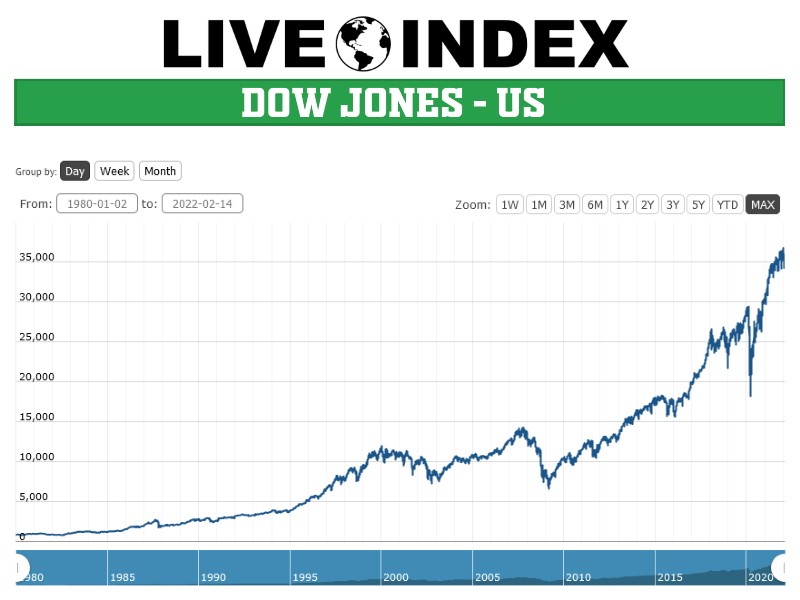
The DJIA is often considered a reliable, albeit imperfect, barometer of the health of the U.S. economy. Because its components are large, established companies across various sectors, their collective performance tends to reflect broader economic trends. When the Dow is consistently rising, it often signals investor confidence in corporate profitability, economic growth, and a positive outlook. Conversely, a sustained decline can suggest concerns about recession, geopolitical instability, or industry-specific challenges that could ripple through the economy. While not the sole economic indicator, it provides a timely and frequently updated snapshot of market sentiment towards the future economic landscape.
Impact on Investor Sentiment and Decision-Making
The daily fluctuations of the Dow have a profound impact on investor sentiment. Positive movements can foster optimism, encourage new investment, and create a “wealth effect” where individuals feel more secure and willing to spend. Negative movements, on the other hand, can trigger fear, uncertainty, and doubt, potentially leading to sell-offs, reduced consumer spending, and a more cautious economic outlook. For individual investors, significant Dow movements can influence whether they decide to buy, sell, or hold their investments, even if they don’t directly own Dow components. The perceived direction of the “market” often guides personal financial decisions.
Distinguishing Short-Term Noise from Long-Term Trends
It’s crucial for investors to distinguish between the Dow’s daily “noise” and its long-term trends. Daily movements can be highly volatile, influenced by a myriad of short-term factors, many of which are temporary. A single day’s gain or loss, even if substantial, rarely dictates the long-term trajectory of the market or an individual’s investment portfolio. Focusing too heavily on intraday or day-to-day changes can lead to impulsive decisions that are detrimental to long-term financial goals. Experienced investors tend to look at the Dow’s performance over weeks, months, and years to identify sustainable trends and make informed strategic decisions.
Key Factors Influencing the Dow’s Performance
The Dow’s value today is a culmination of countless forces acting upon the market. Its daily dance of ups and downs is a complex interplay of corporate news, economic data, global events, and human psychology.
Corporate Earnings and Financial News
Perhaps the most direct influence on the Dow’s component stocks, and therefore the index itself, comes from corporate earnings reports. When Dow companies report stronger-than-expected profits, positive revenue growth, or optimistic future guidance, their stock prices tend to rise, pulling the index higher. Conversely, disappointing results can lead to declines. Beyond quarterly earnings, other company-specific news such as mergers and acquisitions, product launches, executive changes, or legal issues can also significantly impact individual components and, by extension, the broader Dow.
Macroeconomic Indicators and Central Bank Policies
Broader economic data points are critical drivers. Reports on GDP growth, inflation (Consumer Price Index, Producer Price Index), employment figures (non-farm payrolls, unemployment rate), consumer confidence, and manufacturing data all provide insights into the health of the economy. Positive indicators generally boost the Dow, while negative ones can trigger declines. Furthermore, decisions by central banks, particularly the U.S. Federal Reserve, regarding interest rates and monetary policy, have a profound effect. Lower rates generally encourage borrowing, spending, and investment, supporting higher stock prices, while higher rates can have the opposite effect.
Geopolitical Events and Global Market Dynamics
The global nature of today’s economy means that events far beyond U.S. borders can significantly influence the Dow. Geopolitical tensions, trade disputes, international conflicts, commodity price fluctuations (especially oil), and economic performance in major global markets (like China or Europe) can all create ripple effects. A crisis in one part of the world can trigger investor uncertainty, leading to a flight to safety and a sell-off in riskier assets, including U.S. stocks. Conversely, resolutions to conflicts or positive global economic news can uplift markets.
The Role of Investor Psychology
Finally, investor psychology plays an often-underestimated role. Market movements aren’t always rational; fear and greed can drive prices beyond what fundamental data might suggest. Hysteria during market corrections, or irrational exuberance during bubbles, can create significant swings in the Dow. Herd mentality, where investors follow the actions of others, can amplify these psychological forces. Sentiment indicators, surveys of investor confidence, and even social media trends can sometimes provide clues about the prevailing emotional state of the market, which can contribute to the Dow’s daily performance.
The Dow in Your Investment Strategy
While the question “how much is the Dow Jones today?” offers a useful daily snapshot, for individual investors, its importance lies more in its long-term implications than its short-term fluctuations. Integrating the Dow into a sound investment strategy requires a nuanced approach.
Not a Direct Investment, But a Guide
It’s important to remember that you cannot directly invest in the Dow Jones Industrial Average itself. Instead, investors can gain exposure to the companies it represents through index funds or Exchange Traded Funds (ETFs) that track the DJIA, or by investing in the individual component stocks. For many, the Dow serves as a general guidepost. Its movements can help contextualize the performance of one’s own portfolio. If the Dow is up significantly but your portfolio is lagging, it might prompt a review of your holdings. Conversely, if your portfolio is performing well even when the Dow is down, it could indicate resilience in your chosen assets.
Diversification Beyond a Single Index
While the Dow comprises 30 significant companies, it does not represent the entirety of the stock market. Relying solely on the Dow as an indicator or an investment strategy can lead to a lack of diversification. The S&P 500, with its 500 large-cap companies, and the Nasdaq Composite, heavily weighted towards technology stocks, offer broader or different market perspectives. A robust investment strategy typically involves diversification across various asset classes, industries, and market capitalizations, reducing reliance on the performance of any single index or sector. The Dow provides one piece of the puzzle, not the whole picture.

Long-Term Perspective Over Daily Swings
Perhaps the most crucial advice for any investor is to adopt a long-term perspective. Chasing daily Dow movements is a recipe for stress and often leads to suboptimal investment decisions. Historically, despite numerous corrections, bear markets, and periods of high volatility, the stock market, as represented by indices like the Dow, has trended upwards over the long run. Focusing on your financial goals, maintaining a diversified portfolio, regularly rebalancing, and resisting the urge to react to every daily headline will serve investors far better than obsessing over “how much is the Dow Jones today.” The Dow’s ultimate value isn’t just a number; it’s a testament to long-term economic growth and the power of compound returns over time.
aViewFromTheCave is a participant in the Amazon Services LLC Associates Program, an affiliate advertising program designed to provide a means for sites to earn advertising fees by advertising and linking to Amazon.com. Amazon, the Amazon logo, AmazonSupply, and the AmazonSupply logo are trademarks of Amazon.com, Inc. or its affiliates. As an Amazon Associate we earn affiliate commissions from qualifying purchases.