
The financial markets are a dynamic ecosystem, constantly reacting to a myriad of inputs from economic data and corporate announcements to geopolitical events and shifts in investor sentiment. For many, the most immediate and frequently checked pulse of this system is the Dow Jones Industrial Average (DJIA). While a daily check of “how much is the Dow Jones down today” provides a snapshot, truly understanding its implications requires a deeper dive into what the index represents, the forces driving its movements, and what these fluctuations mean for the everyday investor.
The fascination with the Dow’s daily performance is understandable. It’s often the lead story on financial news outlets, a talking point in casual conversations, and a quick indicator for those who track their investments. However, reducing market health to a single day’s movement on one specific index can be misleading. This article aims to contextualize daily Dow movements, dissect the factors contributing to them, and provide a framework for investors to interpret this information meaningfully within the broader landscape of personal finance and investing.

Understanding the Dow Jones Industrial Average (DJIA)
Before we can effectively gauge the significance of its daily movements, it’s crucial to understand precisely what the Dow Jones Industrial Average is and how it fits into the larger financial picture. Often simply referred to as “the Dow,” it’s one of the oldest and most widely recognized stock market indices in the world.
What is the DJIA?
The Dow Jones Industrial Average is a price-weighted average of 30 significant stocks traded on the New York Stock Exchange (NYSE) and the Nasdaq. Unlike market-cap weighted indices like the S&P 500, where larger companies have a greater impact, the Dow’s movements are influenced more by the absolute price of its constituent stocks. This means a $1 change in a high-priced stock has a greater effect on the index than a $1 change in a lower-priced stock, regardless of the companies’ overall market capitalization. The 30 companies included are generally large, well-established, and financially sound corporations that are leaders in their respective industries, often viewed as bellwethers for the broader U.S. economy.
Its Role as a Market Barometer
For over a century, the DJIA has served as a widely referenced barometer for the health of the U.S. stock market and, by extension, the economy. Its longevity and the prominence of its constituent companies have cemented its status as a key indicator. When the Dow is up significantly, it often suggests optimism and growth; when it’s down, it can signal caution or economic headwinds. Because its components are so influential, their collective performance is often seen as reflective of corporate America’s overall vitality.
Limitations of the Dow
Despite its prominence, the Dow has significant limitations that are important for investors to recognize. First, with only 30 stocks, it is a relatively narrow index. It doesn’t represent the thousands of publicly traded companies in the U.S. stock market, nor does it fully capture the performance of smaller or mid-cap companies, or even specific sectors outside its industrial focus (despite “Industrial” now being a historical moniker for a broader set of companies). Second, its price-weighting methodology means that a company with a high stock price but smaller market capitalization can have a disproportionate impact compared to a lower-priced stock of a much larger company. This can sometimes distort its representation of overall market performance. Therefore, while useful, it’s best viewed in conjunction with other indices like the S&P 500 (which tracks 500 large-cap companies) or the Nasdaq Composite (which is technology-heavy) for a more comprehensive market perspective.
Factors Influencing Daily Market Movements
A single day’s movement in the Dow, whether up or down, is rarely attributable to just one factor. Instead, it’s typically the culmination of various economic, corporate, and psychological forces interacting in real-time. Understanding these drivers is key to interpreting “how much is the Dow Jones down today” beyond a superficial level.
Economic Indicators and Data Releases
Major economic reports are powerful market movers. Data such as the Consumer Price Index (CPI), which measures inflation; Gross Domestic Product (GDP), which indicates economic growth; employment figures like the unemployment rate and non-farm payrolls; and consumer confidence surveys can significantly impact investor sentiment. Positive data often spurs optimism, leading to a rise in the Dow, while disappointing figures can trigger sell-offs. For example, higher-than-expected inflation might cause concerns about rising interest rates, leading investors to pull back from equities.
Corporate Earnings and Company-Specific News
Since the Dow comprises 30 specific companies, their individual performance and news greatly influence the index. Quarterly earnings reports are particularly impactful. When a Dow component announces strong earnings and a positive outlook, its stock price typically rises, contributing positively to the index. Conversely, missed earnings expectations, revenue warnings, leadership changes, or significant product failures can cause a stock to drop sharply, pulling the entire Dow down with it. Mergers, acquisitions, or even major product launches by these giants can also create ripples throughout the market.
Geopolitical Events and Global News
The interconnectedness of the global economy means that events far beyond U.S. borders can send shockwaves through the Dow. Geopolitical tensions, trade disputes between major economies, conflicts, political instability in key regions, or even major natural disasters can trigger uncertainty and lead to market sell-offs. The fear of supply chain disruptions, increased commodity prices, or reduced global demand can quickly translate into lower corporate earnings expectations and, consequently, lower stock prices for Dow components.
Central Bank Policies (Interest Rates)
Central banks, particularly the U.S. Federal Reserve, wield immense power over financial markets through their monetary policy decisions. Changes in interest rates, quantitative easing or tightening programs, and even the hawkish or dovish tone of central bank communications can profoundly affect stock valuations. Higher interest rates, for example, typically increase borrowing costs for companies and make bonds a more attractive alternative to stocks, often leading to downward pressure on the Dow.
Investor Sentiment and Technical Analysis
Beyond the hard data, market movements are heavily influenced by the collective psychology of investors. “Fear” and “greed” are powerful emotions that can drive irrational buying or selling, leading to sudden shifts in momentum. Rumors, news headlines, and even social media trends can contribute to this sentiment. Technical analysis, the study of past market data (primarily price and volume) to identify patterns and predict future movements, also plays a role, with some traders making decisions based on support and resistance levels, moving averages, and other indicators, sometimes creating self-fulfilling prophecies.
Interpreting Dow Jones Fluctuations
A simple number—how many points the Dow is up or down—tells only a fraction of the story. To truly interpret the significance of daily fluctuations, investors need to consider both the magnitude and the context of the movement.
Percentage vs. Point Drops
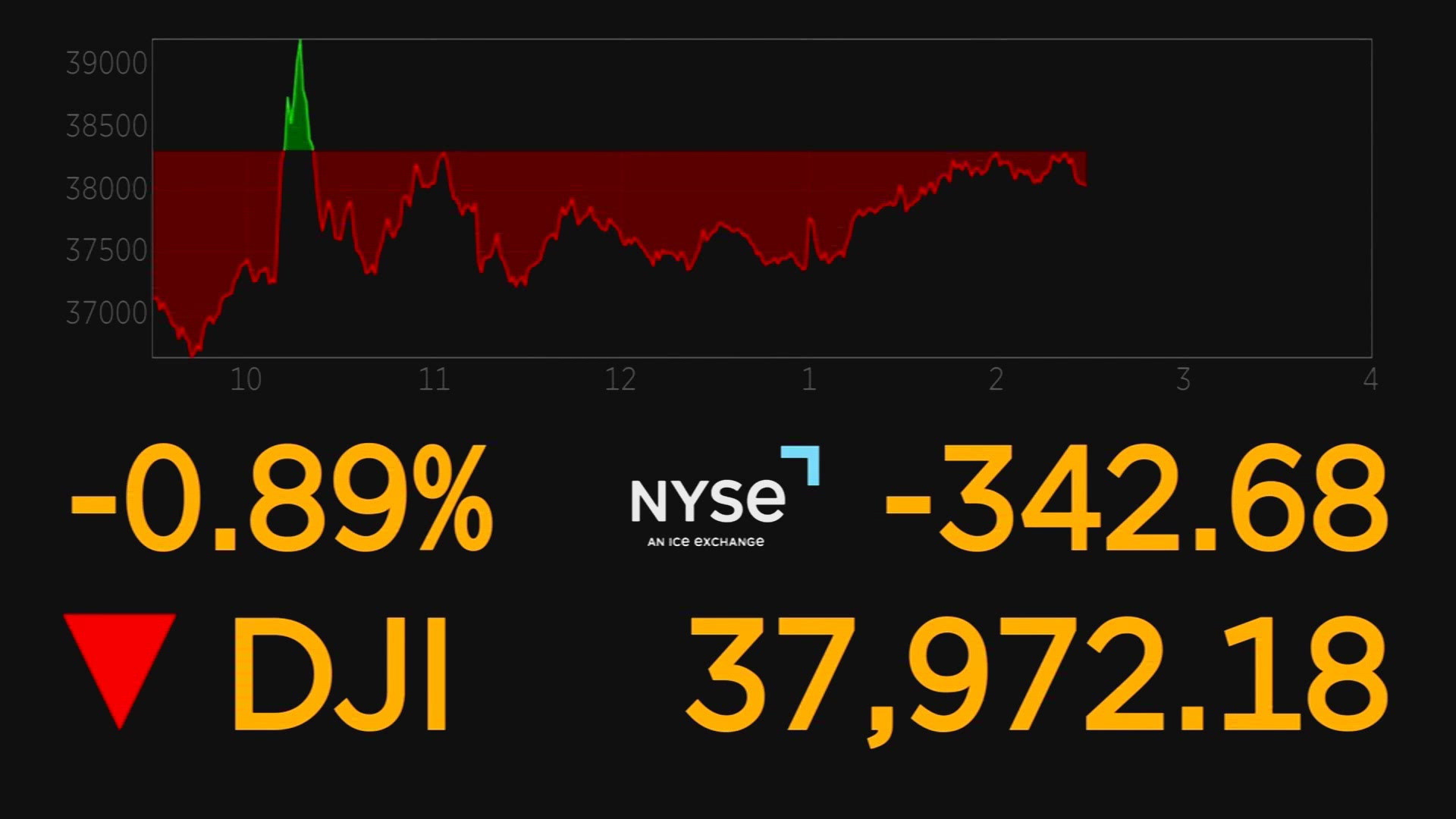
When you hear “the Dow is down 500 points today,” it might sound alarming. However, in a market where the Dow hovers around 30,000 to 40,000 points, 500 points represents a relatively small percentage move, often less than 2%. Historically, a 500-point drop was a much larger percentage move when the Dow was at, say, 10,000 points. Therefore, it’s crucial to look at the percentage change rather than just the raw point change to gauge the true scale of the movement. A 1-2% daily move is quite common and typically falls within the range of normal market volatility. Larger percentage drops (e.g., 3-5% or more) might signal a more significant shift in sentiment or a reaction to major news.
Short-term Noise vs. Long-term Trends
Daily market movements are often referred to as “noise” because they can be highly erratic and influenced by transient factors. While it’s tempting to react to every dip or surge, a single day’s performance rarely dictates the long-term trajectory of the market or an investment portfolio. Seasoned investors understand that markets trend upwards over the long run, punctuated by inevitable periods of correction and volatility. Focusing too much on daily fluctuations can lead to emotional decisions, such as selling during a dip and missing the subsequent recovery, which can be detrimental to long-term wealth building. It’s more insightful to observe weekly, monthly, or quarterly trends to understand the broader market direction.
Connecting Dow Moves to Broader Market Health
While the Dow is an important index, its daily performance should be considered alongside other broader market indicators. A significant drop in the Dow, if mirrored by similar declines in the S&P 500 and Nasdaq Composite, suggests a widespread market pullback. If only the Dow is down significantly while other indices are stable or up, it might indicate issues specific to the 30 companies it tracks or its price-weighted methodology. Investors should also look at sector-specific performance, bond yields, commodity prices, and currency movements to form a more complete picture of overall market and economic health, rather than relying solely on one index.
What Today’s Dip (or Rise) Means for Investors
Whether the Dow is down today, up today, or flat, its daily movement carries different implications depending on an individual’s investment strategy, time horizon, and risk tolerance. Understanding these nuances can help investors react prudently rather than impulsively.
For Long-Term Investors: Perspective and Patience
For those with a long-term investment horizon (e.g., retirement planning, saving for a home down payment years away), a single day’s dip in the Dow is usually nothing more than a blip on the radar. Market corrections and bear markets are normal, albeit uncomfortable, parts of the investment cycle. Historically, markets have always recovered from downturns and reached new highs over time. For long-term investors, the best strategy during a dip is often to do nothing, or even to consider it an opportunity to buy more assets at a lower price (dollar-cost averaging). Panic selling during a downturn locks in losses and undermines the power of compounding. Patience and a focus on long-term goals are paramount.
For Short-Term Traders: Opportunities and Risks
Short-term traders, by contrast, are more attuned to daily and intraday movements. For them, volatility—whether up or down—can present opportunities for profit. They might use various strategies like day trading, swing trading, or options trading to capitalize on rapid price changes. However, this approach comes with significantly higher risk and requires considerable expertise, discipline, and capital. What appears as a “dip” to a long-term investor might be a prime entry or exit point for a short-term trader, but the potential for rapid losses is equally high. This is a very specialized area of investing and is not recommended for the average individual investor.
The Importance of Diversification
Regardless of market movements, diversification remains a cornerstone of sound investment strategy. A well-diversified portfolio spreads investments across different asset classes (stocks, bonds, real estate), geographies, industries, and company sizes. If the Dow is down due to issues affecting large-cap U.S. industrial stocks, a diversified portfolio might be buffered by the performance of international stocks, small-cap companies, or bonds. Diversification helps to mitigate risk, ensuring that no single event or market downturn can disproportionately harm an entire portfolio. It means not putting all your eggs in one basket, a principle that holds true whether the market is up or down.
Strategies for Navigating Market Volatility
Market volatility is an inherent characteristic of investing. While it can be unnerving to see the Dow fluctuate, having a clear strategy can help investors remain disciplined and make informed decisions, regardless of whether the market is up or down today.
Staying Informed, Not Overwhelmed
It’s wise to stay informed about major economic and market news, but it’s equally important not to become overwhelmed or make impulsive decisions based on every headline. Focus on reputable sources of information and understand the difference between news that impacts long-term fundamentals versus short-term speculation. Avoid constantly checking your portfolio or the market throughout the day, as this can amplify anxiety and lead to emotional trading. Set a schedule for checking in, perhaps once a day or even less frequently.
Rebalancing Your Portfolio
Periodic rebalancing is a critical strategy, especially during volatile times. Rebalancing involves adjusting your portfolio back to its original target asset allocation. For example, if your target is 60% stocks and 40% bonds, and a market rally has pushed stocks to 70% of your portfolio, you would sell some stocks and buy more bonds to return to your 60/40 ratio. Conversely, during a market downturn, stocks might fall to 50% of your portfolio, and you would sell some bonds to buy more stocks. This strategy helps you automatically “buy low and sell high” and maintain a risk level consistent with your financial goals.
Dollar-Cost Averaging
Dollar-cost averaging (DCA) is a powerful strategy for long-term investors. It involves investing a fixed amount of money at regular intervals, regardless of market conditions. When prices are high, your fixed amount buys fewer shares; when prices are low (like when the Dow is down), the same amount buys more shares. Over time, this averages out your purchase price, reduces the risk of investing a large sum at a market peak, and leverages market downturns to your advantage. It’s a disciplined approach that takes emotion out of investing.
Considering Your Risk Tolerance
Your investment strategy should always align with your personal risk tolerance—how much financial risk you are comfortable taking to achieve your goals. A significant market dip can be a stark reminder to reassess whether your current portfolio allocation truly matches your comfort level. If daily market fluctuations cause you excessive stress, you might be over-allocated to risky assets and should consider adjusting your portfolio to a more conservative mix. Conversely, if you have a high risk tolerance and a long time horizon, a dip might be an opportune moment to increase your exposure to growth assets.
Seeking Professional Financial Advice
For many, navigating the complexities of financial markets, especially during periods of volatility, can be challenging. A qualified financial advisor can provide personalized guidance, help you define your financial goals, assess your risk tolerance, create a diversified investment plan, and keep you disciplined during market ups and downs. They can offer an objective perspective, preventing emotional decisions and ensuring your investment strategy remains aligned with your long-term objectives, regardless of how much the Dow Jones is down (or up) today.
In conclusion, while the daily movement of the Dow Jones Industrial Average is a useful snapshot, it’s just one data point in a vast and intricate financial landscape. Understanding its context, the underlying drivers of its movements, and the appropriate long-term perspective is crucial for any investor looking to build lasting wealth and navigate the markets with confidence.
aViewFromTheCave is a participant in the Amazon Services LLC Associates Program, an affiliate advertising program designed to provide a means for sites to earn advertising fees by advertising and linking to Amazon.com. Amazon, the Amazon logo, AmazonSupply, and the AmazonSupply logo are trademarks of Amazon.com, Inc. or its affiliates. As an Amazon Associate we earn affiliate commissions from qualifying purchases.