
The question “how much is the Apple company worth?” isn’t just a matter of curiosity; it’s a profound inquiry into the dynamics of global finance, corporate valuation, and the investment landscape. Apple Inc. stands as a titan in the global economy, frequently topping lists as the world’s most valuable public company. Its valuation doesn’t just reflect its financial performance; it embodies investor confidence, consumer loyalty, technological innovation, and its pervasive influence across multiple industries. Understanding Apple’s worth goes beyond a simple number; it involves dissecting its financial structure, revenue streams, growth strategies, and the myriad of factors that contribute to its colossal market capitalization.
At any given moment, Apple’s exact worth is a fluctuating figure, dictated by the relentless pulse of the stock market. However, it consistently hovers in the multitrillion-dollar range, a league occupied by only a handful of global corporations. This valuation isn’t just a testament to its success; it makes Apple a bellwether for the tech sector, a significant holding in countless investment portfolios, and a subject of intense scrutiny for financial analysts worldwide. For investors, understanding the components of this valuation is crucial for making informed decisions, while for business finance enthusiasts, it offers a masterclass in sustained corporate growth and market dominance.
Deconstructing Apple’s Trillion-Dollar Valuation
To grasp the magnitude of Apple’s financial standing, one must first understand the primary metric used to define a public company’s worth: market capitalization. This isn’t merely an arbitrary figure but a reflection of the collective perception of the company’s value by investors globally.
What “Worth” Means: Market Capitalization Explained
Market capitalization, often shortened to “market cap,” is calculated by multiplying a company’s total number of outstanding shares by its current stock price. For instance, if Apple has 15 billion shares outstanding and its stock trades at $200 per share, its market capitalization would be $3 trillion. This figure provides a real-time snapshot of the company’s valuation as determined by the market. It represents the total dollar value of a company’s outstanding shares of stock and is often used by the investment community to rank the size of companies. While market cap is the most common measure of a company’s worth, it’s important to distinguish it from other financial metrics like enterprise value, which includes debt and subtracts cash, providing a more comprehensive view for potential acquirers. However, for public perception and general financial discussion, market capitalization remains the gold standard.
The Journey to a Multitrillion-Dollar Enterprise
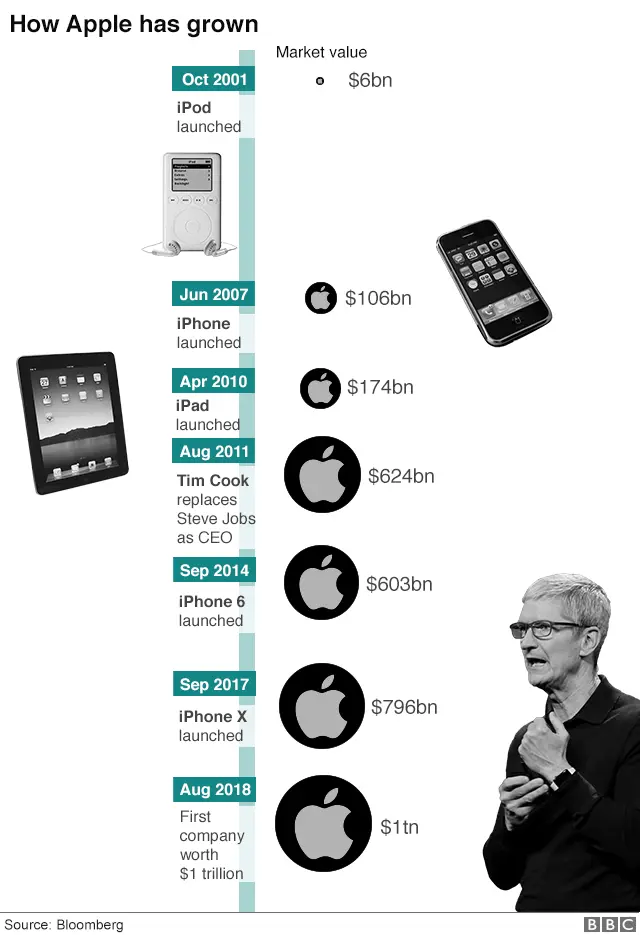
Apple’s ascent to a multitrillion-dollar valuation is a remarkable saga of innovation, strategic execution, and market expansion. The company crossed the $1 trillion market cap threshold in August 2018, becoming the first publicly traded U.S. company to do so. Just over two years later, in August 2020, it doubled that figure, hitting $2 trillion. The $3 trillion mark was breached momentarily in early 2022 and has been revisited multiple times since, cementing its status as a financial behemoth. This rapid growth, especially in the wake of global economic uncertainties, underscores the resilience of Apple’s business model and the enduring demand for its products and services. Key milestones included the consistent success of the iPhone, the expansion of its services division, and a robust balance sheet that instilled confidence in investors. Each new milestone wasn’t just a number; it was a psychological barrier broken, signaling a new era of corporate valuation and market power.
The Dynamics of Share Price and Investor Sentiment
Apple’s market capitalization is in constant flux, primarily driven by its share price. This price, in turn, is a complex interplay of various factors, including the company’s reported earnings, future growth prospects, product announcements, technological breakthroughs, competitive landscape, and broader macroeconomic conditions. Investor sentiment plays a crucial role; positive news or optimistic outlooks can send the stock soaring, while challenges or uncertainties can lead to dips. Analysts constantly evaluate Apple’s financial health, issuing price targets and recommendations that significantly influence trading activity. Furthermore, large institutional investors, mutual funds, and hedge funds hold substantial stakes in Apple, and their buying or selling decisions can move the needle considerably. The sheer volume of Apple’s shares traded daily makes it one of the most liquid and actively followed stocks in the world, reflecting the dynamic nature of its perceived worth.
The Financial Engines Driving Apple’s Immense Value
Apple’s colossal valuation is not built on hype alone; it’s underpinned by an incredibly robust and diversified financial engine that consistently generates massive revenues and profits. This engine has multiple powerful components, each contributing significantly to the company’s overall worth.
Hardware Dominance: The iPhone Ecosystem and Beyond
At the core of Apple’s financial might lies its unparalleled dominance in hardware sales. The iPhone, in particular, remains the company’s flagship product and its primary revenue driver. Its premium pricing strategy, coupled with an unwavering demand for its latest models, ensures consistent, high-margin sales. Beyond the iPhone, Apple’s ecosystem extends to a suite of highly successful devices: the Mac, iPad, Apple Watch, and AirPods. Each product line commands significant market share within its category, benefiting from premium branding, integrated user experience, and strong customer loyalty. The strategy isn’t just about selling individual devices but locking users into an ecosystem where each product enhances the value of the others, encouraging repeat purchases and upgrades. This integrated hardware strategy provides a stable and predictable revenue base, which is highly valued by investors seeking long-term growth and stability.
The High-Margin Powerhouse: Apple’s Services Segment
While hardware sales provide the foundation, Apple’s services segment has emerged as its fastest-growing and highest-margin business, playing an increasingly vital role in its valuation. This segment includes a vast array of offerings such as the App Store (which takes a commission on digital sales), Apple Music, iCloud storage, Apple TV+, Apple Pay, Apple Arcade, and advertising services. The services division thrives on the enormous installed base of Apple devices, converting hardware users into recurring revenue subscribers. With gross margins often significantly higher than hardware, the services segment provides a powerful stream of predictable, high-profit revenue that diversifies Apple’s income streams and makes its overall business model more resilient to product cycle fluctuations. Investors view this segment’s growth as a key indicator of future profitability and a defensive moat against competitors, further solidifying Apple’s financial standing.
Operational Efficiency and Global Scale
Apple’s ability to maintain its massive valuation is also a testament to its exceptional operational efficiency and unparalleled global scale. The company has meticulously built one of the most sophisticated global supply chains in the world, enabling it to manufacture and distribute millions of complex devices with remarkable precision and speed. This operational prowess allows Apple to manage costs effectively, optimize inventory, and bring new products to market rapidly. Furthermore, its global retail footprint, spanning hundreds of physical stores and a robust online presence, ensures direct access to customers worldwide. This combination of efficient manufacturing, logistics, and widespread distribution translates into significant economies of scale, higher profit margins, and the ability to serve an immense global customer base, all of which are critical financial strengths that underpin its multitrillion-dollar valuation.

Key Financial Metrics and Their Impact on Valuation
Beyond market capitalization, a deeper dive into Apple’s financial statements reveals the fundamental strengths that reassure investors and analysts, justifying its premium valuation. These metrics provide a detailed picture of the company’s health, performance, and future potential.
Revenue Growth, Profitability, and Cash Flow Generation
Consistent revenue growth, robust profitability, and strong cash flow generation are the bedrock of Apple’s financial success. The company consistently reports billions in quarterly revenues, driven by both product sales and the expanding services segment. Its net income figures are among the highest globally, reflecting its strong pricing power and cost management. Perhaps most importantly, Apple is a cash-generating machine. Free cash flow—the cash a company generates after accounting for cash outflows to support operations and maintain its capital assets—is immense. This prodigious cash flow provides the company with unparalleled flexibility to invest in research and development, pursue strategic acquisitions, and weather economic downturns without significantly impacting its core operations. Analysts pay close attention to these figures as they are direct indicators of the company’s financial health and ability to sustain growth.
Shareholder Returns: Dividends and Stock Buybacks
A significant portion of Apple’s appeal to investors, particularly large institutional funds and long-term shareholders, comes from its commitment to returning capital. The company regularly pays out a quarterly dividend, providing investors with a consistent income stream. While the dividend yield might not be the highest, its sheer consistency and the company’s ability to increase it over time are highly valued. Even more impactful are Apple’s aggressive share buyback programs. By repurchasing its own stock from the open market, Apple reduces the number of outstanding shares, which in turn boosts earnings per share (EPS) and often supports the stock price. These buybacks represent a direct way the company signals confidence in its future and ensures that excess cash is used to enhance shareholder value, making the stock more attractive to investors.
Balance Sheet Strength: Cash Reserves and Debt Management
Apple boasts one of the strongest balance sheets of any company globally. Its vast cash reserves, which often exceed hundreds of billions of dollars, provide an extraordinary buffer against economic shocks and fuel its strategic initiatives. This immense liquidity allows Apple to self-fund most of its operations and investments, reducing reliance on external financing. While Apple does issue debt, it is typically done strategically, often to finance share buybacks or capital expenditures, taking advantage of low interest rates. Its debt-to-equity ratio remains healthy, and its credit ratings are among the highest. This combination of massive cash holdings, manageable debt, and significant intangible assets (like patents and brand value) creates an impenetrable financial fortress, providing investors with peace of mind and contributing significantly to its premium valuation.
External Factors and Future Prospects Shaping Apple’s Worth
While Apple’s internal strengths are undeniable, its valuation is also constantly influenced by external forces and the market’s perception of its future trajectory. These factors play a critical role in how investors project Apple’s worth years down the line.
Macroeconomic Climate and Consumer Spending Trends
Global macroeconomic conditions exert a significant influence on Apple’s worth. Factors such as inflation, interest rates, employment levels, and consumer confidence directly impact discretionary spending, which in turn affects sales of premium-priced devices like the iPhone. During periods of economic prosperity, consumers are more likely to upgrade to the latest Apple products or subscribe to more services. Conversely, economic downturns or periods of high inflation can lead to delayed purchases or a shift towards more affordable alternatives, impacting Apple’s revenue growth. Geopolitical stability and global trade policies also play a role, affecting supply chains, production costs, and market access. Apple’s ability to navigate these complex macroeconomic shifts is crucial for maintaining its financial strength and investor confidence.
Innovation Pipeline and Market Anticipation
Apple’s valuation is heavily weighted by market anticipation of its future innovations. The company has a long history of disrupting industries with groundbreaking products, from the iPod to the iPhone and Apple Watch. Investors constantly scrutinize rumors and patent filings for clues about Apple’s next big thing—whether it’s advancements in augmented reality (AR) or virtual reality (VR), a potential entry into the automotive market with an “Apple Car,” or new revolutionary services. The promise of future innovation drives speculative buying and bolsters the stock price, as investors bet on Apple’s continued ability to capture new markets and expand its ecosystem. Any perceived slowdown in innovation or failure to deliver on highly anticipated products can lead to investor skepticism and downward pressure on its valuation.

Regulatory Scrutiny and Geopolitical Influences
As one of the world’s largest and most powerful corporations, Apple faces increasing regulatory scrutiny across various jurisdictions. Antitrust investigations, concerns over App Store policies, privacy regulations, and tax practices can all pose significant risks to its business model and financial performance. Fines, mandated changes to business practices, or even potential breakups, although unlikely, represent serious threats. Furthermore, geopolitical tensions, particularly between the U.S. and China (a critical market and manufacturing hub for Apple), can disrupt supply chains, impact sales, and create uncertainty for investors. The company’s ability to successfully navigate these complex legal and political landscapes is increasingly vital for safeguarding its current valuation and ensuring its long-term growth prospects.
Conclusion
The question of “how much is the Apple company worth” reveals far more than a mere number; it offers a comprehensive lesson in modern business finance. Apple’s multitrillion-dollar valuation is a dynamic reflection of its unparalleled market capitalization, driven by a powerful combination of dominant hardware sales, a rapidly growing high-margin services segment, exceptional operational efficiency, and a fortress-like balance sheet. It is a company that masterfully generates immense revenues, profits, and free cash flow, consistently rewarding shareholders through dividends and aggressive buybacks.
Yet, this colossal worth is not static. It is constantly influenced by the ebb and flow of global macroeconomic conditions, the market’s insatiable hunger for groundbreaking innovation, and the intricate web of regulatory and geopolitical challenges that come with being a global powerhouse. For investors, Apple represents a blend of stability, growth, and technological leadership, making it a cornerstone of many portfolios. Its worth is a testament to its enduring brand power, its unwavering commitment to its ecosystem, and its ability to consistently redefine industries. As Apple continues to evolve, innovate, and navigate the complex global landscape, its valuation will remain a fascinating indicator of its financial might and its profound influence on the world economy.
aViewFromTheCave is a participant in the Amazon Services LLC Associates Program, an affiliate advertising program designed to provide a means for sites to earn advertising fees by advertising and linking to Amazon.com. Amazon, the Amazon logo, AmazonSupply, and the AmazonSupply logo are trademarks of Amazon.com, Inc. or its affiliates. As an Amazon Associate we earn affiliate commissions from qualifying purchases.