
Tesla, Inc. (TSLA) stands as one of the most polarized and closely watched securities in the global financial markets. For investors asking “how much is Tesla stock,” the answer is rarely just a numerical figure on a ticker; it is a complex reflection of market sentiment, technological speculation, and fundamental financial performance. Since its initial public offering in 2010, Tesla has evolved from a niche electric vehicle (EV) startup into a multi-faceted energy and robotics conglomerate with a market capitalization that has, at times, exceeded the combined value of several of its largest automotive competitors. Understanding the price of Tesla stock requires a deep dive into the financial metrics, macroeconomic environments, and growth projections that drive its daily fluctuations.
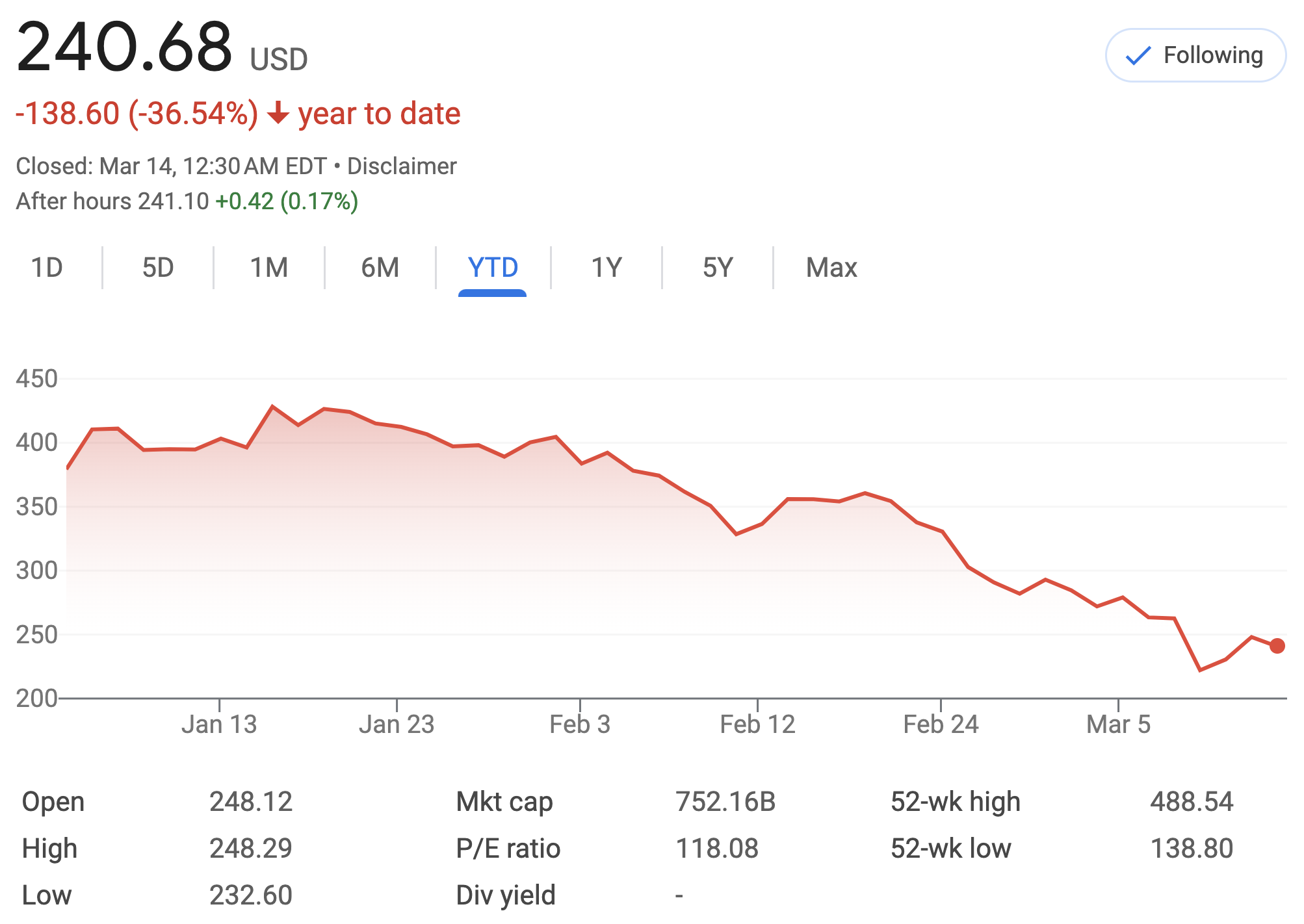
Analyzing Tesla’s Market Valuation and Stock Performance
To understand the current price of Tesla stock, one must first look at its historical context and the unique way the market values the company. Unlike traditional automakers such as Ford or General Motors, which are often valued based on steady earnings and dividend yields, Tesla is frequently valued as a high-growth technology stock. This distinction is critical for any investor looking to gauge whether the current share price represents a value opportunity or an overextended peak.
The Dynamics of TSLA Share Price
Tesla’s share price is characterized by high beta, meaning it tends to be more volatile than the broader market. When the S&P 500 moves 1%, it is not uncommon for Tesla to move 3% or 4% in either direction. This volatility is driven by the company’s aggressive growth targets and the high expectations baked into its valuation. Investors pay a premium for Tesla because they are not just buying a car company; they are buying into a future of autonomous transport, renewable energy storage, and artificial intelligence.
The “price” of the stock is also influenced by institutional ownership. As a member of the S&P 500 and the Nasdaq-100, Tesla is a staple in many index funds and ETFs. This means that large-scale buying and selling by institutional investors—often triggered by macroeconomic shifts rather than company-specific news—can lead to significant price swings.
Market Capitalization vs. Traditional Automakers
At various points in recent years, Tesla’s market capitalization has hovered between $500 billion and over $1 trillion. To put this in perspective, this valuation often exceeds that of Toyota, Volkswagen, and Hyundai combined, despite Tesla producing a fraction of the total vehicle volume of those giants.
From a “Money” perspective, this discrepancy is explained by the “software-as-a-service” (SaaS) model expectations. Investors believe Tesla’s margins will eventually mirror those of software companies rather than hardware manufacturers, particularly as Full Self-Driving (FSD) software subscriptions and charging network revenues scale. When assessing how much the stock is worth, fundamental analysts look at the Price-to-Earnings (P/E) ratio, which historically has remained significantly higher than the industry average, signaling that the market expects massive future earnings growth.
Key Financial Drivers Influencing Tesla’s Stock Price
The fluctuations in Tesla’s stock price are rarely random. They are typically tied to specific financial milestones and operational metrics that the market uses to measure the company’s health. For the retail investor, monitoring these drivers is essential for understanding price movements.
Quarterly Earnings and Delivery Metrics
The most immediate impact on Tesla’s stock price usually comes from its quarterly delivery reports and subsequent earnings calls. Tesla reports the number of vehicles produced and delivered every three months. Because the company’s valuation is built on the premise of exponential growth, even a slight “miss” in delivery numbers compared to analyst expectations can result in a sharp sell-off. Conversely, beating delivery estimates often acts as a catalyst for a bullish run.
On the earnings side, the market looks closely at “GAAP” profitability. While Tesla was once a company that burned through cash, it has now achieved several years of consistent profitability. Investors scrutinize the revenue streams, looking for growth not just in automotive sales, but in the Energy Generation and Storage segment, which includes Powerwalls and Megapacks.
Profit Margins and the Price War Strategy
In recent years, Tesla’s gross margins have become a focal point for the financial community. Historically, Tesla enjoyed industry-leading margins, sometimes exceeding 25%. However, as the EV market has become more competitive and interest rates have risen, Tesla has engaged in a series of aggressive price cuts to maintain market share and stimulate demand.
From an investment standpoint, these price cuts are a double-edged sword. While they help maintain volume and “put more robots on the road” (referring to the future FSD fleet), they compress short-term margins. When Tesla reports a contraction in its automotive gross margin, the stock often faces downward pressure as investors recalibrate their long-term earnings models.
Regulatory Credits and Their Impact on the Bottom Line

A unique aspect of Tesla’s financial profile is its revenue from regulatory credits. Other automakers that do not meet government emissions standards must purchase credits from companies like Tesla. This is essentially “pure profit” revenue. While the market generally prefers to see Tesla’s profit driven by car sales and software, these credits have historically played a vital role in bolstering the company’s cash flow during capital-intensive periods.
Risks and Volatility in the EV Sector
Investing in Tesla is not without significant risk. The stock’s price is sensitive to a variety of external and internal factors that can lead to rapid devaluations.
Macroeconomic Factors and Interest Rates
As a growth stock, Tesla is particularly sensitive to interest rate changes by the Federal Reserve. High interest rates make it more expensive for consumers to finance new vehicles, directly impacting Tesla’s sales volume. Furthermore, in high-rate environments, the “discount rate” applied to future earnings increases, which typically lowers the present value of growth stocks. This is why Tesla often sees its stock price decline when the Fed signals a “higher for longer” stance on rates.
Competition from Global and Domestic Players
The landscape of the electric vehicle market has shifted dramatically. Tesla no longer operates in a vacuum. In China, companies like BYD have emerged as formidable competitors, sometimes outperforming Tesla in total EV sales volumes. In the United States and Europe, legacy manufacturers are pouring billions into their own EV transitions. As competition increases, Tesla may lose its pricing power, which is a major concern for investors who are used to the company’s dominant market position.
The “Musk Premium” and Leadership Risks
Elon Musk is inextricably linked to the Tesla brand and its stock price. Many investors apply a “Musk Premium” to the stock, believing his vision and leadership are the primary drivers of the company’s innovation. However, this also introduces a unique form of “key man risk.” Musk’s involvement in other ventures, such as X (formerly Twitter), SpaceX, and xAI, often leads to concerns about his focus and potential conflicts of interest. Any controversy involving Musk can, and often does, result in immediate volatility for TSLA shareholders.
Evaluating Tesla as a Long-Term Investment
For those looking beyond daily price movements, the question of “how much is Tesla stock” becomes a question of “what will Tesla be in ten years?” The long-term investment thesis for Tesla usually rests on several pillars beyond just car manufacturing.
Growth Potential in Energy Storage and AI
Tesla’s energy division is often described by bulls as an “underappreciated” part of the business. As the world transitions to renewable energy, the demand for large-scale battery storage (Megapacks) is expected to skyrocket. If Tesla can scale this division to match the size of its automotive business, the stock’s current valuation might eventually look conservative.
Furthermore, Tesla is increasingly positioning itself as an AI and robotics company. The development of “Optimus,” a humanoid robot, and the continued refinement of the Dojo supercomputer for AI training, represent massive potential revenue streams. If Tesla successfully solves Level 5 autonomy, it could launch a “Robotaxi” network, shifting its business model from selling hardware to a high-margin service model.
Valuation Metrics: P/E Ratio and Forward Guidance
When deciding whether to buy Tesla stock at its current price, investors often look at the Forward P/E ratio. This compares the current stock price to estimated earnings for the next twelve months. Because Tesla reinvests so much of its capital into R&D and new factories (Gigafactories), its trailing P/E can look alarmingly high. However, if the company continues to grow its bottom line at a high double-digit rate, the forward valuation may be more justifiable for long-term “buy and hold” investors.

Strategic Considerations for Retail Investors
For the individual investor, Tesla requires a specific strategy. Due to its volatility, many financial advisors suggest that Tesla should not be the sole component of a portfolio but rather a “growth” sleeve within a diversified investment plan.
-
Dollar-Cost Averaging (DCA): Given the stock’s tendency for wild swings, many investors use DCA—investing a fixed amount of money at regular intervals—to mitigate the risk of buying at a temporary peak.
-
Focus on Fundamentals: It is easy to get caught up in the headlines or social media hype surrounding Elon Musk. Successful Tesla investors tend to focus on delivery numbers, margin trends, and the progress of the FSD software.
-
Risk Tolerance: Investors must ask themselves if they can stomach a 20% or 30% drop in share price over a short period. If the answer is no, Tesla might not be the right fit for their financial goals.
In conclusion, “how much is Tesla stock” is a question that changes by the minute, but the underlying value is determined by the company’s ability to execute its ambitious roadmap. Between its role as an EV pioneer, an energy giant, and an AI innovator, Tesla remains one of the most complex and high-stakes opportunities in the modern financial landscape. Whether the stock is viewed as overvalued or a bargain depends entirely on an investor’s belief in the company’s ability to disrupt multiple global industries simultaneously.
aViewFromTheCave is a participant in the Amazon Services LLC Associates Program, an affiliate advertising program designed to provide a means for sites to earn advertising fees by advertising and linking to Amazon.com. Amazon, the Amazon logo, AmazonSupply, and the AmazonSupply logo are trademarks of Amazon.com, Inc. or its affiliates. As an Amazon Associate we earn affiliate commissions from qualifying purchases.