
The question “how much is the S&P 500?” is one of the most frequently asked queries in the financial world, yet its answer is far more nuanced than a simple dollar figure. Unlike a single stock, the S&P 500 isn’t a commodity you can directly purchase at a specific price. Instead, it’s a stock market index – a weighted average of the prices of 500 of the largest publicly traded companies in the United States. Its “value” at any given moment reflects the collective sentiment, performance, and expectations for these dominant corporations, serving as a critical barometer for the broader U.S. stock market and, by extension, the economy itself.

For investors, understanding the S&P 500 is fundamental. It represents a significant portion of investable assets, offers a diversified exposure to the market, and serves as a benchmark against which many professional money managers measure their own performance. Delving into its mechanics, its historical trajectory, and the various ways one can gain exposure to it is crucial for anyone looking to navigate the complexities of personal finance and investing. This article will demystify the S&P 500, explaining what its “price” truly signifies, how it impacts your investment decisions, and the strategic considerations for integrating it into your financial plan.
Deconstructing the S&P 500: More Than Just a Number
To truly grasp “how much” the S&P 500 is, we must first understand its fundamental nature as an index rather than a standalone asset. This distinction is critical for anyone looking to make informed investment decisions.
What is the S&P 500 Index?
The S&P 500, short for the Standard & Poor’s 500, is one of the most widely recognized and followed stock market indexes globally. Maintained by S&P Dow Jones Indices, it comprises 500 large-cap U.S. companies selected by a committee based on factors like market size, liquidity, and sector representation. This selection process ensures that the index remains a relevant and accurate reflection of the U.S. economy’s dominant sectors and companies. While it’s called the “500,” it actually represents closer to 70-80% of the total market capitalization of all publicly traded U.S. stocks, making it an exceptionally broad and diversified measure of the market’s health. Companies like Apple, Microsoft, Amazon, Alphabet (Google), and Tesla are perennial components, but the list is dynamic, with companies being added and removed as market conditions and corporate performance evolve.
How the Index Value is Calculated
The S&P 500 is a market-capitalization-weighted index. This means that companies with larger market capitalizations (stock price multiplied by the number of outstanding shares) have a greater impact on the index’s value than smaller companies. For example, if Apple’s stock price moves by 1%, it will affect the S&P 500’s overall value more significantly than a 1% move in a smaller constituent company, even if both are part of the 500.
The index’s “value” is essentially a composite score derived from the sum of the market capitalizations of its constituent companies, adjusted by a divisor. This divisor is regularly updated to account for corporate actions like stock splits, mergers, or changes in the number of outstanding shares, ensuring the index’s continuity and comparability over time. When you see the S&P 500 quoted at, say, 5,000 points, it doesn’t mean $5,000. It’s an arbitrary number representing the aggregate value of these 500 companies relative to a base period, indicating performance trends rather than a direct monetary value per “share” of the index itself.
The “Price” vs. The “Value”
The distinction between “price” and “value” is paramount when discussing the S&P 500. The “price” you see quoted daily is the index level – a numerical representation of its aggregate performance. It fluctuates constantly throughout trading hours as the prices of its 500 underlying stocks change. This index level is not something you can buy or sell directly. You cannot log into a brokerage account and purchase “one share of the S&P 500” for 5,000 points.
Instead, the “value” of the S&P 500 lies in its utility as a benchmark and a proxy for the broader market. Its movements provide insights into investor confidence, corporate earnings, economic indicators, and geopolitical events. For individual investors, understanding its “value” means comprehending its historical returns, its role in portfolio diversification, and its potential for long-term growth, rather than fixating on its daily point tally as a direct cost.
Investing in the S&P 500: Accessibility and Options
While you can’t buy the S&P 500 directly, gaining exposure to its performance is incredibly straightforward and accessible to nearly any investor, thanks to the innovation of financial products designed to track it. These instruments allow you to effectively “own” a slice of the 500 companies without having to buy each one individually.
ETFs and Mutual Funds: Your Gateway
The primary way individual investors gain exposure to the S&P 500 is through Exchange-Traded Funds (ETFs) and Mutual Funds that are designed to track the index. These funds pool money from many investors to buy the stocks of the 500 companies in the same proportion as they appear in the index.
-
S&P 500 ETFs: These are popular for their low costs, liquidity, and ease of trading. ETFs like SPDR S&P 500 ETF Trust (SPY), iShares Core S&P 500 (IVV), and Vanguard S&P 500 ETF (VOO) trade on stock exchanges throughout the day, just like individual stocks. This means you can buy or sell them at market price whenever the market is open. Their expense ratios (the annual fee charged as a percentage of your investment) are typically very low, often under 0.10%, making them highly efficient investment vehicles.
-
S&P 500 Mutual Funds: These funds also aim to replicate the S&P 500’s performance but are typically bought and sold once a day, after the market closes, at their Net Asset Value (NAV). Popular options include the Vanguard 500 Index Fund Admiral Shares (VFIAX) or Fidelity 500 Index Fund (FXAIX). While some mutual funds might have slightly higher expense ratios or minimum investment requirements than ETFs, many offer similar low-cost access, particularly those offered by major fund houses.
Both ETFs and mutual funds tracking the S&P 500 offer a simple, cost-effective way to achieve broad market exposure without the need for extensive research into individual companies.
Diversification Through a Single Investment
One of the most compelling advantages of investing in an S&P 500 index fund or ETF is the inherent diversification it provides. With a single purchase, you are investing in 500 of the largest and most influential companies across various sectors of the U.S. economy, including technology, healthcare, financials, consumer discretionary, industrials, and more. This broad exposure significantly reduces the specific risk associated with any single company or industry. If one company performs poorly, its impact on your overall S&P 500 investment is mitigated by the performance of the other 499 companies. This level of diversification, achieved with such minimal effort, is difficult to replicate by buying individual stocks. It’s a cornerstone of modern portfolio theory and a key reason why the S&P 500 is often recommended as a core holding for long-term investors.
Understanding Expense Ratios
When investing in an S&P 500 ETF or mutual fund, the “cost” is primarily reflected in its expense ratio. This is an annual fee charged by the fund manager, expressed as a percentage of the total assets you have invested in the fund. For instance, an expense ratio of 0.03% means that for every $10,000 you have invested, you’ll pay $3 in fees annually. While these percentages may seem minuscule, they can accumulate significantly over decades, impacting your long-term returns. Fortunately, competition among fund providers has driven S&P 500 index fund expense ratios down to remarkably low levels. Prioritizing funds with the lowest expense ratios is a smart strategy to maximize your net returns when investing in the S&P 500.
The S&P 500 as a Benchmark for Market Health
Beyond being an investment vehicle, the S&P 500 plays a crucial role as a benchmark. It is widely regarded as the best single gauge of large-cap U.S. equities and a reliable indicator of the overall health and direction of the American stock market.

A Bellwether for the U.S. Economy
Because the S&P 500 comprises such a broad and significant cross-section of leading U.S. companies, its performance is often seen as a proxy for the entire U.S. economy. These companies collectively generate trillions in revenue, employ millions of people, and are sensitive to economic cycles, consumer spending, interest rates, and global trade dynamics. When the S&P 500 is performing well, it often signals strong corporate earnings, robust economic growth, and investor confidence. Conversely, a sustained decline in the index can indicate economic slowdowns, recession fears, or other systemic risks. Economists, policymakers, and financial analysts routinely reference the S&P 500’s movements to gauge the effectiveness of economic policies and anticipate future trends.
Historical Performance and Returns
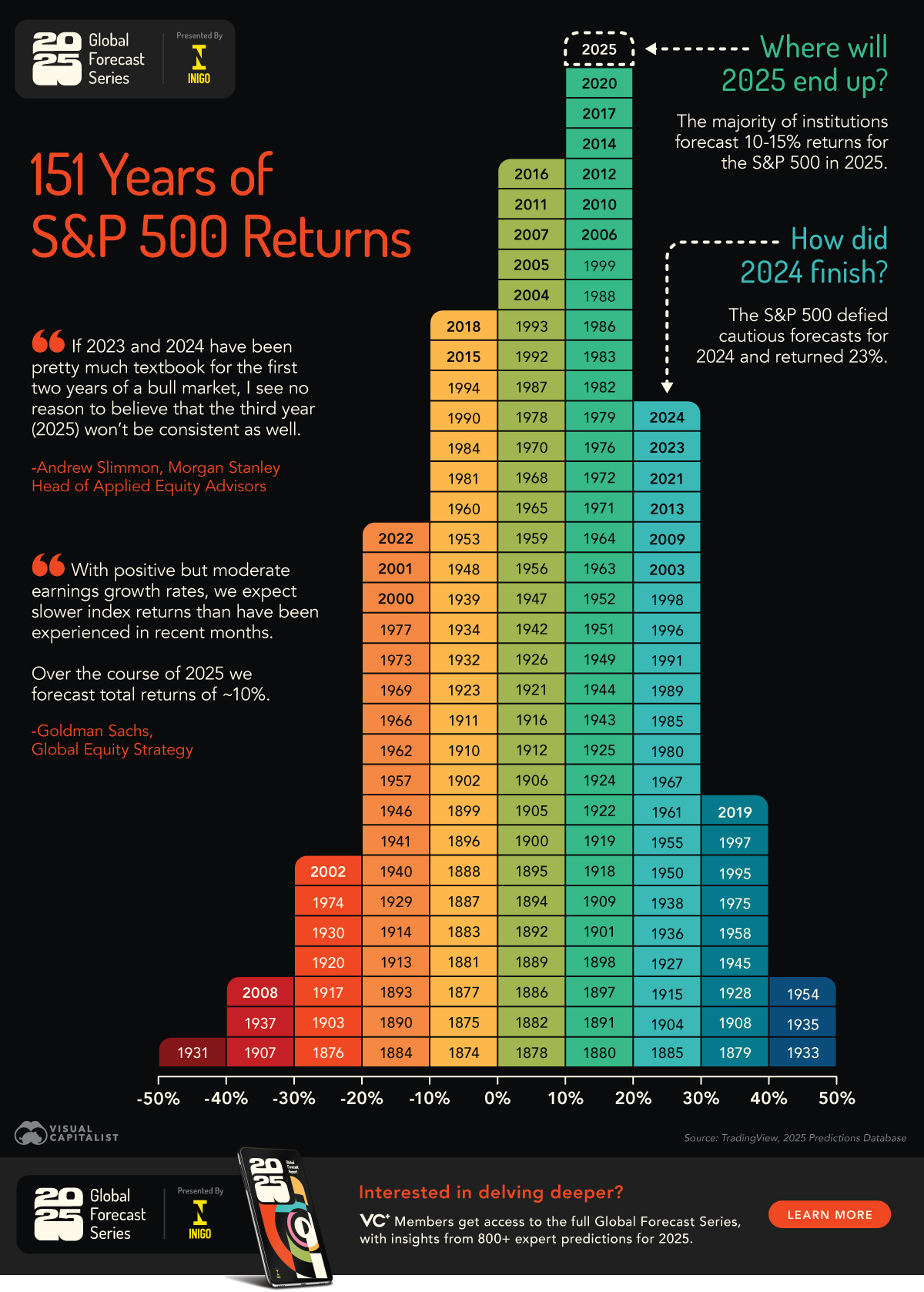
Historically, the S&P 500 has demonstrated a remarkable ability to deliver long-term growth. Over the past several decades, its average annual return has been approximately 10-12%, including reinvested dividends, though past performance is not indicative of future results. This long-term upward trend is a testament to the resilience and innovation of American corporations and the underlying growth of the U.S. economy. However, it’s crucial to understand that this long-term average includes significant periods of volatility, including bear markets (declines of 20% or more), corrections (declines of 10-20%), and bull markets (periods of sustained growth). Investors in the S&P 500 must be prepared for these fluctuations and maintain a long-term perspective to fully capture its growth potential.
Factors Influencing Index Movements
The S&P 500’s value is in constant flux, influenced by a myriad of factors, both macroeconomic and company-specific:
-
Corporate Earnings and Outlook: The aggregate earnings reports of the 500 constituent companies are perhaps the most direct driver. Strong earnings growth and positive forward guidance from major corporations tend to push the index higher.
-
Economic Indicators: Data points like GDP growth, inflation rates, employment figures, consumer confidence, and manufacturing output directly impact the perceived health of the economy, influencing investor sentiment and, consequently, stock prices.
-
Interest Rates: Decisions by the Federal Reserve regarding interest rates significantly affect corporate borrowing costs, consumer spending, and the attractiveness of stocks versus bonds. Higher interest rates can make future corporate earnings less valuable and bond investments more appealing, potentially pressuring the S&P 500.
-
Geopolitical Events: Global events such as international conflicts, trade disputes, or major political shifts can introduce uncertainty and volatility, impacting market confidence.
-
Technological Innovation and Sector Trends: Disruptive technologies or shifts in consumer preferences can lead to outperformance in certain sectors (like technology or healthcare) and underperformance in others, influencing the market-cap-weighted index.
Understanding these interconnected factors provides a richer context for interpreting the S&P 500’s daily movements and forming a comprehensive investment strategy.
Strategic Considerations for S&P 500 Investors
Integrating the S&P 500 into your investment strategy requires more than just buying an index fund; it demands a thoughtful approach to long-term goals, risk tolerance, and portfolio construction.
Long-Term Growth vs. Short-Term Volatility
The S&P 500 is generally considered a long-term growth investment. While it has delivered impressive average annual returns over decades, its journey is rarely a straight line. Short-term volatility is an inherent characteristic of the stock market. Economic downturns, geopolitical tensions, or even simply shifts in market sentiment can lead to significant drops in the index over days, weeks, or months. For investors with a long-term horizon (e.g., 10 years or more), these short-term dips often represent opportunities to buy more at lower prices, as the market has historically recovered and reached new highs. However, for those with a shorter time frame, the S&P 500’s volatility might present too much risk. It’s crucial to align your investment horizon with the market’s typical cycles of growth and correction.
The Role of Rebalancing and Sector Weights
While an S&P 500 index fund offers broad diversification, it’s important to remember that it’s market-capitalization-weighted. This means that if certain sectors or large companies perform exceptionally well, their weight within the index will naturally increase. For example, in recent years, technology companies have held a very significant weighting in the S&P 500. While this can be beneficial during tech booms, it also means that your S&P 500 investment will be heavily influenced by the performance of a few dominant companies and sectors.
For some investors, periodic portfolio rebalancing might be necessary if they find their overall asset allocation becoming overly concentrated due to the S&P 500’s internal shifts or the performance of other assets in their portfolio. This doesn’t necessarily mean selling your S&P 500 fund but perhaps adjusting other holdings to maintain desired diversification across different asset classes (e.g., bonds, international stocks) or even within equities (e.g., small-cap stocks, value stocks).
Integrating the S&P 500 into a Broader Portfolio
The S&P 500 is an excellent core holding for many investors, but it rarely should be the only holding. A truly diversified portfolio often includes:
-
International Stocks: To gain exposure to global economic growth and reduce reliance solely on the U.S. market.
-
Bonds: To provide stability, generate income, and potentially act as a hedge during stock market downturns, depending on the type of bond.
-
Other Asset Classes: Depending on individual goals and risk tolerance, this could include real estate, commodities, or alternative investments.
The ideal asset allocation is highly personal, influenced by factors such as age, financial goals (retirement, home purchase, college savings), risk tolerance, and current income. The S&P 500 forms a robust foundation, representing a significant portion of a growth-oriented portfolio, but it functions best as part of a well-considered, holistic financial plan.
Beyond the Index: The Broader Financial Picture
Ultimately, understanding “how much the S&P 500 is” transcends its numerical value. It’s about recognizing its role as a powerful tool in your financial journey, a benchmark for market health, and a component of a well-rounded investment strategy.
S&P 500 and Your Financial Goals
For most investors, the S&P 500 represents a straightforward, low-cost way to participate in the long-term growth of the U.S. economy. Whether you’re saving for retirement, a down payment on a house, or your children’s education, an S&P 500 index fund or ETF can be a highly effective vehicle for wealth accumulation over extended periods. Its passive nature means you don’t need to constantly monitor individual stocks, freeing up time and reducing the stress often associated with active stock picking. By consistently investing in the S&P 500 through strategies like dollar-cost averaging (investing a fixed amount regularly), you can smooth out the impact of market volatility and systematically build wealth over time.
The Importance of Individual Research and Professional Guidance
While this article provides a comprehensive overview, personal finance is inherently individual. Before making any investment decisions, it’s crucial to conduct your own research, assess your personal financial situation, and understand your risk tolerance. The information provided here is for educational purposes and should not be considered financial advice.
For complex financial situations, or if you feel uncertain about your investment strategy, consulting with a qualified financial advisor is highly recommended. A professional can help you define your goals, assess your risk profile, create a personalized investment plan that integrates the S&P 500 appropriately, and guide you through various market conditions. They can ensure that your approach to “how much the S&P 500 is” is not just about its daily quote but about its strategic role in achieving your long-term financial prosperity.
aViewFromTheCave is a participant in the Amazon Services LLC Associates Program, an affiliate advertising program designed to provide a means for sites to earn advertising fees by advertising and linking to Amazon.com. Amazon, the Amazon logo, AmazonSupply, and the AmazonSupply logo are trademarks of Amazon.com, Inc. or its affiliates. As an Amazon Associate we earn affiliate commissions from qualifying purchases.