
Breaking down on the side of the road can be a stressful and costly experience. From flat tires in inconvenient locations to engine trouble far from home, the unexpected can quickly turn into a significant financial burden. This is precisely where roadside assistance services come into play, offering a safety net that can save drivers from substantial out-of-pocket expenses and immense frustration. Among the myriad of providers, Progressive stands out as a major player in the insurance landscape, offering comprehensive roadside assistance as an add-on to its auto policies. But for the financially savvy consumer, the fundamental question remains: “How much does Progressive’s roadside assistance truly cost, and what value does it deliver for that price?”

Understanding the financial implications of such a service requires a deep dive into its structure, benefits, and how it measures up against alternatives. It’s not just about the premium; it’s about the peace of mind, the potential savings on unforeseen expenses, and whether it aligns with your personal finance strategy. This article will unravel the financial aspects of Progressive’s roadside assistance, helping you make an informed decision that safeguards both your vehicle and your wallet.
Understanding Progressive’s Roadside Assistance Program: A Financial Safety Net
Progressive’s roadside assistance isn’t merely a convenience; it’s a strategically designed financial product aimed at mitigating the monetary risks associated with vehicle breakdowns. For a relatively small, predictable fee, policyholders gain access to a network of services that can prevent larger, unpredictable costs down the line.
What Services Are Typically Included?
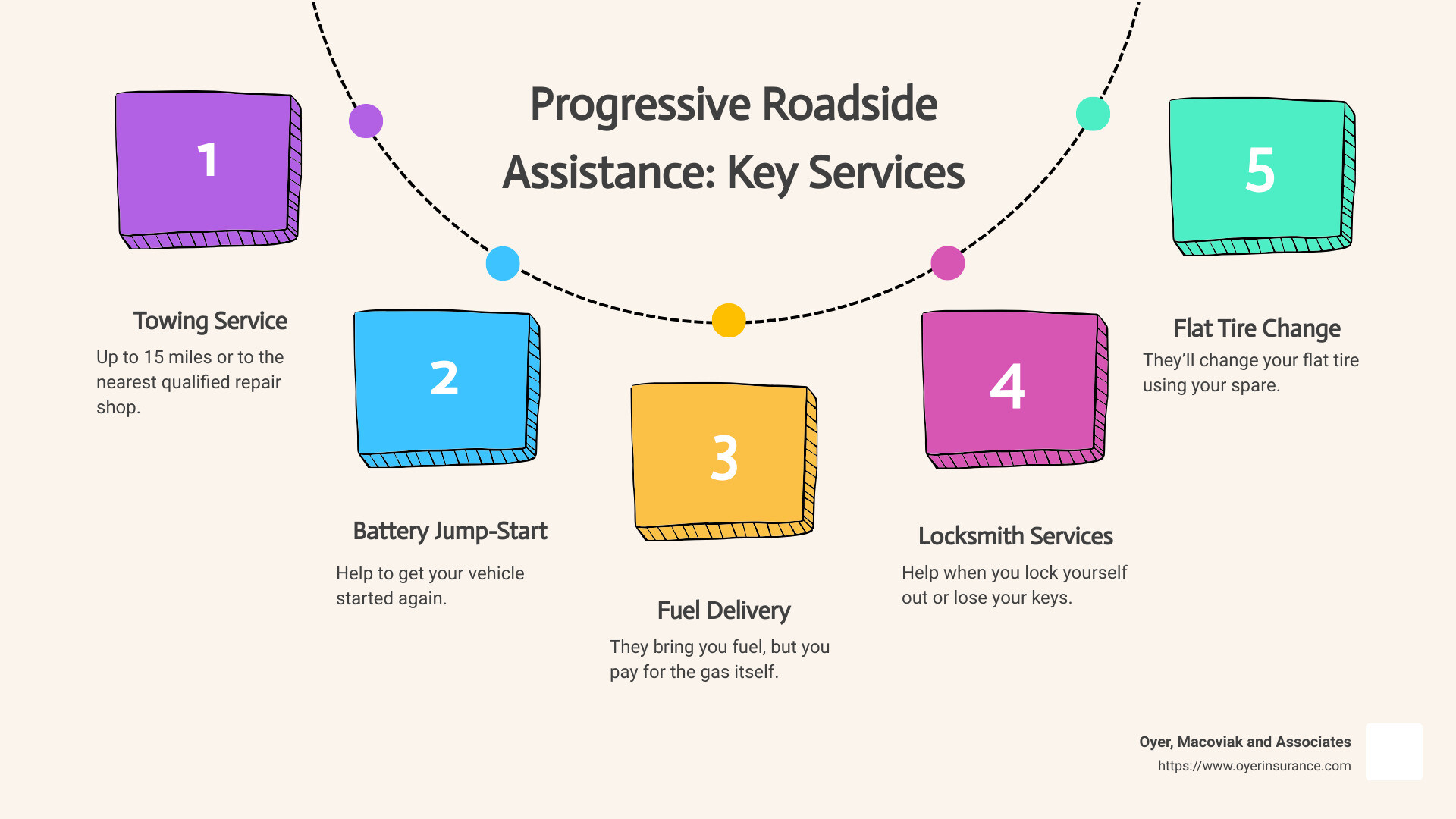
The core value of any roadside assistance program lies in its coverage. Progressive typically offers a suite of services designed to address common vehicle emergencies, effectively preventing policyholders from having to pay exorbitant on-the-spot rates for these services. These generally include:
-
Towing: Perhaps the most critical service, Progressive’s roadside assistance typically covers towing up to a certain distance, or to the nearest qualified repair shop. Without this, a tow could easily run into hundreds of dollars, depending on the distance and time of day. This service transforms an unpredictable expense into a manageable component of your insurance premium.
-
Jump-Starts: A dead battery is a common inconvenience. Rather than calling a specialized service or a friend and potentially paying a fee, Progressive can dispatch help to get your vehicle running, saving you time and immediate cash.
-
Flat Tire Changes: If you have a spare, assistance can be provided to change a flat tire. This saves the cost of a mobile tire service, which can be considerable, especially if you’re stranded far from a city center.
-
Fuel Delivery: Running out of gas can leave you stranded. Progressive can deliver enough fuel to get you to the nearest gas station, avoiding walk-to-station scenarios or the need to pay for an emergency fuel delivery service at inflated prices.
-
Lockout Service: Accidentally locking your keys in your car can be incredibly frustrating. Progressive’s service can help you regain access, often saving you the cost of a locksmith, which can be an unexpected and significant expense.
Each of these services represents a potential financial outlay that the roadside assistance program aims to absorb or significantly reduce, making your financial planning more predictable.
Eligibility and Enrollment: Who Can Get It?
Progressive’s roadside assistance is an optional add-on available to its auto insurance policyholders. It’s typically purchased as an endorsement to an existing policy. This means you must have an active Progressive auto insurance policy to be eligible. The service usually covers the vehicle itself, not just the driver, meaning anyone driving the covered vehicle can utilize the benefits. This broad coverage extends the financial protection to other family members or authorized drivers, adding further value. The enrollment process is straightforward, usually involving a simple request to add the coverage to your policy, with the associated cost being integrated into your premium.
The Core Value Proposition: Peace of Mind vs. Out-of-Pocket Expenses
The financial argument for Progressive’s roadside assistance hinges on the trade-off between a small, recurring premium and the potential for large, unpredictable emergency expenses. For many, the peace of mind knowing that help is just a phone call away, without the immediate worry of how to pay for it, is invaluable. This fixed cost budgeting approach can be a critical component of personal financial management, especially for those with less robust emergency funds or who frequently drive long distances. It’s a proactive measure against financial disruption caused by automotive mishaps.
Deciphering the Cost Structure of Progressive Roadside Assistance
Understanding the price of Progressive’s roadside assistance isn’t as simple as a single, fixed number. Like most insurance products, the cost can vary based on several factors unique to the policyholder and their circumstances.
Factors Influencing Your Premium
Progressive, like other insurers, calculates the cost of roadside assistance as part of your overall auto insurance premium. The exact price for the roadside assistance portion is usually a relatively modest addition, often ranging from $10 to $20 per vehicle per six-month policy period, or roughly $20 to $40 annually. However, this can fluctuate based on:
-
Existing Policy Details: The cost might be influenced by your overall Progressive auto insurance policy, including your driving record, claims history, and other coverages you carry.
-
Vehicle Type: While less impactful than for collision coverage, certain vehicle types might incur slightly different rates based on potential towing complexity or common issues.
-
Location: Geographic location can play a role, as the cost of services can vary regionally.
-
Bundle Discounts: Customers who bundle multiple policies (e.g., auto and home) with Progressive might receive discounts that indirectly affect the perceived cost of all their coverages, including roadside assistance.
It’s crucial to obtain a personalized quote directly from Progressive to understand the exact financial commitment for your specific situation. This involves factoring in all your individual variables to get an accurate cost.
How Progressive’s Pricing Compares to Competitors
When evaluating the financial viability of Progressive’s roadside assistance, it’s beneficial to compare its pricing against other providers. Many major auto insurers, such as GEICO, State Farm, and Allstate, offer similar add-on roadside assistance services, often in a comparable price range.
-
Other Insurers: Most insurer-provided roadside assistance plans are priced similarly, often as low-cost endorsements to encourage retention and add value. The specific services and limits (e.g., towing mileage) might differ slightly, impacting the perceived value for the price.
-
Independent Services: Dedicated roadside assistance clubs like AAA offer comprehensive plans that can range from $50 to $150+ annually, depending on the membership tier. While often more expensive than an insurer add-on, these clubs might offer higher towing limits, additional member discounts, or broader coverage for any car you’re in, not just your own.
-
Credit Card Benefits: Many premium credit cards offer complimentary roadside assistance. While not a direct cost comparison, this can be a “free” alternative that influences your decision.
The general consensus is that insurer-provided roadside assistance, including Progressive’s, tends to be among the most cost-effective options for basic coverage, making it an attractive financial choice for many.
Is it an Add-On or Integrated?
Progressive’s roadside assistance is typically offered as an add-on or endorsement to your primary auto insurance policy. It’s not usually integrated by default into standard policies like liability or comprehensive coverage. This means you have to specifically request to add it, and it will be listed as a separate line item or an included endorsement on your policy documents, along with its associated cost. This clear separation allows consumers to easily evaluate its individual cost and decide whether it aligns with their financial priorities.

Progressive Roadside Assistance: A Deep Dive into Its Financial Benefits
Beyond the direct cost of the premium, the true financial benefit of Progressive’s roadside assistance lies in its ability to prevent larger, unexpected expenses and offer significant convenience, which can also translate into monetary savings.
Avoiding Unexpected Bills: The Case for a Fixed Cost Service
The most compelling financial argument for roadside assistance is its ability to convert unpredictable, potentially high costs into a small, predictable premium. Imagine being stranded with a broken-down vehicle. Without roadside assistance, you might face:
-
Emergency Towing Fees: These can range from $75 to over $300, depending on the distance, time of day (after-hours often cost more), and location.
-
Emergency Repair Service Call-Outs: For issues like a dead battery or lockout, a mobile service might charge a premium for immediate dispatch.
By paying a few dollars a month, you effectively cap your potential exposure to these immediate financial shocks. For individuals who prefer stable budgeting and dislike unpredictable expenses, this fixed-cost protection is invaluable. It acts as a mini “emergency fund” specifically for vehicle breakdowns, without depleting your primary savings.
The Convenience Factor: Time is Money
While not a direct monetary saving, the convenience offered by roadside assistance has a significant indirect financial benefit: time. Waiting hours for a friend or family member to help, or spending time searching for and negotiating with independent service providers, can lead to lost wages, missed appointments, and general productivity loss. Progressive’s service streamlines this process, dispatching help quickly and efficiently. For professionals, freelancers, or anyone whose time is directly tied to income, the ability to resolve a vehicle issue swiftly minimizes financial disruption. The adage “time is money” holds particularly true in these situations.
Impact on Your Insurance Claims History
A critical financial consideration is whether using roadside assistance affects your insurance premiums or claims history. Generally, using Progressive’s roadside assistance for services like towing, jump-starts, or fuel delivery does not count as an at-fault claim on your auto insurance policy. This is a significant advantage. Regular claims (like collision or comprehensive claims) can lead to higher premiums in subsequent policy periods. However, roadside assistance incidents are typically treated as service calls and do not negatively impact your “claims-free” status or eligibility for discounts. This means you can use the service when needed without worrying about financial repercussions on your future insurance rates, reinforcing its value as a true financial safety net rather than a claim accelerator.
Alternatives to Progressive’s Roadside Assistance: A Cost-Benefit Analysis
While Progressive offers a compelling option, a financially prudent decision involves evaluating all available alternatives. Different solutions come with varying costs, coverage levels, and terms, making a direct comparison essential.
Independent Roadside Assistance Providers
Organizations like AAA, AARP, Better World Club, and Good Sam Club specialize solely in roadside assistance.
-
Costs: Annual memberships typically range from $50 to $150 or more, depending on the tier (basic, plus, premier).
-
Benefits: Often provide higher towing mileage limits, more extensive services (e.g., travel interruption benefits), and can cover the member in any vehicle, not just a specific insured car. They also frequently offer member discounts on hotels, car rentals, and other services.
-
Financial Consideration: While potentially more expensive upfront than an insurer add-on, the broader coverage and additional perks might offer greater financial value for frequent travelers or those with multiple vehicles/drivers.
Manufacturer-Provided Roadside Assistance
Many new vehicles come with complimentary roadside assistance as part of their warranty package.
-
Costs: Effectively “free” for the duration of the warranty (typically 3-5 years).
-
Benefits: Often comprehensive, covering towing to the nearest dealership, lockout service, jump-starts, and tire changes.
-
Financial Consideration: If your vehicle is still under warranty, this is often the most cost-effective option, as you’re already paying for it indirectly through the vehicle’s purchase price. There’s no need to double-pay for an insurer add-on.
Credit Card Roadside Benefits
A number of credit cards, especially premium travel or rewards cards, offer complimentary roadside assistance as a cardholder benefit.
-
Costs: Effectively “free” for cardholders, though some cards might have annual fees.
-
Benefits: Services can vary widely, from basic dispatch services where you pay for the service provider, to full-service coverage similar to an insurance add-on.
-
Financial Consideration: This is an excellent “hidden gem” for many. It’s crucial to check the specific terms and conditions of your credit card(s) to understand what’s covered before relying on it. If you have this benefit, it can be a zero-cost alternative to purchasing an additional plan.
Pay-Per-Use Services and Emergency Funds
Some drivers opt to forgo any subscription service and instead rely on an emergency fund or pay for services as needed.
-
Costs: No recurring fees; only pay when a service is required.
-
Benefits: Flexibility to choose any service provider; avoids paying for a service you might not use.
-
Financial Consideration: Requires a robust emergency fund to cover potentially high, unexpected costs. This strategy carries higher financial risk for those without sufficient liquid savings. It puts the burden of finding and negotiating with a service provider directly on the individual during a stressful situation.
Making an Informed Financial Decision: Is Progressive Roadside Assistance Worth It for You?
The decision to add Progressive’s roadside assistance, or any similar service, boils down to a personal financial assessment. It’s about weighing a small, predictable cost against the potential for unpredictable, larger expenses and the value of peace of mind.
Assessing Your Driving Habits and Vehicle Reliability
Consider your typical driving patterns:
-
Commute: Do you drive long distances daily, often in remote areas?
-
Vehicle Age & Condition: Is your vehicle older or prone to mechanical issues? Newer, more reliable vehicles might make roadside assistance seem less critical.
-
Risk Tolerance: Are you comfortable handling an emergency breakdown yourself, or do you prefer professional help readily available?
If you frequently drive in areas where help might be scarce, or if your vehicle is older, the financial risk of not having roadside assistance increases, making the Progressive add-on a more attractive investment.
Budgeting for the Unexpected
Effective personal finance involves planning for contingencies. Roadside assistance serves as a low-cost form of insurance against automotive emergencies.
-
Emergency Fund: Do you have a readily accessible emergency fund specifically allocated for unexpected vehicle repairs or towing? If not, a roadside assistance plan can act as a stop-gap measure.
-
Cash Flow: Is a small, predictable monthly cost more manageable than a potentially large, one-time expense? For many, the answer is yes.
How to Get a Quote and Compare Options
The most effective way to determine the true cost and value for your specific situation is to:
-
Get a Quote from Progressive: Contact Progressive directly or use their online platform to add roadside assistance to your existing policy or get a new auto insurance quote that includes it. Pay close attention to the specific premium increase.
-
Compare Services and Limits: Understand the towing mileage limits, number of service calls allowed per policy period, and any other exclusions.
-
Evaluate Alternatives:
-
Check Credit Card Benefits: Review your credit card agreements for any existing roadside assistance benefits.
-
Manufacturer Warranty: Confirm if your vehicle is still under warranty and includes roadside assistance.
-
Independent Providers: Research AAA or other clubs, noting their annual fees and comprehensive benefits.
-
Emergency Fund Assessment: Determine if your current emergency savings are sufficient to cover potential towing and repair costs without a dedicated plan.
-
By meticulously comparing the annual cost of Progressive’s roadside assistance with the potential costs of alternative solutions and the specific risks associated with your driving profile, you can make a financially sound decision. For many drivers, the relatively low cost of Progressive’s roadside assistance, coupled with its comprehensive coverage and the invaluable peace of mind it offers, represents an excellent financial investment against the unpredictable nature of vehicle breakdowns.
aViewFromTheCave is a participant in the Amazon Services LLC Associates Program, an affiliate advertising program designed to provide a means for sites to earn advertising fees by advertising and linking to Amazon.com. Amazon, the Amazon logo, AmazonSupply, and the AmazonSupply logo are trademarks of Amazon.com, Inc. or its affiliates. As an Amazon Associate we earn affiliate commissions from qualifying purchases.