
In the current economic landscape, the “subscription economy” has transformed from a convenient luxury into a significant line item in the average household budget. As cord-cutting becomes the standard, consumers are no longer paying a single cable bill; instead, they are managing a portfolio of micro-payments to various streaming giants. Among these, Paramount Plus has emerged as a formidable contender, leveraging a massive library of legacy content and high-octane live sports. However, for the financially conscious consumer, the central question remains: How much is Paramount Plus a month, and more importantly, does the platform offer a high enough return on investment (ROI) to justify its place in your monthly budget?
To answer this, we must look beyond the sticker price. Understanding the cost of Paramount Plus requires a deep dive into its pricing tiers, hidden savings through annual commitments, and its comparative value against the broader streaming market.
Understanding the Paramount Plus Pricing Tiers
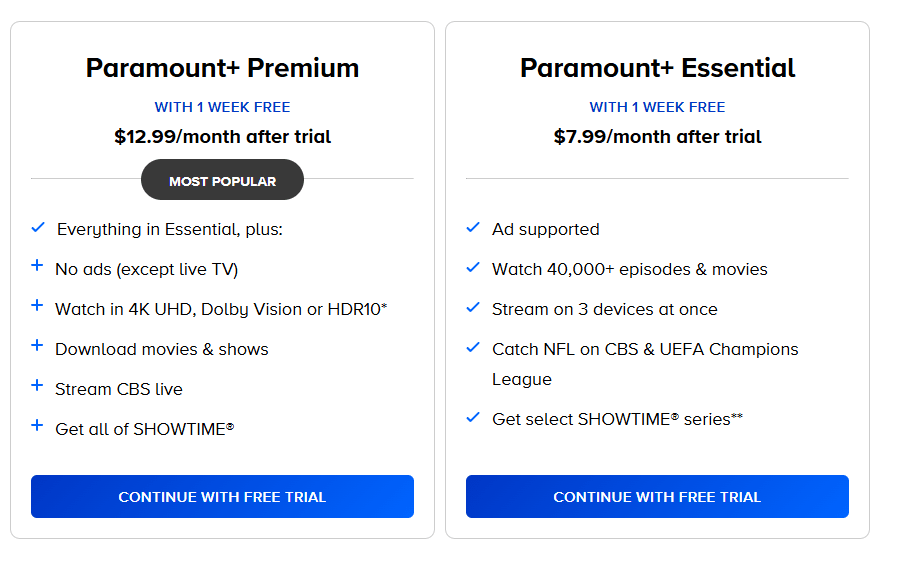
Navigating the cost of Paramount Plus begins with identifying the two primary subscription models the service offers. Paramount Global has strategically bifurcated its service to appeal to two distinct financial demographics: the budget-conscious viewer and the premium seeker who demands a comprehensive entertainment experience.
Paramount+ Essential: The Budget-Friendly Entry Point
As of the latest pricing updates, the Paramount+ Essential plan is priced at $7.99 per month. This tier is designed for individuals who prioritize low monthly overhead and are willing to tolerate limited commercial interruptions in exchange for a lower price point.
From a personal finance perspective, the Essential plan provides access to the core library—over 45,000 episodes and movies—including popular franchises like Star Trek, Yellowstone (via spin-offs), and the Mission: Impossible series. However, it is important to note what this tier excludes. You do not get access to your local live CBS station, nor do you receive the premium Showtime content library. For those managing a strict entertainment budget, this $7.99 tier represents one of the more affordable entries in the “Big Five” streaming services, often undercutting the ad-supported tiers of Netflix and Max.
Paramount+ with SHOWTIME: The Premium Investment
For those who view their streaming services as a total replacement for traditional cable, the Paramount+ with SHOWTIME plan is priced at $12.99 per month. While this is a 62% increase over the Essential plan, the financial value is found in the consolidation of services.
By integrating Showtime, Paramount has effectively merged two separate monthly bills into one. This tier removes most advertisements (with the exception of live TV and select shows), allows for offline downloads on mobile devices, and includes your local live CBS station. For sports fans, this is often the “must-have” tier, as it provides seamless access to NFL on CBS and elite soccer coverage like the UEFA Champions League. When analyzing the cost-per-feature, the $12.99 price point targets the “power user” who utilizes the platform daily and values the time saved by avoiding commercials.
Maximizing Your Investment: Discounts, Annual Plans, and Bundles
One of the hallmarks of savvy financial management is never paying full price for a recurring service if a discount is available. Paramount Plus offers several avenues to reduce the effective monthly cost through long-term commitments and strategic partnerships.
The Annual vs. Monthly Math
The most immediate way to reduce your Paramount Plus bill is to transition from a monthly billing cycle to an annual one. The Essential plan costs $59.99 per year, while the with SHOWTIME plan costs $119.99 per year.
If we break down the math, the annual Essential plan averages out to approximately $5.00 per month, representing a nearly 37% savings over the month-to-month rate. The premium annual plan averages out to about $10.00 per month, saving you roughly $35 over the course of the year. From an investing standpoint, paying upfront for an annual plan yields a “return” that far outpaces traditional savings accounts, provided you are certain you will use the service for the full twelve months.
Strategic Bundles and Third-Party Value
In the modern financial ecosystem, “bundling” is the most effective way to hide or eliminate the cost of a streaming service. Paramount Plus has been particularly aggressive in its partnerships, most notably with Walmart+.

A membership to Walmart+ (which costs $12.95/month or $98/year) includes a Paramount+ Essential subscription at no additional cost. For a household already paying for Walmart+ for grocery delivery or fuel discounts, the “cost” of Paramount Plus effectively drops to zero. Similarly, many cellular providers and credit card companies (such as American Express) occasionally offer “streaming credits” or promotional periods that can cover the cost of a subscription for 6 to 12 months. Identifying these overlaps in your existing financial tools can save you upwards of $100 annually in entertainment expenses.
Student and Military Discounts
Paramount Plus maintains a 25% discount for verified college students on the Essential monthly plan. This brings the monthly cost down to approximately $6.00. While this may seem like a small saving, for a student on a fixed income, these incremental reductions across multiple services are the foundation of healthy financial habits. Similar promotions are frequently offered to military members and veterans through platforms like VetRewards, reinforcing the brand’s strategy of tiered pricing based on demographic needs.
The Cost of Content: Assessing the Return on Investment (ROI)
When auditing your monthly expenses, it isn’t enough to know how much a service costs; you must determine if the value derived justifies the price. In the world of “Money,” we look at this as the cost-per-hour of utility.
The Library Value Proposition
Paramount Plus acts as the digital vault for Paramount Global’s massive portfolio, including CBS, MTV, Nickelodeon, Comedy Central, and BET. For a family with children, the inclusion of the entire Nickelodeon library (SpongeBob, PAW Patrol) can replace the need for multiple smaller subscriptions. If a household watches 20 hours of content on Paramount Plus per month on the Essential plan, the cost is roughly $0.40 per hour. Compared to a single movie ticket which can cost $15.00 for two hours ($7.50 per hour), the streaming service offers a massive financial advantage for home entertainment.
Live Sports and the “Cable Killer” Factor
The true financial “heavy lifting” of Paramount Plus is found in its sports rights. For an NFL fan, the ability to watch local CBS games for $12.99 a month is significantly cheaper than a specialized sports cable package. By using Paramount Plus as a tool for “targeted cord-cutting,” consumers can eliminate a $100+ cable bill, replacing it with a $12.99 premium streaming tier and a high-quality HD antenna. In this context, the monthly cost of Paramount Plus isn’t just an expense; it’s a cost-saving strategy for the broader household budget.
Managing Your Digital Overhead: How Paramount Plus Fits Into a Monthly Budget
As the price of streaming services continues to rise—Paramount Plus itself saw price hikes in 2023 and 2024—the risk of “subscription fatigue” becomes a real financial threat. Managing your digital overhead requires a disciplined approach to how and when you pay for these services.
The Rise of Subscription Fatigue
Subscription fatigue occurs when the cumulative cost of small monthly payments begins to impact a consumer’s ability to save or invest. If you subscribe to Paramount Plus, Netflix, Disney+, Max, and Hulu, your monthly bill could easily exceed $70. To maintain financial health, it is essential to treat these services as “variable expenses” rather than “fixed costs.”
Strategies for Cutting Streaming Costs: The “Rotation Method”
One of the most effective personal finance strategies for the streaming age is the Rotation Method. Instead of paying for Paramount Plus year-round, a consumer might subscribe only during the NFL season or when a specific show like 1883 or Star Trek: Strange New Worlds is airing.
By paying $12.99 for four months out of the year and canceling for the other eight, you spend only $51.96 annually, compared to $155.88 for a year-round monthly subscription. Because Paramount Plus allows you to cancel and resubscribe with a few clicks, there is no financial penalty for this type of seasonal consumption. This “active management” of your subscriptions ensures that you are only paying for what you are currently consuming, a vital habit for anyone looking to optimize their cash flow.
Final Financial Verdict: Is Paramount Plus Worth the Monthly Cost?
When we ask “how much is Paramount Plus a month,” the answer is a range: from $0 (via bundles) to $12.99 (premium monthly). However, the true cost is relative to your usage.
From a professional financial perspective, Paramount Plus offers one of the most compelling value propositions in the market due to its diverse content mix. For the budget-conscious, the Essential plan paired with an annual commitment offers a high-volume library for a very low effective monthly rate. For the high-income household or the dedicated sports fan, the premium tier acts as a cost-effective alternative to traditional cable.
The key to including Paramount Plus in a healthy financial plan is intentionality. By utilizing annual discounts, auditing your “forgotten” subscriptions, and leveraging third-party bundles like Walmart+, you can enjoy premium global entertainment without compromising your long-term financial goals. In the war for your wallet, the most powerful tool is not the subscription itself, but the strategy you use to manage it.
aViewFromTheCave is a participant in the Amazon Services LLC Associates Program, an affiliate advertising program designed to provide a means for sites to earn advertising fees by advertising and linking to Amazon.com. Amazon, the Amazon logo, AmazonSupply, and the AmazonSupply logo are trademarks of Amazon.com, Inc. or its affiliates. As an Amazon Associate we earn affiliate commissions from qualifying purchases.