
In the rapidly evolving landscape of digital entertainment, the question of “how much is Paramount Network” has become more complex than a simple price tag. As the boundary between traditional linear television and over-the-top (OTT) software continues to blur, consumers find themselves navigating a sophisticated ecosystem of apps, subscription tiers, and hardware integrations.
To understand the cost of Paramount Network today, one must look beyond the monthly bill and examine the technological infrastructure of Paramount+, the software features that define its value, and the digital platforms that host this expansive content library. This guide provides a deep dive into the technicalities and costs associated with one of the most significant players in the modern streaming wars.
Understanding the Paramount+ Digital Platform
The first step in answering the cost question is identifying the specific technology you are purchasing. While “Paramount Network” technically refers to a cable television channel, most modern users are actually seeking “Paramount+,” the standalone streaming application that has absorbed much of the brand’s legacy and premium content.
The Transition from Linear Cable to On-Demand App
Historically, Paramount Network was a staple of cable packages, accessible only through traditional broadcasting providers. However, the shift toward a “Direct-to-Consumer” (DTC) model has fundamentally changed the delivery tech. The Paramount+ app is a sophisticated software solution built on a robust backend designed to handle millions of concurrent users.
When you pay for a subscription, you aren’t just paying for the content; you are paying for the maintenance of a high-bandwidth digital infrastructure that supports cloud-based DVR functionality, personalized recommendation algorithms, and cross-platform synchronization. The price of the service is a reflection of this technological shift away from physical cable lines toward global server networks.
Software Tiers: Essential vs. Paramount+ with SHOWTIME
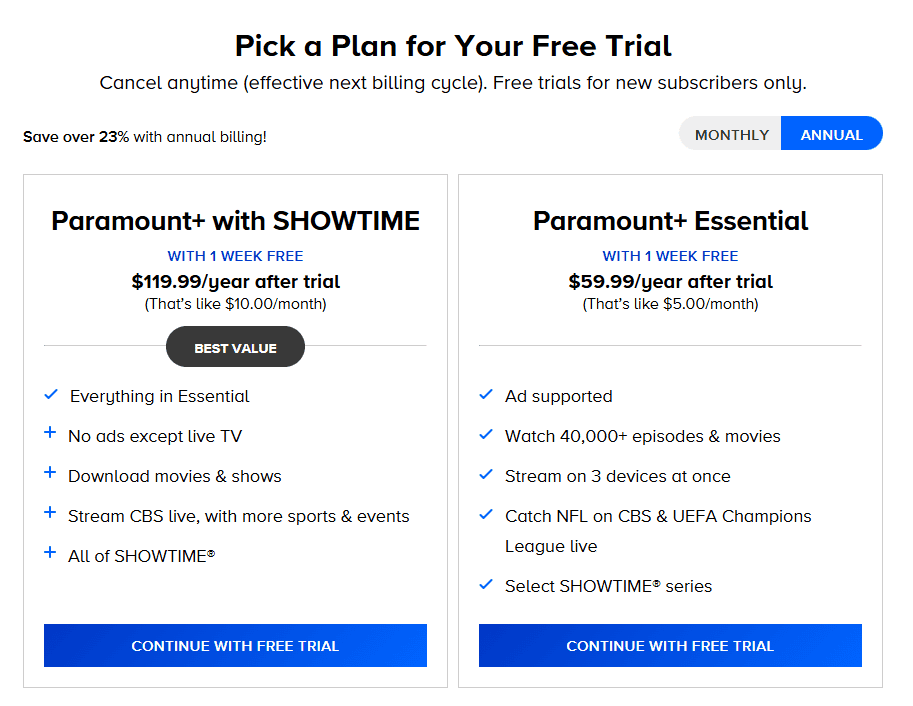
As of the current market cycle, Paramount’s pricing structure is bifurcated into two primary digital tiers. This tiered approach is a common trend in software-as-a-service (SaaS) models, allowing users to choose the level of technical utility they require.
- The Essential Plan (Approx. $5.99/month): This is the entry-level software tier. It utilizes an ad-supported delivery model, where the cost to the consumer is subsidized by a digital ad-insertion engine. This tier provides access to the core library but lacks certain high-end features like offline downloads.
- Paramount+ with SHOWTIME (Approx. $11.99/month): This is the premium software tier. It removes the ad-insertion scripts for on-demand content and integrates the entire SHOWTIME library. Technically, this tier offers more than just content; it includes the ability to stream live local CBS stations via a dedicated digital feed, which requires complex geographic authentication (Geo-fencing) to ensure compliance with local broadcasting regulations.
Cost-to-Value Analysis: Features and Tech Specifications
When evaluating the cost of a streaming service, the “value” is often found in the technical specifications. High-definition video and immersive audio are no longer luxuries; they are expected standards that drive the pricing tiers of modern apps.
Resolution and Audio Capabilities (4K, HDR, and Dolby Atmos)
The price difference between the Essential and Premium tiers is often justified by the bitrates and visual fidelity provided. The Paramount+ with SHOWTIME tier leverages advanced video codecs to deliver content in 4K UHD (Ultra High Definition). This requires significantly more server-side processing and bandwidth.
Furthermore, the premium tier supports High Dynamic Range (HDR10) and Dolby Vision, technologies that optimize the metadata of a video file to communicate directly with a smart TV’s hardware, ensuring the most accurate color representation. On the audio side, the integration of Dolby Atmos—an object-based audio format—provides a spatial sound experience. For tech enthusiasts, the extra few dollars a month represent the cost of accessing these high-fidelity data streams.
Device Compatibility and App Ecosystem
A major component of the “cost” is the convenience of the app’s ecosystem. Paramount+ is developed to be platform-agnostic, meaning it must be optimized for a wide array of operating systems:
- Mobile OS: iOS and Android.
- Smart TV OS: Tizen (Samsung), WebOS (LG), and Android TV.
- Streaming Sticks: Roku OS and Fire OS.
- Gaming Consoles: PlayStation and Xbox.
Each of these platforms requires dedicated development teams to ensure the User Interface (UI) and User Experience (UX) remain seamless. When you subscribe, you are essentially paying for a software license that grants you the right to access the service across an unlimited number of devices (with restrictions on concurrent streams), ensuring that your “digital library” follows you from the living room to the mobile environment.
Navigating the Integration: How to Access Paramount Network for Less
The modern consumer rarely buys a streaming service in a vacuum. The “cost” of Paramount Network is often mitigated or hidden within broader tech bundles and third-party integrations.
Third-Party App Integrations (Amazon Prime, Apple TV Channels)
One of the most efficient ways to manage the cost of Paramount+ is through “Channels” or “Hubs” within larger ecosystems like Amazon Prime Video or Apple TV. From a technical standpoint, this is an API integration where the Paramount+ content is served through a different host app’s UI.
For users, the cost remains similar, but the value increases through “Single Sign-On” (SSO) technology. By subscribing through a third-party aggregator, you reduce the number of individual apps you need to manage, streamlining your digital footprint. This is a strategic move for those who want to avoid “app fatigue” and prefer a unified search engine that scans across multiple streaming services simultaneously.
Bundling Tech: The Future of Streamlined Subscriptions
We are seeing a trend toward “hard bundles,” where Paramount+ is included with other tech services. For example, some mobile carriers include Paramount+ subscriptions within their data plans. This is a B2B (Business to Business) technology integration where the carrier pays a wholesale rate to Paramount to increase the stickiness of their own mobile service.
If you are calculating the “cost” of Paramount Network, it is vital to check your existing tech stack—credit card perks, mobile phone contracts, or internet service provider (ISP) bonuses—as many of these now include the service at no additional out-of-pocket cost.
Security and Account Management in the Streaming Era
As with any digital subscription, the cost is not just financial; it involves the exchange of data and the responsibility of account security. Managing your Paramount+ account effectively is a crucial part of being a savvy tech consumer.
Managing Digital Subscriptions Safely
When you sign up for Paramount+, you are creating a digital identity within their database. To protect your financial information, it is recommended to use secure payment methods such as Apple Pay, Google Pay, or masked credit cards. These technologies prevent the merchant from seeing your actual card details, adding a layer of security to your recurring billing.
Furthermore, the Paramount+ app employs encrypted protocols to protect your viewing habits and personal data. Understanding the privacy settings within the app is essential. Users can opt-out of certain tracking cookies and data-sharing features, which is an important consideration in an era where “data is the new currency.”
Future-Proofing Your Home Entertainment Setup
Finally, the cost of accessing Paramount Network is tied to your hardware. To truly take advantage of what the software offers, a user might need to invest in a 4K-capable streaming device or a Wi-Fi 6 router to ensure a stable, high-speed connection.
The “Paramount Network” of the future will likely involve even more intensive tech, such as augmented reality (AR) features or interactive “choose your own adventure” branching narratives. As these technologies debut, the subscription costs will likely fluctuate to reflect the increased R&D and server costs. Staying informed about the technical trajectory of the platform ensures that you aren’t just paying for a “channel,” but investing in a premium digital experience.

Final Thoughts
How much is Paramount Network? While the numbers $5.99 and $11.99 provide the baseline, the true cost is found in the intersection of software accessibility, hardware compatibility, and digital security. By understanding the tech behind the screen, viewers can make more informed decisions about which tier fits their digital lifestyle, ensuring they get the highest possible return on their entertainment investment.
aViewFromTheCave is a participant in the Amazon Services LLC Associates Program, an affiliate advertising program designed to provide a means for sites to earn advertising fees by advertising and linking to Amazon.com. Amazon, the Amazon logo, AmazonSupply, and the AmazonSupply logo are trademarks of Amazon.com, Inc. or its affiliates. As an Amazon Associate we earn affiliate commissions from qualifying purchases.