
The question of how much one Amazon share costs is more than a simple inquiry into a ticker symbol’s daily price; it is an entry point into understanding the mechanics of the modern global economy. For many individual investors, owning a piece of Amazon (NASDAQ: AMZN) represents a stake in the future of retail, cloud computing, digital advertising, and artificial intelligence. While the nominal price of a single share fluctuates by the second during trading hours, the real value lies in the company’s massive market capitalization, its historical growth trajectory, and its role as a cornerstone of the “Magnificent Seven” stocks that drive much of the market’s performance.
Understanding Amazon’s Current Share Price and Market Mechanics
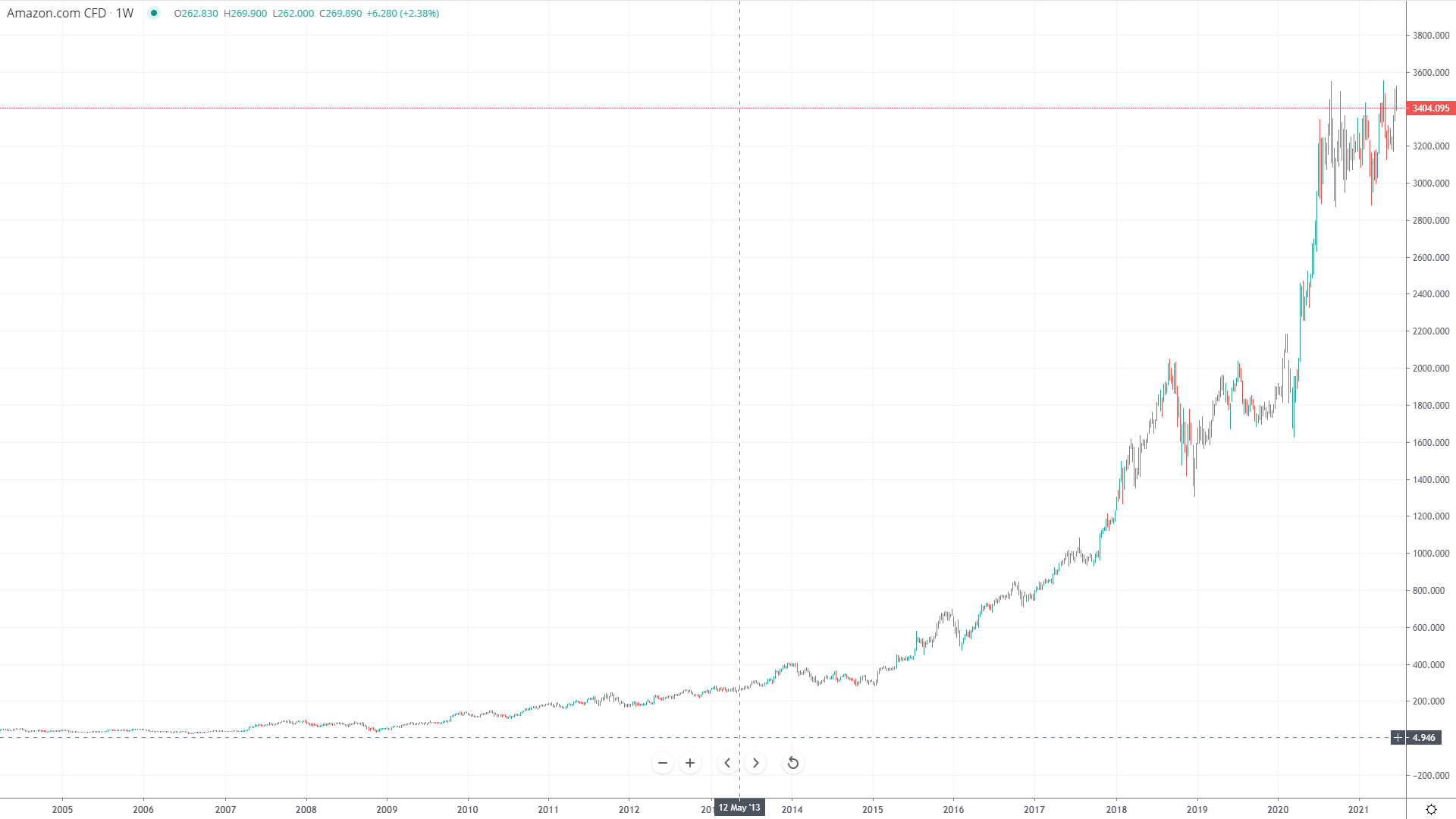
As of the mid-2020s, the price of one Amazon share typically fluctuates within a range that reflects its status as a high-growth, large-cap technology and consumer discretionary company. However, the price you see on a financial news crawler today is drastically different from what you would have seen a few years ago. This is primarily due to the company’s decision to undergo a significant stock split in June 2022.
The Impact of the 20-for-1 Stock Split
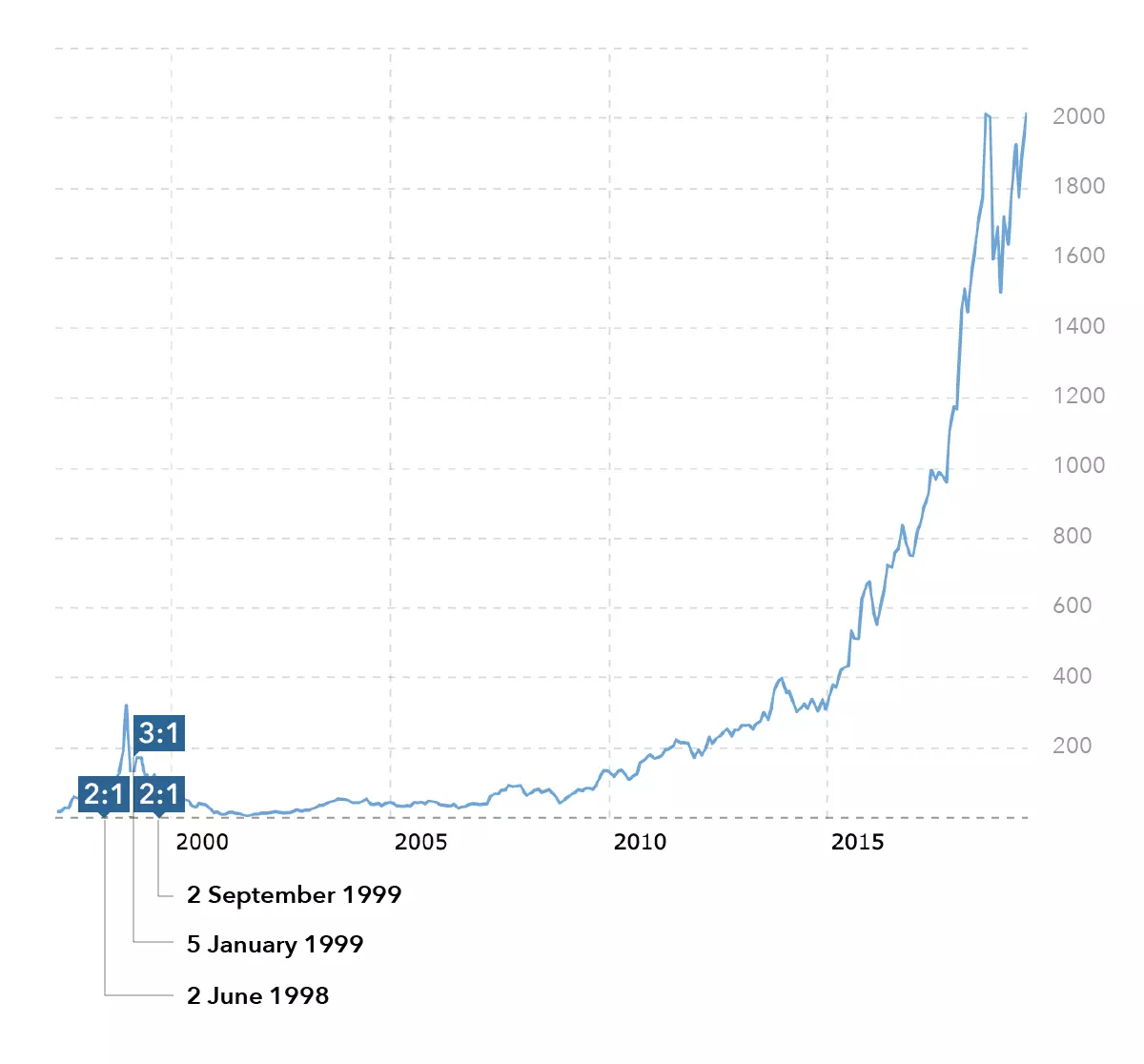
Prior to June 2022, a single share of Amazon was trading at well over $2,000, and at its peak, it flirted with $3,700. For a retail investor with a modest budget, purchasing just one share required a substantial capital outlay. To increase liquidity and make the stock more accessible to a broader range of investors, Amazon executed a 20-for-1 stock split. This move didn’t change the underlying value of the company or an individual’s total investment, but it divided each existing share into 20 smaller pieces. Consequently, the price per share dropped to a more “affordable” range, often hovering between $100 and $200 depending on market conditions.
Factors Influencing Daily Price Fluctuations
The price of an Amazon share is a living entity, reacting to a myriad of internal and external stimuli. Investors must understand these drivers to interpret why the price moves the way it does:
-
Earnings Reports: Four times a year, Amazon releases its quarterly financial results. The share price often experiences high volatility during these periods as investors react to revenue growth, net income, and, perhaps most importantly, the performance of Amazon Web Services (AWS).
-
Macroeconomic Trends: Since Amazon is both a retail giant and a tech titan, it is highly sensitive to interest rates. Higher rates generally discount the value of future earnings, which can weigh on growth stocks like AMZN.
-
Consumer Sentiment: As a dominant player in e-commerce, Amazon’s stock often reflects the health of the global consumer. If retail spending is up, the stock often follows.
The Financial Engine: What Drives the Value of Each Share?
To understand why one share is worth its current price, one must look under the hood at the company’s diverse revenue streams. Amazon is no longer “just a bookstore” or even “just an online retailer.” It is a conglomerate of high-margin services that provide the cash flow necessary to reinvest in future technologies.
Amazon Web Services (AWS) as a Valuation Pillar
While the retail side of the business generates the most revenue, AWS often generates the majority of the company’s operating profit. AWS is the global leader in cloud infrastructure, providing the backbone for everything from government agencies to Netflix. When investors look at the price of one share, they are heavily weighing the continued growth of the cloud sector. The margins in cloud computing are significantly higher than in physical retail, making AWS the primary engine for Amazon’s valuation.
The Rise of Digital Advertising
A relatively new but powerful driver of share value is Amazon’s advertising business. By leveraging its vast trove of first-party shopper data, Amazon has become the third-largest digital advertising platform in the world, trailing only Google and Meta. This high-margin revenue stream allows Amazon to subsidize its logistics and shipping costs, creating a “flywheel effect” that keeps the share price resilient even when retail margins are squeezed.
Logistics and the Prime Ecosystem
The value of an Amazon share is also intrinsically tied to the Prime membership program. With over 200 million members globally, Prime provides a recurring revenue stream and ensures customer loyalty. The massive investment in logistics—delivery vans, airplanes, and fulfillment centers—acts as a “moat,” making it nearly impossible for competitors to match Amazon’s speed and efficiency.
Evaluating AMZN Through Key Financial Metrics
For the serious investor, the price of a share is less important than the valuation metrics associated with it. Simply knowing that a share costs $180 doesn’t tell you if the stock is “cheap” or “expensive.” For that, you need to look at financial ratios.

Price-to-Earnings (P/E) Ratio
Amazon has historically traded at a very high P/E ratio compared to the broader market. This is because the company has traditionally prioritized growth and reinvestment over short-term profits. However, as the company matures and focuses more on operational efficiency, its P/E ratio has begun to normalize. Investors compare the current P/E ratio to historical averages and to peers like Microsoft or Alphabet to determine if the share price is a fair entry point.
Free Cash Flow (FCF)
Many institutional investors ignore net income and focus strictly on Free Cash Flow. Because Amazon spends billions on capital expenditures (warehouses, data centers), its cash flow can be volatile. A recovery in FCF is often a precursor to a major rally in the share price. When analyzing “how much” a share is worth, checking the FCF per share provides a clearer picture of the company’s ability to fund its own growth without taking on excessive debt.
Price-to-Sales (P/S) Ratio
Given Amazon’s massive revenue scale, the P/S ratio is often used to gauge its valuation. Because retail has lower margins than software, Amazon’s P/S ratio is typically lower than that of pure-play tech companies. A rising P/S ratio can indicate that the market is starting to value Amazon more as a service/software provider and less as a traditional retailer.
How to Invest: From Fractional Shares to Long-Term Portfolios
If you have determined that the current price of one Amazon share fits your investment strategy, the next step is execution. The modern financial landscape has made it easier than ever for individual investors to participate in the growth of large-cap stocks.
The Role of Fractional Shares
Even after the stock split, some investors may not want to commit the full price of a single share. Most modern brokerage platforms now offer “fractional shares,” allowing you to invest as little as $1 or $5 into Amazon. This means you can own 0.1 or 0.01 of a share. This democratization of investing ensures that the absolute dollar price of a share is no longer a barrier to entry for building a diversified portfolio.
Dollar-Cost Averaging (DCA)
Because Amazon is a volatile growth stock, many financial advisors recommend dollar-cost averaging. Instead of trying to “time the market” to get the absolute lowest price for one share, you invest a fixed dollar amount at regular intervals (e.g., monthly). This strategy reduces the risk of buying at a temporary peak and allows you to accumulate more shares when the price is lower.
Amazon in ETFs and Mutual Funds
For those who find the price of a single share too concentrated for their risk tolerance, Amazon is a top holding in almost every major index fund and Exchange Traded Fund (ETF), such as those tracking the S&P 500 (SPY) or the Nasdaq-100 (QQQ). By owning these funds, you gain exposure to Amazon’s growth while diversifying your risk across hundreds of other companies.
Risks and Considerations for Potential Shareholders
No investment is without risk, and the price of an Amazon share can be sensitive to various headwinds. Before purchasing, investors should consider the factors that could cause the share price to decline.
Regulatory and Antitrust Scrutiny
Amazon’s dominance in e-commerce and cloud computing has made it a target for regulators in the United States and Europe. Antitrust lawsuits or new regulations aimed at breaking up big tech companies could fundamentally alter the company’s structure and negatively impact the share price. Investors must weigh the potential for a “break-up” versus the current integrated value of the firm.
Competition in the Cloud and Retail Spaces
While AWS is the leader, Microsoft Azure and Google Cloud are growing rapidly and competing on price and AI capabilities. Similarly, in the retail space, players like Walmart and Target have significantly improved their e-commerce offerings, while international competitors like Temu and Shein are challenging Amazon on price. Any erosion of market share in these key areas will lead to a contraction in the stock’s valuation.
Artificial Intelligence Integration
The next frontier for Amazon’s share value is Artificial Intelligence. The company is investing heavily in generative AI to improve Alexa, optimize logistics, and enhance AWS offerings. The market’s perception of whether Amazon is winning or losing the “AI war” will likely be the primary driver of the share price for the remainder of the decade.
In conclusion, knowing “how much” one Amazon share is requires looking past the daily ticker. It is a calculation of the company’s ability to innovate, its dominance in the cloud, and its efficiency in global logistics. Whether you are buying a single share, a fractional share, or an index fund, an investment in Amazon is a bet on the continued digitization of the global economy. As with any financial decision, understanding the underlying metrics and the long-term growth strategy is essential to determining if the current price represents a sound addition to your personal investment portfolio.
aViewFromTheCave is a participant in the Amazon Services LLC Associates Program, an affiliate advertising program designed to provide a means for sites to earn advertising fees by advertising and linking to Amazon.com. Amazon, the Amazon logo, AmazonSupply, and the AmazonSupply logo are trademarks of Amazon.com, Inc. or its affiliates. As an Amazon Associate we earn affiliate commissions from qualifying purchases.