
Navigating the landscape of modern banking can often feel like a balancing act between accessibility and affordability. As one of the “Big Four” banks in the United States, Chase (JPMorgan Chase & Co.) offers a robust infrastructure, a highly-rated mobile app, and thousands of physical branches. However, for a savvy consumer focused on personal finance, the primary question remains: “How much is it actually going to cost me?”
The short answer is that it costs $0 in terms of an initial opening deposit for most Chase checking accounts when opened online. However, the true cost of a checking account isn’t found in the opening deposit; it is found in the monthly maintenance fees, incidental charges, and the opportunity costs of the requirements needed to waive those fees.

Initial Requirements: What It Costs to Get Started
When you walk into a Chase branch or visit their website, the barrier to entry is remarkably low. For the flagship “Chase Total Checking” account—the most common choice for everyday banking—there is no minimum opening deposit requirement for accounts opened online. If you are opening an account in a physical branch, a small initial deposit (often as low as $25) may be requested, but this is capital that remains yours and sits in your balance.
While the “cost” to open the account is negligible, the “cost” to maintain the account is where the strategy begins. Chase operates on a tiered system designed to cater to different financial stages, from students and those rebuilding credit to high-net-worth individuals.
Understanding the Minimum Opening Deposits
-
Chase Total Checking: $0 minimum opening deposit (online).
-
Chase Secure Banking: $0 minimum opening deposit (online).
-
Chase Premier Plus Checking: $0 minimum opening deposit (online).
-
Chase College Checking: $0 minimum opening deposit (online).
Because Chase focuses on long-term relationships, they prioritize getting users into the ecosystem rather than charging an upfront “gate” fee. However, the “real” cost begins on day one of your first full statement cycle.
Navigating Monthly Maintenance Fees: How to Bank for Free
In the world of personal finance, a monthly maintenance fee is often viewed as an “unnecessary tax” on your liquidity. Chase charges these fees to cover the overhead of their physical branches and digital security. Fortunately, almost every account type (with one notable exception) provides a clear roadmap to avoiding these fees entirely.
Chase Total Checking: The $12 Strategy
The most popular account carries a $12 monthly maintenance fee. To bring this cost down to $0, you must meet one of the following criteria:
-
Electronic Deposits: Have monthly direct deposits totaling $500 or more made to the account. This includes payroll, Social Security, or government benefits.
-
Minimum Daily Balance: Maintain a balance of $1,500 or more at the beginning of each day.
-
Linked Balances: Keep an average beginning day balance of $5,000 or more in any combination of this account and linked qualifying Chase checking, savings, and other balances.
Chase Secure Banking: The “No-Frills” Option
This account is unique because it is designed for those who want to avoid overdraft fees entirely. It carries a $4.95 monthly fee, and unlike other accounts, there is no way to waive it through direct deposits or balances. For some, paying roughly $60 a year is a worthwhile insurance policy against the much higher costs of accidental overdrafts.
Chase Premier Plus Checking: The $25 Tier
Targeted at those who maintain higher balances, this account offers perks like free personal checks and no fees for four non-Chase ATM transactions per month. The $25 fee is waived if:
-
You maintain an average beginning day balance of $15,000 or more in any combination of linked Chase accounts.
-
You have a linked qualifying Chase first mortgage enrolled in automatic payments.
Chase Sapphire Banking: The Premium Tier
For high-balance clients, the Sapphire account carries a $25 fee, waived if you maintain a balance of $75,000 or more across linked deposits and investments. The “cost” here is largely an opportunity cost—ensuring that the benefits of the account (like no foreign exchange fees and specialized service) outweigh what you could earn by investing that $75,000 elsewhere.

Beyond the Monthly Fee: Incidental and Service Charges
If you manage your account correctly, the monthly cost of a Chase checking account is zero. However, personal finance is often messy, and incidental fees can quickly add up if you aren’t vigilant.
The Impact of Overdraft Fees
Chase traditionally charges $34 for each “Insufficient Funds” item, up to a maximum of three times per day ($102 total). However, in a move to compete with fintech disruptors, Chase introduced Chase Overdraft Assist. If your account is overdrawn by $50 or less at the end of the business day, the bank will not charge an overdraft fee. Additionally, if you are overdrawn by more than $50, you have until the end of the next business day to bring your balance back to a $50 overdrawn state (or better) to avoid the fee.
ATM and Transactional Costs
Using a Chase ATM is free. However, if you use a non-Chase ATM within the U.S., the fee is typically $3.00 per withdrawal, plus whatever the owner of that ATM charges you. Internationally, this rises to $5.00 per withdrawal plus a 3% transaction fee. For those who travel frequently, these “hidden” costs can make a standard checking account expensive compared to a specialized travel account.
Wire Transfers and Paper Statements
For those involved in business finance or high-value real estate transactions, wire fees are a reality. An incoming domestic wire usually costs $15, while an outgoing domestic wire via the mobile app or website costs $25. Furthermore, while digital statements are free, requesting paper statements for certain account types can incur a $2 to $5 fee depending on the specific account terms.
Maximizing Value: Account Bonuses and Perks
One of the most compelling reasons to open a Chase account—and a frequent topic in personal finance circles—is the “New Account Bonus.” Chase is famous for offering cash incentives to new customers who open an account and set up a direct deposit.
The “Negative Cost” of Opening an Account
Frequently, Chase offers bonuses ranging from $200 to $300 for opening a Total Checking account. If you meet the requirements (usually a single direct deposit within 90 days), the bank pays you to open the account. From a financial tools perspective, this effectively “pre-pays” for years of banking or serves as an immediate boost to your emergency fund.
When you factor in these bonuses, the cost of opening a Chase checking account is actually a net positive for the consumer. However, you must keep the account open for at least six months; otherwise, Chase will deduct the bonus amount upon closing.
Integrated Financial Tools
The “cost” of an account should also be weighed against the value of the tools provided. Chase offers “Credit Journey,” a free credit monitoring service, and “Finn” (integrated into the main app), which helps with automated savings and spend tracking. For a user who would otherwise pay for a budgeting app or credit monitoring service, the “all-in-one” nature of the Chase ecosystem provides significant indirect savings.
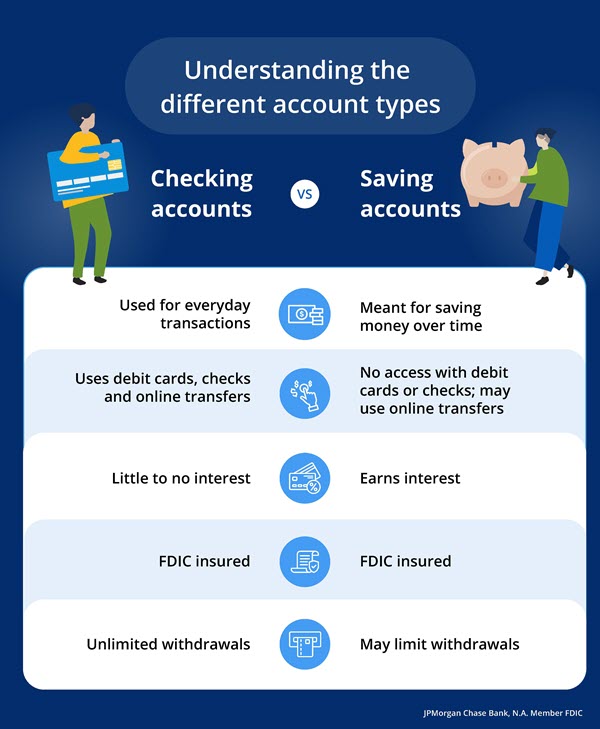
Choosing the Right Chase Account for Your Financial Goals
The total cost of opening a Chase account is ultimately determined by your individual financial behavior. To ensure you are paying as little as possible, you must align your choice with your cash flow.
-
For the Everyman: If you have a steady job with at least $500 in monthly direct deposits, the Chase Total Checking account is effectively free. It is the gold standard for those who want a reliable, no-cost banking experience with the security of a major institution.
-
For the Budget-Conscious/Credit Builder: If you struggle with maintaining a balance or have a history of overdrafts, the Chase Secure Banking account’s $4.95 fee is a small price to pay for the “safety rail” of no overdraft fees. It prevents a small mistake from turning into a $100+ disaster.
-
For the Student: The Chase College Checking account is a standout tool for young adults (ages 17-24). It has $0 monthly maintenance fee for up to five years while in college. This allows students to build a financial history without any overhead costs.
-
For the High-Earner: If you can park $15,000 or $75,000 in the Chase ecosystem, the Premier Plus or Sapphire accounts provide “lifestyle” benefits (waived ATM fees, free checks, better rates) that can save hundreds of dollars a year in incidental costs.
In conclusion, while the literal price to open a Chase checking account is zero, the financial responsibility required to keep it free is non-zero. By understanding the direct deposit requirements and being mindful of the “overdraft trap,” you can leverage Chase’s massive infrastructure as a powerful, free tool in your personal finance arsenal. The goal is never just to open an account; it is to manage it in a way that the bank works for you, rather than you working to pay the bank’s fees.
aViewFromTheCave is a participant in the Amazon Services LLC Associates Program, an affiliate advertising program designed to provide a means for sites to earn advertising fees by advertising and linking to Amazon.com. Amazon, the Amazon logo, AmazonSupply, and the AmazonSupply logo are trademarks of Amazon.com, Inc. or its affiliates. As an Amazon Associate we earn affiliate commissions from qualifying purchases.