
In the dynamic world of stock market investing, the question “how much is Intel stock?” is far more complex than a simple price quote. It delves into the intricate web of market valuation, technological innovation, competitive landscapes, and the broader macroeconomic environment. For both seasoned investors and curious newcomers, understanding the current price of Intel Corporation (NASDAQ: INTC) is merely the entry point to a deeper exploration of its intrinsic value, future potential, and strategic position within the crucial semiconductor industry.
Intel, a name synonymous with computing for decades, has shaped the technological landscape with its processors, memory solutions, and a growing foundry business. Its stock price reflects not just its past performance but also the market’s collective assessment of its ongoing transformations, challenges, and opportunities. This article will dissect what drives Intel’s stock value, how investors can analyze it, and the factors that might influence its trajectory in the years to come, offering a professional, insightful, and engaging look into one of tech’s most iconic investment vehicles.
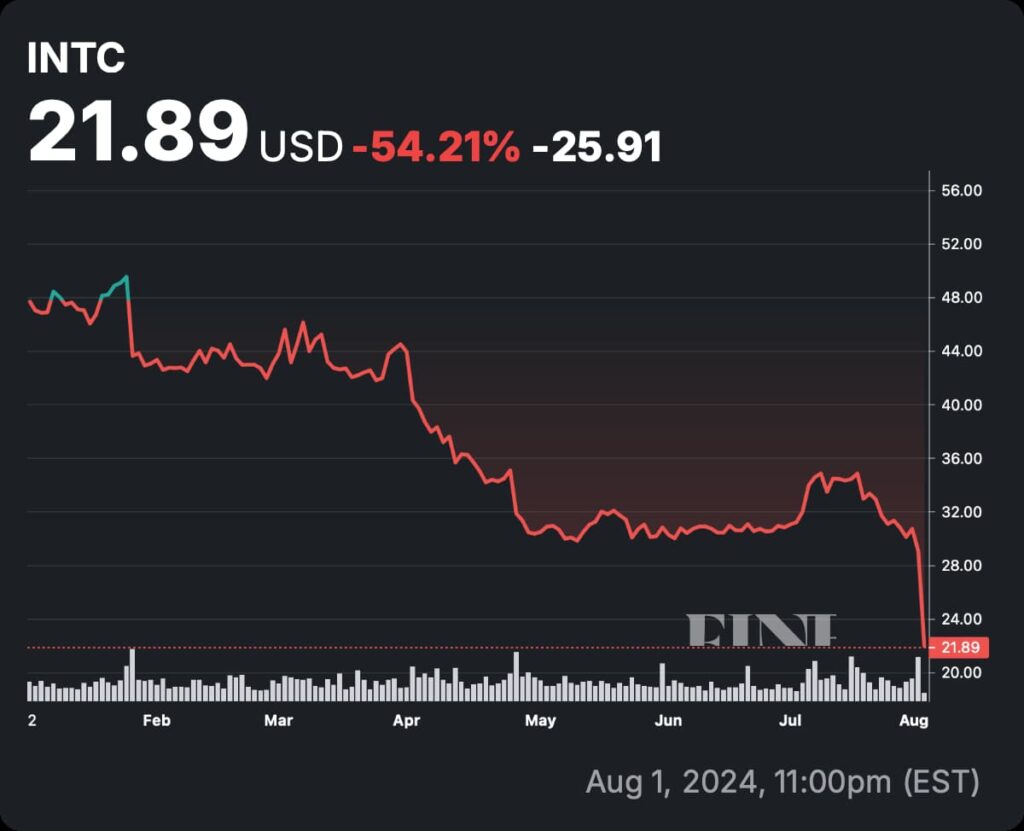
Understanding Intel’s Stock Price (INTC): More Than Just a Number
The stock price of Intel, like any publicly traded company, is a fluctuating figure dictated by the forces of supply and demand on the open market. However, behind this number lies a wealth of information that informs its perceived value and future prospects. It’s crucial to look beyond the immediate quote and understand the underlying mechanisms at play.
The Current Snapshot: Real-time Data and Market Context
When you ask “how much is Intel stock?”, you’re seeking its current trading price. This figure, often updated in real-time during market hours, is the last price at which a share of INTC was bought or sold. While readily available on financial platforms like Google Finance, Yahoo Finance, Bloomberg, or your brokerage account, this number alone tells only a small part of the story.
To truly understand the snapshot, one must consider it within its market context:
- Trading Volume: High volume often indicates strong investor interest and conviction behind price movements.
- Market Cap: Intel’s market capitalization (share price multiplied by total outstanding shares) provides a sense of its overall size and scale relative to competitors and the broader market.
- Daily Range: Observing the high and low prices for the day offers insight into intraday volatility and investor sentiment.
- 52-Week Range: This broad range puts the current price into perspective, showing how it compares to its performance over the past year.
These immediate data points are crucial for short-term traders but also serve as a foundational layer for long-term investors assessing current entry or exit points.
What Drives the Price: Supply, Demand, and Investor Sentiment
At its core, a stock’s price is a function of supply and demand. If more investors want to buy Intel shares than sell them, the price will generally rise. Conversely, if selling pressure outweighs buying interest, the price will fall. But what influences this supply and demand?
- Company Performance: Strong earnings reports, revenue growth, successful product launches, and expanding market share tend to increase demand for a stock. Missed expectations or operational setbacks can have the opposite effect.
- Industry Trends: The semiconductor industry is cyclical and highly sensitive to global economic trends. Periods of high demand for computing, AI, and data centers can boost the entire sector, including Intel.
- Macroeconomic Factors: Interest rates, inflation, consumer spending, and geopolitical events can all influence investor confidence and capital allocation across various sectors, impacting Intel’s valuation.
- Analyst Ratings and Media Coverage: Recommendations from reputable financial analysts and prominent news coverage can sway investor sentiment, sometimes leading to self-fulfilling prophecies in the short term.
- Investor Sentiment and Psychology: Fear and greed are powerful forces in the market. Overoptimism can lead to inflated valuations, while panic can trigger sharp declines, often detached from fundamental realities in the short run.
Key Financial Metrics for Valuation
Beyond raw price, investors utilize several financial metrics to gauge whether Intel stock is “expensive” or “cheap” relative to its earnings, assets, and growth prospects.
- Price-to-Earnings (P/E) Ratio: This classic metric compares the stock price to its earnings per share. A lower P/E might suggest a stock is undervalued or facing headwinds, while a higher P/E often indicates strong growth expectations.
- Price-to-Sales (P/S) Ratio: Useful for companies with fluctuating earnings or those in high-growth phases, it compares market cap to total revenue.
- Earnings Per Share (EPS): A direct measure of profitability on a per-share basis, crucial for understanding how much profit the company generates for each share outstanding.
- Dividend Yield: For income-focused investors, Intel’s dividend yield (annual dividend per share divided by the stock price) indicates the return on investment from dividends alone. Intel has historically been a dividend payer, though its policy can change based on strategic needs.
- Debt-to-Equity Ratio: Measures the company’s financial leverage. A high ratio might signal higher risk, especially in an environment of rising interest rates.
These metrics provide a framework for a more comprehensive valuation, moving beyond the simplistic question of the current price to a deeper understanding of Intel’s financial health and market position.
Intel’s Historical Performance and Market Position
Intel’s journey in the stock market is a rich tapestry woven with periods of unprecedented growth, fierce competition, and strategic pivots. Understanding its past helps contextualize its present valuation and future potential.
A Legacy in Semiconductors: From Dominance to Competition
For decades, Intel was the undisputed titan of the PC processor market, benefiting from the “Intel Inside” era and commanding substantial market share. This dominance translated into significant shareholder returns. However, the 21st century brought new challenges: the rise of mobile computing, where Intel struggled to gain traction; the emergence of powerful competitors like AMD (Advanced Micro Devices) in PCs and servers; and the increasing importance of graphics processing (GPUs), where NVIDIA carved out a commanding lead.
Intel’s market position has shifted from near monopoly to a highly competitive landscape, necessitating significant investments in R&D, manufacturing capacity (fabs), and diversification into new segments like AI accelerators, automotive chips, and foundry services. These strategic shifts are closely watched by investors as indicators of Intel’s ability to reclaim or establish new areas of leadership.
Key Milestones and Stock Performance Trends
Intel’s stock history includes several defining periods:
- Dot-Com Boom (Late 1990s): Intel was a darling of the tech boom, with its stock soaring as demand for PCs exploded.
- Post-Dot-Com Bust & Early 2000s: A period of recovery and steady growth, driven by continued PC dominance.
- 2010s: The Mobile Miss & Data Center Growth: While struggling in mobile, Intel saw strong growth in its data center segment. However, competitive pressures from AMD began to mount.
- Recent Years (Late 2010s-Present): Characterized by manufacturing delays (e.g., 7nm process), market share losses to AMD, and a new strategic direction under CEO Pat Gelsinger focusing on regaining process leadership and establishing a robust foundry business.
Observing Intel’s stock chart over decades reveals these trends: periods of sustained uptrends, significant pullbacks during economic downturns or competitive setbacks, and recent volatility reflecting its ongoing turnaround efforts. For income investors, Intel’s consistent dividend payments over many years have also been a notable feature, although the dividend has been adjusted based on strategic capital allocation needs.
Navigating Volatility: Past Challenges and Rebounds
Intel’s stock has never been a one-way street. Investors who bought at peak valuations during the dot-com bubble faced long waits for recovery. More recently, those who invested during periods of manufacturing stumbles or market share erosion have experienced significant drawdowns. However, Intel has also demonstrated resilience, leveraging its vast resources, intellectual property, and strategic importance to rebound from challenges. These historical patterns underscore the importance of long-term perspective and the understanding that even industry leaders face periods of intense scrutiny and operational hurdles. The current narrative around Intel often centers on its ability to execute its “IDM 2.0” strategy—an integrated device manufacturing model that combines internal product design with both internal and external foundry services—and whether this will lead to a sustained resurgence in its stock performance.
Factors Influencing Intel’s Future Stock Value
Predicting the future stock price of any company, especially one as complex as Intel, is fraught with uncertainty. However, by analyzing key influencing factors, investors can form educated opinions about its potential trajectory.
Technological Innovation and R&D Investment
Intel’s long-term success is intrinsically linked to its ability to innovate and maintain technological leadership. The semiconductor industry is a relentless race for smaller, faster, and more efficient chips.
- Process Technology: Regaining “process leadership” (the ability to manufacture the smallest, most advanced transistors) is a cornerstone of Intel’s turnaround strategy. Success here would significantly boost its competitiveness against TSMC and Samsung in foundry and AMD in product.
- Product Roadmap: The timely launch of competitive CPUs (for client and server), GPUs, and AI accelerators is vital. Each successful product iteration can drive revenue and market share.
- Emerging Technologies: Intel’s investments in quantum computing, neuromorphic computing, and other cutting-edge areas, though long-term, could create new growth vectors.
Significant R&D expenditure is required to stay at the forefront, and the market closely monitors Intel’s progress in these areas.

Market Competition: AMD, NVIDIA, and Foundry Services
The competitive landscape is more intense than ever:
- AMD: Continues to be a formidable challenger in both client (PC) and server CPU markets, often praised for its product execution in recent years.
- NVIDIA: Dominates the GPU market, crucial for AI and data center applications, a space where Intel is also trying to expand its presence with its own accelerators.
- TSMC & Samsung: These are the leading independent foundries, which Intel is both competing with (through its own foundry services) and potentially relying on for some of its own chip manufacturing.
- ARM-based Chips: The increasing adoption of ARM architecture in data centers and Apple’s successful transition to M-series chips for Macs poses a long-term architectural shift that Intel must navigate.
Intel’s ability to fend off these competitors, regain lost market share, and differentiate its offerings will be paramount to its stock performance.
Geopolitical Landscape and Supply Chain Dynamics
The semiconductor industry is highly globalized and increasingly sensitive to geopolitical tensions.
- US-China Relations: Trade disputes, restrictions on technology transfers, and export controls can significantly impact Intel’s sales in key markets and its global supply chain.
- Supply Chain Resilience: Recent chip shortages highlighted the fragility of global semiconductor supply chains. Intel’s strategy to build more fabs in the US and Europe (with government subsidies) aims to de-risk its operations and potentially attract more foundry customers.
- Government Subsidies & CHIPS Act: Legislative efforts like the CHIPS Act in the US and similar initiatives in Europe are designed to boost domestic semiconductor manufacturing. Intel, with its substantial manufacturing footprint, stands to be a major beneficiary, which can improve its financial outlook and competitive position.
These external factors, often beyond Intel’s direct control, can have profound effects on its operational costs, market access, and profitability, directly influencing investor sentiment and stock value.
Financial Health and Dividend Policy
Intel’s financial health forms the bedrock of its investment appeal.
- Revenue Growth & Profitability: Sustained top-line growth and healthy profit margins are key indicators of a thriving business.
- Free Cash Flow (FCF): The cash a company generates after accounting for cash outflows to support operations and maintain its capital assets. Strong FCF is essential for funding R&D, capital expenditures (like new fabs), and returning capital to shareholders.
- Balance Sheet Strength: Low debt levels and ample cash reserves provide flexibility during downturns and enable strategic investments.
- Dividend Policy: While Intel has historically paid a dividend, strategic shifts (like significant capital investments for new fabs) may lead to adjustments in its dividend policy. Investors keenly watch this for signals about capital allocation priorities.
A strong financial position allows Intel to weather economic storms, invest in future growth, and reward shareholders, all of which contribute positively to its stock’s perceived value.
How to Research and Invest in Intel (INTC)
For those considering an investment in Intel, a structured approach to research and execution is vital, moving from understanding the basics to crafting a sound investment strategy.
Accessing Real-Time Stock Quotes and Financial Reports
The first step is always to get the most accurate and up-to-date information.
- Financial News Websites: Websites like CNBC, Reuters, Bloomberg, and The Wall Street Journal offer real-time quotes, news, and analyst commentary.
- Brokerage Platforms: Your online brokerage account (e.g., Fidelity, Schwab, E*TRADE) will provide direct access to INTC’s current price, trading volume, charts, and often basic financial data.
- Intel Investor Relations: The official Intel Investor Relations website is an invaluable resource, providing quarterly earnings reports, annual reports (10-K), proxy statements, press releases, and webcasts. These documents are the primary source for understanding the company’s financial performance and strategic direction.
- SEC Filings: For the most detailed and legally mandated financial disclosures, refer to the U.S. Securities and Exchange Commission (SEC) EDGAR database, where all public companies file their reports.
Fundamental vs. Technical Analysis for INTC
Investors typically employ two main analytical approaches:
- Fundamental Analysis: This involves evaluating Intel’s intrinsic value by examining its financial statements (income statement, balance sheet, cash flow statement), management team, competitive landscape, industry trends, and overall economic conditions. The goal is to determine if the stock is currently trading below its true worth, making it a good long-term buy. For Intel, this means deep dives into its process technology roadmap, market share in various segments, capital expenditure plans, and free cash flow generation.
- Technical Analysis: This approach focuses on analyzing past market data, primarily price and volume, to predict future price movements. Technical analysts use charts, patterns, and indicators (like moving averages, RSI, MACD) to identify trends, support levels, and resistance points. While less about the company’s underlying business, it can be useful for timing entry and exit points, especially for short- to medium-term trades.
A well-rounded investment strategy often incorporates elements of both, using fundamental analysis to select strong companies and technical analysis to optimize trade timing.
Diversification and Risk Management in Your Portfolio
Investing in a single stock like Intel carries inherent risks. Even industry giants can face unforeseen challenges.
- Diversification: The cornerstone of prudent investing. Do not put all your investment capital into one company or even one industry. Spread your investments across various sectors, asset classes (stocks, bonds, real estate), and geographies to mitigate company-specific or sector-specific risks.
- Position Sizing: Determine an appropriate percentage of your overall portfolio to allocate to Intel. This should be based on your risk tolerance and conviction in the investment.
- Long-Term Horizon: For a company undergoing a strategic transformation like Intel, a long-term investment horizon (several years) is often more appropriate than short-term trading. This allows time for the company’s strategies to mature and bear fruit, and for market noise to dissipate.
- Regular Review: Periodically review your Intel investment and the company’s performance. Has its competitive position changed? Are its financial metrics still strong? Has your investment thesis changed? Be prepared to adjust your position if circumstances warrant.
Is Intel Stock a Good Investment for You?
The question of whether Intel stock is a “good investment” is highly personal and depends entirely on an individual investor’s financial goals, risk tolerance, and investment horizon. There is no universally correct answer.
Assessing Your Investment Goals and Risk Tolerance
Before investing in Intel, or any stock, ask yourself:
- What are my financial goals? Am I saving for retirement, a down payment, or simply seeking growth?
- What is my time horizon? Am I looking for short-term gains or long-term capital appreciation?
- How much risk am I comfortable with? Intel is a well-established company, but its stock can be volatile, especially during its current multi-year turnaround. Are you comfortable with potential dips in value for the prospect of future gains?
- Do I understand the business? A fundamental understanding of Intel’s products, markets, and strategic challenges is crucial.
For an investor seeking stable, mature growth with a dividend, Intel might appeal, but its current transformation also adds a layer of higher risk and potential for greater reward. For someone with a low risk tolerance, an investment in a broad market index fund might be more suitable.
Analyst Consensus and Long-Term Outlook
While not the sole basis for investment decisions, Wall Street analyst ratings can offer a snapshot of market sentiment and expert opinions. Analysts typically provide “buy,” “hold,” or “sell” recommendations, along with price targets. These are often based on their detailed financial models and industry expertise. It’s important to look at the consensus view and understand the rationale behind different ratings, rather than relying on a single analyst’s opinion.
The long-term outlook for Intel hinges on its ability to execute its IDM 2.0 strategy successfully:
- Regaining Process Leadership: Can Intel consistently deliver leading-edge manufacturing technology?
- Expanding Foundry Services: Can it attract and retain major external customers for its manufacturing capacity?
- Competitive Product Roadmap: Can its CPUs, GPUs, and AI accelerators compete effectively against AMD, NVIDIA, and ARM?
- Financial Discipline: Can it manage massive capital expenditures while maintaining profitability and cash flow?
A positive answer to these questions paints a favorable long-term picture, suggesting Intel could regain significant market share and deliver substantial shareholder value. A struggling execution, however, could lead to prolonged underperformance.

The “Buy, Hold, or Sell” Dilemma
Ultimately, the decision to buy, hold, or sell Intel stock comes down to your personal investment thesis and continuous reassessment.
- Buy: If you believe Intel’s turnaround strategy will succeed, its stock is undervalued based on future potential, and it aligns with your risk profile.
- Hold: If you already own Intel, believe in its long-term potential but acknowledge current uncertainties, and are comfortable riding out volatility.
- Sell: If your investment thesis for Intel has fundamentally changed, you see better opportunities elsewhere, or the stock no longer fits your risk tolerance or portfolio strategy.
In conclusion, “how much is Intel stock?” is the beginning of a journey into understanding market dynamics, corporate strategy, technological innovation, and personal financial planning. Intel remains a pivotal player in the tech world, and its stock will continue to be a fascinating, albeit complex, investment for those willing to do their homework and align it with their personal financial blueprint.
aViewFromTheCave is a participant in the Amazon Services LLC Associates Program, an affiliate advertising program designed to provide a means for sites to earn advertising fees by advertising and linking to Amazon.com. Amazon, the Amazon logo, AmazonSupply, and the AmazonSupply logo are trademarks of Amazon.com, Inc. or its affiliates. As an Amazon Associate we earn affiliate commissions from qualifying purchases.