
In the realm of home improvement and professional contracting, the cost of materials is only one part of the financial equation. Logistics—specifically the movement of heavy, bulky, or high-volume goods from a retail warehouse to a job site—represents a significant variable in project budgeting. For the savvy homeowner or the small business owner, understanding the nuances of Home Depot’s delivery fee structure is essential for maintaining healthy margins and optimizing cash flow.
Navigating the various delivery tiers requires more than a glance at a checkout screen; it requires a strategic approach to procurement. From standard parcel shipping to flat-rate truck deliveries and the specialized logistics of professional freight, the costs can range from $0 to several hundred dollars. This guide analyzes these costs through a financial lens, helping you determine the most cost-effective way to get your supplies where they need to be.
Understanding Home Depot’s Delivery Pricing Structure
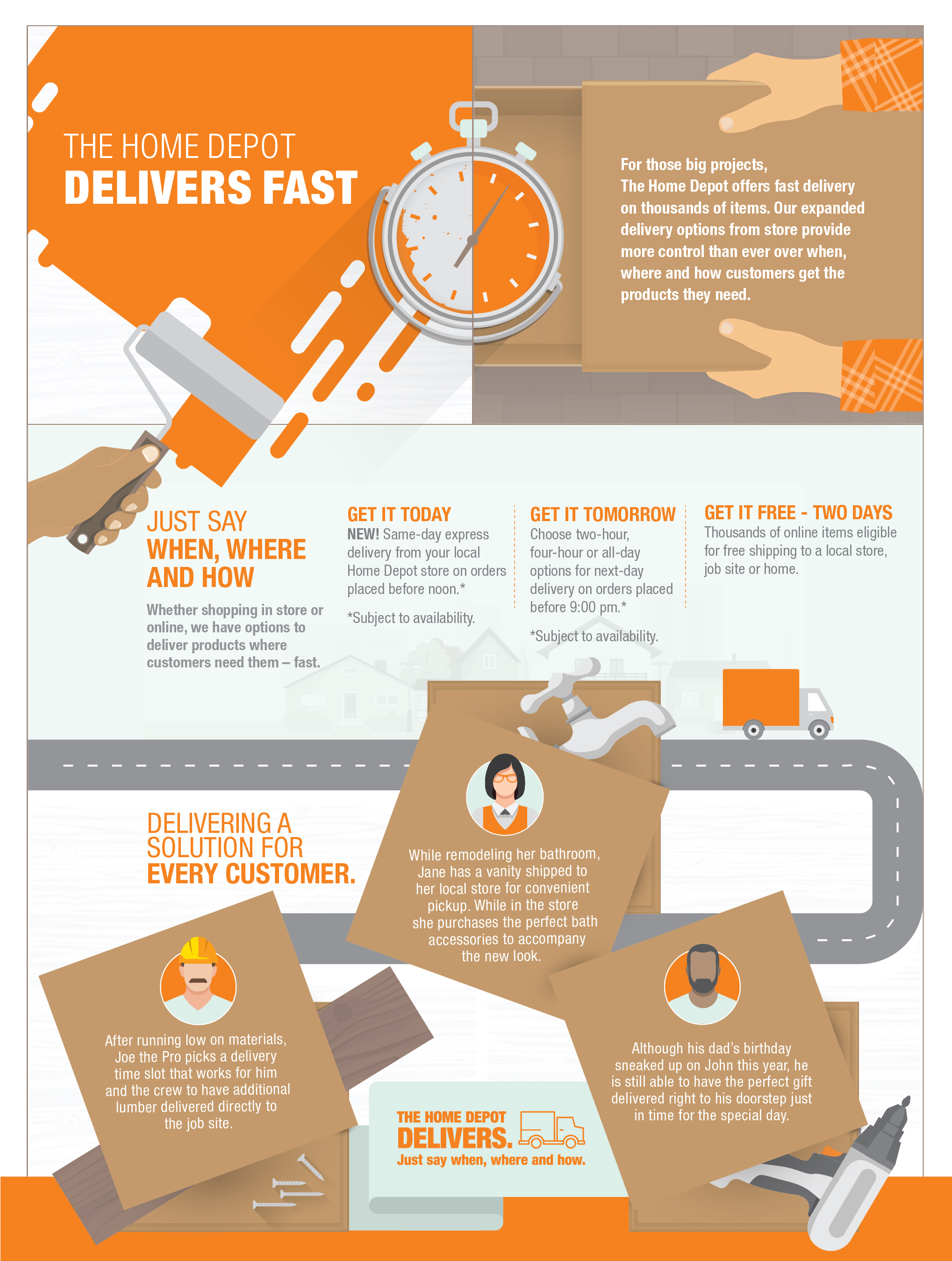
Home Depot utilizes a multi-tiered delivery system designed to accommodate everything from a single box of screws to several tons of lumber. The financial impact of these fees depends largely on the “last mile” logistics required for your specific order.
Standard Shipping and the Free Threshold
For the majority of online retail consumers, the most common delivery method is standard shipping. Home Depot typically offers free standard shipping on over a million items, provided the order exceeds a specific monetary threshold—usually $45. From a personal finance perspective, this is the most efficient tier.
Items delivered via this method are generally shipped via traditional carriers like UPS, FedEx, or USPS. If your order falls below the $45 threshold, you can expect to pay a nominal fee, typically starting around $5.99, depending on the weight and destination. For those looking to maximize their budget, consolidating small purchases into a single order to cross the $45 mark is a basic yet effective strategy for avoiding unnecessary overhead.
Scheduled and Express Delivery
When a project is on a tight timeline, “standard” shipping is often insufficient. Home Depot offers scheduled delivery, which allows you to choose a specific window for arrival. This service typically begins at $8.99 for small items but can scale upward based on the urgency.
Express delivery, often offering same-day or next-day service, is a premium option. Financially, this is a “convenience tax.” While it may seem expensive upfront, for a professional contractor whose crew is sitting idle waiting for a specific part, the $20 to $50 express fee is a minor expense compared to the cost of lost labor hours.
Curbside and In-Store Pickup: The Zero-Cost Alternative
While not a delivery service in the traditional sense, “Buy Online, Pick Up In Store” (BOPIS) and curbside pickup are critical tools for budget management. By utilizing your own transportation and labor, you eliminate delivery fees entirely. For individuals with high-capacity vehicles, this is almost always the most fiscally responsible choice for mid-sized items that do not require a flatbed truck.
Strategic Budgeting for Bulk Materials and Equipment
The complexity of delivery pricing increases significantly when you transition from parcels to pallets. For major renovations—such as deck building, flooring installs, or masonry work—the logistics are handled by Home Depot’s local delivery fleet rather than national parcel carriers.
Flat-Rate Truck Delivery for Major Construction
Home Depot’s “Standard Delivery” for large items—often referred to as Bulk or Flatbed delivery—typically carries a flat rate, regardless of the amount of material ordered. In many markets, this fee is approximately $79.
From a business finance perspective, this flat-rate structure encourages high-volume ordering. If you pay $79 to deliver ten bags of concrete, your per-unit logistics cost is $7.90. However, if you pay $79 to deliver 200 bags of concrete, your per-unit logistics cost drops to approximately $0.40. For large-scale projects, the financial goal should be to consolidate all heavy materials into a single delivery to minimize the impact of the flat-rate fee on your total project ROI.
Freight and Oversized Shipping
Items that are exceptionally heavy or large—such as riding lawnmowers, sheds, or industrial appliances—may require specialized freight shipping. These costs are often calculated based on weight and distance. Unlike the standard flat-rate delivery, freight can sometimes reach upwards of $100 to $200. It is vital to check the product page for “shipping surcharges,” which are additional fees applied to specific items due to their handling requirements. Budgeting for these surcharges is essential to avoid “sticker shock” during the final phase of project financing.

Comparing Rental Truck Costs vs. Professional Delivery
A common financial dilemma is whether to pay for delivery or rent a Home Depot “Load ‘N Go” truck. These rentals usually start around $19 for the first 75 minutes. If you have the physical capability and the time, renting a truck for a quick trip can save you roughly $60 compared to the $79 flat-rate delivery fee. However, you must factor in the “all-in” cost, including fuel, insurance, and the risk of damage during transit, which is a liability Home Depot assumes when you pay for their professional delivery.
Leveraging Professional Programs for Cost Mitigation
For contractors and high-volume DIYers, Home Depot offers specific programs designed to lower the cost of doing business. Understanding these can lead to significant long-term savings.
Home Depot Pro Xtra and Loyalty Discounts
The Pro Xtra loyalty program is a cornerstone for business finance management. Members of this program often gain access to exclusive shipping promotions and discounted delivery rates. Furthermore, high-tier members can earn “Perks” which may include coupons that can be applied directly to delivery fees. By tracking your spending through a Pro Xtra account, you generate data that Home Depot uses to offer you more aggressive pricing on logistics.
Volume Pricing Program (VPP)
For orders typically exceeding $1,500, customers can submit their “quote” to the Pro Desk for Volume Pricing. While the VPP primarily focuses on the unit price of the materials, the total package deal often includes subsidized or waived delivery fees. This is where professional negotiation and bulk purchasing power provide a competitive edge in the marketplace.
Business Tax Deductions for Delivery Expenses
From a tax and accounting perspective, delivery fees for business-related projects are generally considered a deductible business expense. Whether you are a landlord renovating a rental property or a contractor working for a client, these fees should be meticulously tracked. By reducing your taxable income through these “ordinary and necessary” business costs, the effective price of the delivery is lower than the face value of the receipt.
Time-Value Analysis: When Is Paying for Delivery Worth It?
In personal finance, “time is money” is not just a cliché; it is a calculation. To determine if a delivery fee is “worth it,” you must conduct a time-value analysis.
The Opportunity Cost of DIY Transport
Consider the “fully burdened” cost of your time. If a DIY trip to Home Depot takes two hours (including loading, driving, and unloading) and your hourly rate—or the value you place on your leisure time—is $50, the “cost” of that trip is $100. In this scenario, paying a $79 delivery fee actually saves you $21 in terms of opportunity cost.
Furthermore, professional delivery includes “to-the-room” or “threshold” options for certain items. If you are working alone and need to move a 300-pound refrigerator, the physical risk and the time required to move it safely may far outweigh the $50-$100 delivery and installation fee.
Mitigating Risk and Liability in Logistics
When you opt for Home Depot delivery, you are paying for more than just transportation; you are paying for a transfer of risk. If a pallet of tiles is dropped and shattered by the delivery driver, the financial burden of replacement falls on the retailer. If you drop those same tiles while unloading them from your own truck, the loss is yours. For high-value, fragile materials, the delivery fee acts as a form of short-term logistics insurance.

Financial Tips to Save on Home Depot Delivery Fees
To optimize your spending, consider these final strategic tips:
-
Check for “Free Delivery” Labels: Many large appliances include free delivery and basic installation in their base price. Always verify if the item you are looking at belongs to this category before adding it to your budget.
-
Consolidate Shipments: Instead of ordering materials as you need them, create a master list for each phase of the project. Shipping ten items in one box is significantly cheaper (and often hits the free shipping threshold) than ten separate shipments.
-
Utilize Site-to-Store: If an item is not in stock at your local branch but is available online, you can often have it shipped to the store for free. This allows you to bypass home delivery fees while still accessing a wider inventory.
-
Credit Card Perks: Certain business credit cards or the Home Depot Consumer Credit Card may offer periodic promotions that include cash back or statement credits on shipping and delivery services.
-
Seasonal Promotions: During major sales events (Black Friday, Memorial Day, Fourth of July), Home Depot frequently lowers its delivery thresholds or offers flat-rate discounts on large-appliance shipping.
In conclusion, the cost of delivery at Home Depot is a manageable variable for those who understand the system. By aligning your purchasing habits with the flat-rate structures, leveraging professional loyalty programs, and performing a clear-eyed time-value analysis, you can ensure that logistics expenses support, rather than undermine, your financial goals.
aViewFromTheCave is a participant in the Amazon Services LLC Associates Program, an affiliate advertising program designed to provide a means for sites to earn advertising fees by advertising and linking to Amazon.com. Amazon, the Amazon logo, AmazonSupply, and the AmazonSupply logo are trademarks of Amazon.com, Inc. or its affiliates. As an Amazon Associate we earn affiliate commissions from qualifying purchases.