
Navigating the complexities of child support can be a significant financial undertaking for parents in California. Unlike some states that rely on a judge’s discretion, California employs a statewide guideline formula to determine child support amounts, aiming for consistency and fairness. Understanding this formula, the factors that influence it, and the broader financial implications is crucial for both paying and receiving parents. This guide delves into the specifics of California’s child support system, helping individuals grasp the financial responsibilities involved.
Understanding California’s Child Support Guidelines
California’s approach to child support is rooted in a fundamental principle: children should share in the standard of living of both parents. To achieve this, the state utilizes a complex, yet standardized, guideline formula. This formula is codified in Family Code Section 4055 and is designed to ensure that calculations are objective and predictable, minimizing disputes and promoting financial stability for children post-separation or divorce.
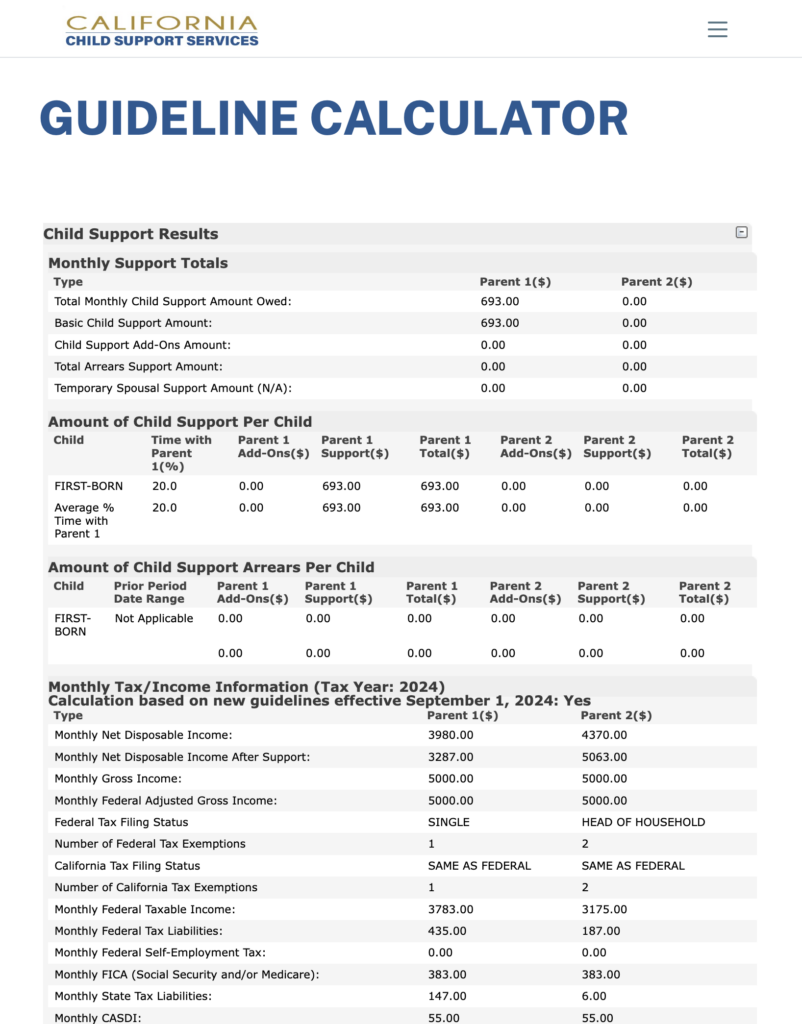
The Statewide Guideline Formula
The core of California’s child support calculation is a mathematical formula that considers a multitude of financial and custodial factors. While the formula itself is intricate and typically calculated by specialized software used by legal professionals and courts, its underlying premise is to balance the incomes of both parents with the amount of time each parent spends with the child. The goal is not just to cover basic needs but to maintain, to the extent possible, the child’s pre-separation lifestyle. This ensures that a child does not suffer undue financial hardship due to changes in parental relationships.
Key Factors Influencing the Calculation
Several critical elements feed into the guideline formula, each playing a significant role in determining the final child support order. A thorough understanding of these factors is essential for any parent involved in a child support case:
- Parents’ Net Disposable Income: This is arguably the most influential factor. It’s not just gross income; rather, it’s the income remaining after mandatory deductions. Net disposable income is calculated for both parents, as the formula considers the combined financial capacity.
- Amount of Time Each Parent Spends with the Child (Custodial Time Share): The percentage of time each parent has physical custody of the child directly impacts the support amount. The assumption is that the parent with more custodial time contributes more directly to the child’s daily expenses. Higher time share for the paying parent generally leads to a lower support obligation, as they are deemed to be covering more expenses directly.
- Number of Children Subject to the Order: The more children requiring support from the same parents, the higher the overall support obligation, though the per-child amount may not increase proportionally.
- Tax Deductions: The formula takes into account various tax deductions available to each parent, such as deductions for dependents, mortgage interest, and property taxes, as these affect each parent’s net disposable income.
- Health Insurance Costs: Premiums paid for the children’s health insurance are factored into the calculation, often shared between parents.
- Child Care Costs: Reasonable and necessary child care expenses incurred due to employment or job training are typically included and shared.
- Other Specific Expenses: This can include uninsured healthcare costs, special educational needs, or other extraordinary expenses for the children.
Each of these factors is inputted into the guideline formula, which then generates a presumptive child support amount. While courts generally adhere to this guideline, there are limited circumstances under which a deviation may occur.
The Calculation Process: A Deeper Dive
Understanding the components of the guideline formula is one thing; comprehending how they are quantified and integrated into the final calculation is another. The process involves precise financial accounting and often the use of specialized software.
Calculating Net Disposable Income
The cornerstone of the child support calculation is each parent’s net disposable income. This is not simply a matter of looking at a paycheck.
-
Gross Income: This includes virtually all forms of income, whether earned or unearned. Common examples include:
- Salaries, wages, commissions, bonuses, and tips
- Income from self-employment (after business expenses)
- Rental income
- Disability benefits (state or private)
- Unemployment benefits
- Workers’ compensation benefits
- Social Security benefits
- Pensions and retirement income
- Interest and dividends
- Spousal support received from a current or prior relationship
- Even “imputed income,” where a parent is intentionally underemployed or unemployed, may be considered if they have the capacity and opportunity to earn more.
-
Deductions: From the gross income, certain mandatory deductions are subtracted to arrive at net disposable income. These typically include:
- Federal and state income taxes (based on filing status and exemptions)
- Federal Insurance Contributions Act (FICA) taxes (Social Security and Medicare)
- Mandatory union dues and retirement contributions
- Health insurance premiums for the parent and children
- Child support paid for other children from different relationships
- Spousal support paid to a current or former spouse (if ordered)
The careful and accurate calculation of net disposable income for both parents is paramount, as it forms the financial bedrock of the entire child support order.
Custodial Time Share
The percentage of time each parent has physical custody of the children is often expressed as a decimal (e.g., 0.50 for 50/50 split). This percentage directly influences the support amount. The formula accounts for the fact that the parent who spends more time with the children is directly covering more of their day-to-day needs, thereby reducing the need for monetary support from the other parent for those periods. Disputes over custodial time can significantly complicate child support calculations, making accurate record-keeping of parenting schedules vital.
Software and Tools
California courts and legal professionals primarily rely on specialized software programs, such as DissoMaster, to perform these complex calculations. These programs input all the relevant financial and custodial data and apply the statutory guideline formula to generate a child support amount. While online calculators can provide a rough estimate, they rarely capture all the nuances and specific deductions that official software handles. It is important to remember that these tools provide a guideline amount, and courts may, in rare circumstances, adjust this figure based on specific findings.
Beyond the Formula: Additional Considerations and Expenses
While the guideline formula provides a baseline, California law also addresses other essential expenses that go beyond basic needs. These “add-ons” ensure a more comprehensive financial plan for the children.
Add-On Expenses
California law distinguishes between mandatory and discretionary add-ons:

- Mandatory Add-Ons: These are generally shared equally by both parents unless an unequal division is deemed more equitable. They include:
- Child care costs related to employment or job search (e.g., daycare, after-school programs).
- Reasonable uninsured healthcare costs for the children (e.g., co-pays, deductibles, prescription costs not covered by insurance).
- Discretionary Add-Ons: These may be ordered by the court if they are in the children’s best interest and financially reasonable. They can include:
- Costs for the children’s education or special needs.
- Expenses for extracurricular activities that are age-appropriate and beneficial for the children.
These add-ons are typically calculated after the base child support amount and are often split proportionally to each parent’s net disposable income, rather than a straight 50/50 split, especially for discretionary expenses.
Low-Income Adjustments
California law includes provisions to protect low-income paying parents. If the guideline child support amount would reduce the paying parent’s income below a certain poverty level, the court may make an adjustment to ensure the parent can still meet their basic needs and remain employed. This aims to prevent child support orders from being so burdensome that they undermine the paying parent’s ability to maintain employment.
High-Income Earners
For parents with exceptionally high incomes, the guideline formula may generate an amount that exceeds the actual needs of the children. In such cases, a court may deviate from the guideline amount if the calculated sum is deemed “excessive and not for the needs of the children.” The burden of proof to show that the guideline amount is inappropriate rests with the party seeking the deviation. The court will still consider the lifestyle the children would have enjoyed if their parents remained together.
Deviation from Guidelines
While courts are generally bound by the guideline formula, Family Code Section 4057 allows for deviation in rare and specific circumstances. A party seeking to deviate must prove that applying the guideline formula would be unjust or inappropriate due to factors such as:
- Extraordinary health expenses of the children not covered by insurance.
- Parents with extraordinarily high incomes where the guideline amount far exceeds the children’s needs.
- A parent paying child support for another child from another relationship.
- The parent receiving support has an extraordinarily high income, and the children’s needs would be met without support from the other parent.
Any deviation must be based on the best interests of the child and requires specific findings by the court.
Modifying and Enforcing Child Support Orders
Life circumstances change, and so can child support obligations. Furthermore, ensuring that support is paid as ordered is critical for the financial well-being of children.
When Can You Modify an Order?
Child support orders are not set in stone. Either parent can request a modification if there has been a “significant change in circumstances.” Common reasons for modification include:
- A substantial increase or decrease in either parent’s income.
- A significant change in the custodial time share arrangement.
- Changes in the children’s needs (e.g., special medical expenses, educational costs).
- A new child being born to either parent, which can affect their net disposable income.
- Incarceration of a parent.
It is crucial to understand that modifications are not retroactive; they typically take effect from the date the motion to modify was filed. Therefore, it’s important to act promptly when circumstances change.
The Modification Process
To modify a child support order, a parent must file a formal request (Request for Order) with the court, detailing the changes in circumstances and providing supporting financial documentation. Both parents will typically need to exchange current income and expense declarations. The court will then apply the guideline formula with the updated information to determine a new support amount. This process can be complex and may involve mediation or court hearings.
Enforcement Mechanisms
When a parent fails to pay child support, California has robust enforcement mechanisms to ensure compliance. The California Department of Child Support Services (DCSS) plays a vital role in establishing and enforcing child support orders. Enforcement tools include:
- Wage Garnishment: A court order can direct an employer to withhold child support directly from a non-paying parent’s wages.
- Bank Levies: Funds can be frozen and withdrawn from bank accounts.
- Interception of Tax Refunds: Federal and state tax refunds can be intercepted.
- Liens on Property: Liens can be placed on real estate or other assets.
- Suspension of Licenses: Driver’s licenses, professional licenses, and even passports can be suspended or denied.
- Contempt of Court: In extreme cases, a non-paying parent can be held in contempt of court, which may result in fines or even jail time.
Understanding these enforcement tools is critical for parents facing non-payment, as well as for paying parents to understand the serious consequences of non-compliance.
Seeking Professional Guidance
Navigating child support calculations, modifications, and enforcement is often more complex than it appears on the surface. The financial implications are substantial and long-lasting for all parties involved.
The Value of Legal Counsel
Engaging an attorney specializing in family law is highly advisable. A skilled attorney can:
- Accurately calculate child support based on all relevant financial documents.
- Advocate for your financial interests during negotiations or court proceedings.
- Identify potential deviations or special circumstances that may affect the guideline amount.
- Guide you through the modification process if your circumstances change.
- Assist with enforcement actions if support payments are not being made.
- Ensure that all legal requirements are met, reducing the likelihood of future disputes.
Financial Planning Post-Order
Beyond the legal process, parents should engage in thorough financial planning. This includes:
- Budgeting: Adjusting household budgets to accommodate the new income or expense of child support.
- Tax Implications: Understanding that child support payments are neither tax-deductible for the payor nor taxable income for the recipient.
- Long-Term Financial Stability: Planning for future financial needs, including saving for children’s education or unforeseen expenses.
Child support in California is a critical component of family finance following separation. By understanding the guideline formula, the factors that influence it, and the available legal and financial resources, parents can better navigate their obligations and ensure the financial well-being of their children.
aViewFromTheCave is a participant in the Amazon Services LLC Associates Program, an affiliate advertising program designed to provide a means for sites to earn advertising fees by advertising and linking to Amazon.com. Amazon, the Amazon logo, AmazonSupply, and the AmazonSupply logo are trademarks of Amazon.com, Inc. or its affiliates. As an Amazon Associate we earn affiliate commissions from qualifying purchases.