
In today’s fast-paced commercial landscape, businesses are constantly seeking efficiencies, cost savings, and streamlined operations to gain a competitive edge. Amazon Business Prime emerges as a compelling solution designed to address many of these needs, offering a suite of benefits tailored for enterprises of all sizes. But for any financially astute business leader, the foundational question remains: “How much does Business Prime cost, and more importantly, what is its true financial value?”
This article delves deep into the pricing structure of Business Prime, moving beyond mere subscription fees to explore the comprehensive financial rationale behind this investment. We will conduct a thorough cost-benefit analysis, examine how different business models can leverage its features for monetary gain, and outline strategies to maximize its financial impact.
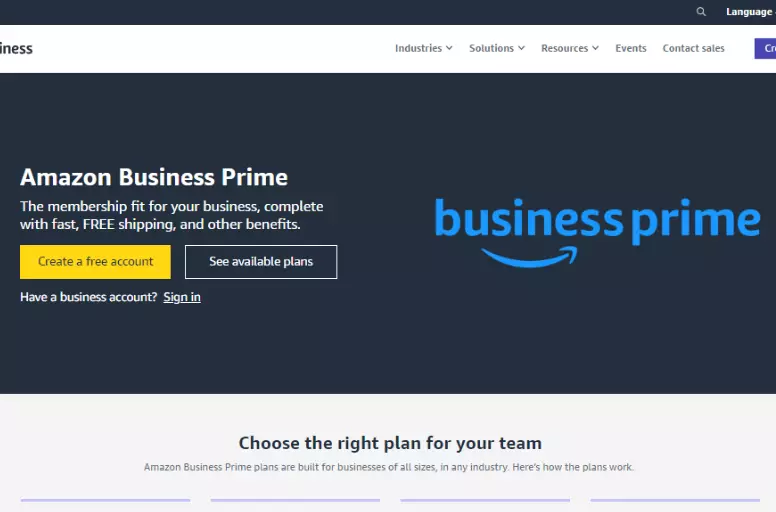
Decoding the Cost of Business Prime: An Investment, Not Just an Expense
The price of Business Prime isn’t a one-size-fits-all figure. Instead, Amazon offers a tiered subscription model, recognizing the diverse needs and purchasing volumes of businesses, from sole proprietorships to multinational corporations. Understanding these tiers is the first step in determining the actual “cost” for your specific operation. However, the real financial consideration extends beyond the annual fee; it encompasses the value derived from its features, which can translate into significant savings and operational efficiencies.
Understanding the Tiers: Tailoring Prime to Your Business Size
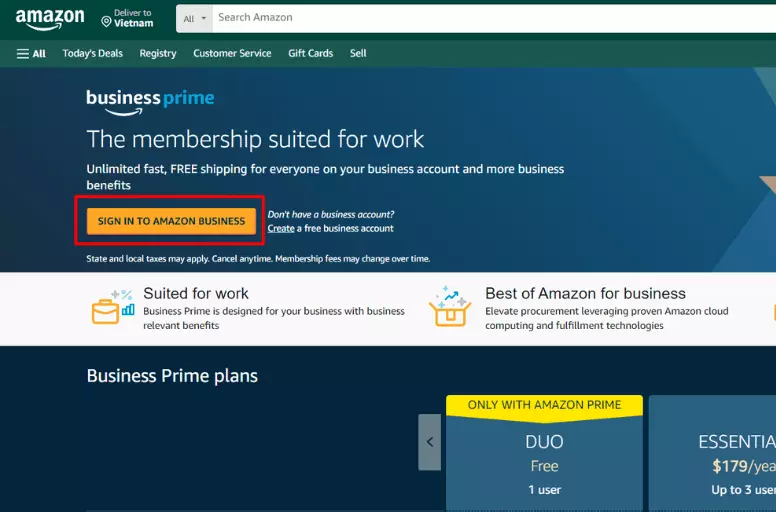
Amazon Business Prime’s pricing structure is designed to scale with your business, ensuring you pay only for the level of service and number of users you require. Each tier unlocks different capabilities and is priced annually.
-
Small (Duo): This entry-level tier is often free for existing Amazon Prime members who also create an Amazon Business account. It’s ideal for very small businesses or individual proprietors who are also personal Prime users, offering basic Business Prime benefits for a single user. While the “cost” might seem negligible, it introduces businesses to the B2B purchasing environment.
-
Small (Essentials): Designed for businesses with up to 3 users, this tier provides unlimited free shipping on eligible orders, extended payment terms (Pay by Invoice), and basic analytics. The annual fee positions it as an accessible option for startups and small businesses looking to centralize procurement and reduce shipping costs.
-
Medium (Advantage): Catering to businesses with up to 10 users, this tier expands upon Essentials by offering enhanced analytics, guided buying policies, and more robust purchasing controls. The increased user capacity and advanced features make it suitable for growing businesses that need better visibility and control over their spending.
-
Medium (Business): This tier accommodates up to 100 users, providing a significant leap in scale and features. It includes everything in Advantage, plus advanced integration capabilities, spend analysis tools, and dedicated customer support. This option is geared towards mid-sized companies with more complex procurement needs and multiple departments.
-
Enterprise: For large organizations with more than 100 users, the Enterprise tier offers custom pricing and a highly tailored suite of features. This includes advanced integrations with existing ERP systems, comprehensive spend visibility across multiple locations, and dedicated account management. The cost for this tier is negotiated directly with Amazon Business, reflecting the bespoke nature of the solution for large-scale operations.
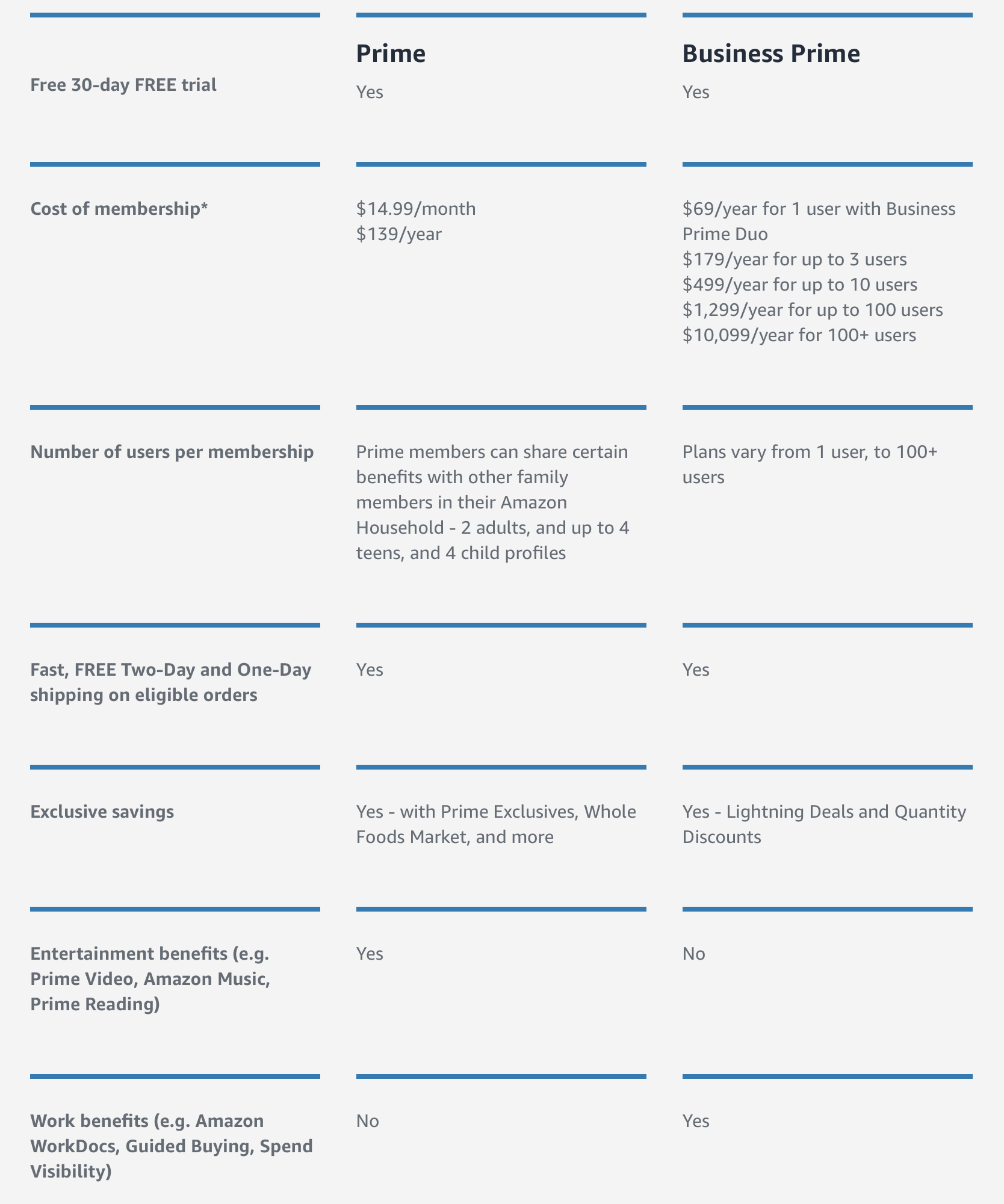
The annual fees for the Essentials, Advantage, and Business tiers typically range from approximately $179 to several thousand dollars per year, depending on the specific plan and any promotional offers. The Enterprise tier, as mentioned, is custom-quoted.
Beyond the Sticker Price: What’s Included in Your Subscription?
The “cost” of Business Prime is not merely the subscription fee, but rather the net effect of the fee minus the financial benefits it delivers. These benefits are multifaceted and directly impact a business’s bottom line.
-
Unlimited Free Shipping: This is often the most immediate and tangible saving. For businesses that place frequent orders, eliminating shipping costs can quickly offset the annual subscription fee, especially for bulk or heavy items.
-
Exclusive Business Pricing & Discounts: Business Prime members gain access to exclusive pricing on millions of products, often significantly lower than standard retail prices. These discounts, combined with potential bulk purchase savings, can lead to substantial cost reductions on supplies, equipment, and inventory.
-
Consolidated Purchasing & Spend Visibility: The platform allows for centralized purchasing, giving financial teams a single view of all company-wide spending. Enhanced analytics dashboards provide insights into purchasing patterns, supplier performance, and opportunities for cost optimization.
-
Guided Buying & Policy Enforcement: Businesses can set up purchasing policies, approve lists of preferred suppliers, and restrict certain categories, ensuring employees adhere to budget constraints and procurement guidelines. This reduces rogue spending and improves financial control.
-
Extended Payment Terms (Pay by Invoice): Eligible businesses can benefit from net 30, net 45, or even net 60 payment terms, allowing for better cash flow management and working capital optimization. This is a significant financial advantage, particularly for businesses managing tight cash cycles.
-
Tax-Exempt Purchases: For qualifying organizations, Amazon Business allows for tax-exempt purchases, further reducing the total cost of goods.
-
Business Analytics & Reporting: The insights gained from detailed spending reports can inform budgeting, vendor negotiations, and strategic sourcing decisions, leading to long-term financial benefits.
The Financial Rationale: Justifying Your Business Prime Expenditure
Every business expenditure must be justified by its return on investment (ROI). For Business Prime, the financial rationale lies in its ability to generate direct cost savings, improve operational efficiency, and provide greater control over a company’s financial outflows. It’s about transforming a line item expense into a strategic investment.
Quantifying Savings: Shipping, Procurement, and Operational Efficiencies
The most straightforward way to quantify savings from Business Prime is through direct cost avoidance.
-
Shipping Cost Elimination: Calculate your average monthly or annual shipping expenditure from various suppliers. If Business Prime can consolidate even a portion of these purchases, the savings can be immediate and significant. For a business spending hundreds or thousands monthly on shipping, the annual Prime fee can be recouped in a matter of weeks or months.
-
Reduced Procurement Costs: Beyond product discounts, Business Prime streamlines the entire procurement process. Less time spent by employees searching for vendors, comparing prices, generating purchase orders, and reconciling invoices translates into direct labor cost savings. The platform centralizes these functions, making procurement more efficient and less prone to errors.
-
Inventory Optimization: With reliable, fast shipping, businesses can potentially reduce safety stock levels, freeing up working capital that would otherwise be tied up in inventory. This also reduces warehousing costs and the risk of obsolescence.
Unlocking Exclusive Business Pricing and Discounts
One of the most compelling financial benefits of Business Prime is access to an exclusive pricing catalog. These aren’t just marginal discounts; they can be substantial, especially for bulk purchases or frequently bought items.
-
Volume Discounts: Amazon Business often offers tiered pricing based on quantity, making it economically advantageous to buy in bulk. This is particularly beneficial for manufacturing, retail, or service businesses that use consumables in large quantities.
-
Member-Exclusive Offers: Regular promotions and special discounts are available only to Business Prime members, covering a wide array of products from office supplies to industrial equipment. Proactive monitoring of these offers can yield significant savings over time.
-
Comparison Shopping Made Easy: The platform allows for easy comparison of prices from multiple sellers, ensuring businesses get the best deal. This transparency empowers procurement teams to make financially informed decisions quickly.
Streamlining Procurement and Expense Management
The indirect financial benefits of Business Prime often outweigh the direct ones by improving the efficiency and integrity of financial operations.
-
Centralized Spending: By directing all approved purchases through a single Amazon Business account, financial controllers gain unparalleled visibility. This reduces “tail spend” (small, unmanaged purchases from various vendors) and helps identify areas for consolidation and negotiation.
-
Policy-Driven Purchasing: The ability to implement guided buying policies prevents unauthorized or off-contract spending. For example, businesses can restrict purchases to approved vendors or limit spending on certain categories, ensuring adherence to budget and corporate procurement policies, thus preventing financial leakage.
-
Simplified Reconciliation: Integrated reporting tools and payment options like Pay by Invoice simplify the reconciliation process, reducing the administrative burden on accounting departments and minimizing errors.
Is Business Prime Worth It? A Cost-Benefit Analysis for Various Business Models
The financial utility of Business Prime varies depending on the size, industry, and operational rhythm of a business. A thorough cost-benefit analysis requires businesses to evaluate their current spending habits and compare them against the potential savings and efficiencies offered by the platform.
Small Businesses and Startups: Maximizing Lean Budgets
For small businesses and startups, every dollar counts. Business Prime can be a game-changer by providing enterprise-level procurement benefits without the associated overheads.
-
Immediate Shipping Savings: As small businesses often lack the volume to negotiate favorable shipping rates with carriers, unlimited free shipping is a direct and significant cost reduction.
-
Access to Competitive Pricing: Small businesses can often struggle to get volume discounts from traditional suppliers. Business Prime levels the playing field, giving them access to pricing typically reserved for larger entities.
-
Reduced Administrative Load: With limited staff, founders and managers often wear multiple hats, including procurement. Business Prime streamlines purchasing, freeing up valuable time that can be reallocated to core business activities.
-
Cash Flow Management: Extended payment terms (Pay by Invoice) are invaluable for small businesses managing tight cash flows, allowing them to pay for goods after they’ve generated revenue.
Mid-Market Companies: Scaling Operations and Centralizing Spend
Mid-market companies, characterized by growth and expanding operational complexity, can leverage Business Prime to centralize fragmented purchasing and improve financial governance.
-
Consolidating Spend Across Departments: As companies grow, purchasing often becomes decentralized. Business Prime allows for a unified purchasing platform, enabling better spend visibility and control across multiple departments or locations.
-
Implementing Spend Policies: For companies scaling rapidly, controlling employee spending becomes crucial. Guided buying features enforce compliance with procurement policies, preventing maverick spending and ensuring budget adherence.
-
Enhanced Analytics for Strategic Sourcing: Mid-market companies can use Business Prime’s analytics to identify top spending categories, preferred suppliers, and opportunities for bulk purchasing or vendor consolidation, leading to more strategic financial decisions.
Large Enterprises: Optimizing Complex Supply Chains
For large enterprises with established procurement systems, Business Prime offers opportunities for incremental optimization, specialized sourcing, and digital transformation of parts of their supply chain.
-
Tail Spend Management: Large enterprises often struggle with “tail spend” – the vast number of low-value, unmanaged purchases from numerous vendors. Business Prime provides a centralized, controlled channel for these purchases, leading to significant aggregate savings and compliance improvements.
-
Integration with ERP Systems: The Enterprise tier’s ability to integrate with existing Enterprise Resource Planning (ERP) systems ensures seamless data flow, improves reconciliation, and enhances overall financial reporting accuracy.
-
Diversity in Sourcing: While large enterprises have core suppliers, Business Prime offers access to a broader marketplace, which can be useful for niche products, emergency purchases, or diversifying the supply base.
-
Sustainability and CSR Goals: Amazon Business offers tools to identify and purchase from diverse sellers (small business, women-owned, minority-owned, etc.), helping large enterprises meet corporate social responsibility (CSR) and diversity spending targets.
Making the Most of Your Business Prime Investment: Practical Financial Strategies
Simply subscribing to Business Prime isn’t enough to realize its full financial potential. Businesses must adopt strategic approaches to leverage its features effectively and ensure a robust ROI.
Centralizing Purchases and Leveraging Spend Visibility
The cornerstone of maximizing financial benefits from Business Prime is centralizing all eligible purchases.
-
Designate an Administrator: Appoint an account administrator responsible for managing users, setting policies, and monitoring spend. This centralizes control and accountability.
-
Educate Employees: Train employees on how to use the Business Prime account for work-related purchases. Emphasize the benefits of compliance, such as faster delivery and simplified expense reporting.
-
Regularly Review Analytics: Utilize the spend analytics dashboard to identify purchasing trends, top spenders, and potential areas for cost reduction. Use this data to inform budgeting and negotiation strategies with other suppliers.
Utilizing Payment Terms and Tax-Exempt Purchases
These specific features of Business Prime can directly impact a business’s cash flow and tax liabilities.
-
Optimize Cash Flow with Pay by Invoice: Leverage extended payment terms to align payables with receivables, improving working capital. For example, if you receive payment from clients net 30, use net 30 or net 45 terms on Amazon Business to ensure you have funds available before payments are due.
-
Streamline Tax Exemption: If your business qualifies for tax-exempt purchases, ensure your account is properly set up. This simple step can lead to immediate savings on every eligible purchase.
Regular Review and Optimization of Your Plan
Business needs evolve, and so should your Business Prime subscription.
-
Annual Review: Conduct an annual review of your Business Prime usage and savings. Compare the cost of your subscription against the quantified benefits (shipping savings, discounts, efficiency gains).
-
Adjust Tiers as Needed: If your user count or purchasing volume changes significantly, reassess whether your current tier (Essentials, Advantage, Business, Enterprise) still aligns with your needs and offers the best value. Upgrading or downgrading could optimize your annual expenditure.
-
Feedback Loop: Gather feedback from procurement teams and end-users about the effectiveness of Business Prime features. This qualitative data, combined with financial metrics, can guide further optimization.
Alternatives and Complementary Financial Tools
While Business Prime offers compelling financial advantages, it’s essential to understand its position within the broader procurement ecosystem and how it integrates with other financial tools.
Comparing Against Traditional B2B Procurement Channels
Before committing to Business Prime, businesses should compare its offerings and costs against their existing procurement channels.
-
Wholesale Distributors: Evaluate if traditional wholesalers still offer better pricing for specific high-volume items, even after factoring in Business Prime’s shipping and other benefits.
-
Direct Manufacturer Purchases: For specialized equipment or proprietary components, direct purchasing from manufacturers may still be the most cost-effective.
-
Other B2B Marketplaces: Competitors in the B2B e-commerce space might offer different pricing models or specialized product catalogs. A comprehensive comparison ensures you secure the best financial deal across all your procurement needs. The goal is to integrate Business Prime where it offers the most financial value, not to replace all other channels indiscriminately.
Integrating Business Prime with Existing Financial Software
For maximum financial efficiency, integrate Business Prime data with your existing accounting and enterprise resource planning (ERP) systems.
-
Expense Management Software: Sync Business Prime purchase data with your expense management software to simplify reconciliation and reporting.
-
Accounting Software: Link purchase data directly to your general ledger to automate categorization and streamline month-end closes.
-
ERP Systems: For larger enterprises, leveraging Business Prime’s integration capabilities with ERPs ensures a single source of truth for all financial data, enhancing accuracy and control over budgeting and forecasting.
In conclusion, “How much is Business Prime?” is a question that extends far beyond its annual subscription fee. It’s an inquiry into the potential for significant cost savings, operational efficiencies, and enhanced financial control. By strategically leveraging its tiered structure, exclusive benefits, and integration capabilities, businesses of all sizes can transform Business Prime from a mere expense into a powerful financial investment that drives long-term value and competitive advantage.
aViewFromTheCave is a participant in the Amazon Services LLC Associates Program, an affiliate advertising program designed to provide a means for sites to earn advertising fees by advertising and linking to Amazon.com. Amazon, the Amazon logo, AmazonSupply, and the AmazonSupply logo are trademarks of Amazon.com, Inc. or its affiliates. As an Amazon Associate we earn affiliate commissions from qualifying purchases.