
Bank of America (BAC) stands as one of the cornerstone institutions of the global financial system. For investors asking “how much is Bank of America stock,” the answer transcends the real-time ticker price found on a brokerage app. Understanding the value of BAC requires a deep dive into macroeconomic trends, interest rate environments, and the internal mechanics of one of the world’s largest consumer and investment banks. As a “Too Big to Fail” institution, Bank of America is often viewed as a proxy for the broader American economy, making its share price a vital metric for both retail and institutional investors.

Understanding Bank of America’s Current Market Position
To evaluate the cost of Bank of America stock, one must first understand its scale. Bank of America is a diversified financial giant serving approximately 69 million consumer and small business clients. Its market capitalization, which often fluctuates between $250 billion and $350 billion depending on market cycles, places it among the top tier of global financial entities alongside JPMorgan Chase and Wells Fargo.
Market Cap and Sector Significance
The price of a single share of BAC is often more accessible to the average retail investor than some of its peers, but its total market capitalization tells the true story of its weight in the S&P 500. As a member of the “Big Four” US banks, its stock price is heavily influenced by the Financial Select Sector SPDR Fund (XLF) and broader market sentiment. When investors buy BAC, they are essentially buying into a diversified engine that includes retail banking, wealth management (through Merrill Lynch), and global investment banking.
Historical Performance and Volatility
Historically, Bank of America’s stock price has undergone significant transformations. Following the 2008 financial crisis, the stock traded at a deep discount for years as the company cleaned up its balance sheet. In the decade that followed, the stock saw a steady climb as it reinstated dividends and engaged in massive share buyback programs. More recently, the stock has reacted to the post-pandemic inflationary environment and the subsequent rapid rise in interest rates, showing resilience even during the regional banking stresses of 2023.
Key Factors Influencing BAC Stock Price
The nominal price of Bank of America stock is driven by a complex interplay of external economic factors and internal operational efficiency. Investors tracking the stock must monitor several key indicators that dictate whether the share price moves upward or faces downward pressure.
Interest Rates and Net Interest Margin (NIM)
Perhaps the single most influential factor on BAC’s stock price is the Federal Reserve’s interest rate policy. Bank of America is highly “asset-sensitive,” meaning its earnings tend to rise when interest rates go up. This is measured through the Net Interest Margin (NIM)—the difference between the interest income generated by the bank (from loans and mortgages) and the amount of interest it pays out to depositors. When the Fed raises rates, BAC can charge more for loans while often lagging in the rates it pays on its massive deposit base, leading to higher profitability and, typically, a higher stock price.
Consumer Banking and Credit Quality
A large portion of Bank of America’s valuation is tied to the health of the American consumer. The bank holds trillions in deposits and manages millions of credit card accounts and mortgages. If the unemployment rate remains low and consumer spending remains high, BAC thrives. However, if the economy enters a recession, the bank must increase its provisions for credit losses (PCL). An increase in these reserves acts as a drag on earnings, which can cause the stock price to retreat as investors price in potential defaults.
The Regulatory Environment and Capital Requirements
As a Systemically Important Financial Institution (SIFI), Bank of America is subject to rigorous “stress tests” by the Federal Reserve. These tests determine how much capital the bank must hold to survive a severe economic downturn. Changes in the Common Equity Tier 1 (CET1) ratio requirements can impact the stock price. If regulators demand higher capital buffers, the bank has less money available for share buybacks and dividend increases, which are primary drivers of shareholder value.
Financial Health and Earnings Analysis
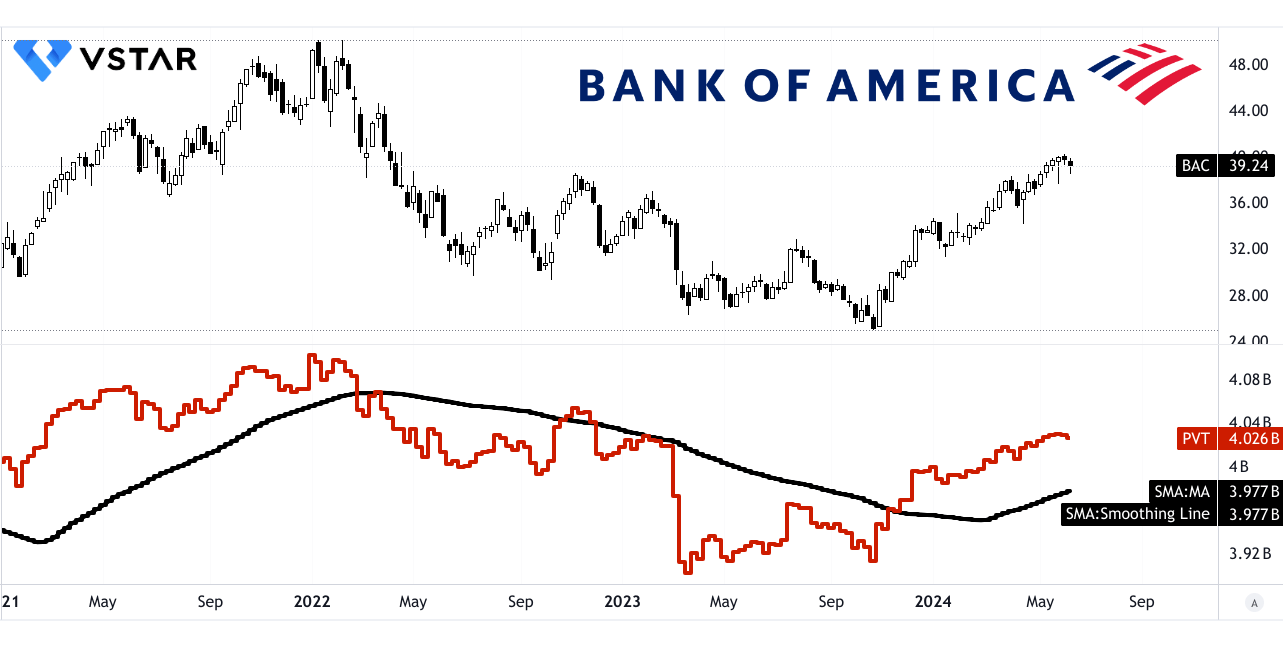
When assessing how much Bank of America stock is “worth” versus its trading price, investors look at the company’s quarterly earnings reports. These reports provide the raw data needed to calculate valuation multiples and growth trajectories.
Revenue Streams and Profitability
Bank of America’s revenue is divided into four main segments: Consumer Banking, Global Wealth & Investment Management (GWIM), Global Banking, and Global Markets. The diversity of these streams provides a hedge; for example, when the investment banking side (Global Markets) is slow due to a lack of IPOs, the Consumer Banking side might be booming due to high interest rates. A balanced growth across all four sectors usually leads to a premium valuation in the stock market.
Dividend Yield and Share Buybacks
For income-focused investors, the value of BAC stock is closely tied to its dividend yield. Bank of America has a long-standing commitment to returning capital to shareholders. The dividend yield typically hovers between 2% and 3.5%, making it an attractive option for those seeking steady passive income. Furthermore, the bank’s aggressive share repurchase programs reduce the total number of shares outstanding, which increases earnings per share (EPS) and helps support the stock price even in stagnant markets.
Efficiency Ratio and Cost Management
The “efficiency ratio” is a key metric for banks, calculated by dividing non-interest expenses by total revenue. A lower ratio indicates a more efficient bank. Bank of America has invested billions in technology to lower its overhead, closing physical branches in favor of digital banking. Success in these cost-cutting measures directly impacts the bottom line, often resulting in a positive reaction from the stock market.
Evaluating Bank of America as a Long-Term Investment
Determining “how much” to pay for Bank of America stock requires looking at valuation metrics that compare its price to its fundamental financial strength.
Valuation Metrics: P/E and Price-to-Book
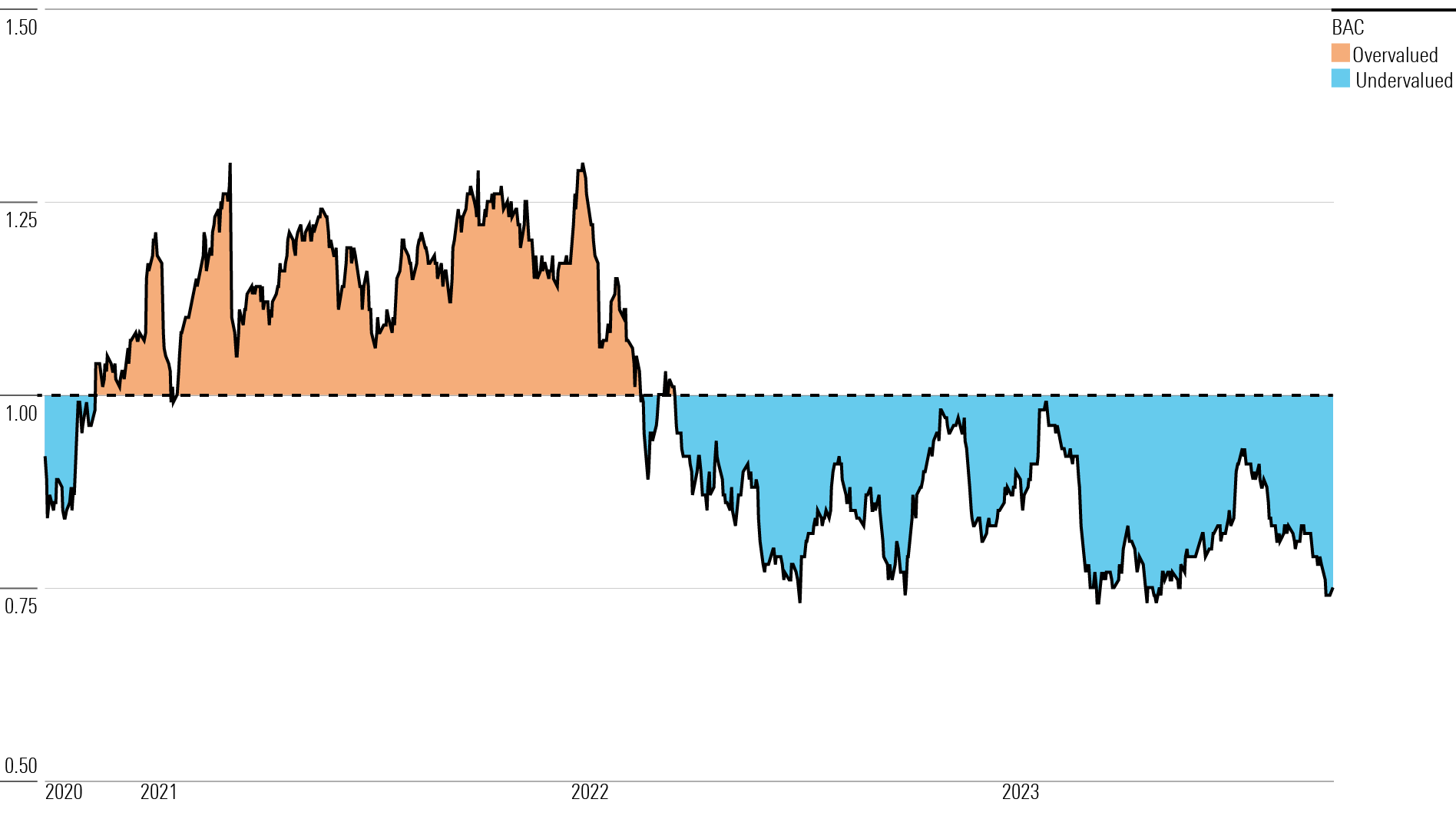
Investors often use the Price-to-Earnings (P/E) ratio to determine if BAC is overvalued or undervalued relative to the S&P 500 or its peers. However, in the banking sector, the Price-to-Book (P/B) ratio and Price-to-Tangible Book Value (PTBV) are even more critical. If BAC is trading near or below its tangible book value, it is often considered a bargain. Conversely, a P/B ratio significantly above 1.5 may suggest the stock is reaching the top of its valuation cycle.
Digital Banking Transformation
A major component of BAC’s modern valuation is its lead in the digital space. The bank’s AI assistant, “Erica,” and its highly-rated mobile app have revolutionized how it interacts with customers. This digital shift is not just about convenience; it is a fundamental shift in the business model. Digital transactions are significantly cheaper for the bank than in-person transactions. Investors increasingly view BAC not just as a traditional bank, but as a fintech leader, which allows it to command a higher valuation than less tech-savvy competitors.
Risk Assessment: Credit Quality and Recession Resilience
No investment is without risk. For Bank of America, the primary risks include a prolonged “inverted yield curve,” which can squeeze profit margins, and the potential for a “hard landing” in the US economy. Additionally, the bank’s exposure to commercial real estate (CRE) is a point of scrutiny for analysts. While BAC’s exposure is generally considered manageable compared to smaller regional banks, any systemic failure in the CRE market could lead to increased volatility in BAC’s stock price.
Conclusion: Navigating the Value of BAC
So, how much is Bank of America stock? While the daily price is dictated by the auction logic of the New York Stock Exchange, its intrinsic value is found in its massive deposit base, its technological edge, and its role as a pillar of the global economy. For the value investor, the stock represents a play on the long-term growth of the United States. For the income investor, it is a reliable source of dividends.
When considering an investment, it is essential to look beyond the current share price and analyze where we are in the interest rate cycle and the broader credit environment. Bank of America has proven its ability to navigate various economic climates, evolving from a traditional lender into a multifaceted financial technology powerhouse. Whether the stock is a “buy” depends on your personal financial goals, but its status as a benchmark for the banking industry remains undisputed. By monitoring net interest income, regulatory shifts, and consumer health, investors can better determine the right entry point for this foundational financial asset.
aViewFromTheCave is a participant in the Amazon Services LLC Associates Program, an affiliate advertising program designed to provide a means for sites to earn advertising fees by advertising and linking to Amazon.com. Amazon, the Amazon logo, AmazonSupply, and the AmazonSupply logo are trademarks of Amazon.com, Inc. or its affiliates. As an Amazon Associate we earn affiliate commissions from qualifying purchases.