
Apple Inc. (AAPL) stands as a titan in the global economy, a company whose market valuation frequently oscillates between two and three trillion dollars, depending on the dynamic forces of the stock market. To ask “how much is Apple worth today” is to inquire about a figure that changes by the second, reflecting not just its immense financial performance but also the collective judgment and future expectations of millions of investors worldwide. This isn’t merely a casual question; it’s an inquiry into the financial heartbeat of one of the most successful corporations in history, whose valuation speaks volumes about its economic power, strategic prowess, and enduring appeal to consumers and investors alike. Understanding Apple’s worth goes far beyond a single number; it requires a deep dive into its financial structure, market dynamics, and the underlying assets that underpin its colossal valuation.

The Dynamic Measure: Understanding Apple’s Market Capitalization
The most common answer to “how much is Apple worth today” is its market capitalization. This crucial financial metric provides a snapshot of a company’s total value based on the stock market. However, it’s a figure in constant flux, influenced by a myriad of factors from daily trading volumes to quarterly earnings reports and broader economic trends.
What is Market Cap and How is it Calculated?
Market capitalization, or market cap, is calculated by multiplying a company’s total number of outstanding shares by its current stock price. For example, if Apple has 15 billion shares outstanding and its stock price is $180 per share, its market cap would be $2.7 trillion. This figure represents the total value of all of Apple’s shares if they were to be bought on the open market at that precise moment. It’s an essential metric for investors, indicating the size and overall value of a company. Large-cap companies like Apple, with market caps in the trillions, are generally considered stable, mature investments, though their sheer size also means their movements can significantly impact broader market indices. The daily swings in Apple’s stock price, driven by buying and selling activity, directly translate into changes in its market capitalization, making it a live, constantly updated measure of its perceived worth.
Historical Context of Apple’s Valuation Milestones
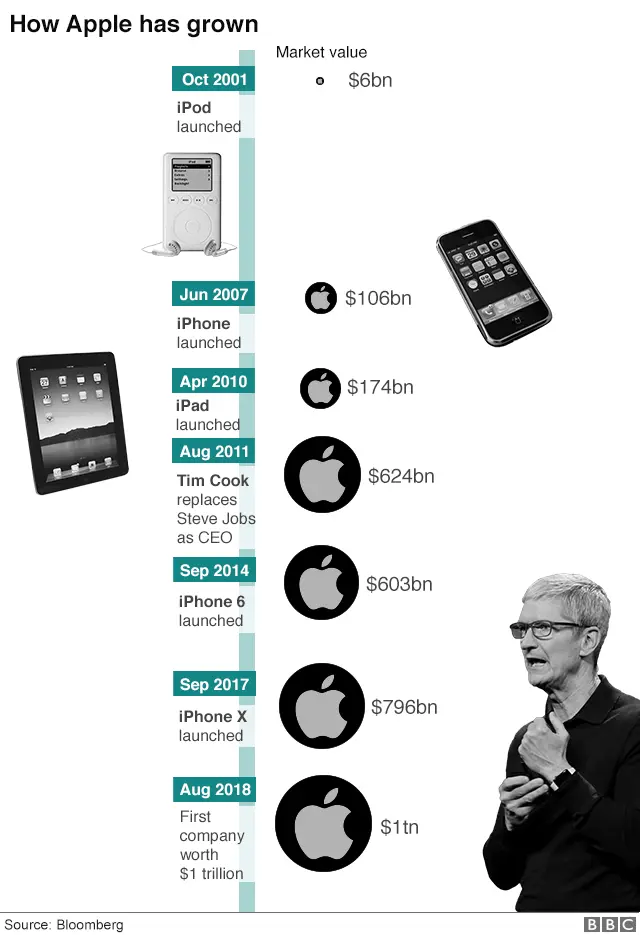
Apple’s journey to a multi-trillion-dollar valuation is a testament to its sustained growth and innovation. The company first achieved a $1 trillion market cap in August 2018, marking a historic milestone as the first U.S. publicly traded company to do so. This was largely fueled by the success of the iPhone X and growing services revenue. Just two years later, in August 2020, amidst a global pandemic that paradoxically boosted demand for technology, Apple crossed the $2 trillion threshold, becoming the first U.S. company to achieve this feat. The momentum didn’t stop there; in early 2022, Apple briefly touched a staggering $3 trillion market cap, again setting a new record. These milestones aren’t just symbolic; they reflect periods of exceptional financial performance, robust product cycles, and strong investor confidence in Apple’s long-term growth prospects. Each new trillion-dollar mark cemented its position as one of the most valuable enterprises in human history, demonstrating its ability to generate immense wealth for its shareholders.
Factors Influencing Daily Fluctuations
The “today” in “how much is Apple worth today” highlights the dynamic nature of market valuation. Several factors contribute to the daily fluctuations in Apple’s stock price and, consequently, its market cap. Investor sentiment, driven by news headlines (product launches, supply chain issues, regulatory challenges), economic data (inflation, interest rates, GDP growth), and competitor performance, plays a significant role. Analyst ratings and target price adjustments can also sway investor perception. Furthermore, macroeconomic events, geopolitical tensions, and even broader market trends (like a general tech stock sell-off or rally) can impact Apple’s valuation irrespective of its internal performance. High-frequency trading algorithms reacting to real-time data also contribute to rapid, minute-by-minute changes. For a company as widely held and scrutinized as Apple, these daily fluctuations are a natural part of its existence as a publicly traded entity, reflecting the ongoing collective assessment of its current health and future potential.
Beyond Market Cap: Deconstructing Apple’s Core Financial Strengths
While market capitalization provides a headline number, a deeper understanding of Apple’s worth requires an examination of its underlying financial strengths. Its robust revenue streams, formidable profitability, and commitment to shareholder returns form the bedrock of its enduring value.
Revenue Streams: Products, Services, and Ecosystem Lock-in
Apple’s financial power originates from its diverse and incredibly sticky revenue streams. The iPhone remains its flagship product, consistently generating billions in sales each quarter and acting as the gateway to its ecosystem. However, Apple’s portfolio extends far beyond: Mac computers, iPad tablets, and the rapidly growing Wearables, Home & Accessories segment (including Apple Watch, AirPods, and HomePod) contribute significantly. Critically, the Services segment has become an increasingly vital and high-margin component of its revenue. This includes the App Store, Apple Music, iCloud, Apple TV+, Apple Pay, and advertising revenue. The “ecosystem lock-in” refers to how seamlessly these products and services integrate, creating a compelling reason for customers to stay within the Apple family once they’ve bought an initial device. This interconnectedness fosters loyalty, encourages upgrades, and provides multiple avenues for monetizing its vast user base, driving predictable and recurring revenue. The high margins associated with services, in particular, are a key driver of investor confidence and a significant contributor to Apple’s overall financial health and valuation.
Profitability and Cash Flow Generation
Apple’s ability to consistently generate massive profits and free cash flow is unparalleled in the corporate world. Its gross margins are enviable, supported by premium pricing and efficient supply chain management. Net income, the company’s “bottom line,” regularly runs into tens of billions of dollars per quarter. This robust profitability translates directly into immense cash flow, providing Apple with significant financial flexibility. The company consistently sits on vast cash reserves, which it can deploy for strategic acquisitions, research and development, or shareholder returns. Strong cash flow is a crucial indicator of financial health, as it represents the actual money a company generates from its operations, separate from accounting profits. For investors, this ensures Apple has the resources to weather economic downturns, invest in future growth initiatives, and continue rewarding shareholders, thereby underpinning its stable valuation.
Shareholder Returns: Dividends and Buybacks
A significant aspect of Apple’s financial attractiveness for investors is its commitment to shareholder returns. The company has a long-standing program of returning capital to shareholders through both dividends and share buybacks. Dividends provide a regular income stream to investors, signaling financial stability and a willingness to share profits. Share buybacks, where Apple repurchases its own stock from the open market, reduce the number of outstanding shares. This action has several positive financial implications: it boosts earnings per share (EPS), makes the remaining shares more valuable, and signals to the market that management believes the stock is undervalued. Apple has executed some of the largest share buyback programs in corporate history, reflecting its strong cash generation and its strategy to enhance shareholder value. These consistent returns, combined with its growth prospects, make Apple a compelling investment for a wide range of investors, from institutional funds to individual retail traders.
The Intangible Assets: How Brand and Innovation Drive Value (from a financial perspective)
While financial statements detail tangible assets, a substantial portion of Apple’s multi-trillion-dollar valuation is rooted in its intangible assets. From a financial perspective, these non-physical elements, particularly its brand equity and relentless innovation, translate directly into pricing power, customer loyalty, and sustained growth, ultimately enhancing its market worth.
Brand Equity as a Financial Asset
Apple’s brand is arguably its most potent financial asset. It’s not just a logo; it represents a promise of quality, design, and user experience that commands premium pricing. This strong brand equity allows Apple to charge more for its products and services than many competitors, directly boosting its revenue and profit margins. Furthermore, a powerful brand fosters immense customer loyalty, reducing customer acquisition costs and ensuring repeat purchases. Millions of consumers worldwide are willing to pay a premium for Apple products, creating a robust, almost cult-like following. Financially, this loyalty translates into a stable and predictable revenue base, insulating the company from competitive pressures and economic fluctuations to a certain degree. Brand equity also reduces marketing spend effectiveness: Apple can generate significant buzz with relatively less advertising effort compared to lesser-known brands. Ultimately, this strong brand is factored into investor valuation models, contributing to higher valuation multiples compared to companies with weaker brand recognition. It’s a core reason why investors are willing to pay a premium for Apple stock.

Research & Development and Future Growth Vectors
Apple’s consistent and significant investment in Research & Development (R&D) is a financial bet on its future worth. While often a significant expense, R&D is the engine of innovation, leading to new products, improved features, and entirely new market segments that promise future revenue streams. Apple’s R&D spend, which often runs into tens of billions of dollars annually, is channeled into various areas: enhancing its core product lines, developing new technologies like augmented reality (AR) and virtual reality (VR) (as seen with the Apple Vision Pro), expanding into health tech, and exploring potential ventures into autonomous vehicles. These investments are not just about creating cool gadgets; they are about securing Apple’s relevance and market leadership for decades to come. Financially, successful R&D translates into new product categories, expanded market share, and sustained revenue growth, all of which are crucial for maintaining and growing its multi-trillion-dollar valuation. Investors closely watch Apple’s R&D activities as indicators of its long-term viability and potential for future financial breakthroughs.
Global Supply Chain and Operational Excellence
Behind every Apple product is a vast, intricate, and incredibly efficient global supply chain. While not a direct financial asset in the traditional sense, Apple’s operational excellence and strategic management of its supply chain directly contribute to its profitability and overall worth. By meticulously orchestrating the design, manufacturing, and distribution of millions of units worldwide, Apple minimizes costs, maximizes efficiency, and ensures product availability. Its ability to negotiate favorable terms with suppliers, secure critical components, and scale production rapidly gives it a significant competitive advantage. Financially, this operational prowess translates into higher gross margins, reduced inventory risks, and timely product launches, all of which positively impact revenue and profit. The resilience of this supply chain, despite global disruptions, is a testament to its strategic importance and contributes to investor confidence in Apple’s ability to execute and deliver financially, even in challenging environments.
Investment Perspective: What Drives Investor Confidence in Apple?
For investors, Apple represents a unique blend of growth, stability, and innovation. The factors that drive their confidence are deeply rooted in the company’s financial performance, strategic positioning, and prudent management.
Consistent Growth and Market Dominance
Investors value consistency, and Apple has repeatedly demonstrated its ability to deliver consistent revenue and earnings growth over extended periods. Even in mature markets or challenging economic climates, Apple often finds ways to grow, whether through new product iterations, expanding its services offerings, or entering new geographical markets. Its dominance in key segments, particularly premium smartphones and tablets, gives it significant pricing power and a loyal customer base that is resistant to switching. This sustained ability to grow revenue and profit, combined with its vast user base, assures investors that Apple is a reliable long-term investment. They see a company that not only innovates but also effectively monetizes its innovations and customer loyalty, leading to predictable financial returns.
Financial Health and Risk Management
Apple’s balance sheet is a fortress of financial health. It maintains substantial cash reserves, relatively low debt compared to its assets, and excellent credit ratings. This financial strength provides an extraordinary cushion against economic downturns, allows for strategic acquisitions without excessive leveraging, and gives it the flexibility to invest heavily in future technologies. Furthermore, Apple has a demonstrated history of shrewd risk management, navigating complex geopolitical landscapes, supply chain challenges, and regulatory pressures. This prudent financial stewardship reduces investor risk perception, making Apple a relatively safe haven asset even in volatile markets. Its ability to manage financial risks effectively is a key reason why institutional investors and large funds allocate significant capital to Apple stock.
Management and Vision
The leadership team, particularly CEO Tim Cook, plays a critical role in shaping investor confidence. Cook has successfully steered Apple through a period of immense growth and transition post-Steve Jobs, expanding the services segment, overseeing unprecedented product cycles, and maintaining the company’s brand integrity. Investors look to management for strategic vision, operational execution, and transparent communication. Apple’s management team has consistently demonstrated its ability to deliver on these fronts, executing long-term strategies that enhance shareholder value. Their vision for the future, including continued innovation in AI, health, and new product categories, reassures investors that Apple is not resting on its laurels but is actively planning for sustained growth in the decades to come.
The Future of Apple’s Valuation: Challenges and Opportunities
While Apple’s worth today is monumental, its future valuation will be shaped by how it navigates emerging challenges and capitalizes on new opportunities. These factors introduce both risks and potential for further growth, making its ongoing financial trajectory a subject of intense investor scrutiny.
Regulatory Scrutiny and Antitrust Concerns
One of the most significant challenges facing Apple’s future valuation is increasing regulatory scrutiny worldwide. Governments and antitrust bodies in the U.S., Europe, and other regions are examining Apple’s App Store policies, particularly the fees it charges developers, its control over its ecosystem, and its competitive practices. Potential changes mandated by regulators, such as allowing third-party app stores or alternative payment systems, could impact Apple’s high-margin services revenue, which is a key driver of its recent growth and valuation. Fines, forced business model changes, or even divestitures could create financial headwinds. Investors are closely watching these developments, as they could introduce uncertainty and potentially cap the growth trajectory of certain profitable segments. The ability of Apple to adapt to or successfully defend against these regulatory challenges will be critical for its future financial standing.
Geopolitical Risks and Supply Chain Diversification
Apple’s extensive global supply chain, heavily reliant on manufacturing in certain regions, exposes it to geopolitical risks. Trade tensions, political instability, and disruptions to manufacturing hubs can impact production, increase costs, and delay product launches, all of which have financial implications. In response, Apple is actively pursuing supply chain diversification strategies, expanding manufacturing to countries like India and Vietnam. This move, while requiring significant investment in the short term, aims to build resilience and reduce dependence on any single region. Successfully diversifying its supply chain will mitigate future risks, ensure continuity of operations, and protect its ability to deliver products reliably, thereby safeguarding its financial performance and investor confidence. The costs and timelines associated with this diversification, however, also represent a significant capital allocation decision that investors track closely.
The Next Big Thing: Innovation and Market Expansion
For Apple to maintain and grow its multi-trillion-dollar valuation, continued innovation and successful entry into new markets are paramount. Investors are constantly looking for “the next big thing” beyond the iPhone. The Apple Vision Pro, its foray into spatial computing, represents a significant, albeit early, bet on a new category. While currently a niche product, its long-term potential for creating new revenue streams and expanding Apple’s ecosystem into augmented and virtual reality could be immense. Beyond hardware, advancements in Artificial Intelligence (AI) and its integration across Apple’s software and services offer substantial growth opportunities. Expanding its health and wellness offerings, or even making a more definitive move into the automotive sector, could unlock vast new markets. Apple’s ability to consistently innovate and effectively monetize these future growth vectors will be the ultimate determinant of its enduring worth and its capacity to push its market capitalization to even greater heights.
Conclusion
Determining “how much is Apple worth today” reveals a figure that is a confluence of real-time financial metrics, strategic execution, market sentiment, and forward-looking potential. Its multi-trillion-dollar market capitalization is a testament to its unparalleled financial strengths: diverse and high-margin revenue streams, colossal profitability, robust cash generation, and a steadfast commitment to shareholder returns. Beyond the immediate numbers, Apple’s financial worth is bolstered by intangible assets like its formidable brand equity and relentless investment in research and development, which drive innovation and ensure future growth.
From an investment perspective, Apple offers a compelling package of consistent growth, impeccable financial health, and visionary leadership, making it a cornerstone for many portfolios. However, its future valuation is not without challenges. Regulatory pressures and geopolitical risks require careful navigation, while the successful realization of “the next big thing” through continued innovation will be crucial for sustained expansion. Ultimately, Apple’s worth is a dynamic financial entity, continuously evolving, but firmly anchored by a robust economic foundation and an enduring capacity to create immense value. It remains a financial powerhouse, whose daily valuation reflects its ongoing impact on the global economy and its position at the zenith of corporate success.
aViewFromTheCave is a participant in the Amazon Services LLC Associates Program, an affiliate advertising program designed to provide a means for sites to earn advertising fees by advertising and linking to Amazon.com. Amazon, the Amazon logo, AmazonSupply, and the AmazonSupply logo are trademarks of Amazon.com, Inc. or its affiliates. As an Amazon Associate we earn affiliate commissions from qualifying purchases.