
The question of how much an Apple share costs is one that transcends simple daily price tickers. For the modern investor, the price of a single share of Apple Inc. (trading under the ticker AAPL on the Nasdaq) is a pulse check on the global economy, a reflection of consumer sentiment, and a benchmark for the technology sector’s health. While the nominal price of a share changes by the second during trading hours, understanding its true value requires a deep dive into market dynamics, historical performance, and the underlying financial health of the world’s most iconic consumer electronics company.
Current Market Dynamics and the Price of AAPL
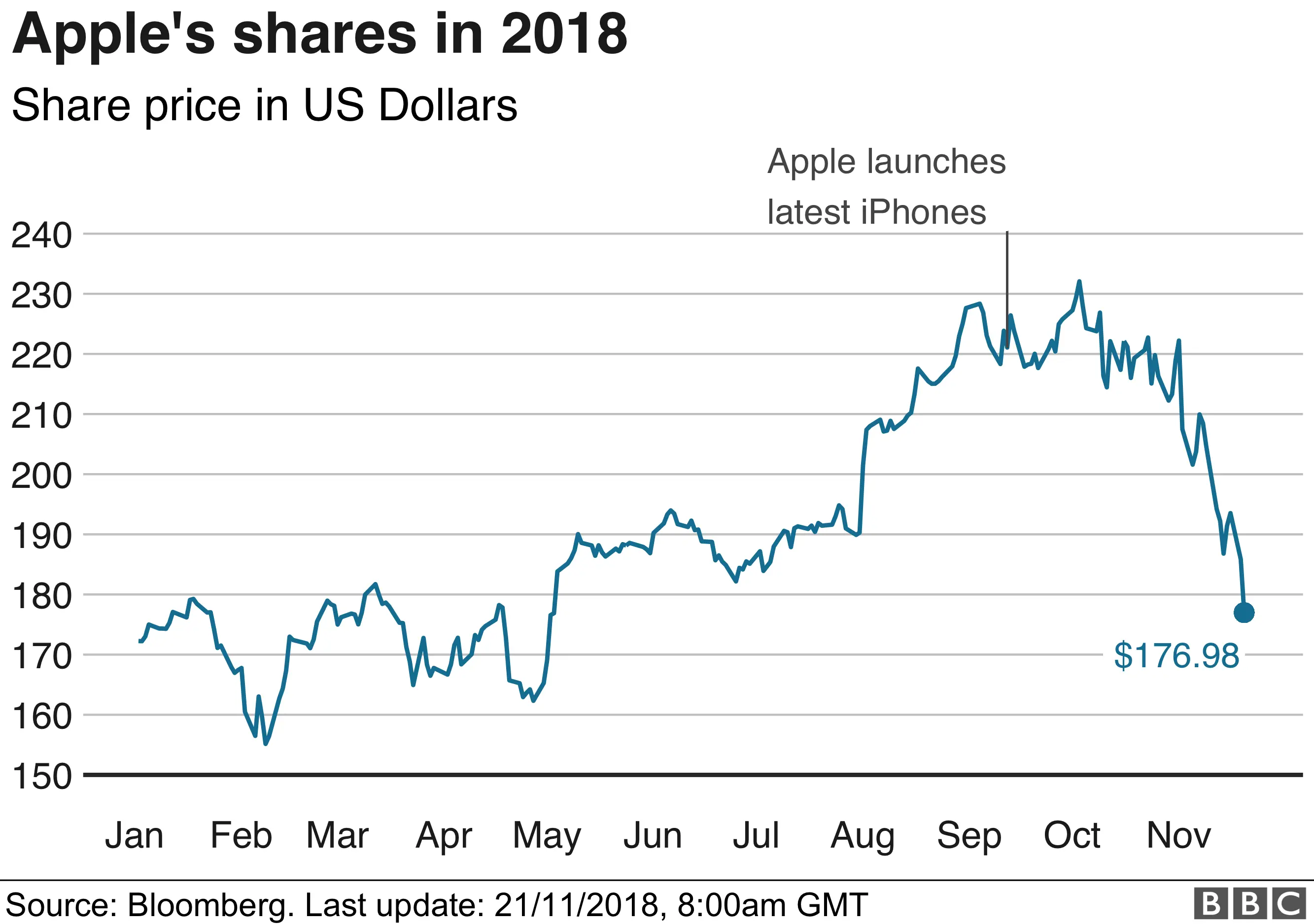
The nominal price of an Apple share is determined by the collective sentiment of millions of investors, ranging from retail traders on smartphone apps to massive institutional hedge funds and pension boards. At any given moment, the price reflects the intersection of supply and demand, influenced by a myriad of macroeconomic and company-specific factors.
The Role of Market Capitalization
To understand the price of an Apple share, one must first understand market capitalization. Market cap is calculated by multiplying the current share price by the total number of outstanding shares. Apple has historically been the first company to hit milestones like $1 trillion, $2 trillion, and $3 trillion in market valuation. Because Apple frequently engages in massive share buyback programs, the number of outstanding shares decreases over time. This financial strategy is designed to increase the value of each remaining share, effectively returning capital to shareholders by making their “slice of the pie” larger, even if the total size of the pie remains the same.
Macroeconomic Influences on Share Price
Apple does not trade in a vacuum. Its share price is highly sensitive to broader economic indicators. For instance, when the Federal Reserve adjusts interest rates, the “discount rate” applied to future earnings changes. Since Apple is a growth-oriented company with significant future earnings potential, higher interest rates can sometimes exert downward pressure on its stock price. Conversely, in a low-interest-rate environment, investors often flock to high-quality equities like AAPL, driving the price per share higher. Furthermore, as a global entity, Apple’s share price is affected by currency fluctuations; a strong U.S. dollar can make iPhones more expensive abroad, potentially cooling sales and impacting the stock’s valuation.
Historical Performance and the Impact of Stock Splits
When looking at the history of Apple’s share price, long-term investors see a trajectory of unprecedented growth. However, a casual observer might notice that the price per share today is lower than they might expect for such a dominant company. This is due to the strategic use of stock splits.
The Mechanics of Stock Splits
Apple has executed several stock splits throughout its history, most notably a 7-for-1 split in 2014 and a 4-for-1 split in 2020. A stock split does not change the fundamental value of an investor’s holding; it simply increases the number of shares they own while lowering the price per individual share proportionally. The primary goal of these splits is to keep the share price accessible to retail investors. If Apple had never split its stock, a single share would today cost tens of thousands of dollars, making it difficult for the average person to invest without using fractional share platforms.
Long-Term ROI and Compound Growth
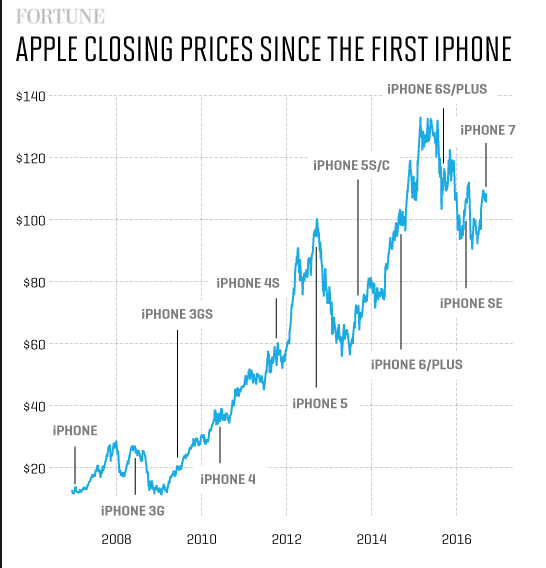
The true story of an Apple share’s value is found in its compound annual growth rate (CAGR). Over the last two decades, Apple has consistently outperformed the S&P 500. This growth has been fueled by the transition from a hardware-centric company—focused on the Mac and iPod—to a platform-based ecosystem powered by the iPhone, iPad, and Apple Watch. Investors who purchased shares during the “dark days” of the late 1990s or even during the initial iPhone launch in 2007 have seen their initial capital multiply exponentially, particularly when factoring in the reinvestment of dividends.
Valuation Metrics: Is an Apple Share Worth the Premium?
Determining how much you should pay for an Apple share involves analyzing valuation metrics. Professional analysts look beyond the sticker price to determine if the stock is “cheap” or “expensive” relative to its earnings power and its peers in the “Magnificent Seven” (the group of high-performing tech stocks including Microsoft, Amazon, and Alphabet).

The Price-to-Earnings (P/E) Ratio
The P/E ratio is the most common metric used to value AAPL. It measures the share price relative to the company’s earnings per share (EPS). Historically, Apple traded at a lower P/E ratio than other tech giants because it was viewed primarily as a hardware company subject to cyclical upgrade cycles. However, as Apple shifted toward a high-margin services model (App Store, iCloud, Apple Music), the market began to award it a “multiple expansion.” Today, investors are willing to pay a higher premium for Apple shares because they view the revenue as more predictable and recurring.
Dividend Yield and Shareholder Returns
Unlike many high-growth tech companies that reinvest every cent of profit back into the business, Apple is a cash-flow machine that prioritizes returning value to shareholders. This is done through a combination of quarterly dividends and share repurchases. While the dividend yield might seem modest compared to traditional “utility” stocks, the absolute dollar amount Apple pays out is staggering. For many investors, an Apple share is not just a bet on capital appreciation (the price going up), but also a source of steady, growing passive income.
Strategic Drivers of Future Share Value
When an investor asks “how much is an apple share,” they are often really asking “how much will it be worth in the future?” The future price of AAPL depends on the company’s ability to innovate and capture new markets.
The Services Pivot
The most significant shift in Apple’s financial profile over the last decade has been the growth of its Services segment. With over two billion active devices globally, Apple has a massive “installed base” that it can monetize through subscriptions and digital content. Services carry much higher profit margins than hardware. As Services become a larger percentage of Apple’s total revenue, the company’s overall profitability improves, which generally justifies a higher share price.
The AI Frontier: Apple Intelligence
The next major catalyst for Apple’s share price is its integration of Artificial Intelligence, branded as “Apple Intelligence.” By embedding AI across its operating systems, Apple aims to trigger a “super-cycle” of hardware upgrades. If consumers feel that their current iPhones are incapable of running the next generation of AI-driven features, it could lead to a massive spike in sales. Analysts closely watch these product cycles, as a successful iPhone launch is often the single largest driver of share price movement in a given fiscal year.
Emerging Markets and Geographical Expansion
Apple’s growth is increasingly tied to its success in emerging markets, most notably India. As the middle class in these regions grows, the demand for premium smartphones and digital services increases. Success in these territories provides a “long tail” for growth that can offset saturation in more mature markets like the United States and Europe.
How to Invest in Apple: Practical Steps for Shareholders
If you have decided that the current price of an Apple share represents a good value, the process of acquiring it has never been easier. Modern financial tools have democratized access to the stock market, allowing almost anyone to become a part-owner of the tech giant.
Brokerage Accounts and Fractional Shares
To buy an Apple share, you need a brokerage account. While traditional firms still exist, many investors use digital platforms that offer commission-free trading. One of the most important innovations for retail investors is the “fractional share.” If the price of a full Apple share is higher than what you have available to invest, many brokers allow you to buy as little as $1 or $5 worth of the stock. This allows for “dollar-cost averaging,” a strategy where you invest a fixed amount of money at regular intervals, regardless of the share price, to smooth out market volatility.
ETFs and Indirect Ownership
For those who want exposure to Apple but are wary of the risks associated with owning a single stock, Exchange-Traded Funds (ETFs) are an excellent alternative. Because Apple is such a large company, it makes up a significant portion of many major indices. If you own an S&P 500 index fund (like VOO or SPY) or a Nasdaq-100 fund (like QQQ), you already own a portion of Apple. For many, this is the most balanced way to benefit from Apple’s growth while maintaining a diversified portfolio.
In conclusion, the price of an Apple share is more than just a number on a screen. It is a reflection of the company’s past innovations, its current financial dominance, and its future potential in the realms of AI and global services. Whether you are looking at AAPL for its dividend, its growth potential, or its status as a “safe haven” in the tech world, understanding the factors that move the needle on its share price is essential for any serious investor.
aViewFromTheCave is a participant in the Amazon Services LLC Associates Program, an affiliate advertising program designed to provide a means for sites to earn advertising fees by advertising and linking to Amazon.com. Amazon, the Amazon logo, AmazonSupply, and the AmazonSupply logo are trademarks of Amazon.com, Inc. or its affiliates. As an Amazon Associate we earn affiliate commissions from qualifying purchases.