
The question “how much is an Amazon share?” is far more than a simple inquiry about a real-time stock price; it’s an entry point into understanding market dynamics, investment strategies, and the colossal impact of one of the world’s most innovative and diversified companies. Amazon (AMZN) isn’t just an e-commerce giant; it’s a formidable force in cloud computing (AWS), digital advertising, artificial intelligence, logistics, and entertainment. For aspiring and seasoned investors alike, delving into Amazon’s stock offers a profound lesson in modern investing.
Understanding the value of an Amazon share necessitates looking beyond the fluctuating ticker. It requires an appreciation for the company’s business model, its historical performance, future growth prospects, and the broader economic landscape that influences all publicly traded entities. This article will dissect these layers, providing an insightful and comprehensive guide to understanding Amazon’s stock as a financial asset.

Understanding Amazon’s Stock (AMZN) in Today’s Market
The immediate price of an Amazon share is a dynamic figure, constantly shifting during trading hours in response to a myriad of factors. It reflects the collective sentiment of millions of investors, driven by news, economic reports, and company-specific announcements. For anyone looking to invest or simply understand the market, grasping this real-time fluidity is fundamental.
The Dynamics of Real-Time Stock Pricing
Stock prices are determined by supply and demand on stock exchanges. When more investors want to buy Amazon shares than sell them, the price tends to rise. Conversely, if more investors are selling than buying, the price typically falls. This continuous tug-of-war happens in fractions of a second, facilitated by high-frequency trading algorithms and human traders alike. The closing price you see at the end of a trading day is merely a snapshot, a consensus of value at that precise moment, which can be significantly different by the next opening bell. Market capitalization, calculated by multiplying the current share price by the total number of outstanding shares, provides a comprehensive view of the company’s total market value.
Key Factors Influencing AMZN’s Value
Several interconnected factors exert pressure on Amazon’s share price:
- Company Earnings Reports: Quarterly and annual reports detailing revenue, profit, and future guidance are critical. Strong earnings often boost investor confidence, while misses can lead to sharp declines.
- Macroeconomic Indicators: Broader economic health, interest rates set by central banks, inflation rates, and consumer spending patterns significantly influence all stocks, including Amazon. A robust economy generally encourages consumer spending, benefiting Amazon’s e-commerce segment and potentially its cloud services.
- Industry Trends and Competition: Developments in e-commerce, cloud computing, and AI, as well as the competitive landscape (e.g., Walmart, Microsoft, Google), can impact Amazon’s market position and investor perception.
- Regulatory Scrutiny: As a dominant player, Amazon faces ongoing antitrust scrutiny and regulatory challenges globally. Potential legal actions or new regulations could impact its business model and profitability.
- Analyst Ratings and News: Recommendations from financial analysts, alongside major news headlines concerning the company, technology sector, or global events, can sway investor sentiment and trading activity.
Where to Find Current Amazon Stock Prices
For the most up-to-date information, investors should consult reliable financial platforms. Brokerage accounts (e.g., Fidelity, Charles Schwab, E*TRADE), financial news websites (e.g., Bloomberg, Wall Street Journal, Reuters, Yahoo Finance), and stock market data providers (e.g., Google Finance) offer real-time or near real-time quotes, historical data, charts, and relevant news. Always ensure you are looking at data during market trading hours (typically 9:30 AM to 4:00 PM EST, Monday to Friday) for the most current figures.
A Historical Perspective: Amazon’s Growth and Stock Performance
Amazon’s journey from an online bookseller to a trillion-dollar conglomerate is one of the most compelling narratives in modern business history. Its stock performance reflects this extraordinary growth, marked by strategic expansion, innovation, and a few significant stock splits.
From IPO to E-commerce Giant: A Journey of Splits and Returns
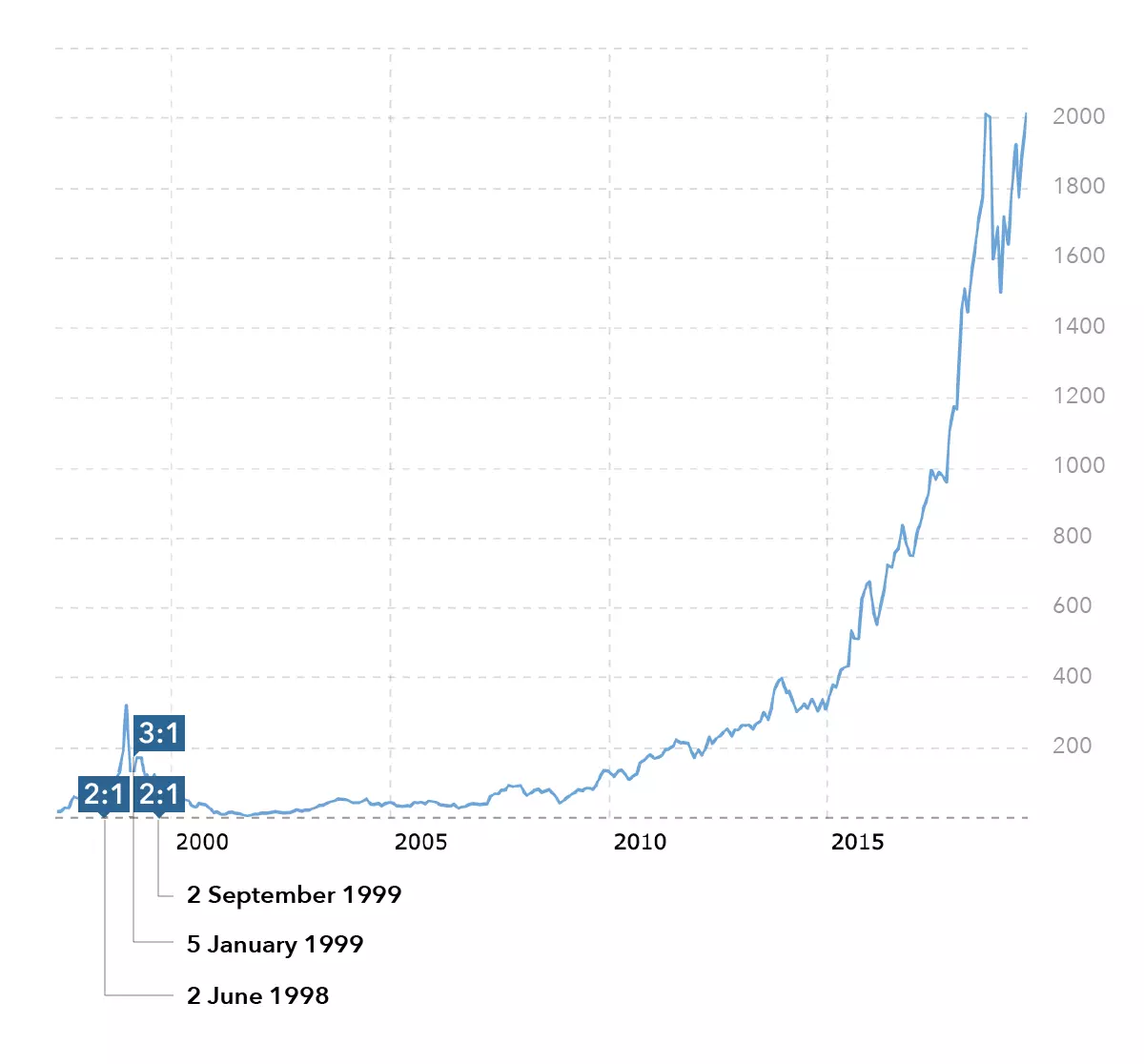
Amazon went public on May 15, 1997, at an initial public offering (IPO) price of $18.00 per share. Since then, the stock has undergone three splits:
- June 2, 1998: 2-for-1 split (Each share became two shares, effectively halving the price per share).
- January 5, 1999: 3-for-1 split.
- September 1, 1999: 2-for-1 split.
- June 6, 2022: 20-for-1 split.
These splits significantly increased the number of shares outstanding and reduced the price per share, making the stock more accessible to individual investors. An investor who bought one share at the IPO price and held it through all splits would now own 120 shares (2 * 3 * 2 * 10). The returns have been astronomical, turning modest initial investments into substantial wealth for long-term holders, showcasing the power of compounding and early investment in disruptive companies.
Major Milestones and Their Impact on Share Price
Amazon’s stock trajectory is punctuated by key strategic moves:
- Diversification into new product categories (late 1990s-early 2000s): Moving beyond books into electronics, music, and general merchandise broadened its revenue base.
- Launch of Amazon Prime (2005): A subscription service offering free shipping and other perks created immense customer loyalty and recurring revenue.
- Introduction of Amazon Web Services (AWS) (2006): This cloud computing arm became an unexpected powerhouse, consistently generating significant profits and driving much of Amazon’s growth and profitability.
- Kindle e-reader (2007) and Alexa (2014): Entry into hardware and AI cemented Amazon’s position as an innovation leader.
- Acquisitions (e.g., Whole Foods in 2017): Expanding into brick-and-mortar retail and new market segments.
Each of these milestones, along with countless others, either fueled investor optimism or helped Amazon weather economic downturns, contributing to its long-term upward trend.
Volatility and Resilience: Navigating Market Swings
Despite its impressive growth, Amazon’s stock has experienced periods of significant volatility. Like any technology stock, it can be susceptible to market corrections, economic recessions, and sector-specific downturns. For instance, the dot-com bubble burst significantly impacted Amazon’s stock in the early 2000s. However, the company’s underlying resilience, strategic vision, and continuous innovation have consistently allowed it to recover and reach new highs, demonstrating its robust business model and strong market position.
Why Invest in Amazon? Analyzing Its Business Fundamentals
Beyond historical performance, a sound investment decision hinges on a deep understanding of a company’s current business and future potential. Amazon’s sprawling empire offers numerous compelling reasons for its continued attractiveness to investors.
Diversified Revenue Streams: E-commerce, AWS, Advertising, and More
Amazon’s strength lies in its diversified ecosystem:
- E-commerce: While its original business, the online retail segment remains massive, constantly expanding product offerings, logistics networks, and global reach.
- Amazon Web Services (AWS): The undisputed leader in cloud computing, AWS provides scalable, cost-effective infrastructure services to millions of businesses and governments worldwide. It’s Amazon’s most profitable segment and a key driver of overall earnings.
- Advertising: Amazon’s rapidly growing advertising business leverages its vast customer data and platform to offer highly targeted ads, challenging traditional digital advertising duopolies.
- Subscriptions: Amazon Prime and other subscription services (e.g., Music Unlimited, Kindle Unlimited) provide a stable, recurring revenue stream and enhance customer loyalty.
- Other Ventures: This includes physical stores, hardware devices (Echo, Ring), entertainment (Amazon Studios, Twitch), and healthcare initiatives, all contributing to its expansive reach.
Competitive Advantages and Market Dominance
Amazon possesses several durable competitive advantages:
- Network Effects: More sellers attract more buyers, and more buyers attract more sellers, creating a powerful virtuous cycle in its marketplace.
- Scale and Logistics: An unparalleled global fulfillment network allows for rapid, cost-effective delivery, a significant barrier to entry for competitors.
- Customer-Centric Culture: Obsession with customer experience has built immense brand loyalty.
- Technological Leadership: Continuous investment in AI, machine learning, and cloud infrastructure keeps it at the forefront of innovation.
- AWS’s Economic Moat: The sheer scale, reliability, and breadth of services offered by AWS create a robust competitive moat that is difficult for rivals to replicate.
Future Growth Prospects and Innovation Pipeline
Amazon’s future growth appears robust, driven by several factors:
- International Expansion: Significant untapped growth potential remains in emerging markets for both e-commerce and AWS.
- Cloud Computing Expansion: The digital transformation trend continues, driving demand for AWS services. New advancements in AI and specialized cloud solutions will further propel growth.
- Advertising Monetization: The advertising segment is still in its relatively early stages compared to its potential, offering significant runway for increased revenue.
- Healthcare and AI Integration: Amazon’s foray into healthcare (e.g., Amazon Pharmacy, Amazon Clinic) and deeper integration of AI across all its services represent massive long-term growth opportunities.
- New Technologies: Continuous R&D in areas like robotics, satellite internet (Project Kuiper), and autonomous delivery ensures a pipeline of future innovations.
Practical Considerations for Amazon Investors
Investing in Amazon, or any stock, requires more than just understanding the company; it demands practical knowledge of investment vehicles, valuation, and personal financial planning.
Direct Stock Purchase vs. ETFs/Mutual Funds
Investors have several avenues to gain exposure to Amazon:
- Direct Stock Purchase: Buying individual shares of AMZN through a brokerage account offers direct ownership and the potential for higher returns (or losses) tied solely to Amazon’s performance. This requires more research and tolerance for single-stock volatility.
- ETFs (Exchange-Traded Funds) and Mutual Funds: These funds pool money from multiple investors to buy a diversified portfolio of stocks. Many technology-focused ETFs or large-cap growth mutual funds will have Amazon as a significant holding. This offers diversification, reducing the risk associated with investing in a single company, though it may also dilute specific Amazon-driven gains.
Understanding Valuation Metrics (P/E Ratio, Market Cap)
When evaluating Amazon’s price, investors often look at metrics:
- Price-to-Earnings (P/E) Ratio: Compares the current share price to the company’s earnings per share. A high P/E might indicate that investors expect significant future growth, or that the stock is overvalued. Amazon has historically commanded a high P/E due to its growth potential.
- Market Capitalization: As mentioned, this is the total value of all outstanding shares. It provides a sense of the company’s size and market influence.
- Price-to-Sales (P/S) Ratio: Especially relevant for high-growth companies not yet highly profitable, comparing share price to revenue per share.
- Enterprise Value to EBITDA (EV/EBITDA): Often preferred for companies with significant debt or varying depreciation methods, providing a more normalized view of valuation.
The Role of Long-Term vs. Short-Term Investment Strategies
Amazon is generally considered a long-term growth investment. Its history shows that holding through market fluctuations has yielded substantial returns. Short-term trading of AMZN is possible but inherently riskier, relying on timing the market and reacting quickly to news, which is challenging even for professional traders. For most individual investors, a “buy and hold” strategy, focusing on Amazon’s fundamental business strength and long-term potential, is often more prudent.
Tax Implications and Portfolio Diversification
- Capital Gains Tax: Profits from selling Amazon shares are subject to capital gains tax, which varies based on holding period (short-term vs. long-term) and individual income bracket.
- Diversification: Even with a strong company like Amazon, it’s crucial not to put all your eggs in one basket. A well-diversified portfolio reduces overall risk by spreading investments across various industries, asset classes, and geographies. While Amazon is a robust company, unforeseen events or market shifts can always impact a single stock disproportionately.
Navigating the Investment Landscape with Amazon Shares
Successful investing is an ongoing process of learning, monitoring, and adapting. For Amazon shareholders, this means staying informed and utilizing available resources.
Utilizing Financial Tools and Brokerage Platforms
Modern investment platforms offer a wealth of tools:
- Real-time Quotes and Charts: Essential for tracking price movements.
- Research Reports: Many brokerages provide analyst reports, financial statements, and news feeds on Amazon.
- Portfolio Trackers: To monitor your investment performance and overall portfolio health.
- Educational Resources: Articles, webinars, and tutorials on investing principles.
Choosing a reputable brokerage that aligns with your investment goals and offers robust tools is a critical first step.
Staying Informed: News, Reports, and Analyst Opinions
Investors should regularly consume financial news, paying close attention to:
- Amazon’s Official Releases: Earnings calls, investor relations pages, and SEC filings (10-K, 10-Q) provide the most accurate company information.
- Industry News: Developments in e-commerce, cloud computing, logistics, and AI.
- Economic News: GDP reports, inflation data, interest rate decisions, and consumer confidence indices.
- Reputable Analyst Coverage: While analyst opinions should be considered, they are not infallible. Use them as one input among many, focusing on the underlying reasoning.

Risk Management and Due Diligence
Every investment carries risk. While Amazon is a formidable company, potential risks include:
- Regulatory Headwinds: Increased antitrust scrutiny could force business changes.
- Intense Competition: Highly competitive markets in all its segments.
- Economic Downturns: A severe recession could impact consumer spending and cloud demand.
- Execution Risk: Challenges in integrating new acquisitions or launching new initiatives.
- Cybersecurity Threats: Data breaches or security failures could damage reputation and financial performance.
Thorough due diligence means understanding these risks and deciding if they align with your personal risk tolerance. Never invest more than you can afford to lose, and always ensure your investment decisions are based on your financial goals and circumstances.
In conclusion, “how much is an Amazon share” is a question with a dynamic answer, but understanding the value of AMZN transcends a mere number. It encompasses a deep dive into the company’s innovative spirit, diversified business segments, historical resilience, and future growth potential. For those looking to participate in the growth of a truly transformative company, Amazon offers an intriguing, albeit volatile, proposition within the vast landscape of financial markets. Careful research, a long-term perspective, and a well-diversified portfolio remain the cornerstones of successful investing.
aViewFromTheCave is a participant in the Amazon Services LLC Associates Program, an affiliate advertising program designed to provide a means for sites to earn advertising fees by advertising and linking to Amazon.com. Amazon, the Amazon logo, AmazonSupply, and the AmazonSupply logo are trademarks of Amazon.com, Inc. or its affiliates. As an Amazon Associate we earn affiliate commissions from qualifying purchases.