
When investors and market analysts ask, “How much is Amazon worth?” the answer is rarely a single, static figure. Depending on whether you are looking at its market capitalization, its enterprise value, or the sum-of-the-parts of its massive subsidiaries, the valuation of Amazon.com, Inc. (AMZN) reveals a complex narrative of a company that has evolved from a niche online bookstore into a global financial juggernaut.
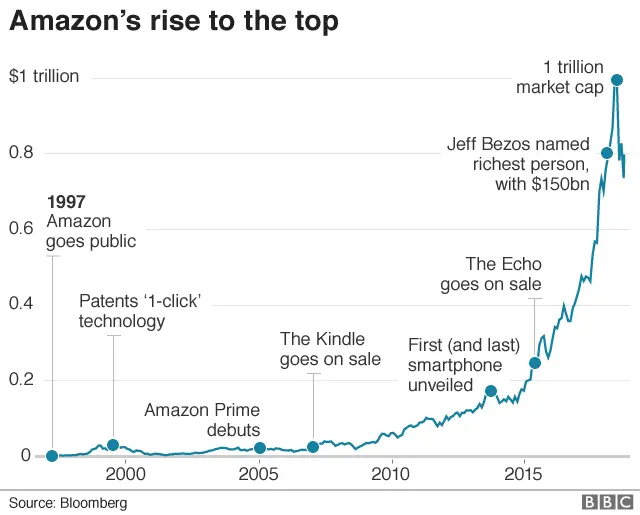
As of the mid-2020s, Amazon consistently oscillates within the “Trillion Dollar Club,” a rare echelon of technology-driven companies that dominate the global economy. To understand the true worth of Amazon, we must peel back the layers of its balance sheet, analyze its diverse revenue streams, and evaluate the financial metrics that drive its stock price.
Understanding Amazon’s Valuation: Market Cap vs. Intrinsic Value
The most common way to answer how much Amazon is worth is by looking at its Market Capitalization. This is a straightforward calculation: the current share price multiplied by the total number of outstanding shares. However, for a behemoth like Amazon, market cap only tells part of the story.
The Mechanics of Market Capitalization
Amazon’s market cap is a reflection of investor sentiment and future expectations. For much of the last few years, this figure has sat between $1.5 trillion and $2 trillion. This valuation places it among the top five most valuable companies in the world. When the stock price moves by even 1%, tens of billions of dollars in “worth” are created or erased. For institutional investors, this liquidity makes Amazon a cornerstone of the modern portfolio, often serving as a proxy for the health of both the consumer tech sector and the broader retail economy.
Enterprise Value and Total Assets
Beyond the stock price, financial analysts often look at Enterprise Value (EV). EV provides a more comprehensive picture of a company’s worth because it accounts for market cap, adds total debt, and subtracts cash and cash equivalents.
Amazon maintains a significant amount of debt to fuel its massive logistics expansion, but it also sits on a mountain of cash. Furthermore, its total assets—including its global network of fulfillment centers, data centers for AWS, and the physical footprint of Whole Foods—contribute to a book value that is staggering. While the “market value” is what you pay for a share, the “intrinsic value” is what an investor believes the company is actually worth based on its ability to generate cash over the long term.
The Profit Engines: Breaking Down Revenue Streams
To understand why Amazon is valued so highly, one must look at where its money comes from. Amazon is no longer just a retailer; it is a diversified conglomerate with several high-margin business units that subsidize its lower-margin shipping operations.
E-commerce and Third-Party Seller Services
The “Online Stores” segment remains the largest contributor to Amazon’s top-line revenue. However, the real growth in the retail sector comes from Third-Party Seller Services. Amazon provides the platform, shipping (FBA), and customer service for millions of independent businesses. The fees collected from these services represent a high-growth, high-margin revenue stream that is much more profitable than selling items directly. This shift from “retailer” to “platform provider” has been a significant driver in increasing the company’s overall valuation.
Amazon Web Services (AWS): The High-Margin Core
If you want to know why Amazon is worth trillions, look no further than AWS. As the pioneer in cloud computing, AWS owns about a third of the global cloud infrastructure market.
From a financial perspective, AWS is the “crown jewel.” While it often accounts for only 15-20% of Amazon’s total revenue, it frequently accounts for over 50% (and sometimes up to 100%) of the company’s operating income. Investors value AWS as a high-growth software utility. In fact, many analysts argue that if AWS were spun off into its own company, it would be worth nearly $1 trillion on its own, given the high multiples typically assigned to SaaS (Software as a Service) and infrastructure companies.
Advertising and Subscription Services
A relatively newer but explosive contributor to Amazon’s worth is its Digital Advertising business. By leveraging the data of millions of shoppers, Amazon has become the third-largest advertising platform in the world, trailing only Google and Meta. Because advertising has incredibly high margins, this segment adds significant “weight” to Amazon’s valuation.
Additionally, Amazon Prime provides a steady, predictable stream of recurring revenue. With over 200 million members globally, the subscription fees alone generate billions of dollars annually, creating a “moat” that ensures customer loyalty and a consistent cash floor for the business.

Key Financial Metrics for Investors
Evaluating Amazon’s worth requires looking past traditional valuation metrics like the Price-to-Earnings (P/E) ratio, which can often be misleading for a company that reinvests almost all its profits back into growth.
Revenue Growth and Net Income Trends
For decades, Amazon was famous for reporting little to no net income because Jeff Bezos prioritized long-term growth over short-term profits. However, in recent years, the company has shown it can be immensely profitable when it chooses to be.
Investors track Revenue Growth as a sign of market share dominance. Even as a multi-trillion-dollar company, Amazon often manages double-digit growth. When evaluating its worth, analysts look for “operating leverage”—the company’s ability to increase its profit margins as it grows its revenue. As AWS and Advertising grow faster than the retail segment, Amazon’s overall margin profile improves, making the company more valuable in the eyes of Wall Street.
Price-to-Earnings (P/E) and Free Cash Flow
Amazon has historically traded at a very high P/E ratio compared to the S&P 500 average. This suggests that investors are willing to pay a premium for every dollar of profit Amazon earns, expecting massive growth in the future.
However, many professional investors prefer to look at Free Cash Flow (FCF). FCF is the cash a company generates after accounting for cash outflows to support operations and maintain its capital assets. Because Amazon spends so much on warehouses and data centers (Capital Expenditure), its FCF can be volatile. A positive trend in FCF is usually the strongest signal that Amazon’s “worth” is on an upward trajectory.
Future Growth Levers and Valuation Risks
A company’s current value is essentially the present value of all its future earnings. Therefore, “how much Amazon is worth” depends heavily on its ability to conquer new markets and navigate economic headwinds.
Expansion into AI, Healthcare, and Fintech
The next frontier for Amazon’s valuation lies in Artificial Intelligence. By integrating generative AI into AWS and using AI to optimize its logistics network, Amazon aims to reduce costs and increase productivity.
Furthermore, Amazon’s aggressive move into Healthcare (via One Medical and Amazon Pharmacy) and Fintech (through Amazon Pay and lending services for sellers) represents a massive expansion of its Total Addressable Market (TAM). If Amazon can successfully disrupt the healthcare industry the same way it did retail, its current $1.8 trillion valuation might one day look like a bargain.
Regulatory Risks and Market Competition
No financial analysis is complete without considering the risks. Amazon faces significant “valuation haircuts” due to regulatory scrutiny. Antitrust lawsuits from the FTC and European regulators threaten to break the company apart or force changes to its business model.
Moreover, competition is intensifying. In the cloud space, Microsoft Azure and Google Cloud are chipping away at AWS’s lead. In retail, companies like Walmart have modernized their e-commerce capabilities, while ultra-low-cost competitors like Temu and Shein are challenging Amazon’s dominance in the value segment. Any significant loss in market share in these areas would lead to a contraction in its valuation multiples.

Conclusion: The Ever-Evolving Price Tag of a Global Giant
So, how much is Amazon worth? If you look at the stock market today, the answer is a figure north of $1.5 trillion. But if you look at the company through a financial lens, it is worth the sum of its parts: a dominant global retailer, the world’s leading cloud service provider, a burgeoning advertising agency, and a logistics network that rivals the world’s largest shipping companies.
For the individual investor or business analyst, Amazon’s worth is defined by its “flywheel”—the virtuous cycle where lower prices lead to more customers, which attracts more sellers, which leads to more data and better infrastructure, which ultimately fuels more growth. While market fluctuations will always cause the nominal “worth” of Amazon to change daily, its underlying financial engine remains one of the most robust and complex in the history of modern capitalism. As long as AWS continues to lead the cloud and the retail platform continues to capture consumer spend, Amazon will likely remain a permanent fixture at the top of the world’s most valuable companies list.
aViewFromTheCave is a participant in the Amazon Services LLC Associates Program, an affiliate advertising program designed to provide a means for sites to earn advertising fees by advertising and linking to Amazon.com. Amazon, the Amazon logo, AmazonSupply, and the AmazonSupply logo are trademarks of Amazon.com, Inc. or its affiliates. As an Amazon Associate we earn affiliate commissions from qualifying purchases.