
In the modern landscape of personal finance, the “subscription economy” has transformed from a convenient novelty into a significant line item on the average household budget. Among the myriad of recurring monthly charges, few are as ubiquitous—or as debated—as Amazon Prime. While the surface-level question is often “how much is Amazon Prime per month,” a sophisticated financial analysis requires us to look deeper.
Evaluating a Prime membership is not merely about tracking $14.99 exiting your bank account; it is an exercise in calculating return on investment (ROI), assessing opportunity costs, and understanding the psychological triggers of consumer spending. To manage your money effectively, you must determine whether this membership is a tool for financial efficiency or a leak in your cash flow.
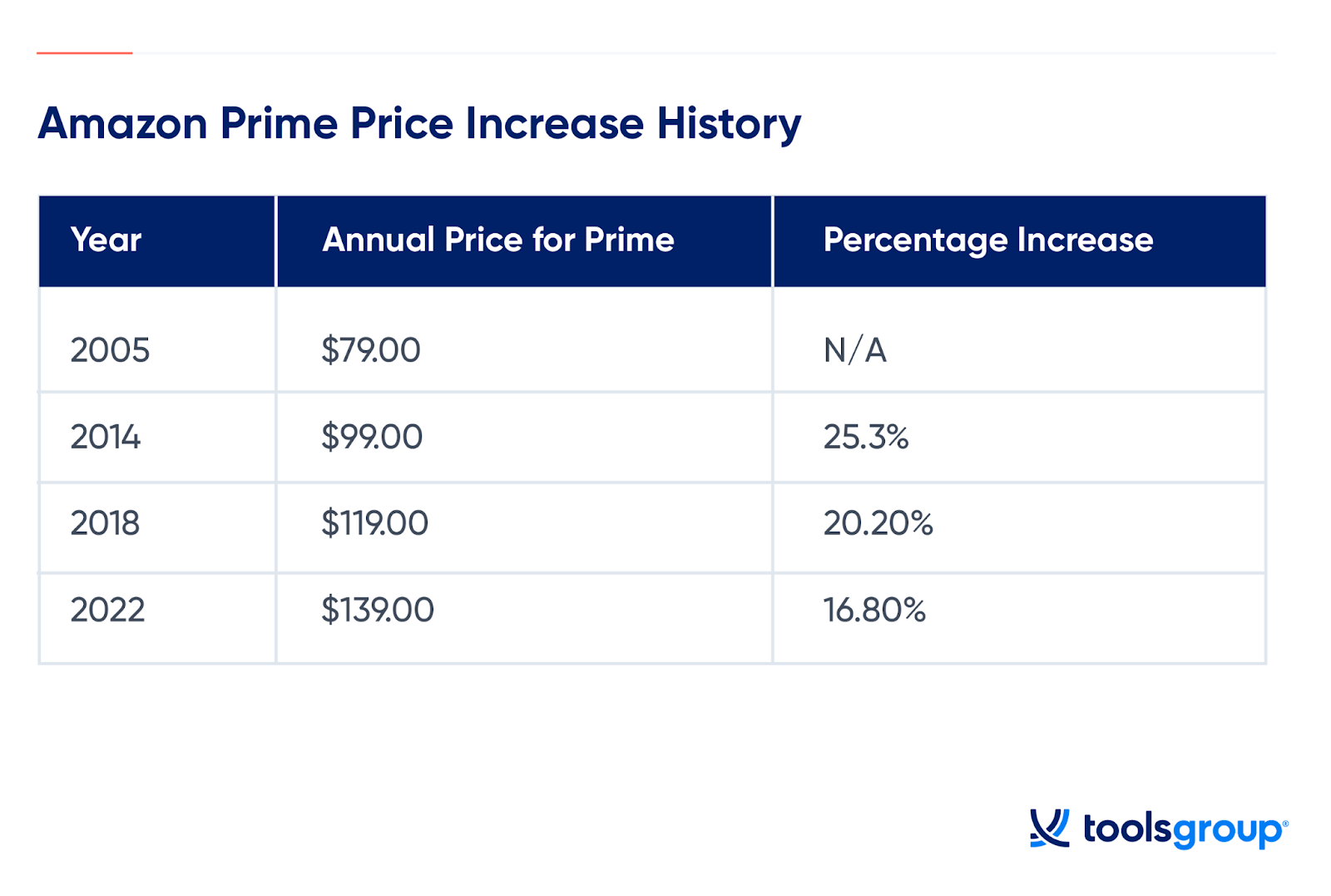
1. Deconstructing the Cost Structure: Tiers and Pricing Models
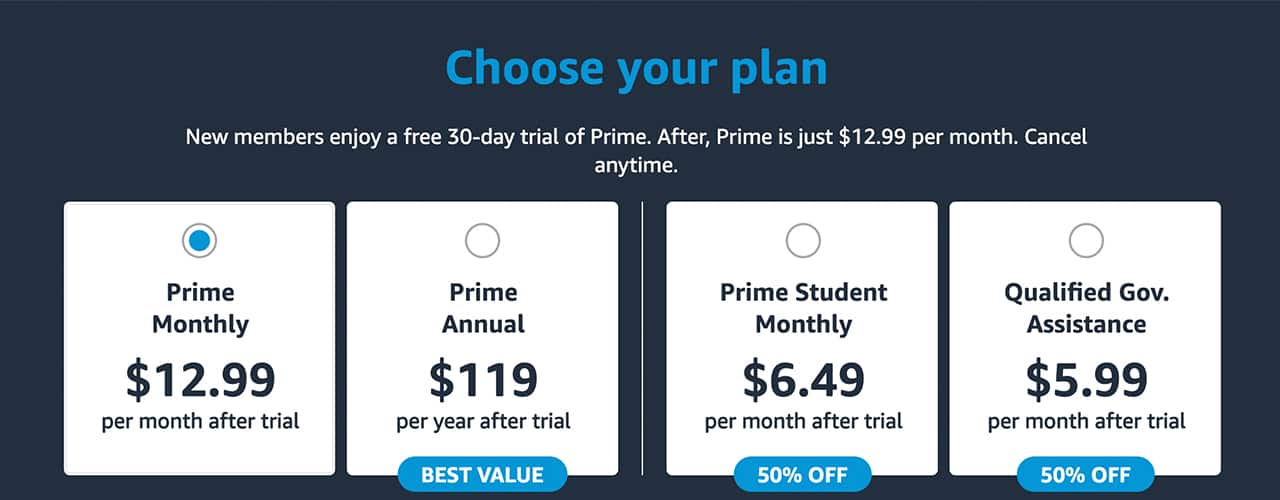
To master your personal finances, you must first have a granular understanding of your fixed expenses. Amazon Prime’s pricing is not a monolith; it is a tiered system designed to cater to different demographic segments and liquidity needs.
The Monthly vs. Annual Dilemma
As of late 2024, the standard cost of Amazon Prime is $14.99 per month. For those who prefer a long-term commitment to lower their average monthly cost, the annual membership is priced at $139 per year.
From a purely mathematical standpoint, the annual plan is the superior choice for consistent users. By paying upfront, the cost averages out to approximately $11.58 per month, representing a savings of roughly $41 per year—or a 22% discount. In the world of investing, a guaranteed 22% “return” on your capital by simply changing your payment frequency is an opportunity that shouldn’t be ignored. However, the monthly option remains a viable financial tool for those managing tight short-term cash flows or those who only plan to use the service during high-volume shopping periods like the holidays.
Reduced-Cost Memberships for Targeted Demographics
Amazon offers specific programs that significantly lower the barrier to entry, which can be a boon for a student’s budget or a household managing on a fixed income.
- Prime Student: At $7.49 per month or $69 per year, this offers the full suite of benefits at half the price.
- Prime Access: For individuals receiving qualifying government assistance (such as SNAP or Medicaid), the cost is reduced to $6.99 per month.
For these demographics, the “break-even” point—the moment where the benefits outweigh the costs—is much easier to reach, making it a high-value inclusion in a lean budget.
The “Prime Video Only” Niche
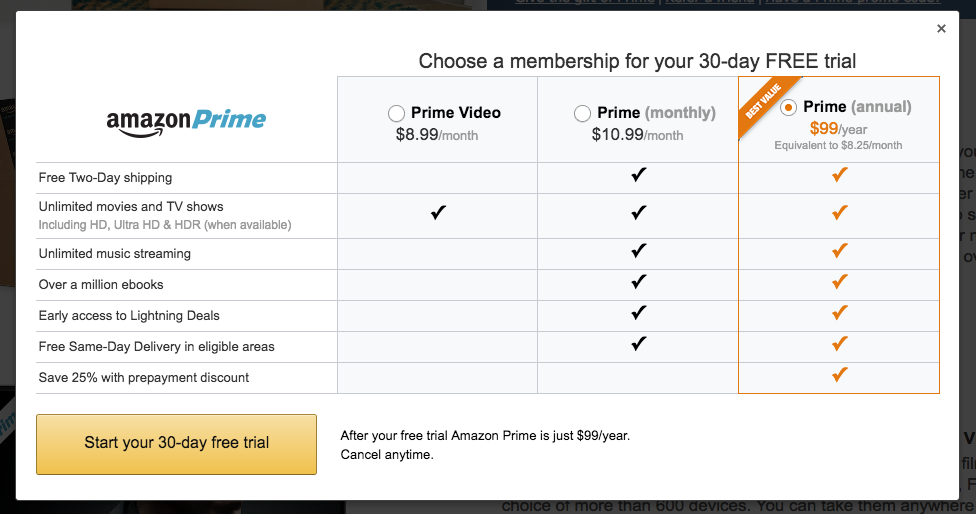
For the budget-conscious consumer who does not require expedited shipping, Amazon offers a standalone Prime Video membership for $8.99 per month. While this removes the “free shipping” perk, it serves as a focused entertainment expense for those who have already optimized their logistics elsewhere.
2. Calculating the Break-Even Point: Shipping and Logistics ROI
The primary value proposition of Amazon Prime has always been its logistics network. To determine if the membership is a “smart money” move, you must calculate your break-even point based on shipping costs.
The Shipping Math
Without Prime, standard shipping for small orders often ranges from $5.95 to $9.95. If you average the cost of shipping at $7.00 per order, you only need to make two orders per month to justify the $14.99 monthly fee. If you are on the annual plan, your “break-even” frequency drops to approximately 1.6 orders per month.
However, a savvy financial planner also accounts for the “minimum spend” threshold. Amazon typically offers free shipping on orders over $35 for non-members. Therefore, if you are disciplined enough to aggregate your purchases into larger, less frequent shipments, the financial necessity of Prime diminishes significantly.
Time as a Financial Asset
In personal finance, we often say “time is money.” The value of “Same-Day” or “One-Day” delivery isn’t just about gratification; it’s about the reduction of “errand friction.” If a Prime membership saves you two trips to a physical store per month, you are saving not just the cost of gasoline and vehicle wear-and-tear, but also the opportunity cost of your time. If you value your time at $30 an hour and Prime saves you two hours of transit and shopping time a month, the membership has effectively paid for itself four times over.
Grocery Savings via Whole Foods and Amazon Fresh
For those who integrate their grocery shopping into the Amazon ecosystem, the financial upside expands. Prime members receive an additional 10% off sale items at Whole Foods Market and access to exclusive “member-only” deals. For a family spending $800 a month on groceries, even a modest 2% total savings through these perks ($16) completely offsets the monthly cost of the membership.
3. The Prime Visa: Leveraging the Membership for Cashback
One of the most overlooked aspects of the Amazon Prime financial ecosystem is the integration of financial tools, specifically the Prime Visa credit card. For those with the discipline to use credit responsibly, this is where the membership transitions from an expense to a revenue generator.
The 5% Cashback Engine
The Prime Visa offers 5% back on all Amazon.com and Whole Foods Market purchases for Prime members. In a high-inflation environment, a 5% “discount” on household essentials, electronics, and groceries is a massive competitive advantage for your net worth.
Let’s look at the numbers: If a household spends $3,000 a year on Amazon (including groceries, gifts, and household supplies), they earn $150 in cashback. This $150 covers the $139 annual membership fee entirely, leaving a $11 surplus. In this scenario, the membership is effectively free, and every additional benefit—from streaming video to cloud storage—is a pure financial bonus.
Strategic Capital Allocation
The card also offers 2% back at restaurants and gas stations, and 1% on other purchases. While other cards may offer higher rewards in specific categories, the 5% baseline for Amazon spend is among the highest in the market. By treating the Prime membership as a “gateway” to this 5% cashback rate, users can optimize their cash flow and reinvest those rewards into savings or investment accounts.
4. Avoiding the “Convenience Tax”: The Psychological Risks
While the math can support a Prime membership, a professional financial analysis must also address the psychological impact on spending habits. Amazon’s business model is built on “frictionless” transactions. From a wealth-building perspective, friction is often your best friend.
The Trap of Impulse Spending
The ease of “One-Click” ordering and “Free Shipping” can lead to a phenomenon known as “spending creep.” When the barrier to purchase is removed, consumers tend to buy more frequently and in smaller increments. A $10 item here and a $15 item there may seem inconsequential, but they aggregate into a significant monthly drain on discretionary income.
To maintain a healthy financial profile, Prime members should implement a “24-hour rule”: place items in the cart but wait 24 hours before hitting “buy.” This reintroduces the friction necessary to evaluate whether a purchase is a “need” or a “want,” ensuring that the convenience of Prime doesn’t sabotage your long-term savings goals.
Subscription Overlap and Hidden Waste
A common financial mistake is paying for multiple services that offer redundant benefits. Amazon Prime includes:
- Prime Video (Potential redundancy: Netflix, Hulu, Disney+)
- Prime Music (Potential redundancy: Spotify, Apple Music)
- Prime Reading (Potential redundancy: Kindle Unlimited, Audible)
- Amazon Photos (Potential redundancy: Google Photos, iCloud)
If you are paying for Amazon Prime but also paying for Spotify and 2TB of Google One storage, you may be overspending by $20–$30 a month on services you already have access to through your Prime membership. Auditing your digital subscriptions once a quarter is essential for maintaining a lean budget.
5. The Opportunity Cost: Is There a Better Use for the Capital?
Finally, we must consider the opportunity cost. If you chose not to spend $139 a year on Prime, what could that money do elsewhere?
The Investment Comparison
If you invested that $139 annually into a low-cost S&P 500 index fund with an average 10% annual return, after 20 years, you would have approximately $8,700. While $139 a year feels small, the compound interest on that sum is not.
Therefore, the membership must prove its value. If the “savings” you reap from Prime (shipping, 5% cashback, grocery discounts) do not exceed the $139 cost plus the potential investment growth, then from a pure wealth-building standpoint, the membership is a net negative.
Evaluating Alternatives
In the current market, Amazon faces stiff competition from Walmart+. For $98 a year (or $12.95 monthly), Walmart+ offers free shipping, grocery delivery, and a Paramount+ subscription. For many households, particularly those in rural areas or those who prefer Walmart’s pricing on staples, the Walmart+ membership may offer a higher ROI than Amazon Prime.
Conclusion: The Final Financial Audit
So, how much is Amazon Prime per month? Physically, it’s $14.99. Financially, the answer depends entirely on your consumption patterns.
A Prime membership is a sound financial investment if:
- You make more than 25 orders per year.
- You utilize the Prime Visa to earn cashback that exceeds the membership fee.
- You consolidate your digital subscriptions (Video, Music, Storage) into the Prime ecosystem.
- You leverage Whole Foods discounts for your regular grocery needs.
Conversely, it is a financial liability if:
- It encourages frequent, low-value impulse purchases.
- You rarely use the streaming or digital benefits.
- You can easily meet the $35 free shipping threshold through disciplined, bulk ordering.
In the pursuit of financial independence, every dollar must have a purpose. By treating your Amazon Prime membership not as a “given” but as a strategic financial tool, you ensure that your monthly subscription costs are working for you, rather than against you.
aViewFromTheCave is a participant in the Amazon Services LLC Associates Program, an affiliate advertising program designed to provide a means for sites to earn advertising fees by advertising and linking to Amazon.com. Amazon, the Amazon logo, AmazonSupply, and the AmazonSupply logo are trademarks of Amazon.com, Inc. or its affiliates. As an Amazon Associate we earn affiliate commissions from qualifying purchases.