
In the rapidly evolving landscape of digital subscriptions, Amazon Prime has long been considered the “Swiss Army Knife” of value. For a single annual or monthly fee, consumers gained access to expedited shipping, a massive library of music, e-books, and, perhaps most significantly, a premium streaming service. However, the financial architecture of streaming changed significantly in early 2024 when Amazon transitioned its Prime Video service to an ad-supported model by default. This shift introduced a new question for the budget-conscious consumer: How much is Amazon ad-free, and does the incremental cost justify the investment in an era of increasing subscription fatigue?

The New Pricing Structure of Amazon Prime Video
For many years, the cost of Prime Video was “invisible,” baked into the standard Amazon Prime membership. However, as the cost of content production skyrocketed and the digital advertising market became more lucrative, Amazon adjusted its revenue model. To watch content without commercial interruptions, users must now pay a monthly surcharge on top of their existing membership fees.
Breaking Down the Monthly and Annual Costs
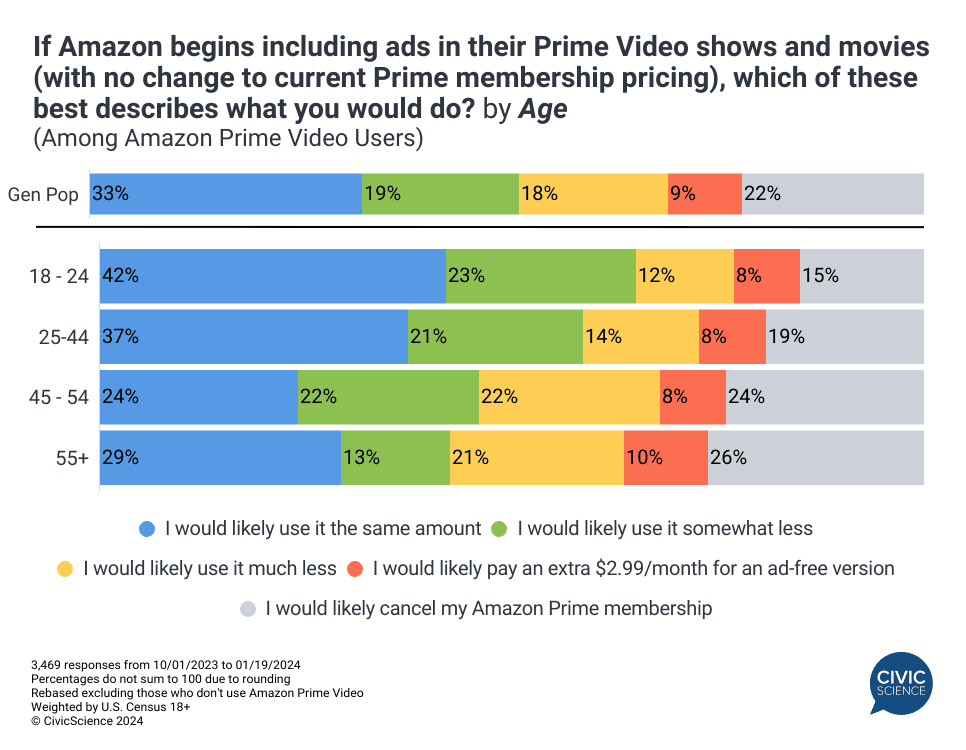
To go ad-free on Amazon Prime Video, the cost is an additional $2.99 per month. While this may seem like a nominal fee in isolation, it is essential to view it through the lens of a total annual financial commitment.
If you are a standard Amazon Prime member paying $139 per year, the ad-free upgrade adds $35.88 to your annual expenditure, bringing your total yearly cost for the “complete” Prime experience to approximately $174.88 plus applicable taxes. For those on a month-to-month Prime plan ($14.99 per month), adding the $2.99 ad-free tier brings the monthly total to $17.98. Over twelve months, this equates to $215.76.
The Standalone Video Option
For consumers who do not shop on Amazon and only want the streaming service, Amazon offers a standalone Prime Video membership for $8.99 per month. However, this base price now includes ads. To remove them, the same $2.99 surcharge applies, raising the monthly cost to $11.98. From a personal finance perspective, this standalone option is often a better deal for those who rarely use the shipping benefits but still want access to Amazon’s original programming and library.
Subscription Fatigue and the Personal Finance Impact
The transition of Amazon Prime Video to an ad-supported default is a classic example of “subscription creep.” This phenomenon occurs when a service that was once inclusive begins to unbundle its features, requiring incremental payments to maintain the same level of service previously enjoyed. For individuals managing a tight household budget, these small increases can have a compounding effect on monthly cash flow.
The “Salami Slicing” of Digital Budgets
Financial experts often refer to these $2.99 or $3.00 increases as “salami slicing”—small, thin cuts into a consumer’s disposable income that are individually negligible but collectively significant. When you add a $2.99 surcharge to Amazon, a $2.00 increase to Netflix, and a price hike on Disney+, a household can easily find itself paying $20 to $30 more per month than they were just two years ago for the exact same services.
When auditing your personal finances, it is crucial to move beyond looking at the $2.99 price tag and instead evaluate the “cost-per-hour” of entertainment. If you watch twenty hours of Prime Video a month, the ad-free upgrade costs you roughly 15 cents per hour of uninterrupted viewing. If you only watch one movie a month, that cost jumps to nearly $1.50 per hour.
Opportunity Cost and Automated Renewals
One of the most significant risks to personal finance in the digital age is the “set it and forget it” nature of subscriptions. Amazon’s ad-free tier is a recurring charge. For an investor, $35.88 per year (the cost of the ad-free upgrade) might seem small. However, if that same amount were invested in a low-cost index fund with a 7% average annual return, over 30 years, it would grow to nearly $3,400. While this doesn’t mean you shouldn’t enjoy ad-free movies, it highlights the importance of making conscious, rather than passive, financial decisions.
Business Strategy: Why Amazon Shifted to an Ad-Supported Default
Understanding “how much” Amazon ad-free costs also requires an understanding of the business finance behind the move. Amazon is not merely looking for an extra $3 from its users; it is building one of the most sophisticated advertising machines in history.
The Economics of ARPU (Average Revenue Per User)
In the world of corporate finance, streaming services are judged by their Average Revenue Per User (ARPU). By introducing ads, Amazon creates a two-pronged revenue stream. Users who choose to stay on the ad-supported tier generate revenue for Amazon through high-margin advertising sales. Users who pay the $2.99 to opt-out provide direct, high-margin subscription revenue.
In many cases, the ad-supported user is actually more valuable to the company than the ad-free user. If Amazon can show a viewer four minutes of ads per hour and sell those slots at a premium, they may earn more than $2.99 per month from that viewer. By setting the ad-supported tier as the default, Amazon ensured an overnight audience of tens of millions for its advertisers, a move that significantly boosted its valuation in the ad-tech space.
Content Valuation and Profitability
The “Peak TV” era, characterized by massive budgets for original series like The Rings of Power, has forced streaming providers to seek more sustainable paths to profitability. The days of using low-cost subscriptions to fuel rapid user growth are over. Now, the focus is on “monetizing the base.” For Amazon, the ad-free surcharge is a way to offset the multi-billion dollar annual spend on content without raising the base price of Prime so high that it triggers mass cancellations.
Comparing the Value: Amazon Ad-Free vs. Competitors
To determine if the $2.99 upgrade is a sound financial move, one must compare it to the broader market. When positioned against other major streaming platforms, Amazon’s pricing remains competitive, though the “total package” value is where the decision usually lies.
Ad-Free Pricing Across the Industry
-
Netflix: The Standard ad-free plan is currently $15.49 per month, while the Premium 4K plan is $22.99.
-
Disney+ / Hulu: The ad-free bundle typically ranges from $19.99 to $24.99 depending on the specific inclusions.
-
Max (formerly HBO Max): The ad-free tier is $16.99 per month, with a “rest of the world” tier at $20.99.
When you look at Amazon Prime’s $14.99 (base) + $2.99 (ad-free) = $17.98, it sits squarely in the middle of the market. However, from a financial perspective, Amazon offers the “rebate” of shipping and other services. If you value the shipping at $10 a month, your “effective cost” for ad-free video drops to $7.98, making it arguably the cheapest premium ad-free service on the market.
The Quality vs. Quantity Financial Trade-off
Different platforms offer different financial values based on their libraries. A consumer focused on maximizing their “entertainment ROI” might rotate subscriptions. For example, paying for Amazon ad-free for three months to catch up on specific series, then canceling that surcharge (or the whole service) to move to another platform. This active management of digital assets is a hallmark of sophisticated personal financial management in the 2020s.
Maximizing Your Digital Dollars: Is Ad-Free Worth the Investment?
Deciding whether to pay for the ad-free tier on Amazon Prime is ultimately a question of how you value your time versus your money.
The Value of Time
The average ad-supported streaming service shows between 4 to 6 minutes of commercials per hour. If you watch 10 hours of content a week, you are spending roughly 40 to 60 minutes a month watching advertisements. By paying $2.99, you are essentially “buying back” an hour of your time for three dollars. For most professionals, an hourly rate of $3 is an incredibly cheap price to pay for time.
However, if you find that ads do not bother you, or if you use that time to check emails or perform quick household tasks, the $2.99 is an unnecessary leak in your budget.

Financial Auditing Tips
To decide if you should keep or cancel the Amazon ad-free upgrade, consider the following steps:
-
Check Usage Stats: Look at how many hours you actually spent on Prime Video last month.
-
Evaluate the Experience: Are the ads repetitive or intrusive? Amazon’s ad load is currently lighter than traditional cable, but it may increase over time.
-
The “Annual Flip”: If you are certain you want ad-free, check if there is an annual option. While Amazon currently bills the $2.99 monthly, staying alert for annual “bundles” can sometimes shave off a percentage of the cost.
-
Consolidate: If you are paying for the ad-free surcharge on five different platforms, choose your “top two” and accept ads on the others. This can save you over $150 a year.
The question of “how much is Amazon ad-free” is simple on the surface—$2.99 a month. Yet, beneath that number lies a complex web of corporate strategy, market positioning, and personal finance trade-offs. By understanding the true cost and the mechanisms behind these pricing shifts, consumers can move from being passive payers to active, informed managers of their digital wealth.
aViewFromTheCave is a participant in the Amazon Services LLC Associates Program, an affiliate advertising program designed to provide a means for sites to earn advertising fees by advertising and linking to Amazon.com. Amazon, the Amazon logo, AmazonSupply, and the AmazonSupply logo are trademarks of Amazon.com, Inc. or its affiliates. As an Amazon Associate we earn affiliate commissions from qualifying purchases.