
In the landscape of personal finance, the “subscription economy” has transformed from a convenient luxury into a significant monthly line item for the average household. Amazon Prime, once a simple $79-per-year service for free shipping, has evolved into a complex ecosystem of digital benefits. However, a major shift in the platform’s monetization strategy has left many consumers asking a critical financial question: How much is ad-free Amazon Prime now, and does the added expense align with a sound personal budget?
As of 2024, the cost of removing advertisements from Amazon Prime Video requires a supplemental monthly fee of $2.99. This is an add-on to the existing Prime membership, which currently sits at $14.99 per month or $139 per year. When you factor in this “ad-free tax,” the total annual investment for a seamless viewing experience rises significantly, marking a new chapter in the rising cost of digital living.

Breaking Down the Costs: The New Math of Amazon Prime
To manage a household budget effectively, one must look beyond the sticker price and calculate the cumulative impact of these recurring fees. Amazon’s decision to transition Prime Video to an ad-supported model by default—while charging an extra premium to opt-out—changes the value proposition of the membership entirely.
The Monthly vs. Annual Calculation
For those who pay for Prime on a monthly basis, the financial breakdown is as follows:
-
Base Membership: $14.99 per month.
-
Ad-Free Supplement: $2.99 per month.
-
Total Monthly Outlay: $17.98 (plus applicable taxes).
For annual members, the math shifts slightly but remains a notable increase:
-
Annual Base Membership: $139.00 per year.
-
Annual Ad-Free Supplement: $35.88 per year (calculated as $2.99 x 12).
-
Total Annual Outlay: $174.88.
When viewed as a single transaction, $174.88 represents a substantial jump from the $79 or $99 price points many long-term subscribers remember. From a financial planning perspective, this represents a 25% increase over the base annual membership fee just to maintain the same user experience that was previously included in the standard price.
Comparing Student and Discounted Tiers
Amazon also offers Prime Student and EBT/Medicaid discounted tiers. For these users, the $2.99 ad-free fee remains the same. Since their base membership is lower ($7.49 for students or $6.99 for qualified government assistance recipients), the $2.99 add-on represents a much larger percentage of their total bill. For a student, the ad-free experience increases their monthly streaming cost by nearly 40%, making it a difficult pill to swallow for those on a strict collegiate budget.
The Economics of the Ad-Free Upsell
To understand why this change occurred, we must look at the broader corporate strategy and market trends. The streaming industry has reached a “saturation point” where acquiring new users is more expensive than increasing the revenue generated from existing ones. This metric, known as Average Revenue Per User (ARPU), is now the primary focus for Amazon’s financial analysts.
The Two-Pronged Revenue Stream
By introducing ads and an ad-free tier, Amazon creates two distinct revenue paths. For users who choose to stay with the ad-supported version, Amazon earns money from advertisers. For those who opt for the $2.99 upgrade, Amazon earns direct subscription revenue. In many cases, the advertising revenue generated from a single user can actually exceed the $2.99 upgrade fee, which explains why the company was willing to risk consumer backlash to implement this change.
Inflation and Digital Services
The “ad-free” fee is also a reflection of broader economic inflation affecting the tech sector. The cost of producing high-end content—such as The Rings of Power or Thursday Night Football—has skyrocketed. To sustain these multi-billion dollar investments without raising the base Prime price to a level that would cause mass cancellations (the “churn” rate), Amazon chose a tiered approach. This allows them to maintain a lower “entry price” while segmenting the market based on a consumer’s willingness to pay for convenience.

Is the Ad-Free Upgrade Worth the Investment? A Cost-Benefit Analysis
From a personal finance standpoint, determining the “value” of $2.99 per month requires a look at opportunity cost and the value of time.
Valuing Your Time
The average hour of ad-supported streaming content contains approximately four to five minutes of commercials. If an individual watches 20 hours of Prime Video a month, they are consuming roughly 80 to 100 minutes of advertisements.
- The Math: At $2.99 for 90 minutes of saved time, you are effectively “buying back” your time at a rate of approximately $2.00 per hour.
For a high-earning professional or a busy parent, “purchasing” an hour and a half of silence or additional leisure time for $3 may be a bargain. However, for those focused on aggressive debt repayment or high-yield savings, that $36 a year (after tax) could be better served in a Roth IRA or an emergency fund.
The Competition Landscape
When deciding whether to pay for ad-free Prime, one must compare it to other financial commitments in the streaming space:
-
Netflix: The Standard plan is $15.49 (ad-free), while the “Standard with ads” is $6.99.
-
Disney+: The ad-free version is $13.99, while the ad-supported version is $7.99.
-
Hulu: A similar $10 gap exists between ad-supported and ad-free tiers.
Amazon’s $2.99 “bridge” is actually one of the smaller price gaps in the industry. However, unlike Netflix or Disney+, Prime Video is bundled with shipping, music, and reading benefits. This makes it a “sticky” subscription—one that users are less likely to cancel because they rely on the shipping benefits. Amazon is leveraging this “stickiness” to nudge users into the higher-priced tier.
Strategies for Managing Subscription Inflation
As digital costs continue to creep upward, savvy consumers must employ specific financial strategies to ensure their “money leaks” don’t sink their long-term goals.
The “Rotation” Strategy
One of the most effective ways to combat subscription inflation is the rotation method. Instead of paying for ad-free Amazon Prime, Netflix, and Max simultaneously, choose one platform per month. You can pay the $2.99 for ad-free Prime in December when you have time for holiday movies, then cancel the add-on in January when you return to a busy work schedule. Since these are month-to-month commitments, you have total control over the toggle.
The Annual Audit
Treat your digital subscriptions like a business treats its overhead. Once a quarter, review your credit card statements for “hidden” fees like the Prime ad-free supplement. If you find that you are mostly using Prime for the 2-day shipping and rarely watching the video content, the $2.99 fee is an unnecessary drain on your capital.
Assessing the “Bundle” Value
For many, the $139/year for Prime is justified solely by shipping savings. If you place 30 orders a year, you are paying roughly $4.60 per shipment. If the video content is merely a “bonus,” then paying extra to remove ads is likely a poor financial move. Conversely, if you have cut the cord on cable and Prime is your primary source of entertainment, the $174.88 total cost is still significantly cheaper than a $100/month cable package.
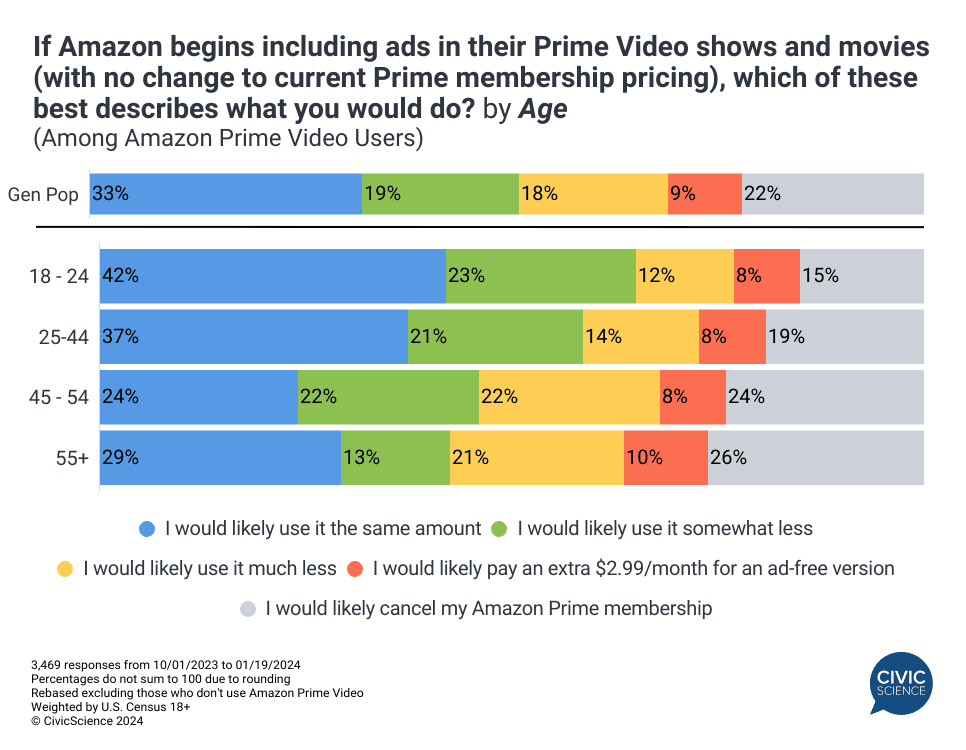
The Future of Digital Costs: What to Expect
The introduction of the ad-free fee for Amazon Prime is unlikely to be the last price adjustment we see. As the cost of capital remains high and tech companies face pressure from shareholders to deliver consistent dividends and growth, the “unbundling” of services will likely continue.
We are entering an era of “modular subscriptions,” where the base price gives you a skeleton service, and every additional feature—4K resolution, ad-free viewing, or offline downloads—comes with a micro-fee. From a wealth-building perspective, the challenge is to avoid the “death by a thousand cuts.” A $2.99 fee here and a $1.99 storage fee there can quickly escalate into hundreds of dollars in annual “passive spending.”
In conclusion, ad-free Amazon Prime currently costs an additional $2.99 per month, bringing the total annual commitment to approximately $175 for standard members. While this may seem like a minor expense in isolation, it represents a broader trend of rising digital costs. By calculating the true annual impact, valuing your time versus the dollar cost, and staying disciplined with subscription audits, you can enjoy your entertainment without compromising your financial health. The goal is to ensure that you are a conscious consumer of digital goods, rather than a passive source of recurring revenue for big tech.
aViewFromTheCave is a participant in the Amazon Services LLC Associates Program, an affiliate advertising program designed to provide a means for sites to earn advertising fees by advertising and linking to Amazon.com. Amazon, the Amazon logo, AmazonSupply, and the AmazonSupply logo are trademarks of Amazon.com, Inc. or its affiliates. As an Amazon Associate we earn affiliate commissions from qualifying purchases.