
Deciding to lease a Tesla is no longer just a lifestyle choice for tech enthusiasts; it is a significant financial decision that requires a deep dive into personal cash flow, tax implications, and the total cost of ownership. As the electric vehicle (EV) market matures, the financial structures surrounding these vehicles have become increasingly complex. Understanding how much a Tesla lease truly costs involves looking far beyond the advertised monthly payment on the manufacturer’s website.
From the entry-level Model 3 to the high-performance Model X, leasing offers a way to drive a cutting-edge vehicle with a lower upfront capital commitment than a traditional loan. However, the unique “no-buyout” policy on certain models and the specific ways federal tax credits are applied to leases make the math different for Tesla than for almost any other automaker. This guide breaks down the financial components of a Tesla lease to help you determine if it aligns with your broader fiscal strategy.
Understanding the Monthly Breakdown: Current Tesla Leasing Rates
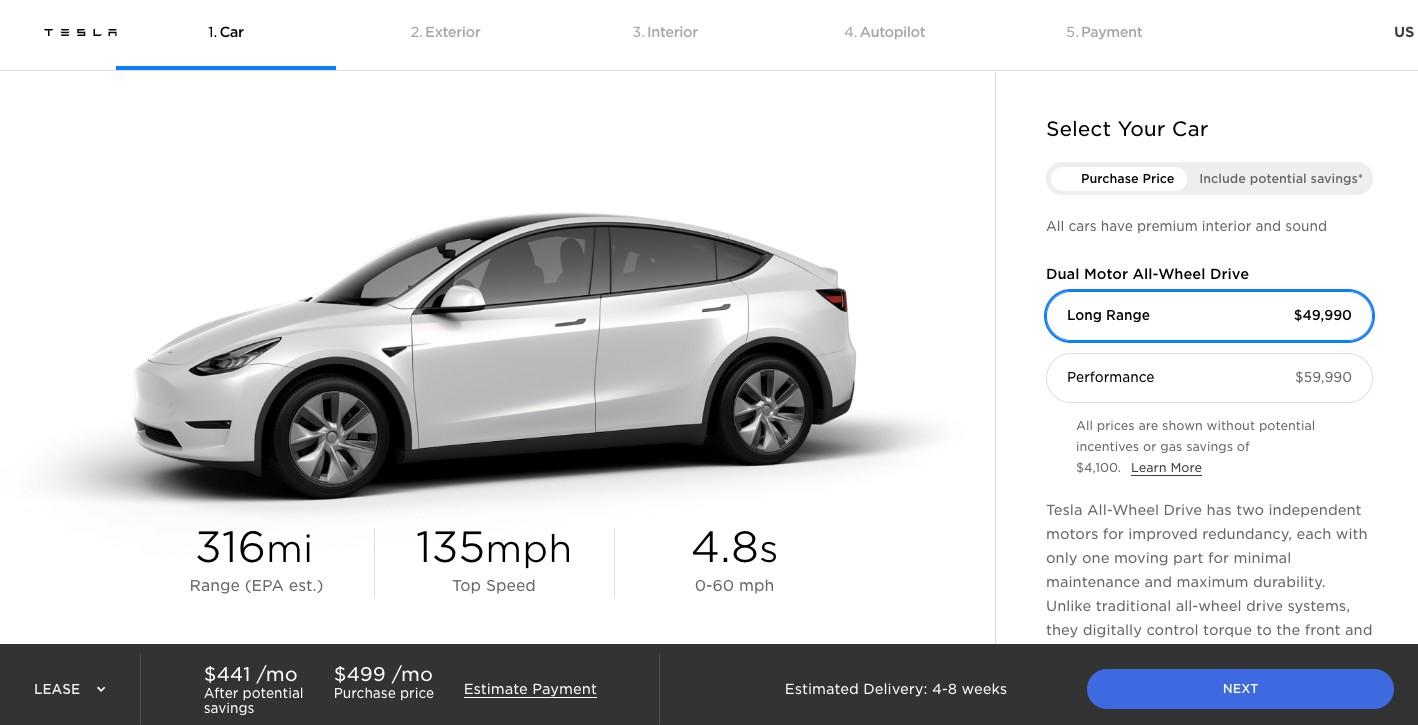
The most immediate question any prospective driver has is: “What is the monthly check?” Tesla’s pricing is famously dynamic, fluctuating based on supply chain efficiencies, interest rates, and competitive pressure. Generally, Tesla leases are structured over 36 months with mileage options of 10,000, 12,000, or 15,000 miles per year.
Model 3 and Model Y Entry Points
The Model 3 remains the most accessible entry point into the Tesla ecosystem. For a standard Rear-Wheel Drive Model 3, monthly lease payments typically hover between $350 and $450, assuming a standard down payment of approximately $3,000 to $4,500. This makes it competitive with mid-range internal combustion engine (ICE) sedans from brands like BMW or Audi.
The Model Y, currently the world’s best-selling vehicle, commands a slight premium. Monthly payments for the Long Range All-Wheel Drive version often fall between $450 and $550. For families looking to transition to electric, the Model Y represents a balance between utility and manageable monthly cash outlays. It is important to note that these figures are base estimates; adding features like Enhanced Autopilot or Full Self-Driving (FSD) as a subscription or upfront cost will shift these numbers significantly.
The Premium Tier: Model S and Model X
For those targeting the flagship models, the financial commitment scales rapidly. The Model S sedan and Model X SUV are premium assets with lease payments that reflect their six-figure price tags. A Model S lease typically starts around $1,000 to $1,200 per month, while the Model X often exceeds $1,300 per month.
At this level, the financial conversation shifts from “affordability” to “capital efficiency.” High-net-worth individuals or business owners often prefer leasing these models to keep their liquidity available for investments that yield a higher return than the interest saved by purchasing the vehicle outright.
The Total Cost of Ownership: Beyond the Monthly Payment
To accurately assess the cost of a Tesla lease, one must look at the “hidden” numbers that do not appear in the bolded headline on the order page. These are the ancillary costs that impact your monthly budget and overall net worth.
Down Payments and Acquisition Fees
Tesla usually requires a “due at signing” amount that includes the first month’s payment, a security deposit (in some cases), an acquisition fee (typically around $695), and the capitalized cost reduction (the down payment). For a Model Y, a $4,000 down payment sounds manageable, but when you add the $1,390 destination fee and local registration taxes, your initial cash outlay could easily exceed $6,000. From a personal finance perspective, this is “sunk capital”—money that will never be recovered because you do not own the asset at the end of the term.
Insurance Premiums for Electric Vehicles
Insurance is a frequently overlooked variable in the Tesla cost equation. Because Teslas are high-tech machines with aluminum intensive frames and specialized sensor suites, repair costs are significantly higher than average. Consequently, insurance premiums can be 20% to 50% higher than for a comparable gas-powered car. Tesla offers its own insurance product in certain states, using real-time driving behavior to calculate premiums, which can save money for safe drivers but add volatility to the monthly budget for others.
Charging Costs vs. Fuel Savings
The primary financial “win” in leasing a Tesla is the displacement of gasoline costs. Depending on your local electricity rates, charging at home can cost a fraction of what you would spend at the pump. For a driver covering 12,000 miles a year, the savings can range from $1,000 to $2,500 annually. However, if you rely heavily on the Tesla Supercharger network, the cost-per-mile increases, narrowing the margin of savings. When calculating your “effective” lease payment, you should subtract your estimated fuel savings from the monthly payment to see the true impact on your disposable income.
The Financial Mechanics of Leasing vs. Buying a Tesla
In the world of finance, the decision to lease or buy often comes down to who takes the risk on the asset’s residual value. With Tesla, this calculation has a unique twist.
Depreciation and Residual Value
All vehicles depreciate, but EVs face unique pressure due to rapid technological advancement. A three-year-old Tesla might have a significantly shorter range or slower charging speed than a brand-new model, which can tank its resale value. By leasing, you shift the risk of “technological obsolescence” to Tesla Financial Services. You are essentially paying for the depreciation that occurs during the most volatile years of the car’s life, and at the end of the 36 months, you simply hand back the keys.
Tax Credits and State Incentives
The federal EV tax credit (up to $7,500) has undergone significant changes under the Inflation Reduction Act. While purchasing a Tesla has strict income and battery-sourcing requirements to qualify for the credit, leasing bypasses many of these hurdles. Under current IRS “commercial vehicle” loopholes, the leasing company (Tesla) receives the $7,500 credit and can choose to pass it on to the consumer in the form of lower monthly payments. This often makes leasing a Model 3 or Model Y more financially attractive than buying for those who wouldn’t otherwise qualify for the tax credit due to high income.
Business Use and Deductions
For entrepreneurs and business owners, leasing a Tesla can be a sophisticated tax move. If the vehicle is used for business more than 50% of the time, the lease payments can often be deducted as a business expense. This is frequently more advantageous than the standard mileage deduction, especially for the high-cost Model X. Consulting with a tax professional is essential here, as the “luxury auto” limits may apply, but generally, leasing provides a cleaner paper trail for business write-offs than purchasing and depreciating a capital asset.
Strategic Considerations Before Signing a Lease
Before committing to a three-year contract, there are two specific Tesla policies that can drastically alter your long-term financial health.
Mileage Limits and Overage Charges
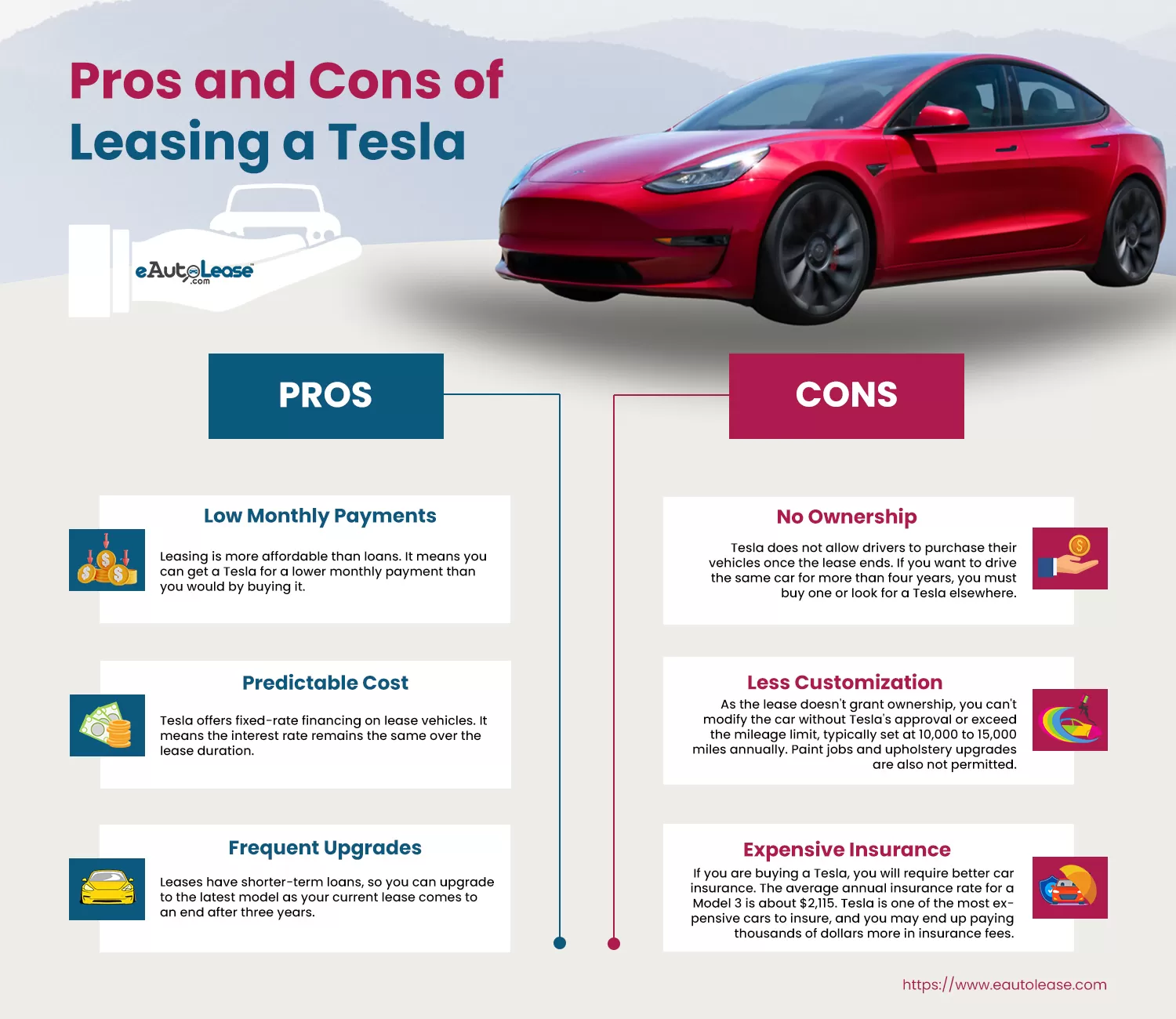
Tesla is rigorous about its mileage limits. Standard leases usually offer 10,000 miles per year. If you exceed this limit, the overage fee is typically $0.25 per mile. While this seems small, an extra 5,000 miles over the life of the lease results in a $1,250 bill at the end. For those with long commutes, it is almost always more cost-effective to pay for a higher mileage tier upfront than to pay the penalty at the end.
The “No Buyout” Policy: A Financial Limitation
This is the most critical factor for any finance-minded individual: For the Model 3 and Model Y, Tesla currently does not allow lessees to purchase the vehicle at the end of the lease. In a traditional lease, if the car is worth $35,000 at the end of the term but your “buyout” price was set at $30,000, you have $5,000 in equity. You could buy the car and sell it for a profit.
With Tesla’s current policy, you cannot capture that equity. You must return the car. This means you are strictly a “renter” of the technology. For the Model S and Model X, buyouts are currently permitted, allowing for potential equity capture, but the lack of this option on the more popular models is a significant financial disadvantage compared to leasing a vehicle from a manufacturer like Ford or Hyundai.

Is a Tesla Lease Worth It for Your Portfolio?
From a personal finance perspective, a Tesla lease is a tool for cash flow management and risk mitigation. It allows you to drive a premium, high-tech vehicle while keeping your capital liquid and avoiding the headache of selling a used EV in a rapidly changing market.
However, the “cost” of a Tesla lease is the sum of the monthly payments, the upfront fees, the higher insurance, and the “opportunity cost” of the equity you cannot build. If you prioritize having the latest software and hardware every three years and you can leverage the $7,500 lease incentive to lower your payments, leasing is a highly efficient way to utilize your capital.
Conversely, if you plan to keep a vehicle for seven to ten years, the math almost always favors a purchase. In the long run, the cheapest car is the one you own outright, but in the fast-moving world of Tesla technology, the flexibility of a lease offers a different kind of value—one that protects your balance sheet from the unpredictable fluctuations of the secondary EV market. When asking “how much is a Tesla lease,” ensure you are looking at the total three-year drain on your net worth, rather than just the number that fits into your monthly budget.
aViewFromTheCave is a participant in the Amazon Services LLC Associates Program, an affiliate advertising program designed to provide a means for sites to earn advertising fees by advertising and linking to Amazon.com. Amazon, the Amazon logo, AmazonSupply, and the AmazonSupply logo are trademarks of Amazon.com, Inc. or its affiliates. As an Amazon Associate we earn affiliate commissions from qualifying purchases.