
Tesla, Inc. (TSLA) is perhaps the most scrutinized and debated stock in the modern financial era. For many retail investors, the question “how much is a share of Tesla?” is the starting point of a much deeper journey into the world of equity markets, valuation models, and the future of transportation. Because Tesla’s stock price fluctuates by the second during trading hours, the “cost” of a share is more than just a numerical value on a ticker; it represents a fractional ownership in a company that has redefined the automotive and energy industries.
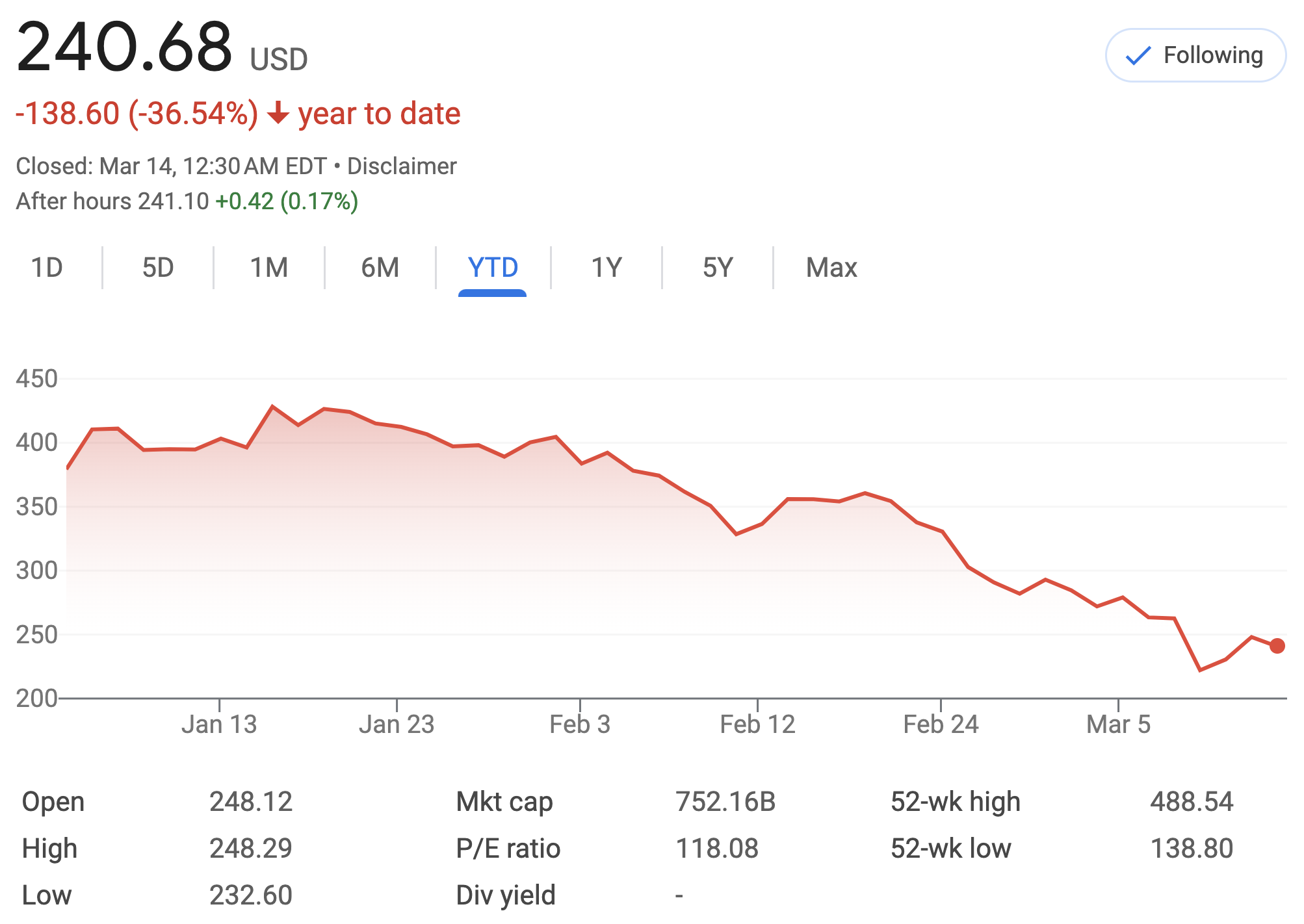
To understand how much a share of Tesla costs, one must look beyond the immediate price quote and examine the factors that drive its valuation, the history of its price movements, and the practical steps required to add this volatile asset to a diversified investment portfolio.
Understanding Tesla’s Market Valuation and Price Fluctuations
The price of a single share of Tesla is determined by the total market capitalization of the company divided by the number of shares outstanding. Unlike traditional legacy automakers, Tesla’s share price often reflects its potential as a technology and energy firm rather than just a manufacturer of hardware. This leads to significant volatility, where the price can swing several percentage points in a single day based on macroeconomic data, earnings reports, or even social media activity.
The Dynamics of Tesla’s Stock Price
When an investor asks for the price of Tesla, they are looking at a real-time reflection of market sentiment. If the stock is trading at $200, it does not necessarily mean it is “cheaper” than when it was at $400, especially if a stock split has occurred. The “price” is a function of supply and demand. In the “Money” niche, we analyze this through the lens of valuation multiples, such as the Price-to-Earnings (P/E) ratio. Tesla has historically maintained a high P/E ratio compared to the S&P 500, suggesting that investors are paying a premium for expected future growth rather than current profits alone.
Historical Stock Splits and Their Impact on Accessibility
Tesla has undergone two significant stock splits in recent years: a 5-for-1 split in August 2020 and a 3-for-1 split in August 2022. Stock splits are critical for individual investors to understand because they change the nominal price of a share without changing the company’s overall valuation. For example, if you owned one share worth $900 before a 3-for-1 split, you would afterwards own three shares worth $300 each. These moves are often strategic, intended to make “how much a share costs” more affordable for retail investors who may not have access to fractional trading, thereby increasing liquidity in the market.
Key Factors Influencing Tesla’s Share Price
The cost of a Tesla share is not arbitrary; it is a reflection of the company’s operational health and its perceived future dominance. Investors who track Tesla’s price must keep a close eye on specific financial and industrial metrics that act as catalysts for price movement.
Production Volume and Quarterly Deliveries
In the world of business finance, “deliveries” are the gold standard for Tesla. Every quarter, the company releases its delivery and production numbers, which usually precedes its full earnings report. If Tesla delivers more vehicles than analysts expected, the share price typically rises. Conversely, any hint of a “miss” in delivery targets or a slowdown in production at the Gigafactories (such as those in Austin, Berlin, or Shanghai) can lead to a sharp decline in share price. For the investor, these numbers are the pulse of the company’s revenue engine.
Innovation and Future Projects: Beyond the EV
A significant portion of Tesla’s share price is “priced in” based on future technologies. This includes Full Self-Driving (FSD) software, the Optimus humanoid robot, and the Robotaxi network. From a financial perspective, these represent high-margin software revenue streams that differ from the capital-intensive business of building cars. When Tesla announces a breakthrough in AI or a new battery chemistry, the market often revalues the stock upward, viewing it more as a software-as-a-service (SaaS) company rather than a traditional industrial firm.
The Role of Leadership and Market Sentiment
It is impossible to discuss the price of TSLA without mentioning its CEO, Elon Musk. In the realm of personal finance and investing, “key person risk” is a vital concept. Musk’s public statements, his involvement in other ventures like X (formerly Twitter) or SpaceX, and his sales of Tesla stock to fund those ventures have historically caused massive ripples in the share price. Investors must weigh the visionary leadership Musk provides against the volatility his personal brand introduces to their portfolio.

How to Buy Tesla Shares: A Step-by-Step for New Investors
If you have determined that the current price of a Tesla share aligns with your investment goals, the next step is execution. Buying a share is easier today than ever before, but it requires a strategic approach to minimize fees and maximize security.
Choosing the Right Brokerage and Account Type
To purchase Tesla stock, you need a brokerage account. In the modern fintech landscape, you have several options:
- Traditional Brokerages: Firms like Charles Schwab or Fidelity offer robust research tools and tax-advantaged accounts like IRAs.
- Mobile-First Platforms: Apps like Robinhood or Public are popular for their user-friendly interfaces and zero-commission trading.
- International Platforms: For those outside the U.S., platforms like eToro or Interactive Brokers provide access to the NASDAQ exchange where Tesla is listed.
Choosing the right “bucket” for your shares is also crucial. Buying TSLA within a Roth IRA can allow your capital gains to grow tax-free, which is a significant advantage if you believe the share price will be substantially higher in a decade.
Fractional Shares: Investing with Less Capital
What if a share of Tesla is trading at $250, but you only have $50 to invest? This is where “fractional shares” come in. Many modern brokerages allow you to buy a portion of a share. This lowers the barrier to entry, allowing you to practice “dollar-cost averaging.” By investing a fixed dollar amount every month regardless of the share price, you buy more shares when the price is low and fewer when the price is high, effectively smoothing out your cost basis over time.
Analyzing Tesla as a Long-Term Investment
Determining “how much” a share is worth is different from knowing its price. Professional investors use fundamental analysis to determine the intrinsic value of the stock.
Growth vs. Value: Where Does Tesla Fit?
Tesla is firmly categorized as a “growth stock.” Unlike “value stocks” (which might trade at a discount to their book value) or “dividend stocks” (which pay out a portion of profits to shareholders), Tesla reinvests almost all of its capital into R&D and scaling production. As of now, Tesla does not pay a dividend. Therefore, the return on your investment comes solely from capital appreciation—the hope that you can sell the share for more than you paid for it.
Risks and Competitive Pressures
No investment is without risk. When evaluating Tesla’s price, one must consider the “Moat”—the competitive advantage a company has over its rivals. Tesla faces increasing pressure from Chinese EV manufacturers like BYD, as well as legacy giants like Ford and Volkswagen. Furthermore, changes in government subsidies for electric vehicles and fluctuating lithium prices can impact Tesla’s profit margins. A savvy investor looks at the share price and asks, “Is the current price accounting for these risks, or is the market being overly optimistic?”

Conclusion: Building a Diversified Portfolio with TSLA
Knowing how much a share of Tesla costs is only the first step in a broader financial strategy. While the allure of high-growth tech stocks is strong, successful personal finance is built on the foundation of diversification. Tesla’s high volatility means it can provide substantial gains, but it can also lead to significant short-term losses.
For most investors, Tesla should represent a calculated portion of a portfolio, balanced by broader index funds or ETFs that track the S&P 500 (where Tesla is a major constituent). By understanding the mechanics of the share price, the factors that drive its growth, and the tools available for purchasing it, you can move from simply asking “how much is a share?” to making an informed decision that aligns with your long-term wealth-building goals. Whether you are buying a single fractional share or a thousand shares, the key is to remain focused on the underlying business fundamentals rather than the daily noise of the ticker tape.
aViewFromTheCave is a participant in the Amazon Services LLC Associates Program, an affiliate advertising program designed to provide a means for sites to earn advertising fees by advertising and linking to Amazon.com. Amazon, the Amazon logo, AmazonSupply, and the AmazonSupply logo are trademarks of Amazon.com, Inc. or its affiliates. As an Amazon Associate we earn affiliate commissions from qualifying purchases.