
Securing a rental car for a short two-day period might seem straightforward, but the actual cost can fluctuate significantly based on a multitude of factors. For consumers focused on financial prudence, understanding these variables is crucial to budgeting effectively and avoiding unexpected expenses. From the base daily rate to an array of mandatory and optional fees, the final price tag can encompass far more than the initial quote. This guide delves into the financial intricacies of a two-day car rental, providing insights to help you manage your budget and secure the best possible deal.

Deconstructing the Daily Rate: Core Expenses and Influencers
The daily rate is the foundational cost of any car rental, representing the base price for each 24-hour period you keep the vehicle. However, this figure is rarely static and is influenced by several dynamic market forces and personal choices.
Car Class and Vehicle Type
The most obvious determinant of the daily rate is the type of car you choose.
-
Economy/Compact Cars: These are typically the most budget-friendly options, ideal for single travelers or couples needing basic transportation. Daily rates might range from $30 to $60, though this can vary wildly.
-
Mid-size/Standard Cars: Offering a balance of comfort and fuel efficiency, these are a popular choice for small families or those desiring a bit more space. Expect daily rates between $40 and $80.
-
SUVs/Vans: Necessary for larger groups, families with extensive luggage, or specific travel needs, these vehicles command higher daily rates, often starting from $70 and easily exceeding $150, especially for full-size SUVs or luxury models.
-
Luxury/Specialty Vehicles: For those seeking a premium experience, luxury sedans, sports cars, or convertibles will significantly increase the daily cost, potentially ranging from $150 to several hundred dollars per day.
Location and Demand Dynamics
Where you pick up the car plays a substantial role in its cost.
-
Airport vs. Off-Airport Locations: Rental agencies at major airports typically impose higher rates due to concession fees and surcharges passed on to the consumer. Renting from an off-airport or downtown location can often save you 10% to 30% on the base rate, though this requires arranging separate transportation to the rental office.
-
City vs. Rural Areas: Demand in bustling metropolitan areas or popular tourist destinations will generally drive up prices compared to smaller towns or less traveled regions.
-
Seasonal Fluctuations and Special Events: Rental prices surge during peak travel seasons (e.g., summer, holidays, spring break) and around major local events (concerts, festivals, conventions). Booking during these times will invariably lead to higher daily rates.
Booking Lead Time
Procrastination can be costly in the rental car market. Booking well in advance, often several weeks or even months ahead, typically secures lower daily rates. Last-minute bookings, especially during high-demand periods, can see rates jump significantly as available inventory dwindles. While last-minute deals can occasionally pop up, they are not a reliable budgeting strategy.
Beyond the Daily Rate: Unpacking Additional Fees and Charges
The sticker price you see initially is rarely the final amount you’ll pay. A myriad of mandatory and optional fees can substantially inflate the total cost of a two-day rental. Understanding these is crucial for accurate financial planning.
Mandatory Fees and Taxes
These charges are non-negotiable and are applied to nearly every rental.
-
Airport Surcharges/Concession Recovery Fees: If you rent from an airport, these fees compensate the airport for allowing rental companies to operate on their premises. They can add anywhere from 5% to 20% or more to the base rate.
-
State and Local Taxes: Similar to sales tax, these vary by location and are applied to the total rental cost.
-
Vehicle Licensing Fees/Registration Recovery Fees: These cover the cost of licensing and registering the rental fleet and are passed on to the customer.
-
Energy Surcharges: Some companies levy a small fee to offset energy costs.
Optional (But Often Assumed) Fees
These fees can be declined but are frequently added, sometimes without explicit awareness, or are essential for certain travelers.
-
Insurance Products: This is one of the largest potential add-ons.
-
Loss Damage Waiver (LDW) or Collision Damage Waiver (CDW): Covers damage to the rental vehicle itself. It can cost $10-$30+ per day.
-
Supplemental Liability Insurance (SLI): Provides additional liability coverage beyond the state minimums. Can be $10-$15+ per day.
-
Personal Accident Insurance (PAI) and Personal Effects Coverage (PEC): Covers medical expenses for occupants and theft of personal belongings, respectively.
-
Financial Tip: Before opting for rental company insurance, check if your personal auto insurance policy extends coverage to rentals, or if your credit card offers rental car insurance benefits (often CDW/LDW). This can lead to significant savings.
-
-
Fuel Options: Rental companies offer various fuel plans.
-
Pre-pay: You pay for a full tank upfront at a potentially higher-than-market rate and return empty.
-
Return Full: You refill the tank yourself before returning the car. This is almost always the most cost-effective option, provided you find a reasonably priced gas station.
-
Rental Company Refills: If you return the car with less than a full tank and haven’t pre-paid, the rental company will refill it and charge you a premium price per gallon plus a service fee. This is the most expensive option.
-
-
Additional Equipment:
-
GPS/Navigation System: Can cost $10-$15 per day. (Your smartphone often suffices.)
-
Child Safety Seats: Essential for families, these can be $10-$20 per day per seat.
-
Toll Pass/Transponder: Often charges a daily fee plus the cost of tolls, sometimes with an additional service charge per toll. For a two-day rental, consider if you’ll be using toll roads frequently enough to warrant this.
-
-
Additional Driver Fee: If someone else will also be driving, expect a daily fee of $10-$15 per extra driver, unless they are a spouse or domestic partner (often waived) or part of a loyalty program benefit.
-
Underage Driver Fee: Drivers under 25 (typically 21-24) are often subject to a daily surcharge, which can be substantial ($25-$45+ per day).
Strategies for Cost Reduction: Smart Savings on Your Rental

Navigating the financial landscape of rental cars requires an informed approach. With a few strategic moves, you can significantly reduce the total cost of your two-day rental.
Leverage Comparison Shopping and Discount Programs
-
Aggregators and Direct Bookings: Use online aggregators (Kayak, Expedia, Priceline) to compare prices across multiple agencies. Then, check the rental company’s direct website, as they sometimes offer exclusive online deals or loyalty program benefits.
-
Discount Codes and Coupons: Search for promo codes from various sources (travel sites, coupon aggregators, email newsletters from rental companies).
-
Loyalty Programs: If you rent frequently, joining a rental company’s loyalty program can yield benefits like discounted rates, free upgrades, waived additional driver fees, or expedited service.
-
Membership Discounts: Check if you have discounts through AAA, AARP, Costco, or your employer, as these can offer significant savings.
Optimize Your Insurance Strategy
As mentioned, insurance can be a major expense.
-
Personal Auto Insurance: Review your personal auto insurance policy to understand its rental car coverage. Many comprehensive policies extend collision and liability coverage to rentals within your home country.
-
Credit Card Benefits: Many premium credit cards offer secondary (or sometimes primary) collision damage waiver coverage for rental cars. Understand the terms and conditions, including eligible car types, rental duration limits, and excluded countries. Using a card with this benefit can save you $20-$60 for a two-day rental.
-
Third-Party Insurance: Companies like Allianz or RentalCover.com offer standalone rental car insurance policies that are often more comprehensive and less expensive than what the rental company offers.
Fuel Management
- Return Full Policy: Always opt to return the car with a full tank. Locate gas stations near the airport or drop-off point in advance to avoid last-minute rush pricing. Calculate the cost difference between refueling yourself versus the rental company’s rates – the savings can be substantial even for a short trip.
Strategic Booking and Pickup
-
Booking in Advance: Aim to book at least 2-4 weeks out for the best rates, especially during peak seasons or for popular destinations.
-
Off-Airport Locations: If feasible, consider picking up your car from a non-airport branch. The savings on airport surcharges can easily offset the cost of a taxi or ride-share to the location for a two-day rental.
-
Weekend vs. Weekday Rates: Be aware that weekend rates (Friday-Sunday) are often higher than weekday rates. If your two-day rental spans a weekend, expect to pay a premium. Some companies offer specific “weekend deals,” but these might require a minimum of three days or specific pickup/drop-off times.
-
Understand the 24-Hour Billing Cycle: Rental car companies typically charge based on 24-hour periods. If you pick up at 10 AM on day one and return at 11 AM on day three, you might be charged for three full days. Try to align your pickup and drop-off times to maximize your two-day rental within a 48-hour window.
Avoid Unnecessary Add-ons
Think critically about every extra. Do you truly need a GPS if your phone has navigation? Can you use your own child seat? Is a toll transponder necessary, or can you pay cash or online for tolls? Each “small” daily fee adds up over two days.
Budgeting for Your Two-Day Rental: A Practical Approach
Creating a detailed budget for your two-day car rental is essential to avoid financial surprises. Consider all potential costs, not just the attractive daily rate.
Step-by-Step Budget Creation
-
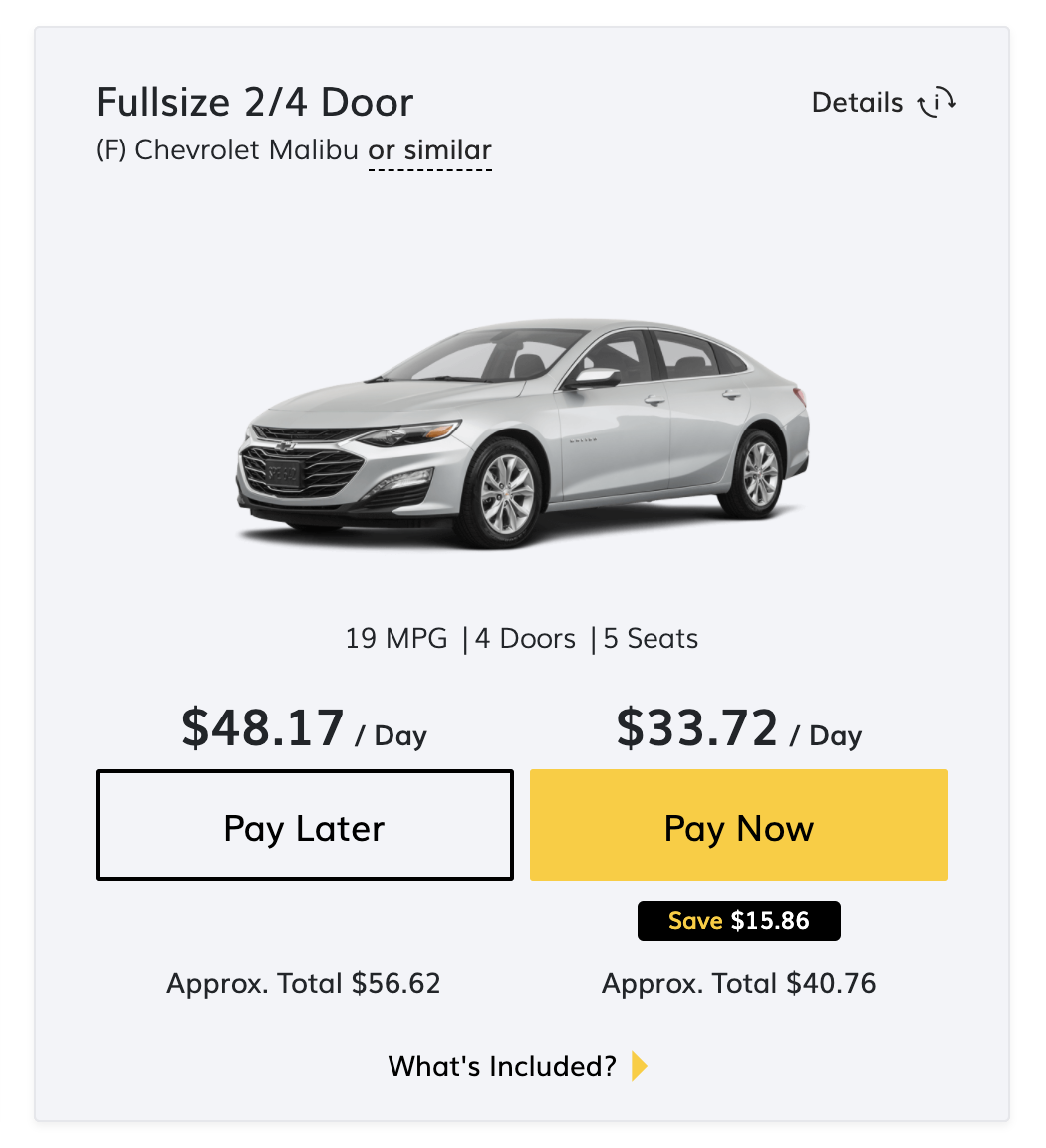
Estimate Base Rate: Based on car class, location, and time of year, get an initial quote. For a two-day rental, this might range from $60 (economy, off-peak, off-airport) to $300+ (SUV/luxury, peak season, airport).
-
Factor in Mandatory Fees: Add estimated airport surcharges, taxes, and recovery fees. These can add 15-35% to your base rate. For a $100 base rate, expect an additional $15-$35+.
-
Assess Insurance Needs: Decide if you’ll use personal insurance, credit card benefits, or purchase from the rental company. If buying from the company, factor in $20-$60+ for two days of basic coverage.
-
Consider Fuel: Assume you’ll return the tank full. Estimate gas costs for your expected mileage. For a two-day trip, this might be $30-$60 depending on car efficiency and distance.
-
Evaluate Add-ons: List any necessary extras like a child seat or an additional driver, and factor in their daily fees. For a child seat and an additional driver, this could be $40-$70 for two days.
-
Contingency Fund: Always add a buffer of 10-15% for unexpected charges, like parking tickets, minor damage not covered by your chosen insurance, or miscalculated fuel.
Example Scenarios:
-
Economy Car, Off-Peak, Off-Airport, Basic Coverage (via credit card), Return Full, No Add-ons:
-
Base Rate (2 days @ $35/day): $70
-
Taxes/Fees (est. 20%): $14
-
Fuel: $30
-
Total Est.: $114
-
-
Mid-size SUV, Peak Season, Airport Pickup, Full Rental Co. Insurance, GPS, Additional Driver, Pre-pay Fuel:
-
Base Rate (2 days @ $80/day): $160
-
Airport Surcharge/Taxes (est. 30%): $48
-
Rental Co. Insurance (2 days @ $25/day): $50
-
GPS (2 days @ $10/day): $20
-
Additional Driver (2 days @ $10/day): $20
-
Pre-paid Fuel (Est. fixed): $70 (often higher than self-refill)
-
Total Est.: $368
-
These examples highlight the vast difference that choices and circumstances can make. For a two-day rental, the impact of each daily fee is magnified because it represents a larger percentage of the total cost compared to a week-long rental. By diligently researching, comparing, and leveraging available discounts, you can ensure your two-day car rental aligns with your financial expectations and avoids any unwelcome surprises.
aViewFromTheCave is a participant in the Amazon Services LLC Associates Program, an affiliate advertising program designed to provide a means for sites to earn advertising fees by advertising and linking to Amazon.com. Amazon, the Amazon logo, AmazonSupply, and the AmazonSupply logo are trademarks of Amazon.com, Inc. or its affiliates. As an Amazon Associate we earn affiliate commissions from qualifying purchases.