
In the world of finance, few assets have captured the collective imagination—and the global headlines—quite like Bitcoin. Since its inception in 2009, the premier cryptocurrency has evolved from a niche experiment in cryptography into a formidable financial instrument. When one asks, “How much is 10,000 Bitcoins?” the answer is not merely a numerical figure on a screen; it is a gateway into a broader discussion about wealth preservation, market liquidity, and the shifting paradigms of modern investment.
The valuation of 10,000 Bitcoins represents one of the most staggering examples of capital appreciation in human history. To understand its current worth, one must navigate the volatile waters of digital asset markets, where valuations can shift by millions of dollars in a single afternoon. However, the true significance of holding 10,000 BTC lies in its relative scarcity and the sheer purchasing power it commands in today’s global economy.

The Historical Perspective: From Two Pizzas to Sovereign Wealth
To appreciate what 10,000 Bitcoins are worth today, we must first look back at what they were worth in the early days of the network. The history of this specific quantity is famously tied to “Bitcoin Pizza Day,” an event that serves as a foundational myth in the world of decentralized finance.
The Infamous Bitcoin Pizza Day
On May 22, 2010, a programmer named Laszlo Hanyecz performed what is widely recognized as the first commercial transaction using Bitcoin. He exchanged 10,000 BTC for two large pizzas from Papa John’s. At the time, the transaction was valued at approximately $41. In 2010, Bitcoin had no established market price, and its value was largely determined by hobbyists on online forums.
Today, those two pizzas would represent a fortune capable of purchasing entire luxury real estate portfolios, private jets, or even minority stakes in major sporting franchises. This historical anchor provides a stark contrast to the modern valuation, highlighting the deflationary nature of Bitcoin and its role as an aggressive growth asset.
The Exponential Growth Curve
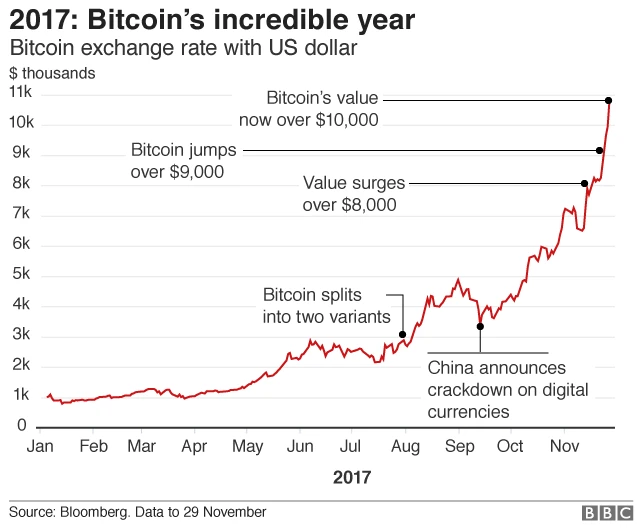
The journey from a $41 valuation to the multi-hundred-million-dollar range is a testament to the “S-curve” adoption of new technology. Over the last decade, Bitcoin has transitioned through several phases: the “Silk Road” era of illicit utility, the retail-driven “ICO” bubble of 2017, and the current era of institutional adoption. Each phase has seen the floor price of 10,000 BTC rise exponentially. For an investor, holding this quantity represents being in the top tier of the “Whale” category—individuals or entities that hold enough of the asset to influence market sentiment and price action.
Calculating the Current Value: Market Dynamics and Volatility
As of the current market cycle, the value of 10,000 Bitcoins typically fluctuates between hundreds of millions and over half a billion dollars, depending on the spot price. To calculate the exact value at any given moment, one simply multiplies the current exchange rate (BTC/USD) by 10,000. However, in the world of high-finance and large-scale investing, the “sticker price” is only part of the story.
Real-Time Valuation and Market Cap Impact
When Bitcoin trades at $30,000, 10,000 BTC is worth $300 million. At $60,000, that figure jumps to $600 million. At the psychological milestone of $100,000 per coin, a 10,000 BTC wallet would be worth a staggering $1 billion.
From a personal finance and wealth management perspective, such a holding places the owner within the ranks of the ultra-high-net-worth individuals (UHNWI). For context, 10,000 Bitcoins represent approximately 0.047% of the total maximum supply of 21 million BTC. In a world with nearly 8 billion people, owning nearly 1/2000th of the world’s hardest money is a position of immense financial leverage.
The Role of Liquidity and Slippage
For a holder of 10,000 Bitcoins, the value on paper (unrealized gains) is different from the value that can be extracted in a single trade. This is where the concept of “slippage” and “liquidity” becomes vital. If an individual were to sell 10,000 BTC on a standard retail exchange all at once, the sheer volume would overwhelm the order books, driving the price down as the trade is being executed.

To manage a sum of this magnitude, institutional investors and “whales” utilize Over-the-Counter (OTC) desks. These desks facilitate large trades outside of public order books to minimize market impact. Therefore, the “value” of 10,000 Bitcoins is also contingent upon the depth of the market and the sophistication of the liquidation strategy.
Investment Implications: What 10,000 BTC Means in Today’s Economy
In the modern financial landscape, 10,000 Bitcoins is no longer just a “lucky” holding from the early days of the internet. It is now viewed as a strategic reserve asset. Corporations like MicroStrategy and Tesla, as well as sovereign nations like El Salvador, have integrated significant amounts of Bitcoin into their balance sheets, recognizing its potential as a hedge against currency debasement.
Institutional vs. Retail Perspective
For a retail investor, 10,000 BTC is an unreachable sum, often viewed through the lens of “what if” scenarios. However, for a hedge fund or a corporate treasury, 10,000 BTC is a standard unit of institutional-grade exposure. Many institutional players view Bitcoin as “Digital Gold.” If Bitcoin’s market capitalization were to eventually match that of physical gold, the value of 10,000 Bitcoins would likely skyrocket into the billions, as it would capture a larger share of the global store-of-value market.
Portfolio Diversification and Risk Management
From a business finance standpoint, holding 10,000 Bitcoins requires rigorous risk management. The volatility of the asset means that a portfolio’s total value can swing by tens of millions of dollars in a single day. For entities holding this much capital, the focus often shifts from “capital appreciation” to “capital preservation” and “yield generation.” Strategies such as multi-signature custody, cold storage, and utilizing the coins as collateral for low-interest loans allow holders to access liquidity without triggering capital gains taxes or losing their long-term position.
The Future of High-Volume Holdings: Scarcity and Digital Gold
The question of “how much” is intrinsically linked to the future supply and demand of the asset. Unlike fiat currencies, which can be printed at the discretion of central banks, Bitcoin’s supply is hard-capped and governed by code.
The Halving Effect and Supply Constraints
Every four years, the Bitcoin network undergoes an event called “the halving,” which reduces the amount of new Bitcoin entering circulation by 50%. This programmed scarcity is a primary driver of the asset’s value. For a holder of 10,000 BTC, each halving event theoretically increases the scarcity of their holding relative to the total circulating supply. As the “issuance rate” of Bitcoin drops below that of gold, the value of large-scale holdings is expected to experience upward pressure, assuming demand remains constant or increases.
Long-term Store of Value vs. Medium of Exchange
While the 10,000 BTC pizzas were an example of Bitcoin as a “medium of exchange,” the current financial consensus has shifted toward viewing it as a “store of value.” In this context, 10,000 Bitcoins is an insurance policy against the systemic risks of the traditional banking system. As global debt levels rise and inflation erodes the purchasing power of the dollar and the euro, the relative value of a fixed-supply digital asset becomes increasingly attractive to those looking to park large sums of capital for the long term.
Navigating the Financial Responsibility of Large-Scale Crypto Assets
Owning or managing 10,000 Bitcoins is a feat of financial engineering as much as it is an investment. The security protocols required to protect $300 million to $1 billion in digital assets are vastly different from those used for traditional bank accounts.
Large-scale holders must navigate complex tax jurisdictions, estate planning challenges, and the psychological pressure of managing a highly volatile fortune. In many ways, the “cost” of 10,000 Bitcoins is the constant vigilance required to secure them. However, for those who understand the mechanics of the market, this quantity represents the pinnacle of digital wealth—a fortune that began with the price of a few pizzas and has transformed into one of the most significant financial assets of the 21st century.
As we look forward, the answer to “How much is 10,000 Bitcoins?” will continue to change. It will be shaped by regulatory developments, technological advancements in the Bitcoin network, and the overarching trends of the global macroeconomy. Yet, regardless of the specific dollar amount, 10,000 BTC will remain a symbol of the transformative power of decentralized finance and the enduring value of digital scarcity.
aViewFromTheCave is a participant in the Amazon Services LLC Associates Program, an affiliate advertising program designed to provide a means for sites to earn advertising fees by advertising and linking to Amazon.com. Amazon, the Amazon logo, AmazonSupply, and the AmazonSupply logo are trademarks of Amazon.com, Inc. or its affiliates. As an Amazon Associate we earn affiliate commissions from qualifying purchases.