
In the early summer of 2010, a programmer named Laszlo Hanyecz made history by conducting the first documented commercial transaction using Bitcoin. He exchanged 10,000 BTC for two large pizzas. At the time, those 10,000 coins were valued at approximately $41. Today, that same amount of Bitcoin represents a fortune that could rival the net worth of some of the world’s most successful corporate executives and institutional funds.
Understanding how much 10,000 Bitcoins are worth is not merely a matter of checking a ticker symbol; it is an exercise in understanding the evolution of money, the mechanics of market liquidity, and the shifting landscape of global finance. To determine the value of such a massive holding, one must look past the spot price and consider the broader economic implications of owning a significant percentage of the total supply of the world’s premier digital asset.

The Historical Context of a 10,000 Bitcoin Fortune
To appreciate the current valuation of 10,000 Bitcoins, one must first revisit the era when such a sum was considered a negligible amount of digital “play money.” In 2009 and 2010, Bitcoin was an experimental cryptographic project with no established market price. The valuation of 10,000 BTC has since traveled through several distinct financial epochs, each defined by increasing institutional acceptance and retail fervor.
The Era of “Pizza Day” and Pennies
When the famous “Bitcoin Pizza” transaction occurred, Bitcoin was worth roughly $0.004 per coin. For most people, the idea that a string of digital code could eventually be worth thousands of dollars was inconceivable. At this stage, 10,000 Bitcoins were practically worthless in terms of purchasing power for anything other than a novelty trade. This era represents the “Proof of Concept” phase, where the value was derived from the network’s utility rather than its potential as a store of value.
The Rise of the Digital Gold Thesis
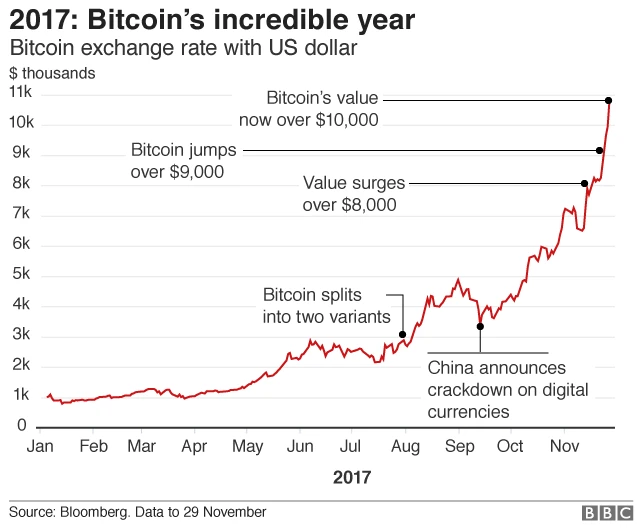
As the years progressed, the narrative around Bitcoin shifted from a medium of exchange to “Digital Gold.” By the time Bitcoin reached its first major peak in 2017, crossing the $19,000 threshold, 10,000 Bitcoins were worth $190 million. This transition was fueled by the recognition of Bitcoin’s fixed supply—a hard cap of 21 million coins—which stands in stark contrast to the inflationary nature of fiat currencies. For an investor holding 10,000 BTC, the value was no longer about buying pizzas; it was about holding a significant portion of a finite global resource.
Calculating the Modern Valuation: Price, Liquidity, and Slippage
In today’s market, the “worth” of 10,000 Bitcoins is a dynamic figure that fluctuates based on the current spot price across major global exchanges. If Bitcoin is trading at $60,000, 10,000 Bitcoins are worth a staggering $600 million. If it climbs to $100,000, that holding becomes a billion-dollar asset. However, in the world of high-stakes finance, the “worth” of an asset is not always the same as its “liquidatable value.”
Real-Time Valuation Metrics
The most straightforward way to calculate the value is to take the current market price (spot price) and multiply it by 10,000. This provides the “paper wealth” of the holder. For high-net-worth individuals or institutional entities, this figure serves as collateral for loans, a metric for portfolio balancing, and a benchmark for performance. However, because Bitcoin is traded 24/7 on a decentralized network of exchanges, this value can change by tens of millions of dollars within a single hour.
The Problem of Market Slippage
For an individual holding 10,000 Bitcoins, selling that entire position at once is a complex financial maneuver. This brings us to the concept of “slippage.” If a “whale” (a term used for large holders) attempts to sell 10,000 BTC on a single exchange’s order book, the sheer volume of the sell order could overwhelm the available buy orders, driving the price down as the trade executes. Consequently, the last few hundred coins would be sold for significantly less than the first few hundred. To mitigate this, large holders utilize Over-the-Counter (OTC) desks or algorithmic execution strategies to realize the full value of their holdings without crashing the market.
Valuation in the Context of Market Cap
A holding of 10,000 BTC represents roughly 0.047% of the total 21 million Bitcoin that will ever exist. In the world of finance, owning nearly 0.05% of a global asset class with a market capitalization in the trillions is an immense position. It places the holder among the top tier of addresses, often referred to as “institutional-sized” holdings.
The Economic Impact of Large Bitcoin Holdings

When discussing the worth of 10,000 Bitcoins, it is essential to consider the influence such a holding exerts on the broader financial ecosystem. This amount of capital does not exist in a vacuum; it affects market sentiment, institutional strategies, and the perception of Bitcoin as a legitimate asset class.
Institutional “Whales” and Market Stability
Today, the entities most likely to hold 10,000 Bitcoins or more are not individuals, but rather public companies like MicroStrategy, exchange-traded funds (ETFs) like BlackRock’s IBIT, or sovereign nation-states. For these entities, the worth of 10,000 Bitcoins is measured in strategic advantage. By holding a significant amount of BTC, these organizations can hedge against the devaluation of the US Dollar and other reserve currencies. Their continued accumulation signals to the market that Bitcoin is a “pristine” collateral asset, which in turn supports a higher price floor.
The Scarcity Principle and Price Appreciation
The value of 10,000 Bitcoins is intrinsically linked to the “Stock-to-Flow” model and the quadrennial “Halving” events. Every four years, the amount of new Bitcoin entering the market is cut in half. As the supply of new coins dwindles, the existing 10,000 BTC become exponentially more valuable relative to the total circulating supply. Investors look at 10,000 Bitcoins not just for what they can buy today, but for their increasing scarcity in a world of unlimited fiat printing.
Strategic Considerations for High-Value Portfolios
Owning 10,000 Bitcoins brings with it a unique set of financial responsibilities and risks. In the realm of personal and business finance, managing an asset worth hundreds of millions of dollars requires sophisticated tools and strategies.
Security and Cold Storage
The worth of 10,000 Bitcoins is zero if the private keys are lost or stolen. For an asset of this magnitude, standard security measures like two-factor authentication on an exchange are insufficient. High-value holders utilize “Cold Storage” solutions—hardware wallets or air-gapped computers that are never connected to the internet. Furthermore, institutional holders often use multi-signature (Multi-Sig) arrangements, where multiple authorized parties must sign off on a transaction before it can be executed. This ensures that no single point of failure can jeopardize the fortune.
Tax and Regulatory Compliance
The financial worth of a Bitcoin fortune is also impacted by the tax jurisdiction of the holder. In many countries, Bitcoin is treated as property, meaning that selling or even swapping 10,000 BTC triggers a capital gains tax event. At a 20% or 30% tax rate, a $600 million holding could result in a tax bill of over $100 million. Sophisticated investors often use “tax-loss harvesting” or borrow against their Bitcoin holdings to access liquidity without triggering a taxable sale, thereby preserving the total worth of the principal investment.
Diversification vs. Concentration
From a financial planning perspective, having 10,000 Bitcoins represents extreme concentration risk if it constitutes the majority of one’s net worth. Professional wealth managers often suggest “de-risking” by converting a portion of the Bitcoin value into more traditional assets like real estate, equities, or government bonds. However, the “HODL” philosophy suggests that because Bitcoin is the best-performing asset of the last decade, maintaining the full 10,000 BTC position is the most effective path to generational wealth.
Future Outlook: What Could 10,000 Bitcoins Be Worth Tomorrow?
The future value of 10,000 Bitcoins is the subject of intense speculation among economists and market analysts. Depending on the global economic trajectory, this holding could either become a global reserve asset or remain a highly volatile speculative vehicle.
The Bull Case: Hyperbitcoinization
If Bitcoin continues its trajectory toward becoming the primary global reserve currency—a process some call “Hyperbitcoinization”—the worth of 10,000 Bitcoins could reach astronomical levels. Some analysts predict a price target of $500,000 or even $1 million per coin within the next decade. At $1 million per BTC, a 10,000-coin wallet would be worth $10 billion. In this scenario, the holder would possess purchasing power equivalent to the world’s most powerful billionaires, capable of funding massive infrastructure projects or philanthropic foundations.
The Role of Bitcoin ETFs and Mass Adoption
The recent approval of Spot Bitcoin ETFs in the United States has changed the valuation game. These financial products allow trillions of dollars from pension funds and 401(k) plans to flow into Bitcoin. As institutional demand increases and the supply remains capped, the “worth” of 10,000 Bitcoins is likely to be bolstered by a constant stream of buy-side pressure. This institutionalization reduces the extreme volatility of the past, leading to a more stable, albeit still high-growth, valuation.
Conclusion: More Than Just a Number
Ultimately, the question of “how much is 10,000 Bitcoins worth” is a reflection of the era in which it is asked. In 2010, it was worth a couple of pizzas. Today, it is worth a corporate empire. Tomorrow, it may be worth a significant fraction of the world’s total wealth. For the investor, the technologist, and the financial strategist, 10,000 Bitcoins represent the ultimate manifestation of the digital age’s potential: a finite, secure, and globally recognized store of value that has redefined our understanding of what money can be. Whether valued at $500 million or $5 billion, the true worth of such a holding lies in its independence from traditional banking systems and its role as the vanguard of a new financial frontier.
aViewFromTheCave is a participant in the Amazon Services LLC Associates Program, an affiliate advertising program designed to provide a means for sites to earn advertising fees by advertising and linking to Amazon.com. Amazon, the Amazon logo, AmazonSupply, and the AmazonSupply logo are trademarks of Amazon.com, Inc. or its affiliates. As an Amazon Associate we earn affiliate commissions from qualifying purchases.