
The transition toward renewable energy is no longer a fringe movement; it is a technological revolution driven by rapid advancements in semiconductor materials and power electronics. At the heart of this transition is the solar photovoltaic (PV) panel. For tech enthusiasts, engineers, and early adopters, the fundamental question “how much electricity do solar panels generate?” is not just about a single number—it is about the interplay between hardware specifications, environmental variables, and the software-driven optimization of power conversion.
Understanding the generation capacity of modern solar technology requires a look beyond the marketing stickers. It involves dissecting the physics of energy capture, the efficiency of silicon wafers, and the emerging technologies that are pushing the limits of what a single square meter of hardware can produce.
The Hardware Fundamentals: Rated Power and Cell Architecture
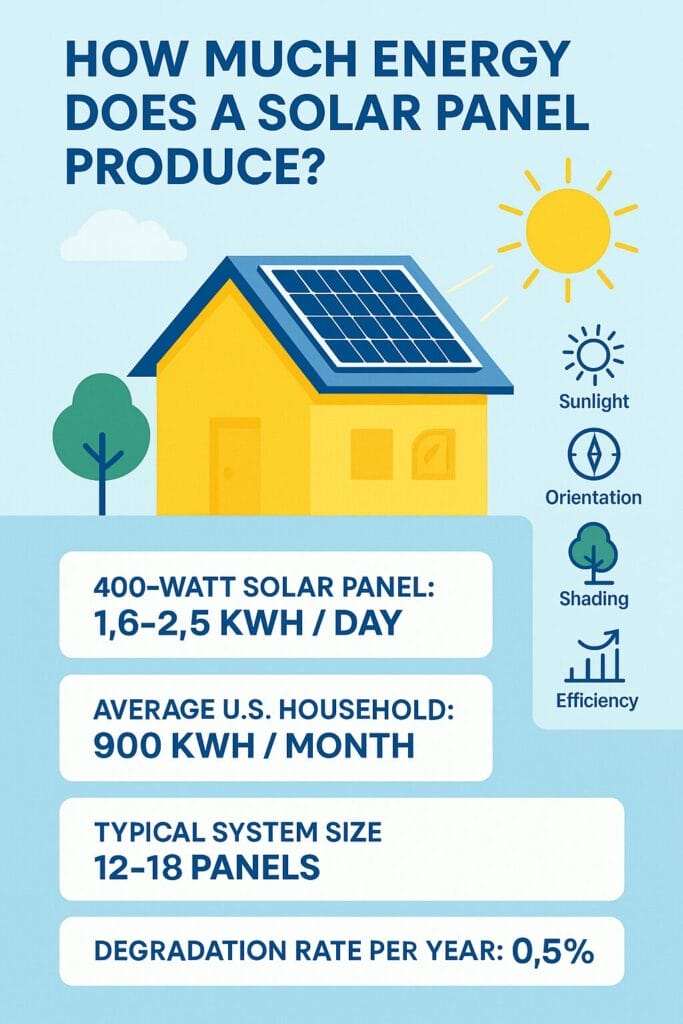
When discussing the electricity generation of a solar panel, the primary metric is its “Rated Power” or “Wattage.” Most modern residential solar panels are rated between 350 and 450 watts (W). However, this number is a laboratory measurement taken under Standard Test Conditions (STC)—specifically, a cell temperature of 25°C (77°F) and an irradiance of 1,000 watts per square meter.
Monocrystalline vs. Polycrystalline Efficiency
The architecture of the solar cell determines its base efficiency. Monocrystalline panels, recognizable by their dark, uniform look, are sliced from a single, high-purity silicon crystal. This allows electrons more room to move, resulting in higher efficiency rates—typically between 19% and 23%. In contrast, polycrystalline panels are made by melting fragments of silicon together. This creates “boundaries” that impede electron flow, capping their efficiency at around 15% to 17%. For those seeking maximum output per square foot of roof space, monocrystalline technology is the current industry gold standard.
The Role of N-Type vs. P-Type Silicon
The tech industry is currently shifting from P-type (boron-doped) cells to N-type (phosphorus-doped) cells. P-type cells have been the workhorse of the industry for decades but suffer from Light-Induced Degradation (LID). N-type cells are immune to LID and offer higher efficiency ceilings. Technologies like TOPCon (Tunnel Oxide Passivated Contact) and HJT (Heterojunction Technology) are N-type variants that are currently pushing residential panels toward the 25% efficiency mark, significantly increasing the total kilowatt-hours (kWh) generated over the life of the system.
Busbars and Ribbon Technology
If you look closely at a solar panel, you will see thin metallic lines. These are busbars, which collect the electrons generated by the cells. The latest hardware trends involve “Multi-Busbar” (MBB) designs and “half-cut” cell technology. By splitting cells in half, the internal resistance is lowered, and the current path is shortened. This tech-driven modification reduces energy loss as heat and ensures that if one part of the panel is shaded, the rest of the module continues to generate electricity at near-peak capacity.
Technical Factors Influencing Energy Yield
While a panel might be rated for 400W, its real-world generation is a dynamic variable influenced by several technical and environmental factors. In the world of solar tech, we refer to this as the “Specific Yield”—the actual energy produced (kWh) per kilowatt-peak (kWp) of installed capacity.
Solar Irradiance and Peak Sun Hours
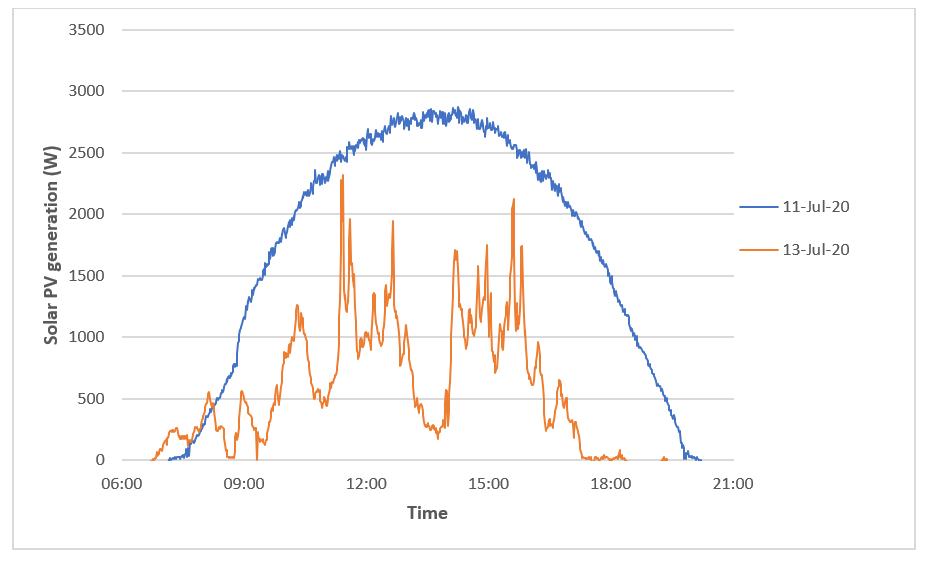
The amount of electricity generated is directly proportional to the number of photons hitting the silicon surface. This is measured in “Peak Sun Hours.” A peak sun hour is not just an hour of daylight, but an hour where the intensity of the sun reaches 1,000W/m². Even a high-efficiency panel will see a drop in generation during “diffuse” light conditions (cloudy days), though modern cells are becoming increasingly sensitive to the blue and violet ends of the spectrum, allowing for some generation even in overcast conditions.
The Temperature Coefficient
A common misconception is that solar panels thrive in heat. In reality, solar panels are electronic components, and like a CPU or a GPU, they lose efficiency as they get hot. This is measured by the “Temperature Coefficient.” For every degree above 25°C (77°F), a panel’s output typically drops by 0.3% to 0.5%. High-end panels utilize advanced thermal management designs and materials with lower temperature coefficients to ensure that generation remains stable even in desert environments.
Inverter Efficiency and Clipping
Electricity is generated as Direct Current (DC), but our gadgets and grids run on Alternating Current (AC). The “Generation” of a system is therefore limited by the efficiency of the inverter. Modern string inverters and micro-inverters boast efficiencies of 97% to 99%. However, a technical phenomenon known as “clipping” can occur if the solar array’s DC capacity significantly exceeds the inverter’s AC rating. While this sounds like a loss, it is often a deliberate tech strategy to ensure the inverter operates at its maximum capacity for a longer portion of the day.
Measuring Performance: Data, Monitoring, and Software Optimization
In the modern era, a solar panel is a “smart” device. The amount of electricity generated is no longer a mystery solved by a monthly utility bill; it is tracked in real-time through sophisticated software stacks and IoT (Internet of Things) integration.
Power Optimizers and Micro-inverters
The traditional “string” setup—where panels are linked like Christmas lights—is being replaced by Module-Level Power Electronics (MLPE). Devices like SolarEdge optimizers or Enphase micro-inverters allow each panel to operate independently. This technology uses Maximum Power Point Tracking (MPPT) algorithms to constantly adjust the voltage and current of each module. If one panel is underperforming due to bird droppings or a stray leaf, the software ensures it doesn’t “drag down” the generation of the entire array.
Smart Monitoring Dashboards
The integration of API-based monitoring allows users to see their generation data on smartphones and web consoles. These platforms provide granular data on:
- Daily Yield (kWh): The total energy produced in a 24-hour cycle.
- Peak Power (kW): The maximum output reached during the day.
- Historical Trends: Comparative data that helps identify if a panel’s generation is degrading faster than the manufacturer’s warranty suggests.
- Fault Detection: AI-driven alerts that notify the user if the hardware is underperforming relative to local weather data.
Grid Interaction and Smart Export
The tech-savvy approach to solar generation also involves how that electricity is “spent.” Smart home ecosystems can now sync with solar generation data. For example, a home automation system might trigger a high-draw appliance (like a dishwasher or EV charger) specifically when the solar panels reach a generation threshold of 3kW, ensuring that the “green” electricity is used on-site rather than being sent back to the grid.
Emerging Solar Tech: The Future of Generation
The question of how much electricity a panel can generate is being rewritten by laboratory breakthroughs that are just now hitting the commercial market. We are moving beyond the limitations of standard crystalline silicon.
Bifacial Modules
Bifacial technology allows panels to generate electricity from both sides. While the front catches direct sunlight, the transparent back captures “albedo” light reflected off the roof or the ground. In certain environments—such as snowy landscapes or white-painted flat roofs—bifacial tech can increase total electricity generation by as much as 10% to 30% without increasing the footprint of the array.
Perovskite and Tandem Cells
The most anticipated leap in solar tech is the Perovskite-Silicon tandem cell. By layering a Perovskite thin-film over a traditional silicon cell, researchers have achieved lab efficiencies exceeding 30%. This “multi-junction” approach allows the panel to capture a wider spectrum of sunlight. When these hit the mass market, the electricity generated by a standard-sized residential panel could jump from 400W to over 600W.
AI and Predictive Maintenance
Artificial Intelligence is now being used to maximize generation through predictive maintenance. Large-scale solar farms and high-end residential setups use machine learning to analyze weather patterns and historical performance. If a panel is generating 5% less than it should be based on the current irradiance, the software can diagnose whether it’s a hardware fault, a dirty surface, or a failing connection.
Conclusion: A Hardware-Driven Energy Future
The amount of electricity a solar panel generates is a product of its hardware architecture, its chemical composition, and the software that manages its output. While a typical high-quality panel today might produce between 1.5 and 2.5 kWh per day (depending on geography), the technology is far from stagnant.
As we move toward higher-efficiency N-type cells, integrated MLPE, and eventually tandem Perovskite modules, the “generation density” of our homes and businesses will continue to climb. For the technologist, solar is no longer just a “green” alternative; it is a sophisticated field of power electronics and material science that is turning every rooftop into a high-tech power plant. Understanding these technical nuances is essential for anyone looking to optimize their personal energy ecosystem and leverage the full potential of photovoltaic technology.
aViewFromTheCave is a participant in the Amazon Services LLC Associates Program, an affiliate advertising program designed to provide a means for sites to earn advertising fees by advertising and linking to Amazon.com. Amazon, the Amazon logo, AmazonSupply, and the AmazonSupply logo are trademarks of Amazon.com, Inc. or its affiliates. As an Amazon Associate we earn affiliate commissions from qualifying purchases.