
Wealth management is a sophisticated and often highly lucrative segment of the financial services industry, dedicated to providing comprehensive financial advice and services to high-net-worth (HNW) and ultra-high-net-worth (UHNW) individuals and families. Unlike traditional financial planning that might focus solely on investments, wealth management encompasses a broader spectrum of services, including investment management, financial planning, estate planning, tax planning, philanthropic advice, and even specialized services like concierge banking. Given the complexity and personalized nature of these services, it naturally follows that professionals in this field are compensated commensurately.
However, answering the question “how much does wealth management make?” isn’t straightforward. Compensation in this sector is highly variable, influenced by a myriad of factors such as experience level, geographic location, the type and size of the firm, the assets under management (AUM) an individual oversees, and their specific role and specializations. This article will delve into the various components that determine earnings in wealth management, providing a clear picture of the earning potential across different roles and career stages.

Understanding the Wealth Management Landscape and Key Roles
To appreciate the compensation structures, it’s essential to first understand what wealth management entails and the various professional roles within it. The industry is not monolithic; it comprises diverse firms and specialists catering to different client needs.
What is Wealth Management?
At its core, wealth management is a consultative process where a wealth manager works with a client to manage their financial life comprehensively. This goes far beyond merely picking stocks or bonds. It involves:
-
Investment Management: Strategic asset allocation, portfolio construction, and ongoing monitoring tailored to the client’s risk tolerance and financial goals.
-
Financial Planning: Retirement planning, education funding, cash flow analysis, and liability management.
-
Tax Planning: Strategies to minimize tax liabilities on investments, income, and estates.
-
Estate Planning: Developing strategies for wealth transfer to future generations, including wills, trusts, and philanthropic giving.
-
Risk Management: Insurance needs analysis, including life, disability, and long-term care insurance.
-
Specialized Services: Business succession planning, executive compensation strategies, and even family governance.
The goal is to preserve and grow wealth across generations while meeting immediate financial objectives and mitigating risks. This holistic approach demands a high level of expertise and trust, which contributes to the professional’s value and, consequently, their earning potential.
Primary Roles within Wealth Management
The wealth management ecosystem supports a variety of specialized roles, each with distinct responsibilities and compensation profiles:
-
Financial Advisor/Wealth Advisor: These are the client-facing professionals who build relationships, assess client needs, and formulate comprehensive financial plans. They often act as the primary point of contact for clients and coordinate services from other specialists. Their compensation is heavily tied to the AUM they manage and new client acquisition.
-
Portfolio Manager: Responsible for making investment decisions, constructing portfolios, and managing assets on behalf of clients. They often have deep expertise in market analysis, asset allocation, and specific investment strategies.
-
Financial Planner: Focuses on developing detailed financial plans covering retirement, education, insurance, and taxes. While advisors often integrate this, dedicated planners might handle more complex cases or serve as internal specialists.
-
Relationship Manager: Primarily focused on client retention and deepening relationships. They ensure clients receive excellent service and that their evolving needs are met, often working closely with wealth advisors.
-
Client Service Associate (CSA): Provides administrative and operational support to advisors and clients, handling account openings, transfers, and general inquiries. This is often an entry-level role.
-
Analysts/Associates: Often support senior advisors or portfolio managers by conducting research, preparing reports, and assisting with financial modeling and client presentations. These roles serve as a stepping stone into more senior advisory or management positions.
Factors Influencing Compensation in Wealth Management
The vast range in wealth management salaries is not arbitrary; it’s a direct reflection of several interconnected factors. Understanding these can help aspiring professionals gauge their potential earnings and help current professionals benchmark their compensation.
Experience Level and Seniority
Unsurprisingly, experience is a major determinant of earnings.
-
Entry-Level (0-3 years): Roles like Client Service Associate or Junior Analyst typically involve foundational learning and support functions. Compensation will be lower, primarily salaried, with smaller bonuses.
-
Mid-Career (3-10 years): As professionals gain experience, build a client base, and demonstrate expertise, their responsibilities and compensation grow significantly. Advisors at this stage often manage substantial AUM and contribute directly to firm revenue.
-
Senior/Partner Level (10+ years): Highly experienced professionals, especially those with a large book of business, specialized expertise, or leadership roles, command the highest salaries and bonuses. Partners in advisory firms may also receive equity or profit-sharing.
Firm Type and Size
The institutional setting profoundly impacts compensation:
-
Wirehouses (e.g., Merrill Lynch, Morgan Stanley): Large, full-service brokerage firms that offer extensive resources and brand recognition. They often have structured compensation models with a base salary and significant production-based bonuses.
-
Registered Investment Advisors (RIAs): Independent firms that typically operate on a fee-only or fee-based model, meaning they charge a percentage of AUM. Compensation can vary widely depending on the firm’s size, but successful advisors can earn a higher percentage of their generated revenue.
-
Private Banks (e.g., J.P. Morgan Private Bank, UBS Wealth Management): Cater to UHNW clients and offer a wider array of banking services alongside wealth management. Compensation is often competitive, with a strong base salary and performance bonuses.
-
Family Offices: Serve a single wealthy family or a small number of families. Roles here can be highly specialized, and compensation packages are often bespoke, sometimes including long-term incentives.
-
Boutique Firms: Smaller, specialized firms that may focus on a particular niche or client segment. Compensation structures can be more flexible and entrepreneurial.
Geographic Location
Financial hubs naturally offer higher compensation due to a higher cost of living, greater concentration of wealthy individuals, and more intense competition for talent. Major cities like New York, London, Zurich, Singapore, and Hong Kong consistently show higher average salaries compared to smaller regional markets.
Client Assets Under Management (AUM)
For client-facing roles, especially wealth advisors, AUM is arguably the most critical factor influencing compensation. Most advisors operate on a fee-based model, charging an annual percentage (e.g., 0.5% to 1.5%) of the assets they manage. A significant portion of this fee revenue directly translates into the advisor’s total compensation, making AUM growth a primary driver of income.
Compensation Structure
How professionals are paid varies:
-
Salary + Bonus: Common in larger firms, private banks, and entry-level roles. A base salary provides stability, while a performance-based bonus incentivizes AUM growth, client satisfaction, or firm profitability.
-
Commission-Based: Less prevalent now due to regulatory scrutiny and a shift towards fiduciary standards, but still exists for some product sales (e.g., insurance, annuities). This model can lead to high earnings but is often criticized for potential conflicts of interest.
-
Fee-Based (AUM Percentage): The dominant model for RIAs and many independent advisors. Advisors earn a percentage of the assets they manage. This aligns the advisor’s incentives with the client’s growth.
-
Hybrid Models: Combine elements of salary, commissions, and fees.

Specializations and Credentials
Professionals with advanced degrees (MBA, JD) or specialized certifications often command higher salaries. Highly valued credentials include:
-
Certified Financial Planner (CFP®): Demonstrates expertise in comprehensive financial planning.
-
Chartered Financial Analyst (CFA®): Focuses on investment analysis and portfolio management, highly valued for portfolio managers and analysts.
-
Certified Public Accountant (CPA): Valuable for roles involving tax planning and strategy.
-
Chartered Alternative Investment Analyst (CAIA): Specializes in alternative investments like private equity, hedge funds, and real estate.
Those with expertise in niche areas like ESG (Environmental, Social, Governance) investing, digital assets, or complex estate planning can also command a premium.
Typical Salary Ranges Across Different Roles and Experience Levels
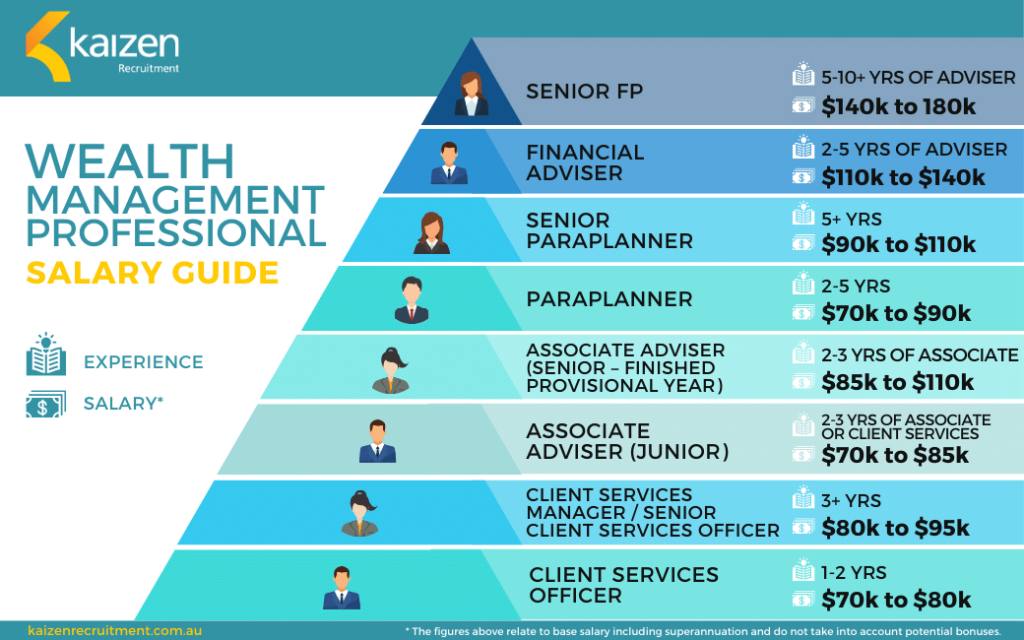
While general figures can only provide an estimate, the following ranges illustrate potential earnings in the wealth management industry. These figures generally reflect total compensation, including base salary and bonuses, and can fluctuate significantly based on the factors discussed above.
Entry-Level Positions (0-3 years experience)
-
Client Service Associate: Typically earns $45,000 – $75,000 annually.
-
Junior Analyst/Associate: Salaries range from $50,000 – $90,000, often with a modest bonus of 10-20% of the base salary. These roles provide crucial foundational experience.
Mid-Career Professionals (3-10 years experience)
-
Financial Advisor/Wealth Advisor: For advisors building their book of business, total compensation can range from $100,000 – $250,000. Success is heavily tied to AUM growth and client acquisition. A significant portion of this is variable, tied to revenue generation.
-
Portfolio Manager: Depending on the size of portfolios managed and performance, earnings can be anywhere from $120,000 – $300,000+.
-
Experienced Financial Planner: Professionals focusing on complex planning might earn $90,000 – $180,000.
Senior and Partner-Level Roles (10+ years experience)
-
Senior Wealth Advisor/Managing Director: These highly experienced professionals, especially those with a substantial client base (managing hundreds of millions or even billions in AUM), can command total compensation ranging from $300,000 to over $1,000,000 annually. A large portion of this is typically performance-based, reflecting a percentage of AUM or profits generated.
-
Head of Wealth Management/Firm Partner: In leadership positions or as equity partners in successful RIAs, total compensation can easily exceed $500,000 and reach well into the seven figures, depending on the firm’s profitability and their direct contribution.
Illustrative Compensation for Top Performers
It’s important to note that the very top tier of wealth managers, those who consistently manage multi-billion dollar books of business for UHNW clients or institutions, can earn exceptionally high incomes. For these elite professionals, total compensation, including bonuses and profit sharing, can easily reach multi-million dollar figures annually. These are individuals who have cultivated decades-long relationships, possess unparalleled expertise, and often work with the wealthiest families and foundations.
The Future of Wealth Management Compensation
The wealth management industry is dynamic, continually evolving with technological advancements, changing client expectations, and regulatory shifts. These trends will undoubtedly impact how professionals are compensated in the future.
Impact of Technology and Automation
The rise of robo-advisors and AI-powered tools is streamlining many aspects of wealth management, from portfolio rebalancing to financial planning. While some feared these technologies would displace human advisors, the more likely outcome is a shift in roles. Human advisors will increasingly focus on complex financial planning, behavioral coaching, and relationship building – areas where AI struggles. This could lead to:
-
Increased efficiency: Advisors may be able to manage more clients with the aid of technology, potentially boosting their AUM and, consequently, their income.
-
Value proposition shift: Compensation may increasingly be tied to the “human touch” and specialized advice that technology cannot replicate.
Shifting Fee Structures
The industry has largely moved away from transaction-based commissions towards fee-based models (e.g., AUM percentage). This trend is expected to continue, reinforcing the alignment of advisor and client interests. There may also be a rise in subscription models or project-based fees for specific planning services, offering clients more flexibility and advisors more predictable income streams beyond AUM.
Demand for Specialized Expertise
As global wealth grows and becomes more complex, so does the need for specialized advice. Expertise in areas like sustainable and ESG investing, digital assets (cryptocurrencies), philanthropy, cross-border wealth planning, and private market investments will become increasingly valuable. Professionals who cultivate these niche skills will likely command higher compensation due to their specialized knowledge and the premium clients are willing to pay for it.
Regulatory Changes
Ongoing regulatory changes, such as enhanced fiduciary standards, aim to protect clients by ensuring advisors act in their best interests. While this might initially put pressure on some commission-based models, it ultimately enhances the trust and professionalism of the industry, potentially solidifying the value proposition of fee-only and fee-based advisors. Increased transparency in fee disclosure could also influence compensation structures, pushing firms to justify their fees with demonstrable value.
Conclusion
Wealth management is a career path with significant earning potential, especially for those who demonstrate expertise, build strong client relationships, and continuously adapt to an evolving financial landscape. While entry-level salaries are competitive, true wealth in this profession is typically built over time, correlating directly with an individual’s experience, the size and quality of their client base (AUM), their firm’s structure, and their specific expertise.
Success in wealth management is not just about financial acumen; it requires strong interpersonal skills, a deep understanding of human psychology, unwavering ethics, and a commitment to lifelong learning. For those willing to invest in these areas, the rewards, both financial and personal, can be substantial, making it one of the most fulfilling and lucrative fields within finance.
aViewFromTheCave is a participant in the Amazon Services LLC Associates Program, an affiliate advertising program designed to provide a means for sites to earn advertising fees by advertising and linking to Amazon.com. Amazon, the Amazon logo, AmazonSupply, and the AmazonSupply logo are trademarks of Amazon.com, Inc. or its affiliates. As an Amazon Associate we earn affiliate commissions from qualifying purchases.