
For the modern entrepreneur, managing the financial health of a business requires a deep understanding of the tools that facilitate cash flow. Square has revolutionized the way small and medium-sized enterprises (SMEs) accept payments, moving away from the opaque, contract-heavy world of traditional merchant services toward a more transparent, flat-rate model. However, for a business owner focused on the bottom line, the question “How much does Square charge per transaction?” is only the beginning. To truly master business finance, one must understand how these fees impact profit margins, how they compare to the broader market, and how to optimize financial operations around them.
The Foundation of Square’s Pricing: Navigating Transactional Costs
Square’s primary appeal lies in its simplicity. Unlike legacy processors that often bury fees in complex monthly statements, Square operates on a flat-rate fee structure. This predictability is a significant asset for financial planning and budgeting.
In-Person Transaction Fees
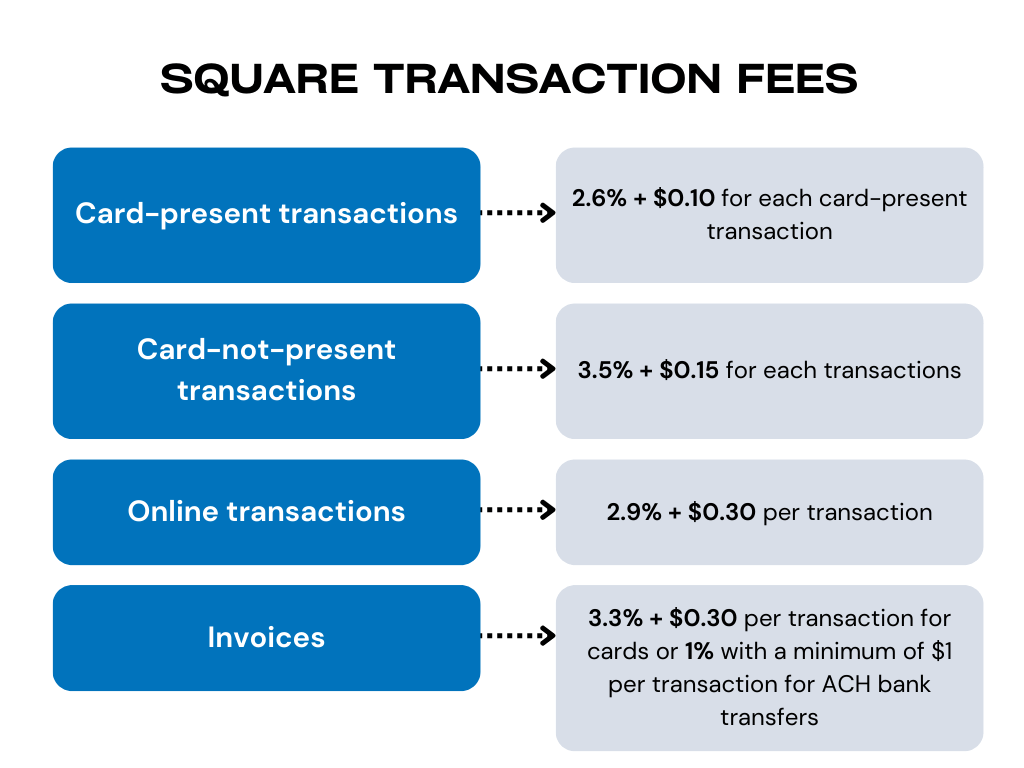
The most common way businesses interact with Square is through “Card Present” transactions. Whether using a magstripe reader, a chip card terminal, or contactless “Tap to Pay” via a smartphone, the standard rate for most Square hardware is 2.6% plus $0.10 per transaction. This fee applies to all major credit cards, including Visa, Mastercard, American Express, and Discover. From a financial management perspective, this flat rate eliminates the uncertainty of “interchange-plus” pricing, where the cost varies depending on the type of card (e.g., a rewards card vs. a debit card).
Online and E-commerce Processing
When a business moves into the digital space, the risk profile of the transaction changes. Because the physical card is not present, the likelihood of fraud increases, and the processing fees reflect this. For online payments processed through Square Online, Square APIs, or online invoices, the standard rate is 2.9% plus $0.30 per transaction. This $0.30 fixed fee is a crucial variable for businesses with low average order values (AOV). For a $5 purchase, a $0.30 fee represents a significant percentage of the gross margin, making it essential for business owners to calculate their “effective rate” across different sales channels.
Manually Entered and Keyed-In Payments
The most expensive category in Square’s fee schedule is the manually entered transaction. When a merchant types card numbers into a virtual terminal or the Square app—often during a phone order—the rate jumps to 3.5% plus $0.15. Financially, these transactions are the most “leaky.” Businesses that rely heavily on phone orders may find their profit margins eroded by this nearly 1% premium compared to in-person taps. Strategically, shifting customers toward online invoices or physical hardware can result in immediate financial savings.
Beyond the Swipe: Analyzing the Total Cost of Payment Processing
While the per-transaction fee is the headline figure, a comprehensive financial analysis must account for the secondary costs and potential savings associated with the Square ecosystem. Payment processing is not just a cost center; it is a component of a company’s broader financial infrastructure.
Hardware Investment and Capital Expenditure
Square differs from many competitors by requiring an upfront purchase of hardware rather than monthly leasing. From a balance sheet perspective, this is a “CapEx” (Capital Expenditure) rather than an “OpEx” (Operating Expense). While a simple “Square Reader” might cost $49, a fully integrated “Square Register” can cost several hundred dollars. However, because there are no long-term contracts or monthly “PCI compliance fees,” the “Total Cost of Ownership” (TCO) over a three-year period is often lower than traditional merchant accounts that charge $30–$50 in monthly maintenance fees.
Chargebacks and Risk Mitigation
In the world of business finance, chargebacks—where a customer disputes a charge through their bank—can be a silent profit killer. Many processors charge a “chargeback fee” (often $15 to $25) regardless of whether the merchant wins the dispute. Square, notably, does not charge a fee for managing chargebacks. They provide a specialized dashboard to submit evidence and fight fraudulent claims. This lack of a penalty fee offers a layer of financial protection for businesses in high-risk industries or those with high transaction volumes.
Instant Transfers and Liquidity Management
Cash flow is the lifeblood of any small business. Square’s standard payout schedule is typically the next business day. However, for businesses needing immediate liquidity to pay vendors or cover payroll, Square offers “Instant Transfers.” This service allows merchants to move their balance to a bank account in seconds for a 1.75% fee. While this is a convenient financial tool, it is also a cost that can add up. A business that uses instant transfers daily is effectively increasing its transaction cost significantly, emphasizing the need for robust cash flow forecasting to avoid unnecessary fees.
Comparing Square with Competitors: A Strategic Financial Analysis
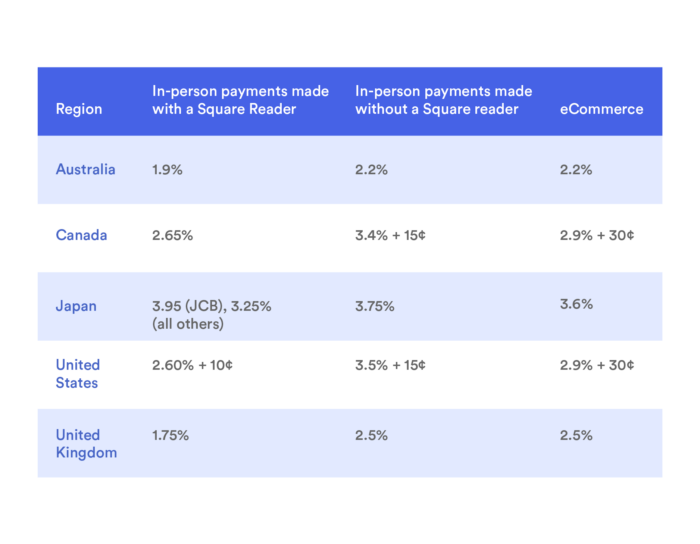
To determine if Square is the right financial choice, a business must compare it against alternatives like Stripe, PayPal, or traditional interchange-plus processors. The “right” choice often depends on the business’s annual processing volume.
Square vs. Stripe: The Digital vs. Physical Divide
Stripe and Square are often compared, but they serve different financial niches. Stripe is primarily built for developers and online-first businesses, while Square is designed for omnichannel businesses with a physical presence. Stripe’s standard online fee (2.9% + $0.30) matches Square’s, but Stripe offers more granular control over international transactions and currency conversion. For a business scaling globally, Stripe’s financial tools for handling VAT and multi-currency payouts might outweigh Square’s simplicity.
The “Break-Even” Point for Traditional Merchant Accounts
For businesses processing more than $250,000 annually, Square’s flat-rate model may become more expensive than a traditional merchant account using “Interchange-Plus” pricing. In an interchange-plus model, the merchant pays the actual cost of the card network (e.g., 1.5% for a basic debit card) plus a small markup (e.g., 0.10%).
As a business grows, the difference between a 2.6% flat rate and a 1.8% effective rate on an interchange-plus plan can amount to thousands of dollars in annual savings. For high-volume businesses, Square does offer custom pricing, but the threshold to negotiate is usually high. Financial officers should perform a quarterly audit of their processing statements to determine if they have reached the “break-even” point where a more complex, variable-rate plan becomes more profitable.
Hidden Value: Integrated Financial Tools
One must also consider the “soft” financial benefits of Square. Square provides free software for Point of Sale (POS), inventory management, and basic analytics. If a business were to use a different processor, they might have to pay $50–$100 per month for a separate inventory management system or CRM. When these costs are consolidated, Square’s slightly higher per-transaction fee often becomes a more economical choice for the total business operation.
Maximizing Profitability Within the Square Ecosystem
Once a business commits to the Square platform, the goal shifts to optimizing operations to minimize fees and maximize the utility of the data provided.
Strategizing Payment Methods
To protect margins, savvy business owners can incentivize certain payment behaviors. Since keyed-in transactions are the most expensive (3.5% + $0.15), training staff to use the physical reader or sending an online invoice (2.9% + $0.30) can save 0.6% to 0.9% per transaction. For high-ticket items, some businesses choose to utilize Square’s “Buy Now, Pay Later” integration through Afterpay. While the fees for Afterpay are higher for the merchant, the increase in average order value and conversion rates can lead to higher overall net profit.
Utilizing Square Capital for Business Growth
Square is not just a payment processor; it is a lender. Through “Square Capital” (now rebranded as Square Loans), the platform offers business loans based on processing volume. Instead of monthly fixed payments, these loans are paid back as a percentage of daily sales. This is a unique financial instrument for businesses with seasonal revenue. When sales are slow, the dollar amount of the repayment decreases, easing the pressure on the business’s working capital. However, it is vital to calculate the “factor rate” of these loans to ensure the cost of capital is lower than the projected ROI of the investment.
Analyzing Financial Data for Better Decision Making
Every transaction processed through Square generates a data point. The Square Dashboard provides insights into peak sales times, customer retention, and inventory turnover. By integrating this data into a broader financial strategy, business owners can reduce waste and optimize staffing levels. For example, if the data shows that 80% of transactions happen between 12 PM and 2 PM, a business can optimize its labor costs to match, ensuring that the cost of processing is supported by efficient operational overhead.
Conclusion: The Financial Reality of Square
Square’s transaction fees are more than just a cost of doing business; they are a variable that dictates the pricing strategy and profitability of a company. While the 2.6% + $0.10 or 2.9% + $0.30 rates are market standard for entry-level and mid-market businesses, the true financial value of Square lies in its lack of hidden fees, its integration of financial tools, and its predictable cost structure.
For the entrepreneur, the choice to use Square should be a calculated one. It involves weighing the convenience of a flat-rate model against the potential savings of a more complex interchange-plus system. By understanding the nuances of how Square charges—and how to navigate its various financial products—business owners can turn their payment processing from a simple necessity into a strategic advantage for their business’s long-term financial health.
aViewFromTheCave is a participant in the Amazon Services LLC Associates Program, an affiliate advertising program designed to provide a means for sites to earn advertising fees by advertising and linking to Amazon.com. Amazon, the Amazon logo, AmazonSupply, and the AmazonSupply logo are trademarks of Amazon.com, Inc. or its affiliates. As an Amazon Associate we earn affiliate commissions from qualifying purchases.