
In the modern household budget, the “subscription economy” has transitioned from a minor convenience to a significant line item. Among the giants of this industry, Amazon’s Prime Video stands as a unique entity, functioning both as a standalone service and a cornerstone of a much larger retail ecosystem. Understanding how much Prime Video costs a month requires more than a simple glance at a price tag; it necessitates a deep dive into pricing tiers, the math of annual versus monthly commitments, and a rigorous cost-benefit analysis of the “hidden” value provided by the broader Amazon Prime membership.
As consumers face “subscription fatigue,” the financial decision to maintain or cancel a service often hinges on the perceived Return on Investment (ROI). This guide analyzes the current cost structure of Prime Video, examines the financial impact of recent tier changes, and provides a framework for integrating this expense into a disciplined personal finance strategy.
The Core Pricing Architecture: Navigating the Tiers
The financial entry point for Prime Video is not a monolith. Amazon has structured its pricing to capture various consumer segments, ranging from students on tight budgets to high-frequency shoppers looking to consolidate their digital expenses. To accurately budget for this service, one must first identify which category of consumer they occupy.
The Standalone Prime Video Subscription
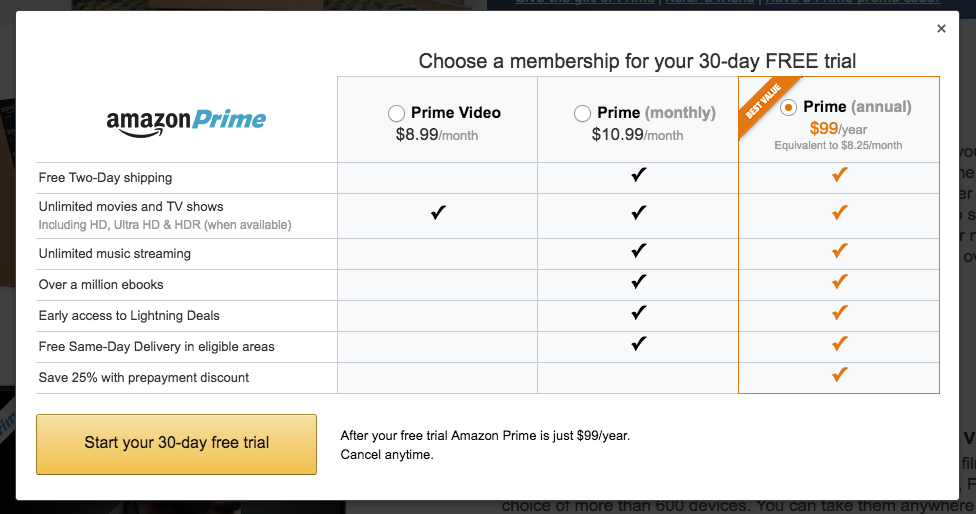
For those who have no interest in expedited shipping or Amazon’s broader retail ecosystem, there is a standalone Prime Video subscription. Currently, this is priced at $8.99 per month.
From a personal finance perspective, this is often the least efficient way to consume the service. While it offers the lowest immediate monthly cash outlay, it excludes the vast array of secondary benefits that come with the full Prime membership. For a marginal increase in cost, a user could gain access to a suite of services that potentially offset other household expenses.
The Full Amazon Prime Membership
The most common way to access Prime Video is through the comprehensive Amazon Prime membership. This tier is priced at $14.99 per month or $139 per year.
The annual option represents a significant discount for those with the liquid capital to pay upfront. At $139 per year, the effective monthly cost drops to approximately $11.58. For a household committed to the service for the long term, choosing the annual payment over the monthly one results in a 23% savings—a high-yield financial move in the context of recurring expenses.
Discounted Entry Points: Students and Qualified Recipients
Amazon utilizes a “low-customer-acquisition-cost” strategy for specific demographics. Prime Student is available for $7.49 per month or $69 per year. This includes a six-month trial, which is a powerful tool for those looking to minimize their entertainment budget during their peak borrowing years.
Furthermore, Amazon offers a discounted membership for recipients of qualifying government assistance programs, such as SNAP or Medicaid. This tier costs $6.99 per month, ensuring that digital entertainment and the logistical benefits of Prime remain accessible to lower-income households. From a budgeting standpoint, these targeted discounts represent some of the highest value-for-dollar propositions in the entire streaming market.
The “Ad-Free” Premium and the Economics of Attention
In early 2024, the financial landscape of Prime Video shifted significantly with the introduction of advertisements into the standard tier. This move was a response to the broader industry trend of “monetizing attention” to offset the soaring costs of content production.
The $2.99 Surcharge
To maintain an uninterrupted, ad-free experience, subscribers must now pay an additional $2.99 per month. When added to the base monthly Prime membership of $14.99, the total monthly cost for a premium experience rises to $17.98.
For the financially conscious consumer, this $2.99 surcharge is a “convenience tax.” Over the course of a year, this adds nearly $36 to the budget. When evaluating this expense, one must consider the “opportunity cost” of their time. If the inclusion of ads adds five minutes of non-skippable content per hour of viewing, a heavy user might find the $2.99 a small price to pay for reclaimed time. However, for the casual viewer, this is a prime candidate for cost-cutting.
The Impact on Annual Subscribers
It is important to note that the $2.99 ad-free fee is not currently included in the $139 annual price. Even if you pay for the year upfront, you must still pay the monthly surcharge to remove ads. This bifurcated billing creates a “hybrid” subscription model that requires careful tracking in a monthly budget.

The ROI Assessment: Evaluating Value Beyond the Screen
When assessing the cost of Prime Video, it is a mistake to view it in a vacuum. Unlike Netflix or Max, which are pure-play content services, Prime Video is a “loss leader” or a “value-add” for a retail giant. To determine if the cost is justified, one must perform a holistic audit of the Prime ecosystem.
Logistics and Shipping Savings
The primary driver of Prime’s value is often not the video content, but the “free” two-day, one-day, or same-day shipping. For a household that orders from Amazon twice a month, the savings on shipping fees alone can frequently exceed the $14.99 monthly membership cost. In this scenario, Prime Video essentially becomes a “free” benefit, reducing the effective entertainment budget to zero.
Diversified Digital Assets
A full Prime membership includes access to:
-
Amazon Music Prime: A library of 100 million songs (ad-supported).
-
Prime Reading: A rotating selection of thousands of e-books and magazines.
-
Amazon Photos: Unlimited full-resolution photo storage.
-
Prime Gaming: Free weekly games and a monthly Twitch subscription.
From a financial planning perspective, these perks allow a consumer to “stack” their savings. If a Prime membership allows you to cancel a $9.99/month cloud storage plan for your photos and a $10.99/month music streaming service, the $14.99 Prime fee actually nets the household a $6.00 monthly surplus. This is the essence of “ecosystem budgeting”—looking at the aggregate cost of digital life rather than individual line items.
Managing “Subscription Creep”: Identifying Hidden Expenditures
While the base cost of Prime Video is straightforward, the platform is designed to be a gateway to further spending. “Subscription creep” occurs when a user inadvertently increases their monthly outflow through small, frictionless digital purchases.
Prime Video Channels
One of the most significant financial pitfalls within the app is “Channels.” Amazon allows users to subscribe to third-party networks like Paramount+, AMC+, or Max directly through the Prime interface. While this offers the convenience of a single bill, it masks the total cost of entertainment. It is common for users to “stack” channels during a free trial and forget to cancel, leading to a monthly bill that can easily exceed $50 or $60 without a clear realization of the escalation.
Rentals and Purchases
Unlike some competitors that offer their entire library for a flat fee, Prime Video operates on a “freemium” model. Much of the content is included with the subscription (“Free to me”), but the latest blockbusters often require an additional rental fee (usually $3.99 to $5.99) or a purchase price ($14.99 to $19.99). In a professional financial audit, these “transactional” costs must be separated from the “recurring” costs to understand the true spend on the platform.
The “Buy Box” Psychology
The integration of Prime Video into the larger Amazon store creates a psychological pathway to spending. Viewing a show can lead to targeted ads for related merchandise, and the ease of “one-click” ordering can lead to impulse purchases that harm a long-term savings goal.
Strategic Budgeting for the Digital Consumer
To master the cost of Prime Video, consumers should adopt a proactive stance toward their digital expenditures. Here are three strategies to ensure the service remains a financial asset rather than a liability.
The Annual vs. Monthly Arbitrage
As established, the annual plan saves roughly $40 per year over the monthly plan. However, this is only a saving if you use the service for all 12 months. If you only watch Prime Video for the duration of a specific sports season or to catch a single marquee show, paying $14.99 for two months ($29.98 total) is far more logical than paying $139 for a year.
Subscription Auditing and Rotation
The most sophisticated financial approach to streaming is “subscription rotation.” This involves maintaining only one or two active services at a time. You might pay for Prime Video in January to catch up on original series, cancel it in February, and switch to a competitor. Because Amazon allows you to cancel and restart with ease, there is no financial penalty for lack of loyalty.

Utilizing Family Sharing
The “Amazon Household” feature allows two adults and up to four children to share the benefits of a single Prime membership. From a personal finance standpoint, this effectively cuts the cost of the subscription in half for a two-adult household. By linking accounts, both users get Prime Video access while maintaining separate watchlists and recommendations, maximizing the utility of the $14.99/month expense.
In conclusion, while the base cost of Prime Video ranges from $8.99 to $17.98 per month, its true impact on your finances depends on how deeply you engage with the Amazon ecosystem. By choosing the right tier, leveraging annual discounts, and remaining vigilant against “subscription creep,” Prime Video can be a highly cost-effective component of a modern financial plan.
aViewFromTheCave is a participant in the Amazon Services LLC Associates Program, an affiliate advertising program designed to provide a means for sites to earn advertising fees by advertising and linking to Amazon.com. Amazon, the Amazon logo, AmazonSupply, and the AmazonSupply logo are trademarks of Amazon.com, Inc. or its affiliates. As an Amazon Associate we earn affiliate commissions from qualifying purchases.