
In the landscape of modern manufacturing, few topics command as much financial scrutiny as the production costs of Tesla’s electric vehicle (EV) fleet. For investors, competitors, and consumers alike, the “cost per car” is the most critical metric in determining whether Tesla remains a high-growth tech disruptor or eventually settles into the lower-margin reality of the traditional automotive industry.
Understanding the cost of making a Tesla requires peeling back the layers of the Bill of Materials (BOM), analyzing the capital expenditure of the “Gigafactory” model, and evaluating the radical efficiencies gained through vertical integration. While Tesla does not publicly release the exact line-item costs for every model, financial analysts and teardown experts have provided a clear picture of how much it costs to bring these machines from the assembly line to the driveway.
The Financial Evolution of Tesla’s Production Costs
To understand where Tesla stands today, one must look at the trajectory of their manufacturing efficiency. In the early days of the Model S and Model X, Tesla’s cost of goods sold (COGS) was astronomical, reflecting the pains of a low-volume, high-complexity startup. However, with the introduction of the Model 3 and Model Y, the company shifted its focus toward “design for manufacturability.”
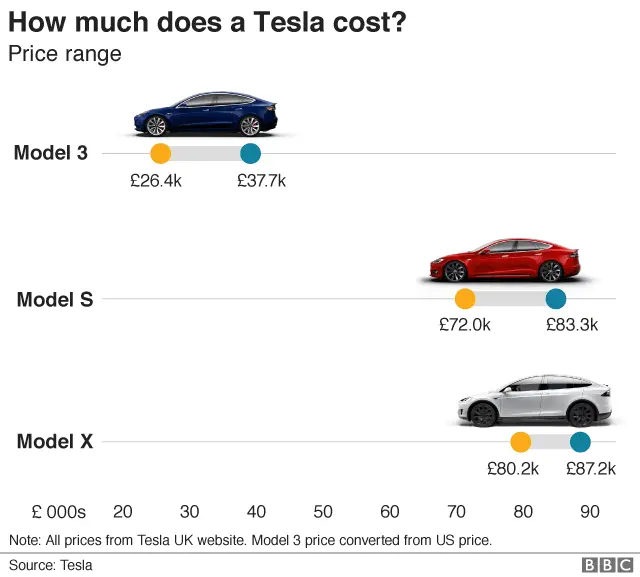
Recent estimates suggest that the average cost to build a Tesla Model 3 or Model Y sits between $30,000 and $36,000 per unit. This is a staggering drop from the estimated $84,000 it cost to build a Model S in its early iterations. By streamlining the platform and reducing the number of parts, Tesla has achieved a cost structure that legacy automakers struggle to match.
The Impact of Scale and Learning Curves
From a business finance perspective, Tesla’s secret weapon is its “learning curve.” In manufacturing, the more units you produce, the more efficient you become at producing them. Tesla’s COGS per vehicle has fallen as their annual delivery numbers have surged into the millions. This is not just a result of buying parts in bulk; it is the result of continuous engineering iterations that remove cost without sacrificing the perceived value of the product.
Breaking Down the Bill of Materials (BOM)
The Bill of Materials represents the direct cost of all physical components required to build a vehicle. In an electric vehicle, the hierarchy of costs is vastly different from that of an internal combustion engine (ICE) car.
The Battery: The Largest Line Item
The battery pack remains the single most expensive component of any Tesla. Historically, battery costs were the primary barrier to EV adoption. However, Tesla’s investment in battery chemistry and large-format 4680 cells has driven costs down.
On average, the battery pack for a long-range Model Y is estimated to cost between $10,000 and $12,000. This is calculated based on an industry-leading cost of approximately $100 to $125 per kilowatt-hour (kWh) at the pack level. By securing direct contracts for lithium, nickel, and cobalt, and by bringing cell manufacturing in-house, Tesla avoids the “middleman markup” that plagues other automakers who rely entirely on third-party suppliers like LG or CATL.
The Powertrain and Power Electronics
Beyond the battery, the drive unit—consisting of the electric motor, inverter, and gearbox—represents another significant cost, typically ranging from $3,000 to $4,000. Tesla’s use of silicon carbide (SiC) inverters is a prime example of a strategic financial trade-off. While SiC is more expensive than traditional silicon, its higher efficiency allows Tesla to use a smaller, cheaper battery pack to achieve the same range, resulting in a net cost saving for the entire vehicle.
Structural Engineering and the Giga Press
One of Tesla’s most significant financial innovations is the use of “Giga Castings.” Traditional car frames are made by welding and gluing hundreds of small stamped metal parts together. Tesla replaced the entire rear underbody of the Model Y with a single piece of cast aluminum produced by a massive machine called the Giga Press.

From a business finance standpoint, this reduces capital expenditure (fewer robots needed on the line), lowers labor costs, and significantly reduces the factory footprint. Estimates suggest that Giga Casting reduces the cost of the vehicle body by roughly 20% to 30% compared to traditional methods.
Vertical Integration as a Cost-Saving Strategy
In the automotive world, the standard model is to outsource 60% to 80% of a vehicle’s components to Tier 1 suppliers. Tesla has flipped this model on its head, opting for a level of vertical integration not seen since the days of the Ford Model T.
In-House Software and Hardware
Most car companies buy their Electronic Control Units (ECUs) and software from suppliers like Bosch or Continental. Tesla designs its own chips (such as the FSD computer) and writes its own code. While this requires high initial Research and Development (R&D) spending, it eliminates the profit margins that would otherwise go to suppliers. It also allows Tesla to remove redundant hardware. For example, by using software to control power distribution, Tesla has significantly reduced the length and weight of the wiring harness, saving hundreds of dollars in copper and assembly time per car.
The Direct-to-Consumer Advantage
While not a “manufacturing” cost in the strictest sense, Tesla’s direct-sales model has a massive impact on the company’s bottom-line efficiency. By bypassing the traditional dealership network, Tesla avoids the 10% to 15% margin that typically goes to a third-party dealer. This financial leeway allows Tesla to either price their cars more competitively or absorb higher manufacturing costs while maintaining healthy gross margins.
Comparing Tesla’s Margins to the Industry Standard
To truly understand the “cost” of a Tesla, one must look at the gross margin—the difference between the cost to make the car and the price it sells for. For much of 2021 and 2022, Tesla boasted industry-leading gross margins of nearly 25% to 30%. In contrast, many legacy automakers operate on margins of 8% to 12% for their ICE vehicles, and often lose money on every EV they sell.
The “Cost of Complexity” in Legacy Auto
Legacy manufacturers face a financial hurdle known as the “cost of complexity.” They must maintain assembly lines for gas cars while simultaneously building new lines for EVs. This duplication of overhead keeps their per-unit costs high. Tesla, being an “EV-only” manufacturer, benefits from a singular focus that allows every dollar of capital to be directed toward optimizing a single platform.
Pricing Power and Market Fluctuations
As of 2023 and 2024, Tesla has engaged in aggressive price cuts. These maneuvers are only possible because of the company’s low production costs. When Tesla lowers the price of a Model Y by $5,000, they are still profitable, whereas a competitor with a higher COGS might be forced to sell at a loss to stay relevant. This “margin cushion” is Tesla’s greatest competitive advantage in the global market.
The Future: The Path to the $25,000 Vehicle
The ultimate goal for Tesla’s finance and engineering teams is the “Next-Gen Platform,” often referred to as the vehicle that will allow for a $25,000 retail price point. To achieve this, Tesla plans to implement the “Unboxed Process.”
The Unboxed Manufacturing Process
Traditional car assembly involves moving a car body down a line and stuffing parts into it. The Unboxed Process proposes building sub-assemblies (like the seats and floorboard) separately and only joining them together at the very end. This is projected to reduce the factory footprint by 40% and lower production costs by as much as 50% compared to the Model 3 platform.
If Tesla can successfully drive the cost to make a vehicle down to the $18,000–$20,000 range, it would represent a seismic shift in the economics of transportation. At that level, the electric vehicle becomes not just a “green” choice, but the objectively superior financial choice for the mass market.

Conclusion of the Financial Landscape
The cost to make a Tesla is a moving target, defined by relentless optimization and a willingness to reinvent the assembly line. By focusing on battery chemistry, structural casting, and vertical integration, Tesla has moved from a high-cost luxury manufacturer to the world’s most efficient producer of electric vehicles. For the savvy observer, the real story isn’t just the cars themselves, but the incredible financial engineering that allows those cars to be built more cheaply, faster, and at a higher margin than almost anything else on the road today.
aViewFromTheCave is a participant in the Amazon Services LLC Associates Program, an affiliate advertising program designed to provide a means for sites to earn advertising fees by advertising and linking to Amazon.com. Amazon, the Amazon logo, AmazonSupply, and the AmazonSupply logo are trademarks of Amazon.com, Inc. or its affiliates. As an Amazon Associate we earn affiliate commissions from qualifying purchases.