
In the sprawling landscape of online services, Amazon Prime stands as one of the most prominent, offering a seemingly endless array of benefits from expedited shipping to extensive digital entertainment. For millions worldwide, it has become an almost indispensable part of modern consumerism. However, the fundamental question that every financially astute consumer must ask is: “How much does it truly cost for Amazon Prime membership, and does its value justify the expense?” This article delves deep into the financial implications of an Amazon Prime subscription, breaking down its various pricing tiers, evaluating its hidden costs and benefits, and providing a framework for consumers to assess its real worth from a personal finance perspective.
Understanding Amazon Prime’s Pricing Tiers
Amazon Prime is not a one-size-fits-all subscription. Amazon has strategically developed several pricing structures to cater to different demographics and financial situations. Understanding these tiers is the first step in determining the true cost for you.
The Standard Monthly Membership
For many, the most accessible entry point to Amazon Prime is the monthly subscription. This option provides flexibility, allowing members to cancel at any time without a long-term commitment. However, convenience often comes at a premium. The monthly fee for a standard Amazon Prime membership tends to be higher when annualized compared to paying for a full year upfront. This structure is ideal for individuals who might only need Prime for specific periods, such as during holiday shopping seasons, or those who prefer to manage their cash flow on a monthly basis, even if it means a higher overall expenditure over 12 months. From a financial planning standpoint, it offers greater liquidity but less long-term savings.
The Annual Savings Option
The most common and financially advantageous option for regular Prime users is the annual membership. By committing to a full year, subscribers typically receive a significant discount compared to paying month-to-month. This upfront payment represents a larger single outlay but yields substantial savings over the course of a year. For individuals or households who consistently utilize Prime’s benefits throughout the year, the annual plan is almost always the more fiscally responsible choice. It requires a greater initial investment but optimizes the cost-per-month, making it a key consideration for long-term budget planning.
Discounted Prime for Eligible Groups (Students, EBT/Medicaid Recipients)
Recognizing that not all financial situations are equal, Amazon offers significantly reduced Prime memberships for specific eligible groups. This initiative is a testament to Amazon’s understanding of diverse consumer financial realities and its strategy to expand its market reach.
- Prime Student: University students can often access Prime at a reduced monthly or annual rate, frequently accompanied by an extended free trial period. This program is designed to embed the Prime ecosystem with a demographic that will likely become lifelong customers. For students operating on tighter budgets, this discount is a substantial financial relief, making essential services like textbook delivery and study break entertainment more accessible.
- Prime for EBT and Medicaid Recipients: In a move aimed at enhancing accessibility, Amazon provides a discounted Prime membership to individuals receiving government assistance, such as EBT (Electronic Benefits Transfer) or Medicaid. This lower price point significantly reduces the barrier to entry for low-income households, offering them benefits like free shipping for essential goods and access to digital content that might otherwise be unaffordable. From a personal finance perspective, this discount can free up funds for other necessities, making the service a valuable economic tool rather than a luxury.
Prime Video Only Membership: A Niche Alternative
For those primarily interested in Amazon’s extensive library of movies and TV shows but not the other Prime benefits, a standalone Prime Video membership is available. This option strips away the shipping perks, music, and other extras, offering a focused entertainment package at a lower monthly cost than a full Prime subscription. For strict budgeters who already have alternative shipping solutions or simply don’t shop on Amazon frequently, this can be a financially prudent choice, allowing them to enjoy premium video content without subsidizing unused services. It exemplifies the importance of tailoring subscription choices to actual usage to prevent unnecessary financial leakage.
Beyond the Sticker Price: Hidden Value and Financial Considerations
Understanding the direct cost is just one piece of the puzzle. The true financial assessment of Amazon Prime requires a deeper dive into its myriad benefits and how they can either save or inadvertently cost you money.
The True Cost of “Free” Two-Day Shipping
The headline benefit for many Prime members is the “free” two-day shipping. While it eliminates per-order shipping fees, it’s crucial to acknowledge that the cost of this convenience is baked into the annual or monthly membership fee. From a financial standpoint, if you infrequently order items that qualify for Prime shipping, you might be paying for a benefit you rarely use. Conversely, for heavy Amazon shoppers, the cumulative savings on shipping fees can quickly eclipse the membership cost, representing a significant return on investment. The key is to track your actual shipping costs before Prime and compare them to the membership fee. Are you truly saving, or are you simply consolidating your shipping expenses into a single annual payment?
Digital Entertainment: Streaming, Music, and Books
Prime Video, Amazon Music Prime, Prime Reading, and Twitch Prime offer substantial digital entertainment value.
- Prime Video: Provides access to thousands of movies and TV shows, including Amazon Originals. If you would otherwise subscribe to another streaming service solely for video content, Prime Video’s inclusion can represent a direct saving.
- Amazon Music Prime: Offers a catalog of millions of songs ad-free. While not as extensive as Amazon Music Unlimited or Spotify Premium, it can eliminate the need for a separate music subscription for casual listeners.
- Prime Reading: Gives access to a rotating selection of ebooks, magazines, and comics. For avid readers, this can reduce spending on individual book purchases.
- Twitch Prime (now Prime Gaming): Offers free games, in-game content, and a free channel subscription monthly. For gamers, this can represent real monetary value in virtual goods.
The financial assessment here involves evaluating whether these included services replace other paid subscriptions or prevent new purchases. If you leverage these features, they contribute directly to Prime’s financial justification; if not, they are simply unused perks you’re subsidizing.
Exclusive Deals and Early Access Benefits
Prime members often receive exclusive discounts and early access to Lightning Deals, particularly during major sales events like Prime Day. For strategic shoppers, this can translate into genuine savings on desired products. However, a critical financial caveat is the risk of impulse purchasing. The allure of a “Prime-exclusive deal” can encourage spending on items that weren’t budgeted for or genuinely needed, thereby negating any potential savings. Savvy consumers will stick to pre-planned purchases and compare prices rigorously to ensure the Prime deal is indeed the best value.
Grocery Savings with Amazon Fresh and Whole Foods Market
Prime membership unlocks access to Amazon Fresh for grocery delivery and significant discounts at Whole Foods Market.
- Amazon Fresh: Offers free grocery delivery on orders above a certain threshold in select areas. This can save time and transportation costs associated with physical grocery shopping.
- Whole Foods Market: Prime members receive exclusive discounts on thousands of items and an additional 10% off sale items (excluding alcohol). For regular Whole Foods shoppers, these cumulative savings can be substantial over a year, potentially offsetting a significant portion of the Prime membership fee.
Evaluating these benefits requires assessing your grocery shopping habits. If you frequently shop at Whole Foods or rely on grocery delivery, these perks can offer tangible financial advantages.
Cloud Storage and Other Digital Perks
Prime Photos provides unlimited full-resolution photo storage, plus 5 GB for videos and other files. For individuals currently paying for a separate cloud storage service for photos, this benefit can represent a direct saving. Other benefits include Prime Try Before You Buy (formerly Prime Wardrobe) for clothing, which can reduce returns and associated costs, and Amazon Pharmacy savings. These often overlooked benefits can contribute to the overall financial value proposition, especially if they replace other paid services or prevent unnecessary spending.
Is Amazon Prime Worth the Investment? A Financial Perspective
Ultimately, the decision of whether Amazon Prime is worth its cost boils down to a personalized financial assessment. It’s not about the absolute price, but the value it delivers relative to your spending habits and financial goals.

Calculating Your Personal ROI (Return on Investment)
To determine your personal ROI, create a simple spreadsheet or list.
- List all Prime benefits you actively use.
- Estimate the monetary value of each used benefit:
- Shipping: How much would you typically spend on shipping fees for your Amazon orders without Prime? Or, how many trips to physical stores does Prime save you, and what’s the associated cost (gas, time)?
- Streaming: How much would you pay for comparable streaming video or music services if Prime didn’t offer them?
- Grocery: How much do you save monthly/annually through Whole Foods discounts or free Amazon Fresh delivery?
- Other Perks: Do you save on cloud storage, e-books, or gaming content?
- Sum these estimated savings/values.
- Compare this sum to your annual Prime membership cost.
If your estimated annual savings and value exceed the membership fee, Prime likely offers a positive ROI for you. If not, it might be an expense rather than an investment.
When Prime Makes Financial Sense
Prime is often a sound financial decision for:
- Frequent Amazon Shoppers: Individuals who place numerous orders throughout the year, especially those who often need items quickly.
- Regular Whole Foods Shoppers: Those who can consistently leverage the exclusive discounts and savings.
- Digital Entertainment Enthusiasts: Users who actively consume Prime Video, Music, and Reading, potentially replacing other paid subscriptions.
- Households with Specific Needs: Families needing specific items quickly, or those utilizing Amazon Fresh for convenience.
- Students or Low-Income Individuals: For whom the discounted rates significantly reduce the barrier to access valuable services.
When Prime Might Be an Unnecessary Expense
Conversely, Prime might be an unjustified expense for:
- Infrequent Amazon Shoppers: If you only order a few times a year, the shipping fees might be less than the annual membership.
- Dedicated to Other Retailers: If your primary shopping is done elsewhere.
- Content with Other Streaming Services: If Prime Video, Music, or Reading don’t add unique value to your entertainment consumption.
- Budget-Conscious Consumers: Those who find themselves spending more due to the convenience of Prime, rather than saving.
- Those Unaware of Benefits: If you’re paying but not actively utilizing many of the features, you’re leaving money on the table.
Leveraging Prime Benefits to Maximize Savings
To ensure you’re getting your money’s worth, be proactive.
- Consolidate Purchases: Use Prime for all eligible purchases to maximize shipping savings.
- Explore All Perks: Regularly check what’s included with Prime Video, Music, Reading, and Gaming. You might find hidden gems that eliminate other subscriptions.
- Shop Smart on Prime Day: If you plan to buy electronics or household goods, strategically wait for Prime Day or other sales events to capitalize on exclusive discounts, but stick to your budget.
- Utilize Whole Foods Discounts: Make a conscious effort to use your Prime membership when shopping at Whole Foods to capture those savings.
Alternatives and Budgeting Strategies for Prime Users
Even with a Prime membership, smart financial habits can optimize your spending and ensure you’re getting the most value.
Sharing a Prime Membership (Household Benefits)
Amazon allows two adults in the same household to share Prime benefits, including free shipping, Prime Video, and Prime Reading. This can be a fantastic way to halve the cost for eligible households, effectively making the service twice as affordable per person. Before signing up individually, check if a partner, spouse, or other eligible household member already has a membership or is willing to split the cost. This is a direct financial hack to reduce individual expenditure while maintaining access to perks.
Utilizing Free Trials Wisely
Amazon frequently offers free trial periods for Prime (often 30 days, or longer for students). These trials are an excellent opportunity to test the waters and genuinely assess how much you would use the various benefits before committing financially. Mark your calendar for the trial end date and be prepared to cancel if the value proposition isn’t strong enough for your financial situation. Avoid letting trials automatically roll into paid subscriptions if you haven’t actively used and valued the service.
Exploring Competitor Services
While Amazon Prime is comprehensive, it’s not the only game in town. Services like Walmart+ offer competing benefits, particularly in shipping and grocery delivery, often at a similar or slightly lower price point. For streaming, standalone services like Netflix, Hulu, Disney+, and HBO Max might offer more specialized content if video is your sole priority. A thorough comparison of features and costs among competitors can reveal a more suitable or cost-effective alternative for your specific needs, especially if you find yourself underutilizing many of Prime’s broad offerings.
Regular Financial Review of Subscriptions
In today’s subscription economy, it’s easy to accumulate numerous recurring charges that erode your budget. Make it a habit to review all your subscriptions, including Amazon Prime, at least once a year. Ask yourself:
- Am I still actively using this service?
- Am I deriving sufficient value to justify the cost?
- Are there cheaper alternatives or ways to get similar benefits?
- Has my usage changed since I first subscribed?
This disciplined approach ensures that your money is always working for you and not going towards forgotten or underutilized services.
Future Outlook: Potential Price Changes and Member Value
Amazon has a history of adjusting Prime membership fees, typically upwards, as it expands its offerings and faces increasing operational costs.
Historical Price Trends
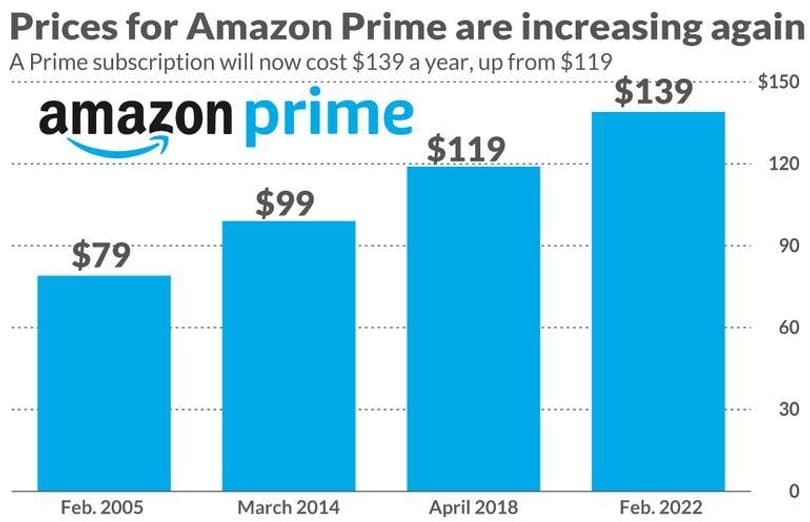
Since its inception, the cost of Amazon Prime has seen periodic increases. These adjustments are usually justified by Amazon through expanded benefits, increased shipping speeds, and investment in original content for Prime Video. While these price hikes can be frustrating for consumers, they often reflect the rising costs of doing business and the continuous enhancement of the service’s value proposition.
Anticipating Future Adjustments
It’s reasonable to anticipate further price adjustments for Prime in the future. Factors such as inflation, fuel costs, labor expenses, and the ever-growing investment in logistics and digital content all contribute to Amazon’s operational overhead. Consumers should factor these potential increases into their long-term financial planning, ensuring their personal ROI calculation remains favorable even if the sticker price goes up.
The Evolving Value Proposition
The value of Amazon Prime is not static. Amazon continually adds new features, expands its delivery network, and invests in new content. This evolving value proposition means that while the cost might increase, the benefits often do too. Savvy consumers will need to re-evaluate their Prime membership periodically, weighing the increased cost against the expanded array of services to ensure it continues to align with their financial interests and lifestyle needs.

Conclusion
The question “How much does it cost for Amazon Prime membership?” is more nuanced than a simple dollar figure. It encompasses direct costs, the implicit value of its diverse benefits, and the potential for both savings and overspending. From standard monthly and annual fees to discounted tiers for students and eligible low-income individuals, Amazon offers various entry points. However, the true financial wisdom lies in a diligent assessment of how you utilize these benefits. By calculating your personal return on investment, strategically leveraging discounts, and regularly reviewing your subscription, you can transform Amazon Prime from a potential budget drain into a genuinely valuable financial tool that aligns with your personal finance goals. Without this critical financial lens, the perceived convenience of Prime risks becoming an unchecked expense.
aViewFromTheCave is a participant in the Amazon Services LLC Associates Program, an affiliate advertising program designed to provide a means for sites to earn advertising fees by advertising and linking to Amazon.com. Amazon, the Amazon logo, AmazonSupply, and the AmazonSupply logo are trademarks of Amazon.com, Inc. or its affiliates. As an Amazon Associate we earn affiliate commissions from qualifying purchases.