
Understanding your contributions to Social Security is a fundamental aspect of personal finance, impacting not only your current take-home pay but also your financial security in retirement, disability, and for your survivors. While often seen as a deduction on a paycheck, these payments are investments in a vast social insurance program designed to provide a safety net for millions of Americans. Decoding the mechanics of Social Security contributions—who pays, how much, and why—is crucial for effective financial planning and for appreciating the role this system plays in the broader economy.
The Foundation of FICA: Understanding Your Payroll Taxes
At the heart of Social Security contributions for most employed individuals is the Federal Insurance Contributions Act (FICA) tax. This mandatory payroll tax funds both Social Security and Medicare, two cornerstone federal programs.
What is FICA?
FICA is a combined tax on earnings. For employees, it comprises two distinct components:
-
Social Security Tax (OASDI – Old-Age, Survivors, and Disability Insurance): This portion of the tax funds benefits for retirees, survivors of deceased workers, and individuals with disabilities. The employee contribution rate for Social Security is currently 6.2% of your gross wages.
-
Medicare Tax: This portion funds hospital insurance for the elderly and disabled. The employee contribution rate for Medicare is currently 1.45% of your gross wages.
Together, the total FICA tax rate for employees is 7.65% (6.2% + 1.45%). This amount is automatically withheld from your paycheck by your employer.
The Wage Base Limit
A critical distinction for Social Security tax is the “wage base limit.” Each year, there’s an maximum amount of earnings subject to Social Security tax. For example, if the wage base limit is $168,600 (for 2024), any earnings above this amount are not subject to the 6.2% Social Security tax. This means that high-income earners stop contributing to Social Security once their cumulative earnings for the year hit this ceiling.
It’s important to note that the Medicare tax component of FICA does not have a wage base limit. All earned income, regardless of how high, is subject to the 1.45% Medicare tax. Furthermore, an additional Medicare tax of 0.9% applies to individual incomes exceeding $200,000 (or $250,000 for married couples filing jointly). This additional tax is only levied on the employee’s portion and is not matched by the employer.
Employer’s Role
While employees contribute 7.65% of their wages to FICA, employers also pay a matching 7.65%. This means that for every dollar you earn up to the Social Security wage base, a total of 15.3% (12.4% for Social Security and 2.9% for Medicare) is contributed to the system. This employer contribution is a significant hidden cost of employment and ensures a broader funding base for these vital programs.
Navigating Self-Employment Taxes (SECA)
For entrepreneurs, freelancers, and small business owners, the method of contributing to Social Security and Medicare differs significantly from that of traditional employees. These individuals pay Self-Employment Contributions Act (SECA) taxes.
The Self-Employed Contribution Act (SECA)
If you are self-employed, you are responsible for paying both the employee and employer portions of Social Security and Medicare taxes. This means your effective self-employment tax rate is 15.3% of your net earnings from self-employment (12.4% for Social Security and 2.9% for Medicare).
However, there’s a crucial distinction: SECA taxes are calculated on 92.35% of your net earnings from self-employment. This adjustment is designed to approximate the fact that employees do not pay FICA tax on the employer’s share of FICA. Furthermore, self-employed individuals can deduct one-half of their self-employment taxes paid from their gross income when calculating their adjusted gross income (AGI). This deduction helps to offset the burden of paying both portions of the tax.
Just like with employee contributions, the Social Security portion of SECA tax is subject to the annual wage base limit, while the Medicare portion has no income cap and includes the additional 0.9% Medicare tax for high earners.
Estimating and Paying Your SECA Taxes
Unlike employees who have FICA taxes automatically withheld, self-employed individuals are responsible for calculating and paying their SECA taxes themselves. This is typically done through quarterly estimated tax payments to the IRS using Form 1040-ES. Failing to pay sufficient estimated taxes throughout the year can result in penalties.
Accurate record-keeping of income and expenses is paramount for the self-employed to correctly calculate their net earnings and, consequently, their SECA tax liability. This meticulous approach to financial management ensures compliance and avoids unexpected tax burdens.
How Your Contributions Fuel the System
Your regular contributions to Social Security are not held in an individual account earmarked specifically for your future benefits. Instead, they are part of a dynamic “pay-as-you-go” system that immediately funnels money to current beneficiaries.
Funding Current Benefits
The Social Security system operates on an intergenerational compact: today’s workers and their employers contribute to support today’s retirees, disabled workers, and survivors. This means the taxes you pay now are primarily used to provide monthly benefit checks to those currently eligible. Any surplus contributions are invested in special interest-bearing U.S. Treasury securities held by the Social Security Trust Funds. These trust funds act as reserves, ensuring the system can meet its obligations even during periods when outlays exceed incoming tax revenue.
The three main categories of benefits funded by your contributions are:
-
Retirement Benefits: Providing income for eligible individuals and their spouses/dependents in retirement.
-
Disability Benefits: Offering financial support to workers who become severely disabled and are unable to work.
-
Survivors Benefits: Providing payments to eligible family members (e.g., spouses, children) of a deceased worker.
Earning Social Security Credits
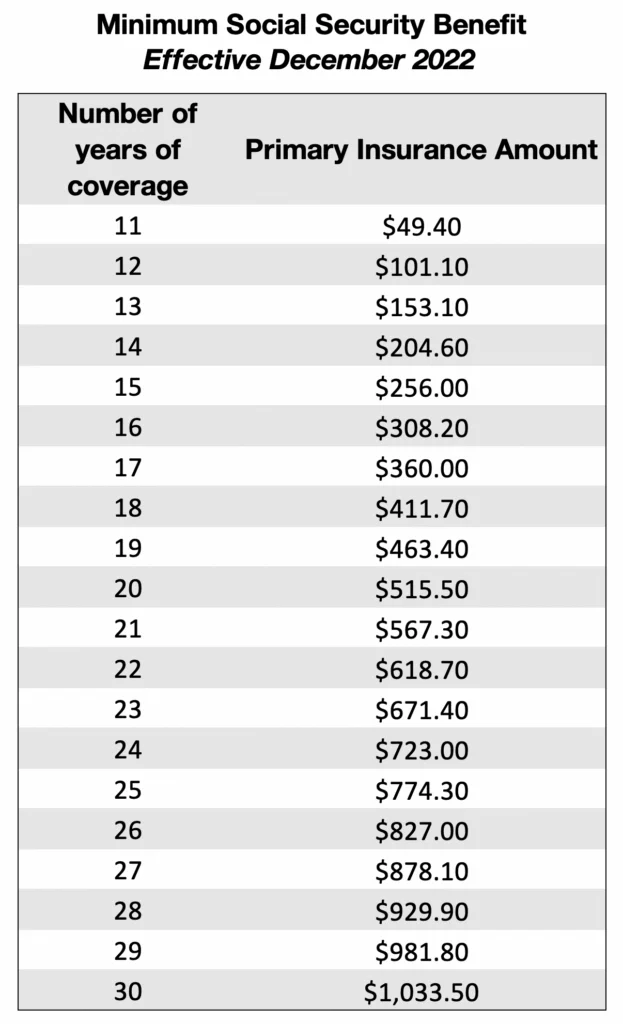
Your contributions also directly impact your eligibility for future benefits by earning you “Social Security credits.” The Social Security Administration (SSA) uses these credits to determine if you have worked long enough to qualify for retirement, disability, or survivors’ benefits.
In any given year, you can earn up to four Social Security credits. The amount of earnings required to earn one credit changes annually with inflation. For instance, in 2024, you earn one credit for every $1,730 of earnings, up to the maximum of four credits for earning $6,920 or more.
Most people need 40 credits (10 years of work) to qualify for retirement benefits. Fewer credits may be needed for disability or survivor benefits, depending on age and other factors. These credits are the fundamental building blocks that link your contributions to your eventual benefit eligibility.
The Long-Term Impact: How Contributions Shape Your Future
The amount you pay into Social Security over your working life directly influences the size of the benefits you or your family will receive in the future. It’s not just about qualifying; it’s about the benefit amount itself.
Calculating Your Social Security Benefits
The Social Security Administration calculates your Primary Insurance Amount (PIA), which is the base amount of your monthly benefit, using a complex formula. This formula considers your “average indexed monthly earnings” (AIME) over your highest 35 years of earnings. “Indexing” adjusts past earnings to reflect changes in general wage levels over time, ensuring that older earnings have a comparable value to more recent ones.
If you have fewer than 35 years of earnings, zero-earning years will be included in the calculation, which can significantly lower your AIME and, consequently, your PIA. This highlights the importance of consistent contributions over a long working career. The higher your indexed earnings over those 35 years, the higher your potential Social Security benefit will be, up to a maximum benefit level.
Maximizing Your Retirement Income
Understanding the relationship between your contributions and future benefits can inform strategic financial decisions. While you cannot directly alter the contribution rate, you can influence the earnings reported to Social Security, especially if you are self-employed or have opportunities for additional income streams.
Moreover, choices made as you approach retirement can significantly impact your eventual payout:
-
Working Longer: Continuing to work past your initial 35 highest earning years can replace lower-earning years in your AIME calculation, potentially increasing your benefit.
-
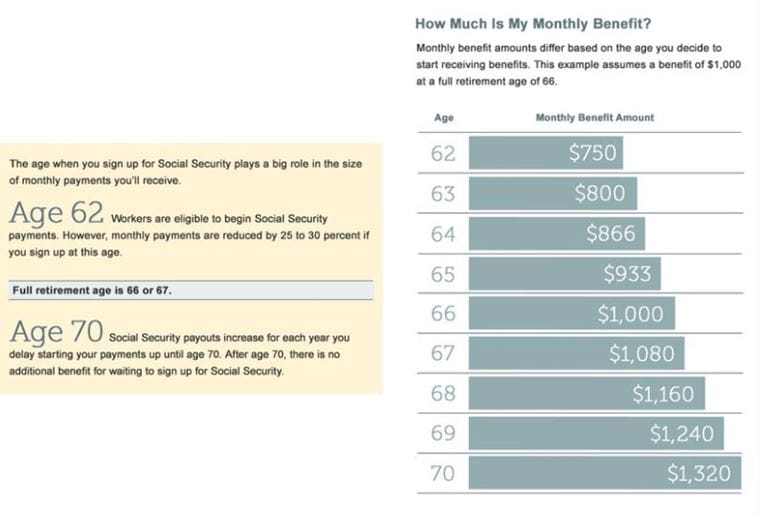
Delaying Benefits: While you can start receiving retirement benefits as early as age 62, your monthly payment is permanently reduced. Waiting until your Full Retirement Age (FRA) provides your full PIA. Delaying beyond your FRA (up to age 70) results in “delayed retirement credits,” which can increase your monthly benefit by a significant percentage each year you delay.
Given that Social Security benefits are designed to replace only a portion of pre-retirement income (typically around 40% for average earners), it is crucial to complement these benefits with personal savings, investments, and other retirement vehicles.
The Evolving Landscape of Social Security
Social Security is a dynamic system continually influenced by demographic shifts, economic conditions, and legislative discussions. Understanding its current challenges and potential future changes is vital for comprehensive financial planning.
Challenges and Future Outlook
The Social Security system faces long-term financial challenges, primarily due to demographic shifts. An aging population, coupled with lower birth rates, means fewer workers are contributing for each beneficiary drawing benefits. This shift can put pressure on the trust funds. The Social Security Trustees regularly issue reports detailing the financial health of the system, projecting when the trust funds might be depleted if no legislative action is taken.
Potential solutions often discussed include:
-
Increasing the Full Retirement Age: Raising the age at which individuals can receive unreduced benefits.
-
Adjusting Tax Rates: Increasing the Social Security tax rate for employees, employers, or both.
-
Raising the Wage Base Limit: Subjecting more of high earners’ income to Social Security tax.
-
Modifying Benefit Formulas: Changing how benefits are calculated, potentially leading to lower benefit amounts for future retirees.
-
Means Testing: Introducing income or wealth thresholds that would reduce benefits for higher-income individuals.
Personal Financial Planning Implications
While Social Security has been a cornerstone of American retirement security for decades, the ongoing discussions about its long-term solvency underscore the importance of diversified personal financial planning. It is prudent for individuals to:
-
Not Solely Rely on Social Security: While an essential component, Social Security should be viewed as one leg of a multi-legged retirement stool.
-
Maximize Other Retirement Vehicles: Actively contribute to 401(k)s, IRAs, and other investment accounts.
-
Stay Informed: Keep abreast of legislative developments regarding Social Security, as changes could impact future benefits.
-
Consult a Financial Advisor: A professional can help integrate your anticipated Social Security benefits into a broader, personalized retirement strategy.
By understanding how much you pay into Social Security, how those payments are utilized, and what future implications they hold, you can make more informed decisions to secure your financial well-being.
aViewFromTheCave is a participant in the Amazon Services LLC Associates Program, an affiliate advertising program designed to provide a means for sites to earn advertising fees by advertising and linking to Amazon.com. Amazon, the Amazon logo, AmazonSupply, and the AmazonSupply logo are trademarks of Amazon.com, Inc. or its affiliates. As an Amazon Associate we earn affiliate commissions from qualifying purchases.