
Living comfortably is a deeply personal and often elusive concept, but from a financial perspective, it can be quantified. It’s not just about covering basic necessities; it’s about achieving a sense of security, having the freedom to pursue aspirations, and enjoying a lifestyle free from persistent financial stress. Determining the precise income required involves a nuanced understanding of individual circumstances, geographic factors, and long-term financial goals.
Defining “Comfortably” in Financial Terms
The threshold for living comfortably extends far beyond mere subsistence. While a minimum wage might keep a roof over one’s head and food on the table, comfort implies a quality of life that includes discretion, security, and the ability to plan for the future without constant anxiety.

Beyond Basic Needs: The Ladder of Financial Well-being
To live comfortably typically means ascending past the foundational rung of financial stability. Financial stability is the ability to meet all essential expenses consistently and handle minor emergencies without going into debt. Comfort, however, suggests several additional layers:
- Security: This encompasses a robust emergency fund (3-6 months of living expenses), adequate insurance coverage (health, life, disability), and a manageable debt-to-income ratio.
- Discretionary Spending: The ability to afford non-essential items and experiences such as dining out, entertainment, hobbies, and vacations without guilt or financial strain.
- Future Planning: Actively saving and investing for significant life goals like retirement, a down payment on a home, or a child’s education. This implies having disposable income after all essential expenses and immediate wants are met.
- Freedom from Stress: Perhaps the most significant indicator of financial comfort is the absence of daily worry about money. It means having enough buffer to absorb unexpected costs and to not feel trapped by financial obligations.
The 50/30/20 Rule and Lifestyle Inflation
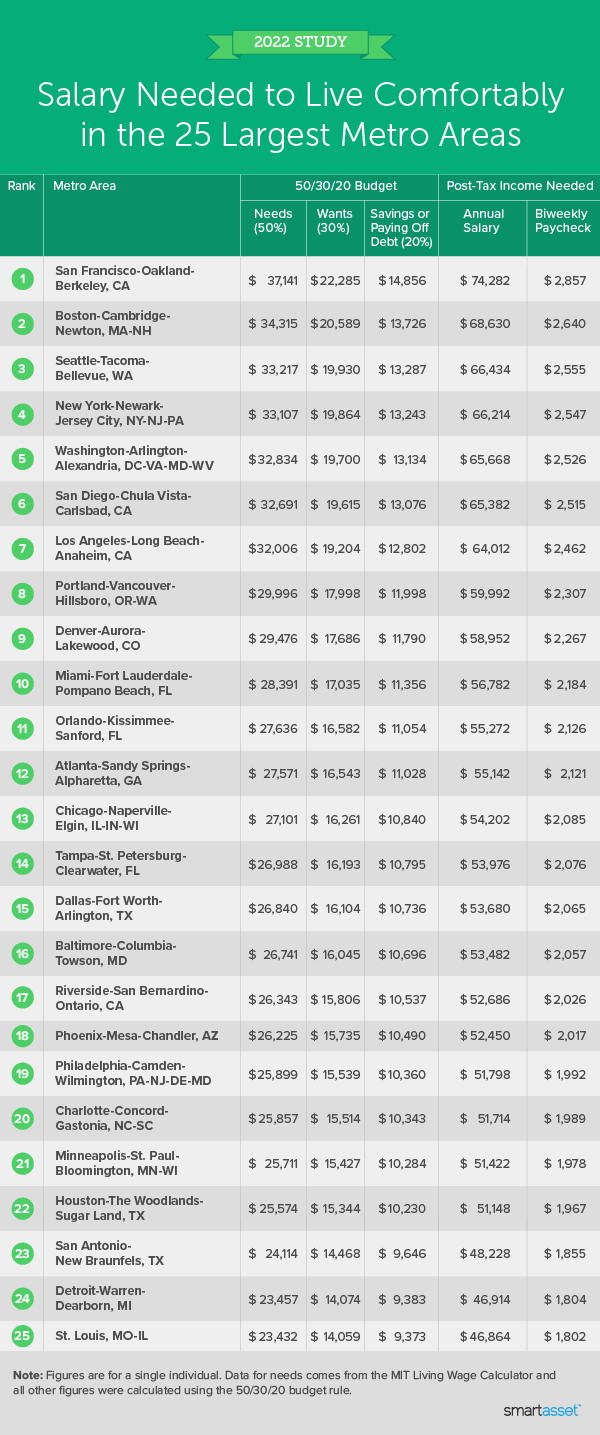
A popular guideline for budgeting and assessing financial comfort is the 50/30/20 rule: 50% of after-tax income for needs, 30% for wants, and 20% for savings and debt repayment. While this framework provides a good starting point, the actual dollar amounts for “needs” and “wants” fluctuate wildly.
- Needs (50%): Housing, utilities, groceries, transportation, insurance, minimum debt payments. For comfort, this often means affording quality versions of these – a safe neighborhood, reliable car, nutritious food.
- Wants (30%): Dining out, entertainment, vacations, personal care, subscriptions. This category is where comfort truly shines, allowing for enrichment and enjoyment.
- Savings & Debt Repayment (20%): Retirement contributions, emergency fund building, extra debt payments beyond the minimum. This segment is crucial for long-term comfort and financial independence.
Lifestyle inflation is a significant challenge to achieving comfort. As income rises, so too can spending habits. What was once considered a luxury becomes a perceived necessity. Resisting this upward creep of expenses is critical for maintaining true financial comfort and ensuring that increased income translates into increased security and opportunity, rather than just more spending.
Geographic and Demographic Variables
The income needed for comfort is not a static figure across different individuals or locations. Several external and personal factors play a crucial role in shaping this number.
Cost of Living Index: Urban vs. Rural
Perhaps the most significant external factor is geography. The cost of living varies dramatically from one region to another, even within the same country or state. Major metropolitan areas (e.g., New York City, San Francisco, London, Sydney) have significantly higher housing, transportation, and sometimes even food costs compared to suburban or rural areas. A salary that affords a comfortable lifestyle in a small town might barely cover rent in a major city.
Cost of living indexes, which compare the price of goods and services across different locations, are vital tools for understanding these disparities. These indexes often cover categories like housing, groceries, utilities, transportation, and healthcare. A national average might indicate a comfortable income, but localized data is essential for a realistic personal assessment.
Family Size and Dependents
An individual living alone has different financial requirements than someone supporting a family of four. Children introduce substantial additional expenses, including:
- Childcare: A major cost for working parents, often rivaling or exceeding housing expenses.
- Education: From private schooling to extracurricular activities and future college savings.
- Healthcare: Increased doctor visits, specialized care, and higher insurance premiums.
- Food and Clothing: More mouths to feed and bodies to clothe.
- Activities: Sports, lessons, and entertainment suitable for children.
Each additional dependent, whether a child, an elderly parent, or another relative, increases the baseline income required to maintain a comfortable standard of living for the entire household.
Age and Career Stage Considerations
The definition of comfort also evolves with age and career stage:
- Early Career (20s-30s): Income might be lower, but expenses could include student loan repayments, establishing an emergency fund, and perhaps saving for a first home. Comfort here might mean covering these while still having some discretionary income.
- Mid-Career (30s-50s): Income typically peaks, but so do responsibilities. This phase often involves mortgage payments, raising a family, and aggressively saving for retirement and children’s education. Comfort means managing these significant financial obligations without undue stress.
- Late Career/Pre-Retirement (50s-60s): Focus shifts heavily to maximizing retirement savings and potentially down-sizing or paying off the mortgage. Comfort here is about financial security heading into retirement.
- Retirement: While income-generating work may cease, comfort in retirement means having sufficient passive income (from investments, pensions, Social Security) to maintain a desired lifestyle, cover healthcare costs, and enjoy leisure activities without drawing down capital too quickly.
The Pillars of Financial Comfort
Achieving and maintaining financial comfort rests on several fundamental financial pillars. Neglecting any of these can undermine overall well-being.
Secure Housing and Transportation
These two categories often represent the largest recurring expenses for most households.
- Housing: Comfort means stable housing that meets your needs without being a financial burden. This could be owning a home with manageable mortgage payments (ideally no more than 28% of gross income) or renting a property that fits your lifestyle and budget, in a desirable location. It means not being “house poor.”
- Transportation: Reliable, safe transportation is crucial for access to work, services, and leisure. Whether it’s a paid-off car, affordable public transit, or a car loan with reasonable payments, comfort dictates that transportation costs do not strain the budget. The general guideline is that combined car payments, insurance, and fuel should not exceed 10-15% of your net income.

Robust Savings and Emergency Funds
True comfort includes a financial safety net.
- Emergency Fund: At least three to six months’ worth of essential living expenses stored in an easily accessible, interest-bearing account (like a high-yield savings account) is non-negotiable. This protects against job loss, medical emergencies, or unexpected home/car repairs.
- General Savings: Beyond the emergency fund, regular contributions to other savings goals, such as a down payment for a home, a new car, or a large purchase, contribute to overall comfort by providing options and reducing the need for debt.
Debt Management and Retirement Planning
These aspects deal with past and future financial obligations, respectively.
- Debt Management: While some debt (like a mortgage or student loans) can be part of a comfortable life, high-interest consumer debt (credit cards, personal loans) is antithetical to comfort. A comfortable financial state involves having a manageable debt load, ideally with a plan to pay down high-interest debt aggressively. The total debt-to-income ratio (DTI) – comparing monthly debt payments to gross monthly income – is a key metric, with lenders often preferring it below 36%.
- Retirement Planning: Consistently contributing to retirement accounts (401(k), IRA, etc.) from an early age is vital for long-term comfort. The goal is to accumulate a nest egg large enough to generate sufficient income to maintain your desired lifestyle throughout retirement without having to work. Financial advisors often recommend saving 10-15% of your income for retirement.
Discretionary Spending and Quality of Life
The ability to enjoy life beyond mere survival is a hallmark of comfort.
- Experiences: Vacations, hobbies, cultural events, dining out, and other leisure activities.
- Personal Development: Courses, workshops, books, and gym memberships.
- Generosity: The ability to give to charities or help loved ones without feeling financially stretched.
These elements contribute significantly to mental and emotional well-being, which is integral to a comfortable life.
Strategies for Achieving Financial Comfort
Knowing the components of comfort is one thing; actively working towards it is another. Strategic financial planning and discipline are key.
Budgeting and Expense Tracking
The cornerstone of financial comfort is a clear understanding of your cash flow. Creating and sticking to a budget allows you to allocate your income effectively across needs, wants, and savings. Tools ranging from simple spreadsheets to sophisticated budgeting apps can help track every dollar, identify areas for reduction, and ensure spending aligns with your goals. Regularly reviewing your budget helps in adapting to life changes and preventing financial drift.
Income Diversification and Career Advancement
While budgeting manages outflows, increasing inflows can accelerate the path to comfort.
- Career Advancement: Investing in skills, pursuing promotions, and negotiating salaries are direct ways to increase primary income.
- Side Hustles: Generating additional income through part-time work, freelancing, or online ventures can supplement your main income and provide a buffer.
- Passive Income: Exploring avenues like dividend stocks, rental properties, or high-yield savings accounts can create income streams that require less active effort.
Smart Investing for Long-Term Growth
Once emergency funds are established and high-interest debt is managed, investing becomes paramount for long-term comfort and wealth accumulation.
- Retirement Accounts: Maximize contributions to tax-advantaged accounts like 401(k)s and IRAs.
- Diversified Portfolio: Invest in a mix of assets (stocks, bonds, mutual funds, ETFs) appropriate for your risk tolerance and time horizon.
- Compound Interest: Understanding and leveraging the power of compound interest allows your investments to grow significantly over time.
Continuous Financial Education
The financial landscape is constantly evolving. Staying informed about personal finance topics, economic trends, and investment strategies empowers you to make better decisions and adapt your plan as needed. Reading financial news, attending webinars, or consulting with financial advisors are all valuable steps.
Personalizing Your Comfort Calculation
Ultimately, the exact figure you need to live comfortably is unique to you. It’s a dynamic number that changes with your life stage, priorities, and external circumstances.
Tools and Resources for Assessment
Numerous online calculators can help estimate the cost of living in different areas and project retirement needs. Websites like the MIT Living Wage Calculator or various retirement planning tools offer valuable starting points. However, these general tools should be customized with your specific expenses, income, and aspirations. Working with a fee-only financial advisor can provide personalized guidance and a tailored plan.
Regular Review and Adjustment
Financial comfort is not a destination but an ongoing journey. It requires regular review of your income, expenses, and goals. Annually, or whenever a major life event occurs (marriage, children, new job, move), reassess your financial situation. Adjust your budget, savings goals, and investment strategy to ensure they continue to align with your evolving definition of living comfortably. This proactive approach ensures you remain on track to achieve and sustain your desired quality of life.
aViewFromTheCave is a participant in the Amazon Services LLC Associates Program, an affiliate advertising program designed to provide a means for sites to earn advertising fees by advertising and linking to Amazon.com. Amazon, the Amazon logo, AmazonSupply, and the AmazonSupply logo are trademarks of Amazon.com, Inc. or its affiliates. As an Amazon Associate we earn affiliate commissions from qualifying purchases.