
Navigating the complexities of child support can be one of the most financially and emotionally challenging aspects of a separation or divorce. When two children are involved, the calculations and considerations often become more intricate than simply doubling a single-child amount. For parents seeking clarity on their financial obligations or entitlements, understanding the underlying principles, state-specific guidelines, and long-term implications is paramount. This comprehensive guide aims to demystify the process, offering insightful financial perspectives for both paying and receiving parents, ensuring that the well-being of the children remains at the forefront of every decision.

Understanding the Fundamentals of Child Support Calculations
Child support is a legal obligation for parents to provide financial assistance for their children’s upbringing, ensuring they maintain a similar standard of living to what they would have experienced had their parents remained together. It’s not punitive; rather, it’s a mechanism to uphold parental responsibility, even after a relationship dissolves. The calculation of child support is rarely a straightforward, universal formula, as it’s heavily influenced by a multitude of factors and state-specific regulations.
The Core Purpose of Child Support
At its heart, child support is designed to cover a child’s essential needs and expenses. This includes, but is not limited to, food, shelter, clothing, medical care, education, and childcare. The overarching goal is to minimize the financial impact of parental separation on the children, ensuring their continuity of care and access to resources necessary for their development. While the paying parent provides funds, the receiving parent is responsible for managing these funds to meet the children’s needs, often supplementing them with their own income. It’s a shared financial commitment, albeit often formalized into distinct payments.
Key Factors Influencing Support Amounts
While the specific formulas vary by jurisdiction, several universal factors typically play a crucial role in determining child support amounts:
- Parents’ Gross Income: This is often the most significant factor. Most states consider both parents’ incomes, either individually or combined. The higher the combined income, the greater the potential support amount. Deductions for taxes, health insurance premiums, and other mandatory payments may be factored in to arrive at a net disposable income.
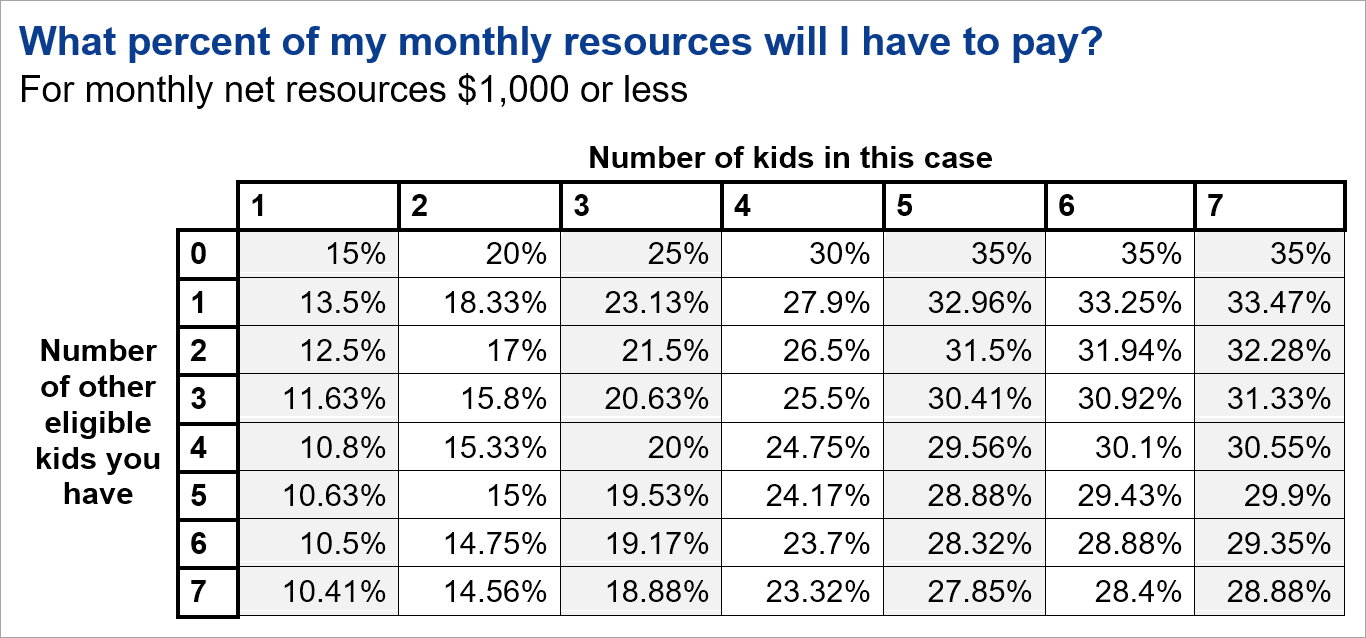
- Number of Children: Logically, more children generally lead to higher support amounts, but often not in a linear fashion. The “multiplier effect” is usually less than double for two children compared to one, as some fixed costs of a household don’t scale directly with each additional child.
- Custody Arrangement/Parenting Time: The amount of time each parent spends with the children significantly impacts calculations. In sole custody arrangements, the non-custodial parent typically pays more. In shared or joint custody, where both parents have substantial overnight stays, the support amount might be reduced or even result in the higher-earning parent paying the lower-earning parent, regardless of who is technically the “custodial” parent.
- Childcare Costs: Expenses related to daycare, after-school care, or nannies are often added to the basic support obligation and shared between parents.
- Health Insurance Premiums: The cost of health insurance for the children is typically included, with the parent paying the premium often receiving a credit or the cost being shared.
- Extraordinary Expenses: These can include costs for specific medical treatments, educational needs (private school tuition, special tutoring), or significant extracurricular activities. They are usually added on top of the base support and apportioned between parents.
State-Specific Calculation Models
Each U.S. state employs one of three primary models for calculating child support, each with its nuances:
- Income Shares Model: This is the most common model, used by the majority of states. It assumes that children should receive the same proportion of parental income they would have received if their parents lived together. The parents’ combined adjusted gross income is determined, and a basic support obligation is calculated based on state guidelines for that income and number of children. This obligation is then divided proportionally between the parents based on their respective incomes.
- Percentage of Obligor’s Income Model: Used by a minority of states, this model calculates support as a fixed percentage of the non-custodial parent’s income. This percentage may vary based on the number of children. Some states might use a “flat” percentage, while others use a “varying” percentage based on income levels.
- Melson Formula: A variation of the Income Shares Model, primarily used in Delaware, Hawaii, and Montana. It takes into account both parents’ incomes, subtracts a self-support reserve for the parents, and then calculates the support obligation.
Understanding which model your state uses is the first critical step in estimating potential child support figures for two children.
Deconstructing the “Two Kids” Scenario
While the general principles of child support apply universally, the presence of two children introduces specific considerations that refine the calculation process. It’s crucial to move beyond the simplistic notion that support for two children is merely double that for one.
The Multiplier Effect: How More Children Impact Support
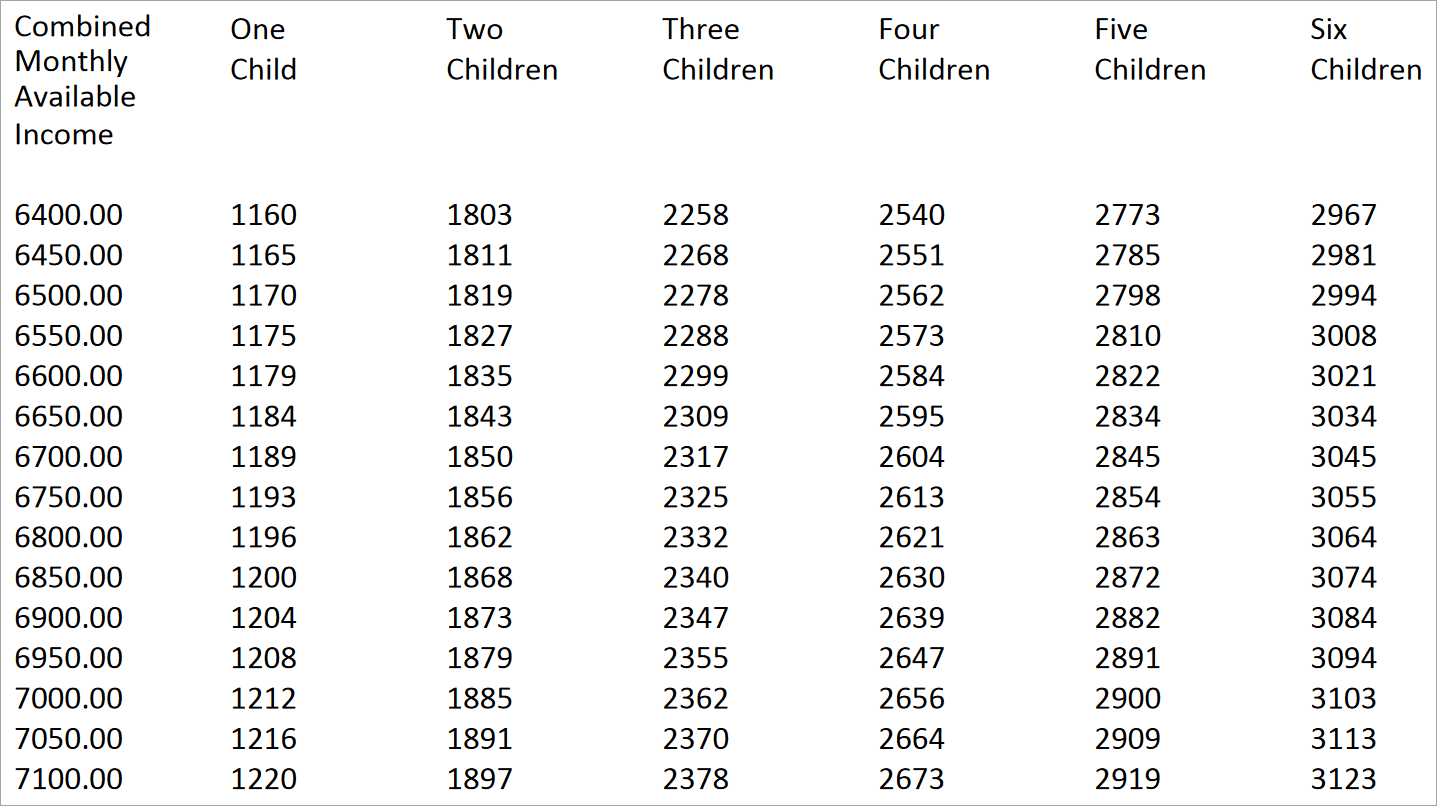
State child support guidelines tables illustrate that while support increases with each additional child, the rate of increase often diminishes. For example, if a parent pays $500 for one child, they might pay $800-$900 for two children, rather than a straightforward $1,000. This is because certain household expenses, like housing or utilities, don’t necessarily double with an additional child. The cost of providing a stable home is largely fixed, and adding another child increases variable costs like food, clothing, and activity fees, but less so the core infrastructure costs. The guidelines are structured to reflect these economic realities, attempting to capture the marginal cost of raising an additional child.
Adjustments for Shared vs. Sole Custody
The custody arrangement profoundly impacts child support for two children.
- Sole Custody: When one parent has the children the majority of the time (e.g., more than 70% of overnights), the other parent typically pays a higher support amount. The receiving parent is considered to be covering most of the daily expenses.
- Shared/Joint Custody: If parents share custody more equally (e.g., 50/50 or close to it, typically above 30-35% overnights for each parent), the calculation becomes more complex. Many states use a “crossover” formula, where the support obligation is calculated for both parents as if they were the paying parent, and then the difference is paid by the higher-earning parent to the lower-earning parent. The rationale is that both parents are contributing significantly to the children’s direct costs during their respective parenting times. The more time the children spend with the higher-earning parent, the more that parent is directly covering their needs, potentially reducing the cash support obligation.
Special Considerations for Multiple Children
Having two children often brings specific expenses that need careful consideration:
- Age Gaps: If there’s a significant age gap between children, their needs might differ greatly (e.g., one in daycare, one in high school). While the guidelines account for the total number of children, specific extraordinary expenses might arise.
- Healthcare Needs: With two children, the likelihood of diverse medical needs, allergies, or chronic conditions increases. Health insurance costs and out-of-pocket medical expenses become a larger line item, requiring clear allocation in the support order.
- Educational Expenses: As children grow, their educational needs can range from school supplies and uniforms to tutoring, private school tuition, or college savings. These extraordinary expenses need to be addressed in the child support order or through separate agreements.
- Extracurricular Activities: Sports, music lessons, clubs, and other activities can be significant costs for two children. These are often considered “extraordinary expenses” and divided between parents based on their income share or other agreed-upon terms. It’s vital to have a clear understanding of how these costs will be handled to avoid future disputes.
Financial Implications for Both Parents
Child support has profound financial implications, requiring meticulous budgeting and a clear understanding of responsibilities for both the paying and receiving parents. It’s not just a monthly transfer; it’s a commitment that shapes individual financial futures.
For the Paying Parent: Budgeting and Compliance
For the parent obligated to pay child support, integrating this expense into their monthly budget is critical. Child support is a non-negotiable legal obligation, and failure to pay can lead to severe consequences, including wage garnishment, bank account levies, liens on property, loss of driver’s licenses, and even jail time in extreme cases.
- Prioritize Payments: Child support should be treated as a priority expense, similar to housing or food.
- Automate Payments: Setting up automatic bank transfers or using state-mandated payment systems can ensure timely and consistent payments, reducing the risk of arrears.
- Maintain Records: Keep detailed records of all payments made, including dates and amounts, in case of future discrepancies.
- Understand Modification Procedures: Life circumstances change. If there’s a significant income reduction, job loss, or change in custody, it’s crucial to promptly seek a formal modification of the child support order through the courts. Unilateral reduction or cessation of payments is illegal and detrimental.
For the Receiving Parent: Managing Funds for Children’s Needs
The receiving parent carries the responsibility of managing child support funds to meet the children’s daily needs and expenses. This often requires careful budgeting, as the support amount rarely covers 100% of the costs of raising two children.
- Comprehensive Budgeting: Create a detailed budget that accounts for all children-related expenses, including housing (a portion allocated to children), food, clothing, healthcare, education, childcare, and extracurricular activities.
- Track Expenses: While not always legally required, tracking how support funds are used can be beneficial for personal financial management and can serve as documentation if questions arise about the children’s needs.
- Supplementation: Be prepared to supplement child support with your own income, as the guidelines are often based on basic needs and may not cover all desired expenses or lifestyle choices.
- Advocate for Children’s Needs: Understand when it’s appropriate to request modifications for increased needs or changes in the paying parent’s income.
The Role of Income Disparity
The disparity in income between the parents is often the most significant determinant of the child support amount. In the Income Shares Model, the higher-earning parent contributes a larger percentage to the total child support obligation. When one parent earns significantly more than the other, the child support payment will generally be higher to reflect the higher earner’s greater capacity to contribute to the children’s standard of living. This disparity is also heavily factored into extraordinary expenses, where parents typically share costs proportionally to their incomes. Understanding this dynamic is crucial for both parents to anticipate their financial obligations and entitlements accurately.
Navigating the Legal and Financial Process
The process of establishing, enforcing, or modifying child support for two children involves legal procedures and financial disclosures. Approaching this phase with diligence and an understanding of the legal framework can save significant time, stress, and money.
The Importance of Accurate Financial Disclosure
At the outset of any child support calculation, both parents will be required to provide full and accurate financial disclosure. This includes income from all sources (wages, bonuses, commissions, self-employment income, investments, benefits), tax returns, pay stubs, and information on assets and debts.
- Transparency is Key: Deliberately hiding income or assets can lead to severe penalties, including court sanctions, imputed income (where the court assigns an income level based on earning capacity rather than reported income), and even charges of perjury.
- Gather Documentation: Organize all financial documents well in advance. This streamlines the process and ensures that calculations are based on the most current and accurate information.
- Understanding “Imputed Income”: If a parent is voluntarily underemployed or unemployed, courts may “impute” an income based on their earning capacity, education, and past work history. This prevents parents from intentionally reducing their income to avoid child support obligations.
Legal Assistance: When to Hire an Attorney
While some straightforward child support cases can be handled without an attorney, especially if parents are in agreement, hiring legal counsel is often a wise investment when two children are involved, particularly in complex situations.
- Complex Cases: If there are significant income disparities, self-employment income, special needs children, or disputes over custody and parenting time, an attorney can ensure all factors are properly considered and advocated for.
- Disputes and Non-Compliance: If one parent is refusing to cooperate, providing inaccurate information, or failing to make payments, an attorney can navigate the enforcement mechanisms available through the courts.
- Ensuring Fairness: An experienced family law attorney can ensure that the child support order is fair, legally sound, and adheres to state guidelines, protecting your rights and your children’s financial future.
Mediation and Alternative Dispute Resolution
For parents who wish to avoid the adversarial nature and high costs of traditional litigation, mediation and other forms of Alternative Dispute Resolution (ADR) offer a constructive path forward.
- Cost-Effectiveness: Mediation is typically less expensive than going to court.
- Amicable Solutions: A neutral third-party mediator helps parents reach mutually agreeable solutions regarding child support, custody, and other issues. This fosters better co-parenting relationships in the long run.
- Customized Agreements: Mediation allows for more flexible and creative solutions tailored to the unique needs of the family and two children, rather than a judge’s blanket ruling.
Modifying Child Support Orders
Child support orders are not set in stone. Life changes, and the law recognizes this. A significant change in circumstances generally warrants a review and potential modification of the order.
- Triggering Events: Common reasons for modification include a substantial increase or decrease in either parent’s income, a significant change in the children’s needs (e.g., development of a chronic illness, special educational requirements), or a change in the custody arrangement or parenting time.
- Formal Process: Modifications must be sought through the court system. Simply agreeing with the other parent to change the amount without a formal court order can lead to legal issues down the line. It’s crucial to file a petition to modify and follow the legal process.
- Retroactivity: In most jurisdictions, child support modifications are generally not retroactive to the date of the change in circumstances but rather to the date the petition for modification was filed. This underscores the importance of acting promptly when changes occur.
Long-Term Financial Planning and Well-being
Beyond the immediate concerns of monthly payments, child support for two children has long-term financial implications that extend into education, retirement, and overall financial stability for both parents. Proactive planning is essential for navigating these future challenges.
Beyond Basic Support: College and Extraordinary Expenses
While basic child support typically ends when a child turns 18 or graduates high school (whichever comes later), the financial needs of two children often continue beyond this age, particularly concerning higher education.
- College Expenses: Many parents include provisions for college expenses in their divorce agreements. This might involve setting up 529 plans, agreeing to contribute to tuition, room, board, and books, or sharing costs based on income. It’s vital to discuss and formalize these agreements early, as they are often separate from standard child support.
- Special Needs Children: For children with special needs, child support may continue indefinitely beyond the age of majority, or specific trusts and financial arrangements might be established to ensure their lifelong care.
The Impact of Child Support on Retirement Planning
For both the paying and receiving parent, child support obligations and receipts can significantly impact retirement savings.
- For Paying Parents: The regular deduction of child support can reduce disposable income available for retirement contributions. It’s crucial to factor this into long-term financial planning and explore ways to maximize retirement savings around these obligations.
- For Receiving Parents: While child support provides necessary funds for children, it’s not considered income for tax purposes and typically doesn’t contribute to Social Security benefits. Receiving parents must ensure they are also actively saving for their own retirement, distinct from the funds allocated to their children’s present needs.
Fostering Financial Stability Post-Divorce/Separation
The goal for both parents, even after a separation, should be to achieve individual financial stability while adequately supporting their children.
- Financial Literacy: Educating oneself on budgeting, investing, and debt management becomes even more critical.
- Career Development: Investing in career advancement or skill development can increase earning potential, benefiting both the parent and, indirectly, their children.
- Emergency Funds: Establishing robust emergency savings is crucial to navigate unexpected financial challenges without jeopardizing child support obligations or the children’s well-being.
- Revisit Financial Plans: Regularly review and adjust financial plans as children grow, needs change, and economic circumstances evolve.
In conclusion, determining “how much child support for 2 kids” is a multifaceted financial and legal endeavor that demands careful attention, accurate disclosure, and a forward-looking perspective. While state guidelines provide a framework, the specifics are tailored to each family’s unique circumstances, incomes, and custody arrangements. By understanding the fundamentals, navigating the legal processes diligently, and committing to long-term financial planning, parents can ensure that their two children receive the financial support they need to thrive, fostering stability and security for the entire family unit.
aViewFromTheCave is a participant in the Amazon Services LLC Associates Program, an affiliate advertising program designed to provide a means for sites to earn advertising fees by advertising and linking to Amazon.com. Amazon, the Amazon logo, AmazonSupply, and the AmazonSupply logo are trademarks of Amazon.com, Inc. or its affiliates. As an Amazon Associate we earn affiliate commissions from qualifying purchases.