
Apple Inc. consistently stands as one of the most financially robust companies globally, a testament to its unparalleled product ecosystem, strong brand loyalty, and masterful supply chain management. The question of “how much cash on hand does Apple have?” is more complex than a simple number, involving not just immediate liquidity but also strategic investments, global tax considerations, and a deliberate capital allocation strategy. Understanding Apple’s cash position requires delving into its financial statements, appreciating its historical evolution, and recognizing the strategic implications of such vast financial reserves.
Understanding Apple’s Liquidity: A Financial Fortress
When analysts or investors discuss a company’s “cash on hand,” they are typically referring to its most liquid assets. For a behemoth like Apple, this encompasses a combination of:

- Cash and Cash Equivalents: This includes physical cash, demand deposits, and highly liquid investments with maturities of three months or less, such as Treasury bills, commercial paper, and money market funds. These are essentially as good as cash, readily convertible without significant loss of value.
- Marketable Securities: These are short-term and long-term investments in various financial instruments, including U.S. Treasury securities, agency securities, municipal bonds, corporate bonds, and certificates of deposit. These typically have maturities ranging from three months to several years and are considered highly liquid, though not as immediately accessible as cash equivalents.
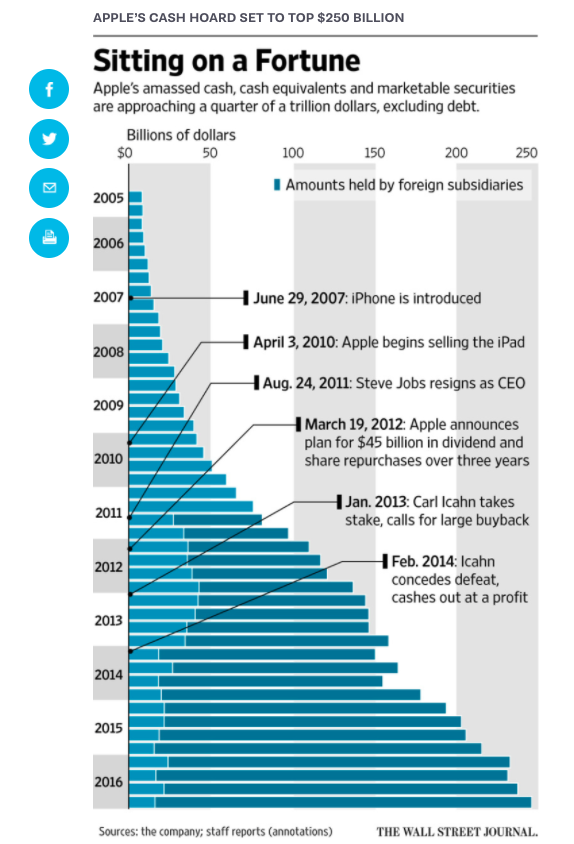
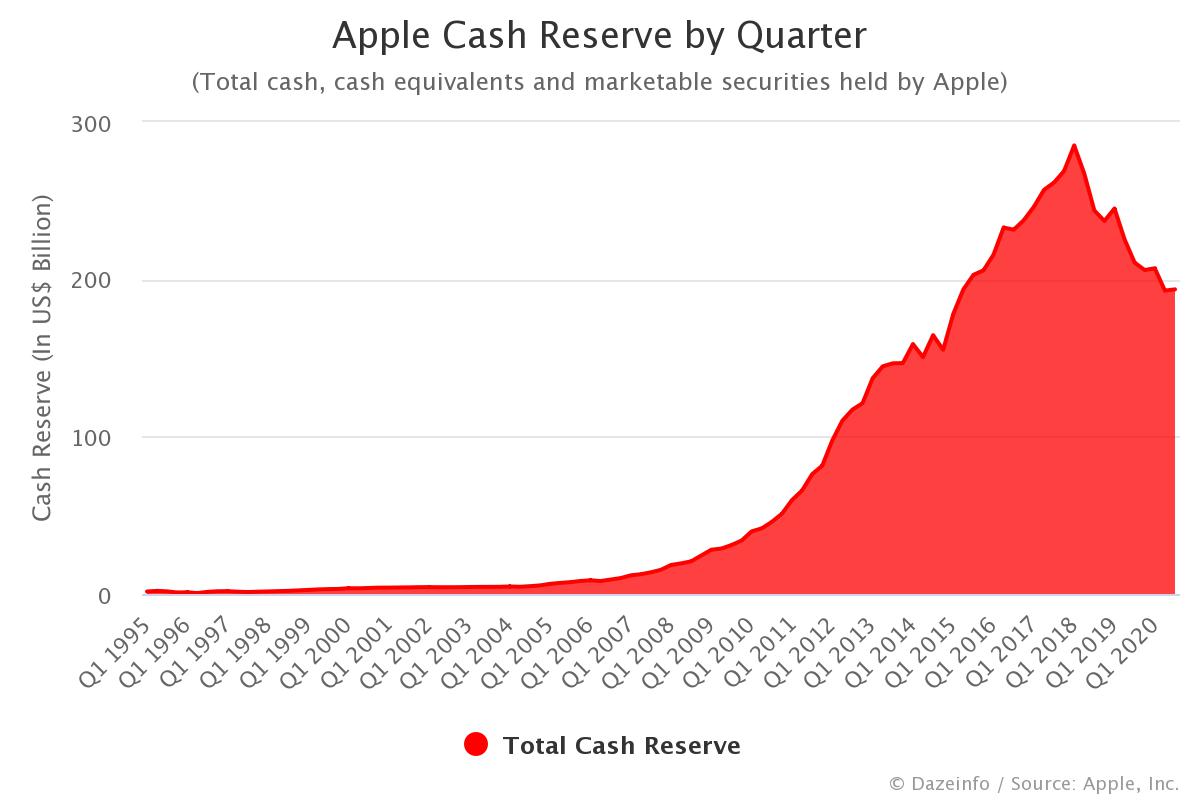
The exact figure for Apple’s gross cash and marketable securities varies quarter by quarter, as reported in its Form 10-K (annual) and 10-Q (quarterly) filings with the U.S. Securities and Exchange Commission (SEC). Historically, Apple has maintained a staggering sum, often exceeding hundreds of billions of dollars. For instance, in recent years, this figure has frequently hovered around the $200 billion range, although it has seen significant fluctuations due to the company’s capital return programs and strategic decisions.
It’s crucial to distinguish between gross cash and net cash. Gross cash refers to the total amount of cash, cash equivalents, and marketable securities. Net cash, on the other hand, subtracts total debt from this gross amount. Apple, despite its massive cash pile, does carry a substantial amount of debt, primarily issued to fund share buybacks and dividends, largely due to historical tax implications of repatriating offshore cash. Therefore, while Apple possesses an immense gross cash position, its net cash position is a more nuanced figure, and the company has expressed a long-term goal of achieving a “net cash neutral” position, where its gross cash roughly equals its total debt.
Strategic Implications of Apple’s Vast Cash Reserves
The sheer magnitude of Apple’s liquidity isn’t merely an impressive statistic; it underpins nearly every facet of its strategic operations and financial health. This formidable cash position grants the company unparalleled flexibility and resilience.
Fueling Innovation and Research & Development
Apple’s commitment to innovation is legendary, and its cash reserves are the lifeblood of its extensive research and development (R&D) efforts. Developing groundbreaking technologies like custom silicon chips (M-series, A-series), advanced display technologies, sophisticated camera systems, and ambitious new product categories such as the Vision Pro, requires colossal, sustained investment. These projects often span years, involve thousands of engineers, and consume billions of dollars before yielding any revenue. Apple’s cash allows it to:
- Invest long-term: Pursue high-risk, high-reward projects without immediate pressure for profitability.
- Acquire cutting-edge talent and resources: Outbid competitors for top-tier engineers and scientists, and invest in specialized equipment and facilities.
- Control its destiny: Develop key components in-house, reducing reliance on external suppliers and intellectual property.
This strategic R&D investment is a core driver of Apple’s competitive advantage and its ability to continually redefine market segments.
Shareholder Returns and Capital Allocation
A significant portion of Apple’s cash is strategically deployed to enhance shareholder value, reflecting a mature company’s focus on capital efficiency.
- Stock Buybacks: Apple has one of the most aggressive share repurchase programs in corporate history. By buying back its own stock from the open market, Apple reduces the number of outstanding shares. This action, assuming consistent earnings, directly boosts earnings per share (EPS), often leading to an increase in the stock price. It also signals confidence from management in the company’s future prospects. Apple’s cash allows it to execute these buybacks consistently and at scale, providing a floor for its stock price and enhancing shareholder returns.
- Dividends: Apple initiated a dividend program in 2012 and has consistently increased its quarterly payout since then. A robust cash position ensures the sustainability and growth of these dividends, making the stock attractive to income-focused investors. The ability to fund dividends from operating cash flows, supplemented by its cash reserves, underscores its financial stability.
Mergers and Acquisitions (M&A)
While Apple is not known for “mega-acquisitions” like some tech giants, it is a highly active acquirer of smaller, strategic companies. Its cash reserves enable it to:
- Acquire key technologies and talent: Swiftly purchase startups or private companies that possess valuable intellectual property, crucial engineering teams, or specific expertise that can be integrated into Apple’s ecosystem. Examples include the acquisition of Beats Electronics for its audio technology and streaming service, or various AI and augmented reality startups to bolster future product development.
- Maintain competitive edge: Prevent competitors from acquiring critical technologies and ensure Apple remains at the forefront of innovation.
- Avoid dilution: Fund these acquisitions entirely with cash, thus avoiding the issuance of new shares that would dilute existing shareholder ownership.
Mitigating Economic and Operational Risks
In an increasingly volatile global economy, a substantial cash buffer acts as a vital safeguard.
- Economic Downturns: During recessions or periods of reduced consumer spending, Apple’s cash provides a cushion, allowing it to maintain operations, continue R&D, and avoid drastic cost-cutting measures that could impair its long-term growth.
- Supply Chain Disruptions: Events like pandemics, natural disasters, or geopolitical tensions can severely impact global supply chains. Apple’s cash enables it to pre-purchase components, diversify suppliers, invest in logistics, and absorb higher costs, thereby maintaining production and minimizing disruption to product availability.
- Legal and Regulatory Challenges: Large corporations often face significant legal challenges and regulatory scrutiny. Apple’s financial strength allows it to robustly defend its intellectual property, comply with new regulations, and navigate complex legal landscapes without undue financial strain.
The Evolution of Apple’s Cash Management Strategy
Apple’s approach to managing its cash has undergone significant transformations, largely influenced by global tax policies and its growing maturity as a public company.
The Offshore Cash Dilemma
For many years, a substantial portion of Apple’s cash, often exceeding 90%, was held in its international subsidiaries, outside the United States. This strategy was largely driven by U.S. corporate tax laws, which historically imposed a high tax rate on repatriated foreign earnings. By keeping profits offshore, Apple deferred paying U.S. taxes on those earnings. This created a peculiar situation where Apple would issue debt in the U.S. to fund domestic capital returns (like buybacks and dividends) even while sitting on hundreds of billions of dollars overseas. This was a rational financial decision, as the interest expense on the debt was often lower than the tax cost of bringing foreign cash back home.
Repatriation and Tax Reforms
The Tax Cuts and Jobs Act of 2017 (TCJA) significantly altered this dynamic. It introduced a one-time repatriation tax on accumulated foreign earnings, making it more financially viable for companies like Apple to bring their offshore cash back to the U.S. Following this reform, Apple announced plans to significantly increase its U.S. investments and capital returns, repatriating tens of billions of dollars. This move had a profound impact on its cash management, enabling more direct use of its global liquidity without penalizing tax implications.
The “Net Cash Neutral” Ambition
In recent years, Apple has explicitly stated its long-term objective to achieve a “net cash neutral” position. This means the company aims to reduce its gross cash and marketable securities to a level roughly equivalent to its total debt. The primary mechanism for achieving this has been through its aggressive share repurchase program and consistent dividend increases. This strategy reflects a shift from simply accumulating cash to actively optimizing its capital structure and returning excess capital to shareholders, signaling confidence in its ongoing cash generation capabilities from operations.
Analyzing Financial Statements for Cash Insights
For investors, analysts, and anyone interested in understanding Apple’s financial health, the primary sources of information are its publicly filed financial statements.
Key Financial Documents
- Form 10-K: Apple’s annual report, filed with the SEC, provides a comprehensive overview of its financial performance, operations, and risks.
- Form 10-Q: Apple’s quarterly reports, also filed with the SEC, offer updated financial information for each quarter.
These documents are readily available on Apple’s Investor Relations website and the SEC’s EDGAR database.
The Balance Sheet
The Balance Sheet provides a snapshot of Apple’s assets, liabilities, and equity at a specific point in time. Under the “Assets” section, you will find:
- Current Assets: “Cash and cash equivalents” and “Marketable securities (current)” indicate highly liquid assets expected to be converted to cash within one year.
- Non-Current Assets: “Marketable securities (non-current)” represents investments with maturities beyond one year.
Summing these categories provides a clear picture of Apple’s gross cash and marketable securities.
The Cash Flow Statement
While the Balance Sheet shows the amount of cash, the Cash Flow Statement reveals the sources and uses of cash over a period. It’s broken down into three main activities:
- Operating Activities: Cash generated from Apple’s core business operations (sales of iPhones, Macs, services, etc.). This is typically Apple’s largest source of cash.
- Investing Activities: Cash used for purchasing or selling investments (like marketable securities), property, plant, and equipment (CapEx), or acquisitions.
- Financing Activities: Cash related to debt and equity transactions, such as issuing or repurchasing stock, paying dividends, or issuing/repaying debt.
Analyzing the cash flow statement provides critical insights into how Apple is generating and deploying its immense wealth, highlighting its operational efficiency, investment priorities, and capital return strategy.
Important Financial Metrics
To fully contextualize Apple’s cash position, it’s helpful to consider various financial ratios:
- Current Ratio: Current Assets / Current Liabilities. A high ratio indicates strong short-term liquidity, suggesting Apple can easily cover its immediate obligations.
- Quick Ratio (Acid-Test Ratio): (Cash & Equivalents + Marketable Securities + Accounts Receivable) / Current Liabilities. This is a stricter measure of liquidity, excluding inventory.
- Debt-to-Equity Ratio: Total Debt / Shareholder Equity. This shows how much debt Apple uses to finance its assets relative to the value of shareholders’ equity.
- Net Cash: (Cash & Cash Equivalents + Marketable Securities) – Total Debt. This figure provides the true “excess” cash position after accounting for all outstanding liabilities.
By examining these metrics in conjunction with the raw cash figures, one can gain a comprehensive understanding of Apple’s financial strength and its strategic use of its vast resources.
The Future of Apple’s Capital Structure
Apple’s cash position will continue to be a dynamic component of its financial strategy. The company is expected to maintain its commitment to returning capital to shareholders through buybacks and dividends, steadily working towards its net cash neutral goal. Concurrently, its enormous cash generation from a growing services segment and continued hardware innovation provides ample fuel for strategic investments in emerging technologies, potential new product categories, and global market expansion. The ongoing balance between these priorities will define the evolution of Apple’s capital structure and its impressive financial fortress for years to come.
aViewFromTheCave is a participant in the Amazon Services LLC Associates Program, an affiliate advertising program designed to provide a means for sites to earn advertising fees by advertising and linking to Amazon.com. Amazon, the Amazon logo, AmazonSupply, and the AmazonSupply logo are trademarks of Amazon.com, Inc. or its affiliates. As an Amazon Associate we earn affiliate commissions from qualifying purchases.