
Amazon, a colossal force in global commerce and technology, is a company whose financial metrics frequently captivate investors, analysts, and the general public alike. Its vast ecosystem—encompassing e-commerce, cloud computing, digital advertising, and an ever-expanding array of ventures—naturally raises questions about its financial bedrock. Among the most fundamental of these inquiries is: “How much cash does Amazon actually have?” This seemingly simple question unlocks a deeper understanding of the company’s operational strength, strategic flexibility, and resilience in a dynamic global economy.
Understanding Amazon’s cash position isn’t merely about peering into a bank account balance. It’s about analyzing a critical component of its business finance—liquidity—that fuels its relentless innovation, aggressive market expansion, and robust risk management. A company of Amazon’s scale operates with financial requirements that dwarf those of most enterprises, demanding colossal reserves to maintain its intricate global supply chains, fund cutting-edge research and development, and strategically acquire new businesses. By delving into the nuances of its cash and cash equivalents, along with broader concepts like free cash flow, we can paint a comprehensive picture of Amazon’s financial might and the strategic implications of its substantial monetary resources. This exploration will strictly adhere to the principles of business finance, examining how Amazon manages and leverages its capital to sustain its trajectory as a dominant global entity.
Unpacking Amazon’s Cash Position: A Deep Dive into Liquidity
To truly grasp “how much cash Amazon has,” one must first understand what financial professionals mean by “cash.” It’s far more expansive than just currency in a vault; it represents the immediate liquid assets available to a company, essential for day-to-day operations and strategic maneuvers.
Defining “Cash”: Beyond the Bank Account
In the realm of business finance, “cash” is typically reported on a company’s balance sheet as “cash and cash equivalents.” This category encompasses not only physical cash and balances in bank accounts but also highly liquid, short-term investments that can be readily converted into cash within 90 days. Examples include marketable securities like Treasury bills, commercial paper, and money market funds. These instruments are favored for their low risk and quick convertibility, providing a stable yet accessible pool of funds. For a company like Amazon, this definition is crucial, as a significant portion of its readily available capital is strategically parked in such instruments to generate some return while remaining liquid.
The Latest Figures: Where to Find the Data
Amazon, as a publicly traded company, is legally required to disclose its financial performance through filings with the U.S. Securities and Exchange Commission (SEC), primarily its quarterly 10-Q reports and annual 10-K reports. These documents provide a detailed breakdown of its assets, liabilities, equity, revenues, and expenses. The cash and cash equivalents figure is a prominent line item on its consolidated balance sheet.
It’s important to note that these figures are dynamic. Amazon’s cash position fluctuates significantly quarter-to-quarter due to its massive operational scale, seasonal sales patterns (especially during holiday seasons), capital expenditures for infrastructure, and strategic investments. While specific real-time figures would necessitate consulting the latest financial reports directly, the discussion here focuses on the principles of how a company like Amazon manages such a large and fluid cash balance. Historically, Amazon has often maintained tens of billions of dollars in cash and cash equivalents, a figure that underscores its operational demands and strategic ambitions rather than a static snapshot.
Why Amazon Needs Vast Cash Reserves
The sheer magnitude of Amazon’s operations necessitates an equally vast pool of liquid assets. These reserves serve multiple critical functions:
- Operational Working Capital: Amazon’s global e-commerce and logistics network requires immense working capital. This includes paying suppliers for inventory, covering payroll for hundreds of thousands of employees worldwide, managing returns, and absorbing inventory holding costs. A healthy cash balance ensures that these daily operational demands can be met seamlessly, preventing disruptions in its vast supply chain.
- Contingency Planning: Economic downturns, supply chain shocks, regulatory changes, or unforeseen global events (like pandemics) can significantly impact revenue and operational costs. Amazon’s substantial cash reserves provide a critical financial buffer, allowing the company to absorb shocks, continue operations, and even capitalize on opportunities that arise during periods of market instability.
- Capital Expenditures: Amazon is a company that relentlessly reinvests in itself. Its cash flow fuels massive capital expenditures (CapEx) for building new fulfillment centers, expanding its AWS data centers, investing in its logistics fleet, and developing advanced robotics and automation technologies. These investments are crucial for maintaining its competitive edge and supporting future growth.
The Strategic Implications of Amazon’s War Chest
Beyond operational necessities, Amazon’s substantial cash reserves translate directly into formidable strategic power. This financial muscle enables the company to pursue ambitious growth initiatives, consolidate market share, and innovate at a pace few others can match.
Fueling Growth and Innovation
Amazon’s business model is fundamentally driven by aggressive reinvestment and innovation. Its cash hoard is a direct enabler of this strategy:
- Research & Development (R&D): From developing new AI algorithms for Alexa and recommendation engines to pioneering drone delivery and satellite internet (Project Kuiper), Amazon pours billions into R&D. A strong cash position ensures these long-term, high-risk, high-reward projects can be funded without external pressure.
- AWS Infrastructure: Amazon Web Services (AWS) is a cornerstone of Amazon’s profitability and innovation. Maintaining its global lead requires continuous, massive investment in new data centers, cutting-edge hardware, and network infrastructure. These are capital-intensive undertakings that Amazon can pursue vigorously due to its robust cash flow and reserves.
- Global Expansion: Entering new markets, adapting to local regulations, and building new distribution networks are costly ventures. Amazon’s liquidity allows it to expand its e-commerce and cloud services into untapped regions, consolidating its global footprint.
Mergers, Acquisitions, and Strategic Investments
One of the most visible ways Amazon deploys its cash is through strategic mergers and acquisitions (M&A). Unlike smaller firms that might rely heavily on debt or equity issuance for large acquisitions, Amazon often has the flexibility to make significant purchases using its cash reserves.
- Consolidating Market Position: Acquisitions like Whole Foods Market (2017 for $13.7 billion) allowed Amazon to rapidly enter and disrupt the grocery sector. Similarly, the acquisition of One Medical (2022 for $3.9 billion) signaled Amazon’s serious intent to expand into healthcare.
- Acquiring Key Technologies or Talent: Smaller, targeted acquisitions often bring crucial intellectual property or specialized talent into Amazon’s ecosystem, accelerating product development or expanding service offerings.
- Strategic Minority Investments: Amazon also makes strategic minority investments in promising startups, gaining insights into emerging technologies or market trends without full acquisition.
Shareholder Returns and Financial Flexibility
While Amazon has historically favored reinvesting earnings back into the business over paying dividends, its cash position still offers financial flexibility that benefits shareholders indirectly and directly.
- Potential Share Buybacks: Though less common than in some other mature tech companies, a robust cash balance provides the option for share buybacks, which can reduce the number of outstanding shares and boost earnings per share, thereby increasing shareholder value.
- Strong Credit Profile: A healthy cash reserve, alongside strong cash flow, contributes to Amazon’s excellent credit rating. This allows the company to borrow money at favorable interest rates when needed, providing another layer of financial flexibility without straining its balance sheet.
- Weathering Economic Downturns: In periods of economic uncertainty, companies with strong cash positions are better equipped to withstand revenue declines, maintain investment in critical areas, and even gain market share as weaker competitors struggle.
Cash Flow vs. Cash Balance: Understanding the Nuance
While the cash balance on a company’s balance sheet is important, a deeper understanding of financial health requires examining cash flow. This metric reveals how effectively a company generates cash from its operations, investments, and financing activities over a period.
The Importance of Free Cash Flow (FCF)
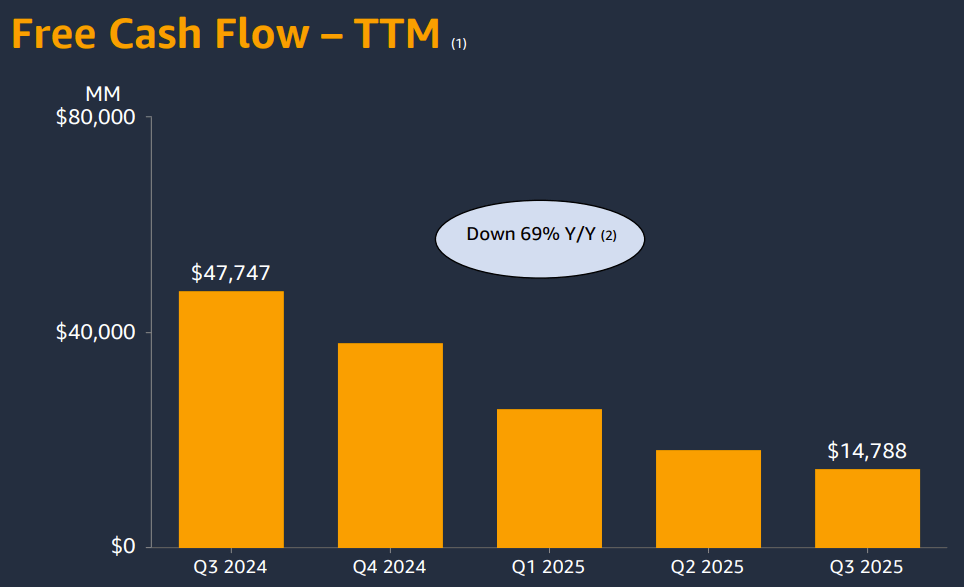
Free Cash Flow (FCF) is arguably a more robust indicator of a company’s financial strength and its capacity for sustained growth and value creation than its static cash balance. FCF represents the cash a company generates after accounting for cash outflows to support operations and maintain its capital assets (like property, plant, and equipment). In essence, it’s the cash left over that can be used for discretionary purposes—paying down debt, funding acquisitions, issuing dividends, or buying back shares.
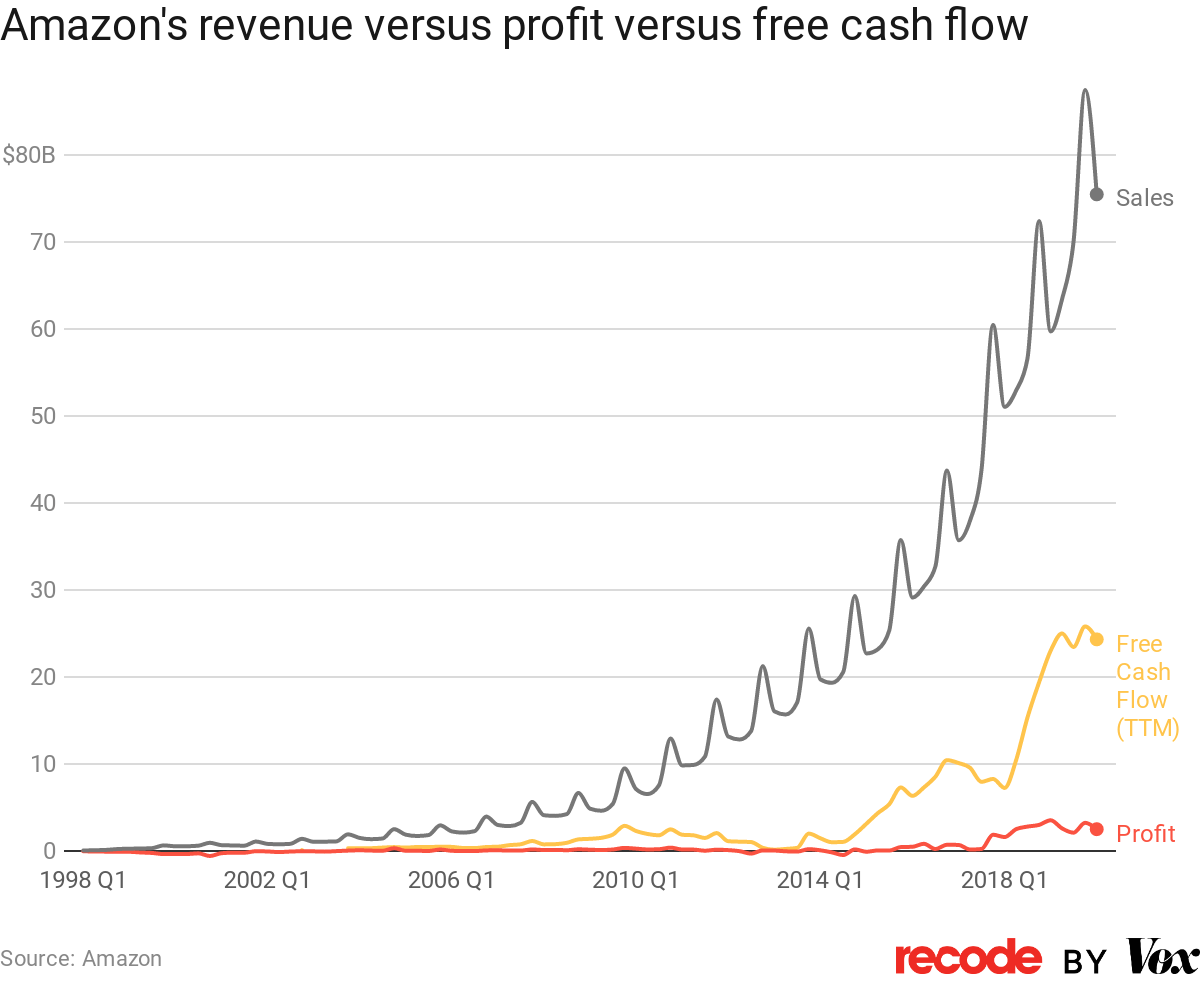
For Amazon, FCF is particularly critical because the company operates with relatively thin profit margins in some of its segments (like e-commerce retail) but generates immense volumes of sales. Strong FCF indicates that despite heavy reinvestment, the core business is highly efficient at converting sales into spendable cash.
Amazon’s FCF Trajectory
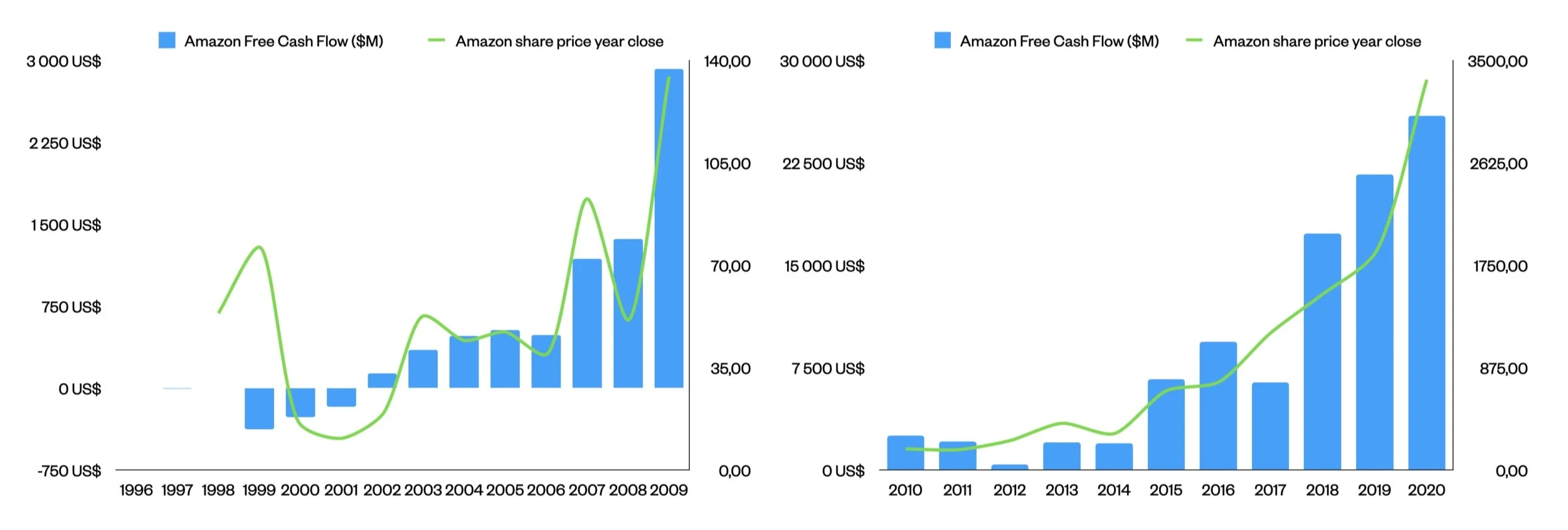
Amazon has a historical pattern of aggressive reinvestment, which can sometimes make its reported net income appear modest compared to its enormous revenue. However, its free cash flow figures often tell a more compelling story of financial health. Amazon frequently prioritizes long-term growth and market dominance over short-term profitability, consistently pouring cash back into infrastructure, R&D, and new ventures. This strategic choice is reflected in its FCF, which fluctuates based on these investment cycles. Even during periods of significant CapEx, a strong underlying operational cash flow indicates the company’s ability to fund these expansions organically.
Capital Expenditures (CapEx) and Reinvestment Cycle
Amazon’s CapEx figures are staggering. Building massive fulfillment centers, expanding delivery networks, and continually upgrading AWS data centers are capital-intensive endeavors. These investments consume a significant portion of Amazon’s operational cash flow. However, they are not mere expenses; they are strategic investments designed to enhance efficiency, expand capacity, and drive future revenue growth. The cycle involves generating cash from existing operations, reinvesting a substantial portion into new assets, which in turn generate more revenue and cash flow, perpetuating Amazon’s growth engine. Understanding this reinvestment cycle is key to interpreting Amazon’s cash flow statement and its overall financial strategy.
Managing a Trillion-Dollar Balance Sheet: Challenges and Opportunities
Managing financial resources on Amazon’s scale presents both unique challenges and unparalleled opportunities, demanding sophisticated financial strategies and robust governance.
The Cost of Holding Too Much Cash
While a large cash balance provides security and flexibility, holding excessive amounts of cash can also incur an opportunity cost. Cash held in low-yield accounts or short-term securities might not be generating the highest possible return compared to more strategic investments or debt reduction. Inflation can also erode the purchasing power of cash over time. Amazon’s finance teams constantly weigh the benefits of liquidity against the potential for higher returns from strategic deployment. The goal is an optimal balance: enough cash to ensure operational stability and strategic agility, but not so much that it becomes a drag on overall capital efficiency.
Debt Management and Credit Ratings
Despite its substantial cash holdings, Amazon also utilizes debt financing to fund a portion of its operations and expansion. This is a common strategy for large corporations, as debt can be a cost-effective way to raise capital, especially when interest rates are low. Amazon’s strong cash position, robust FCF, and diverse revenue streams contribute to its excellent credit rating. This high rating allows Amazon to borrow money at very competitive rates, further enhancing its financial flexibility. The combination of strong cash reserves and access to cheap debt provides a formidable financial foundation, minimizing financial risk while maximizing strategic options.
Navigating Economic Headwinds
A robust cash position is perhaps most critical during periods of economic uncertainty or downturns. While even Amazon is not immune to economic cycles, its financial strength provides a substantial buffer. During recessions or unexpected global crises, companies often face declining revenues, tighter credit markets, and increased operational costs. Amazon’s cash reserves allow it to:
- Maintain Investment: Continue funding R&D and critical infrastructure projects, potentially gaining an advantage over competitors forced to cut back.
- Support Employees: Weather periods of reduced demand without resorting to drastic cost-cutting measures that could damage morale or future capabilities.
- Seize Opportunities: Be in a position to acquire distressed assets or competitors at favorable valuations, emerging stronger from a downturn.
In essence, Amazon’s cash provides a vital lifeline, allowing it to navigate challenging landscapes with greater stability and strategic intent than many of its peers.
In conclusion, “how much cash does Amazon have” is a question that reveals much more than a simple number. It illuminates the vast financial engine powering one of the world’s most influential companies. Amazon’s consistent ability to generate, manage, and strategically deploy immense financial resources—from cash and cash equivalents to powerful free cash flow—is fundamental to its operational excellence, its capacity for relentless innovation, and its long-term market dominance. It is a testament to sophisticated business finance at the largest scale, ensuring Amazon remains a formidable force in global commerce and technology for the foreseeable future.
aViewFromTheCave is a participant in the Amazon Services LLC Associates Program, an affiliate advertising program designed to provide a means for sites to earn advertising fees by advertising and linking to Amazon.com. Amazon, the Amazon logo, AmazonSupply, and the AmazonSupply logo are trademarks of Amazon.com, Inc. or its affiliates. As an Amazon Associate we earn affiliate commissions from qualifying purchases.