
Accessing your hard-earned money should be a seamless process, yet many consumers find themselves surprised by the intricate web of limits and regulations that govern cash withdrawals. Whether you are preparing for a large private purchase, traveling to a location where cash is king, or simply prefer the security of physical currency, understanding the specific policies of Bank of America is essential for effective personal financial management.
Bank of America, one of the “Big Four” banking institutions in the United States, employs a tiered system for withdrawal limits. These limits are not arbitrary; they are designed to balance consumer convenience with institutional security and federal compliance. To navigate these boundaries effectively, one must look beyond the simple daily ATM limit and understand the broader context of account types, security protocols, and regulatory reporting.
Understanding Bank of America ATM Withdrawal Limits
The most common way customers interact with their cash is through an Automated Teller Machine (ATM). However, the amount you can pull from a machine in a single 24-hour period is rarely a one-size-fits-all figure.
Daily Limits for Standard Accounts
For the majority of Bank of America Advantage Banking customers, the standard daily ATM withdrawal limit typically ranges between $1,000 and $1,500. This limit is reset every 24 hours, usually at midnight according to the bank’s server time. It is important to note that this limit applies to the total amount withdrawn across all ATMs, not per machine. If you withdraw $500 in the morning, you only have the remaining balance of your daily limit available for the rest of the day.
Premium and Business Account Tiers
Bank of America rewards loyalty and high balances through its Preferred Rewards program. As customers move up the tiers—Gold, Platinum, and Platinum Honors—they often receive higher daily withdrawal limits. While a standard account might be capped at $1,000, a Platinum Honors member or a high-volume Business Advantage client may see their daily ATM limit increased to $2,500 or even $5,000, depending on their specific agreement and account history. These higher limits provide significant flexibility for business owners who may need to manage petty cash or pay day-laborers in cash-intensive industries.
How to Verify and Customizing Your Limit
You do not have to guess your limit. The most efficient way to check your specific withdrawal ceiling is through the Bank of America mobile app or online banking portal. By navigating to the “Manage Debit Card” section, you can view your current daily limit. In some instances, the app allows users to temporarily or permanently decrease their limit for security purposes. If you require an increase, you can often submit a request through the app, though permanent increases usually require a review of your account standing and average daily balance.
Withdrawing Cash at the Branch: Over-the-Counter Limits
When the ATM limit is insufficient for your needs, the next logical step is visiting a physical Bank of America branch. Withdrawing cash over-the-counter (OTC) offers a different set of parameters and much higher potential ceilings.
Identification and Verification Protocols
To withdraw significant amounts of cash in person, Bank of America requires robust identification. You will typically need your primary debit card and a valid government-issued photo ID. For very large withdrawals, some branches may request a second form of identification. This layer of security protects your assets from unauthorized access, ensuring that only the account holder can drain substantial funds from the account.
The $10,000 Threshold and Federal Reporting
A common misconception is that you cannot withdraw more than $10,000. This is false; you can withdraw as much as you have in your account, provided the branch has the liquidity on hand. However, any cash transaction exceeding $10,000 triggers a mandatory Currency Transaction Report (CTR) under the Bank Secrecy Act.
Bank of America is legally obligated to file this report with the Financial Crimes Enforcement Network (FinCEN). While this sounds intimidating, it is a standard procedure designed to prevent money laundering. As long as the source of your funds is legal and your intentions are legitimate, the CTR is simply a piece of administrative paperwork. It is critical, however, to avoid “structuring”—the act of making multiple smaller withdrawals (e.g., $9,500 two days in a row) specifically to avoid the $10,000 reporting limit. Structuring is a federal crime and is monitored closely by bank algorithms.
Planning for Bulk Cash Needs
If you intend to withdraw a very large sum—for instance, $20,000 or $50,000—it is highly recommended to call your local branch 24 to 48 hours in advance. Banks do not keep unlimited physical cash in their vaults; they maintain specific levels based on projected daily needs. By giving the branch manager a “heads up,” they can ensure they have the necessary denominations available and can prepare the paperwork in advance, significantly reducing your time spent at the teller window.
Navigating Security and Fraud Prevention
The limits placed on your Bank of America account serve a dual purpose: they manage the bank’s liquidity and act as a primary defense against fraud. In an era of digital theft and card skimming, these boundaries are more important than ever.
The Role of Fraud Monitoring
Bank of America utilizes sophisticated AI-driven systems to monitor withdrawal patterns. If you typically withdraw $60 a week and suddenly attempt to withdraw $1,500 from an ATM in a different state, the bank’s security system may flag the transaction and temporarily freeze your card. This is an automated protective measure. Before making an unusually large withdrawal, especially while traveling, it is wise to set a travel notice or notify the bank via the app to ensure your access remains uninterrupted.
Daily vs. Cumulative Limits
It is also essential to distinguish between your ATM withdrawal limit and your daily debit purchase limit. While you might be limited to $1,000 in cash from an ATM, your “Point of Sale” (POS) limit—the amount you can spend by swiping your card at a retailer—is often much higher, sometimes reaching $5,000 or more. If you need to pay for a large item, using the card directly is often more efficient than attempting to withdraw the equivalent amount in physical cash.
Security Best Practices at the ATM
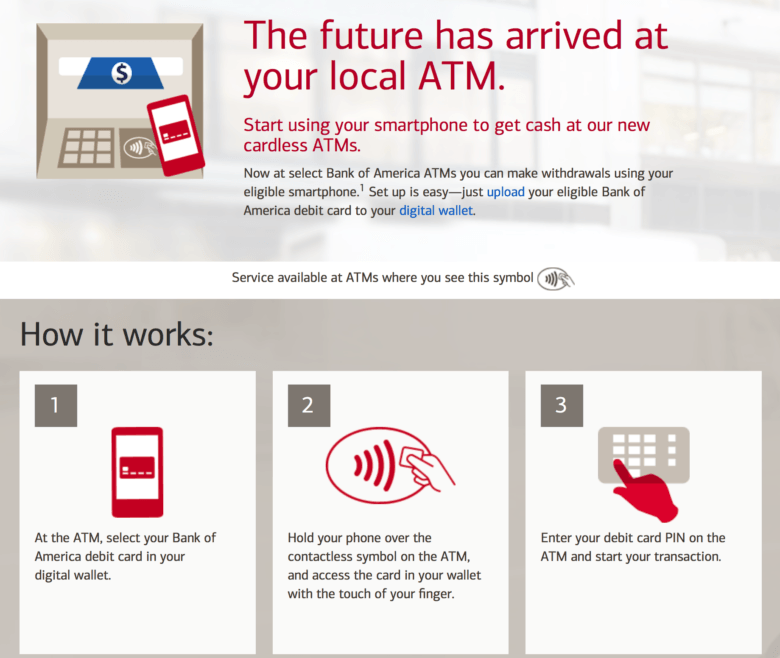
When withdrawing the maximum allowed amount, your physical security becomes a factor. Bank of America encourages users to use “Cardless ATM” features available in the mobile app. This allows you to staged the withdrawal on your phone and use a QR code or mobile wallet at the machine, eliminating the risk of card skimming. Furthermore, choosing ATMs located inside branch lobbies rather than outdoor or standalone kiosks provides a safer environment for handling large sums of currency.
Strategies to Increase Your Cash Access
If you find that the standard limits are hindering your financial operations, there are several strategic ways to gain access to more cash without violating bank policies or triggering unnecessary red flags.
Temporary Limit Increases
Life events such as weddings, home renovations, or purchasing a used vehicle often require more cash than a standard daily limit allows. In these cases, you can contact Bank of America customer service to request a temporary daily limit increase. These are typically granted for a 24-hour window and are based on your account’s age, balance, and history of responsible use.
Leveraging Cashback at Retailers
While it may seem tedious, you can supplement your ATM withdrawal by using the “cashback” feature at major retailers like grocery stores or pharmacies. These transactions are usually processed as POS purchases rather than ATM withdrawals. While most retailers cap cashback at $50 to $100 per transaction, this does not count against your daily ATM limit, providing a small but useful “overflow” valve for cash needs.
Utilizing Peer-to-Peer (P2P) Transfers
In many modern scenarios, physical cash can be replaced by digital “cash” via apps like Zelle, which is integrated directly into the Bank of America mobile app. Zelle allows for the instant transfer of funds to other bank accounts. If you are paying a contractor or an individual, verify if they accept Zelle. This bypasses the need for physical currency altogether while maintaining the immediacy of a cash transaction. Note that Zelle has its own set of daily and monthly transfer limits, which are separate from your ATM limits.
The Financial Logic Behind Withdrawal Constraints
Understanding why Bank of America limits your access to cash can help you plan your finances with less frustration. From a corporate finance perspective, physical cash is an “idle asset.” It earns no interest for the bank and costs money to transport, insure, and store.
By encouraging digital transactions and setting ATM limits, banks maintain better control over their reserves. For the consumer, these limits act as a “circuit breaker.” In the event that a debit card is stolen or a PIN is compromised, the daily limit ensures that a thief cannot drain an entire life savings account in a single afternoon.
When you look at your withdrawal limit, see it not as a restriction on your ownership of the money, but as a structured gateway designed to keep that money secure. By mastering the app settings, understanding the nuances of branch withdrawals, and respecting the federal reporting guidelines, you can ensure that you always have the liquid capital you need, exactly when you need it. Balancing your need for physical currency with the digital tools provided by Bank of America is the hallmark of a savvy and secure modern consumer.
aViewFromTheCave is a participant in the Amazon Services LLC Associates Program, an affiliate advertising program designed to provide a means for sites to earn advertising fees by advertising and linking to Amazon.com. Amazon, the Amazon logo, AmazonSupply, and the AmazonSupply logo are trademarks of Amazon.com, Inc. or its affiliates. As an Amazon Associate we earn affiliate commissions from qualifying purchases.