
For many, purchasing a car represents a significant life milestone, a symbol of independence, or a crucial tool for daily life. However, the excitement of a new set of wheels can often overshadow the critical financial considerations involved, particularly when it comes to securing a car loan. The question “how much car loan can I afford?” is far more complex than simply looking at a monthly payment. It delves deep into the nuances of personal finance, requiring a thorough understanding of income, expenses, credit health, and long-term financial goals. Approaching this decision with a strategic, informed mindset is paramount to ensuring your new vehicle enhances your financial well-being rather than becoming a source of stress.

This guide will systematically break down the factors influencing car loan affordability, providing actionable insights and tools to help you make a financially sound decision. We’ll move beyond the sticker price and delve into the true cost of car ownership, empowering you to navigate the lending landscape with confidence.
Understanding Your Financial Foundation for a Car Loan
Before you even start browsing car models, the most crucial step is to objectively assess your current financial standing. This foundational analysis will serve as your compass, guiding you toward a car loan amount that aligns with your real-world budget and financial aspirations.
Assessing Your Current Financial Health
The bedrock of any responsible financial decision begins with a clear picture of your cash flow.
- Income vs. Expenses: Begin by meticulously tracking your monthly income from all sources and comparing it against your fixed and variable expenses. Fixed expenses include rent/mortgage, existing loan payments (student, personal, credit card), and subscriptions. Variable expenses encompass groceries, entertainment, utilities (which can fluctuate), and discretionary spending. A clear surplus is essential. If your expenses consume the majority of your income, adding a car loan payment could strain your budget significantly.
- Existing Debts: Lenders scrutinize your current debt load. High existing debts, especially credit card balances with high interest rates, indicate a greater financial burden and can limit the amount of additional debt you can comfortably take on. Prioritizing the reduction of high-interest debt before taking on a car loan is often a wise strategy.
- Emergency Fund: A robust emergency fund, ideally covering three to six months of living expenses, provides a vital buffer against unexpected financial setbacks. Committing to a car loan without an adequate emergency fund can leave you vulnerable if unforeseen circumstances arise, such as job loss or medical emergencies. Your car payment should not jeopardize your ability to maintain this critical safety net.
The Role of Your Credit Score
Your credit score is arguably the single most influential factor in determining not just if you can get a car loan, but what rate you’ll receive.
- Impact on Interest Rates: A higher credit score (typically FICO scores above 700-740) signals to lenders that you are a reliable borrower, translating into lower interest rates. Even a difference of one or two percentage points in your Annual Percentage Rate (APR) can save you thousands of dollars over the life of a car loan, significantly impacting your overall affordability. Conversely, a lower credit score will likely result in higher interest rates, making the car more expensive each month and overall.
- Steps to Improve Your Credit: If your credit score isn’t where you want it to be, taking steps to improve it before applying for a car loan can pay substantial dividends. This includes paying all bills on time, reducing outstanding credit card balances, disputing any errors on your credit report, and avoiding opening new lines of credit in the months leading up to a car purchase. Monitoring your credit report regularly through free services is also a good practice.
Deconstructing the True Cost of Car Ownership
Many prospective buyers focus solely on the monthly car payment, an oversight that can lead to significant financial strain. The actual cost of car ownership extends far beyond the loan principal and interest, encompassing a range of upfront and ongoing expenses that must be factored into your budget.
Beyond the Monthly Payment: Upfront Costs
The initial investment required to get your car home can be substantial and often overlooked.
- Down Payment: A down payment reduces the amount you need to borrow, thereby lowering your monthly payments and the total interest paid over the life of the loan. Lenders also view a substantial down payment as a sign of financial commitment, which can improve your chances of approval and secure better terms. Aiming for at least 10-20% of the car’s purchase price is generally recommended, with 20% being ideal for new cars to immediately offset depreciation.
- Sales Tax, Registration, Fees: These mandatory costs vary by state and locale but can add hundreds or even thousands of dollars to the total purchase price. Sales tax is typically calculated on the car’s selling price, while registration fees can be annual or one-time. Dealership administrative fees (doc fees), license plate fees, and title fees also contribute to the upfront outlay. It’s crucial to ask your dealer for a full breakdown of all these charges.
- Trade-in Value: If you have an existing vehicle, its trade-in value can significantly offset your upfront costs. Research your car’s market value using online tools like Kelley Blue Book or Edmunds to ensure you’re getting a fair offer. Be prepared to negotiate, and consider selling your old car privately if it fetches a better price than the dealership offers.
Ongoing Expenses: The Hidden Budget Busters
Once the car is yours, a new set of regular expenses will become part of your monthly budget.
- Car Insurance: This is often one of the largest ongoing costs, varying significantly based on the car’s make and model, your driving record, age, location, and the type of coverage you select. Obtain insurance quotes before finalizing your car purchase, as the difference between insuring a modest sedan and a high-performance sports car can be hundreds of dollars per month.
- Fuel Costs: With fluctuating gas prices, estimating your monthly fuel expenditure is crucial. Consider your average daily commute, the car’s fuel efficiency (MPG), and your typical driving habits. A fuel-efficient vehicle might have a slightly higher purchase price but could save you substantial money over the long term.
- Maintenance and Repairs: All cars require regular maintenance (oil changes, tire rotations, brake checks) and, inevitably, repairs. Newer cars often come with warranty coverage, but even then, routine servicing is necessary. Older vehicles, while potentially cheaper to buy, can incur higher maintenance and repair costs, which must be budgeted for. Research common issues and estimated repair costs for specific models you’re considering.
- Depreciation: While not a direct monthly cash outflow, depreciation is the single largest cost of car ownership. It’s the loss in value of your vehicle over time. Understanding depreciation helps you make a more informed choice, especially if you plan to trade in or sell your car in the future. Some cars hold their value better than others.
Practical Tools and Rules for Determining Affordability
To translate these financial considerations into actionable numbers, several practical rules and tools can help you establish a clear affordability threshold.
The 20/4/10 Rule: A Guiding Principle
This widely cited guideline provides a simple yet effective framework for responsible car buying.
- 20% Down Payment: As discussed, a 20% down payment reduces your loan amount, lowers monthly payments, and helps you avoid being “underwater” (owing more than the car is worth) due to immediate depreciation.
- 4-Year Loan Term: Aim to finance your car for no more than four years (48 months). While longer terms (5, 6, or even 7 years) offer lower monthly payments, they dramatically increase the total interest paid and keep you in debt for a longer period. By the time you finish paying off a 7-year loan, the car might be significantly older and require more maintenance, creating a cycle of debt.
- 10% of Gross Income for Car-Related Expenses: This is perhaps the most critical component. All car-related expenses—including your loan payment, insurance, fuel, and estimated maintenance—should not exceed 10% of your gross (pre-tax) monthly income. This rule ensures that your car doesn’t consume an outsized portion of your budget, leaving room for other financial goals and discretionary spending. For example, if your gross income is $5,000/month, all car expenses should ideally be capped at $500/month.
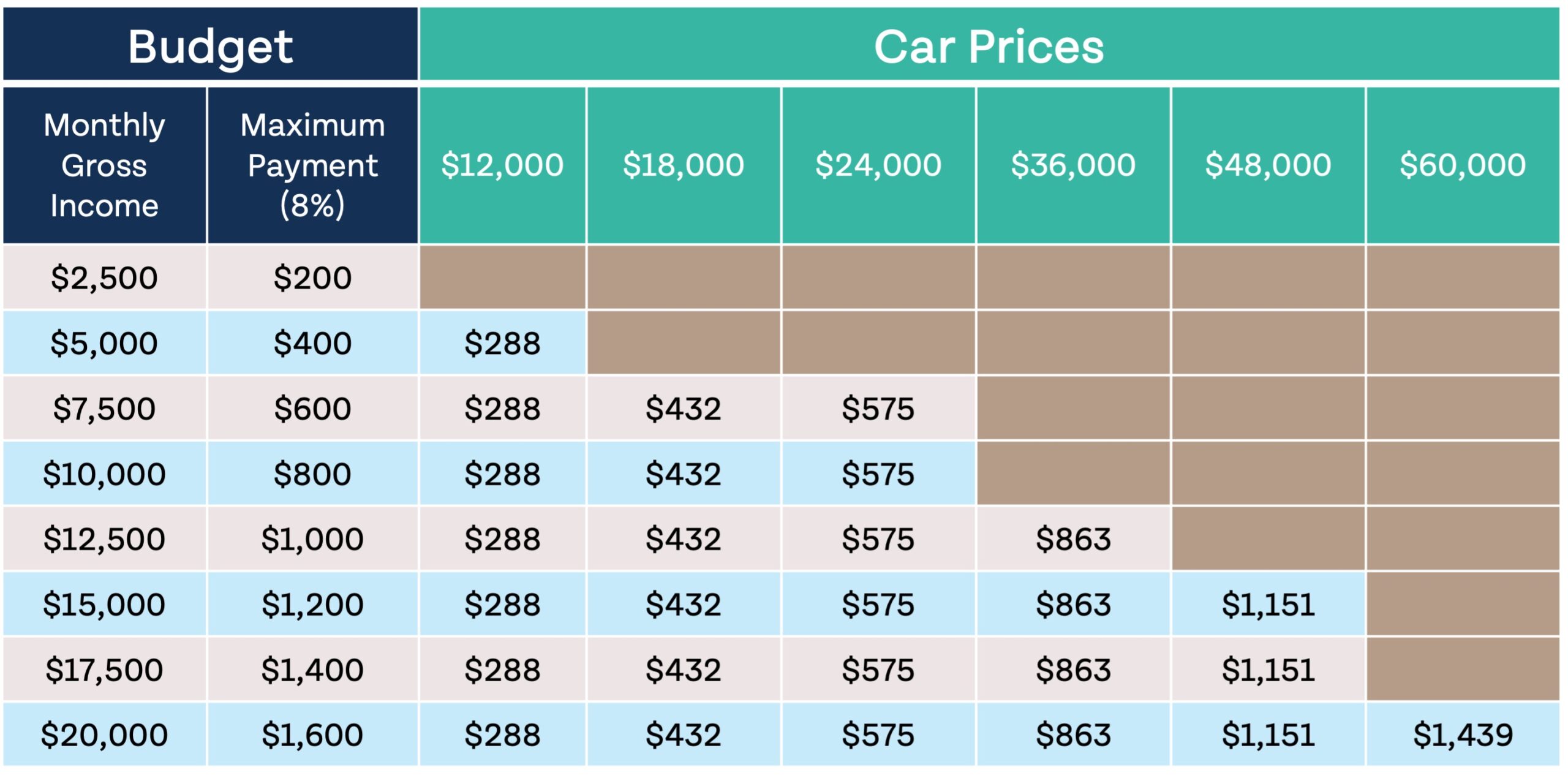
Leveraging Debt-to-Income (DTI) Ratios
Lenders use your Debt-to-Income (DTI) ratio as a key indicator of your ability to manage monthly payments and repay debts.
- Understanding Your DTI: Your DTI is calculated by dividing your total monthly debt payments (including the prospective car loan payment) by your gross monthly income. For instance, if your existing debt payments (student loans, credit cards, mortgage) total $1,000 per month, and your gross income is $4,000, your DTI is 25%.
- Lender Expectations: Most lenders prefer borrowers with a DTI ratio below 36-43%, though this can vary. A lower DTI indicates less financial risk and increases your chances of loan approval with favorable terms. Factoring in your new car loan payment into this calculation will reveal if you’re approaching or exceeding these thresholds, which could make it harder to qualify for a loan or lead to less favorable interest rates.
The Importance of a Realistic Budget
Ultimately, all these rules and ratios funnel into one essential tool: a comprehensive budget.
- Creating a Detailed Car Budget Worksheet: Don’t rely on mental math. Create a detailed spreadsheet or use a budgeting app to list all your income sources and all your expenses, including the projected costs of your new car (loan payment, insurance, fuel, maintenance buffer). This exercise will clearly show you how much disposable income you genuinely have available for a car payment without sacrificing other financial priorities.
- Utilizing Online Calculators: Many financial websites and lenders offer car loan affordability calculators. These tools allow you to input variables like loan amount, interest rate, term, and down payment to see estimated monthly payments. Use these as a preliminary guide, but always cross-reference them with your personal budget for a more accurate picture. Some calculators also allow you to factor in insurance and fuel costs.
Navigating the Loan Application and Selection Process
Once you have a clear understanding of what you can afford, the next step is to strategically approach the loan application and car selection process. This involves empowering yourself with information before stepping into a dealership.
Pre-Approval: Your Strategic Advantage
Getting pre-approved for a car loan is perhaps the most powerful step you can take before car shopping.
- Why Get Pre-Approved: Pre-approval from an independent bank or credit union gives you a firm offer of how much you can borrow, at what interest rate, and for what term, before you even pick out a car. This transforms you from a vulnerable buyer into a cash buyer, giving you significant leverage during negotiations at the dealership. You’ll know your maximum budget, avoiding the trap of falling in love with a car you can’t truly afford.
- Comparing Offers: Seek pre-approvals from multiple lenders. Each lender will assess your credit differently and offer varying terms. Comparing these offers ensures you get the most competitive interest rate and favorable conditions, saving you money over the loan’s lifetime. Don’t worry about multiple inquiries affecting your credit too much; credit bureaus typically count multiple loan inquiries within a short period (usually 14-45 days) as a single inquiry, recognizing you’re rate shopping for one loan.
Understanding Loan Terms and Interest Rates
The structure of your loan heavily influences its overall cost.
- Short vs. Long Loan Terms: As mentioned with the 20/4/10 rule, shorter loan terms (e.g., 36 or 48 months) result in higher monthly payments but significantly lower total interest paid. Longer terms (60, 72, or even 84 months) reduce monthly payments, making the car seem more affordable in the short term, but drastically increase the overall cost of the loan due to more interest accruing over time. Always prioritize the shortest term you can comfortably afford within your budget.
- Fixed vs. Variable Rates: Most car loans come with fixed interest rates, meaning your interest rate and monthly payment remain constant throughout the loan term. Variable rates, while less common for car loans, can fluctuate based on market conditions. For stability and predictability in your budget, a fixed-rate loan is almost always preferable.
- APR Explained: The Annual Percentage Rate (APR) is the true cost of borrowing money for a year. It includes the interest rate plus any additional fees charged by the lender. When comparing loan offers, always focus on the APR, as it provides the most accurate measure of the loan’s total cost.
The Dealership Experience: Negotiation and Finalization
Armed with your budget and pre-approval, you’re ready to engage with dealerships confidently.
- Separating Car Price from Loan Terms: Never discuss your monthly payment goal with a salesperson until you’ve agreed on the total price of the car. Focusing on monthly payments allows dealers to manipulate variables like the loan term or interest rate to hit your payment target, potentially costing you more in the long run. Negotiate the out-the-door price of the car first, then discuss financing options.
- Beware of Add-ons: Dealerships often try to sell extended warranties, paint protection, anti-theft devices, or gap insurance (which can be a good idea, but often cheaper from your own insurer) at the time of purchase. While some might offer value, many are overpriced or unnecessary. Carefully consider each add-on and its true value before agreeing to include it in your financing. If it’s something you genuinely want, try to negotiate its price separately.
Long-Term Financial Planning and Your Car Loan
A car loan is not just a short-term commitment; it’s a financial obligation that impacts your capacity to achieve broader life goals. Integrating your car loan decision into your long-term financial strategy is crucial for sustained financial health.
The Impact of a Car Loan on Future Financial Goals
Every dollar committed to a car payment is a dollar that cannot be allocated elsewhere.
- Saving for Retirement, Home Ownership, etc.: A substantial car loan can significantly reduce your ability to save for retirement, contribute to a down payment on a home, or invest in other wealth-building opportunities. Ensure your car payment leaves ample room in your budget to continue progressing toward these vital long-term goals.
- Flexibility in Your Budget: Financial stability often hinges on flexibility. A high car payment can make your budget rigid, leaving little room to absorb unexpected expenses or adapt to changes in income. Strive for a car payment that allows for a comfortable margin, preserving your financial agility.

Strategies for Early Loan Repayment (if applicable)
If your financial situation improves after taking out a car loan, consider strategies to pay it off early and reduce the total interest paid.
- Making Extra Payments: Even small extra payments can make a big difference. Rounding up your payment each month, making an extra payment annually, or applying windfalls (tax refunds, bonuses) directly to the principal can shave months or even years off your loan term and save you hundreds in interest. Always confirm with your lender that extra payments will be applied directly to the principal and that there are no prepayment penalties.
- Refinancing Options: If your credit score has improved significantly since you initially took out the loan, or if interest rates have dropped, you might qualify for a lower APR by refinancing your car loan. This can reduce your monthly payment or allow you to pay off the loan faster while keeping the same payment amount. Research reputable lenders and compare refinancing offers just as you would for an initial loan.
In conclusion, determining how much car loan you can afford requires a holistic and disciplined approach to personal finance. It’s about much more than just the monthly payment; it encompasses your current financial health, the true cost of ownership, strategic use of financial tools, and an awareness of long-term implications. By thoroughly assessing these factors, you can confidently secure a car loan that fits comfortably within your budget, allowing you to enjoy your new vehicle without compromising your financial future.
aViewFromTheCave is a participant in the Amazon Services LLC Associates Program, an affiliate advertising program designed to provide a means for sites to earn advertising fees by advertising and linking to Amazon.com. Amazon, the Amazon logo, AmazonSupply, and the AmazonSupply logo are trademarks of Amazon.com, Inc. or its affiliates. As an Amazon Associate we earn affiliate commissions from qualifying purchases.