
For millions of Americans, Social Security represents a cornerstone of their financial future, a promise of income designed to provide a measure of economic security in retirement, disability, or in the event of a wage earner’s death. However, as life expectancies increase and financial needs evolve, many individuals find themselves wanting or needing to continue working even after they begin receiving Social Security benefits. This common scenario often leads to a critical question: “How much can I earn and still draw my Social Security benefits?”
The answer isn’t a simple dollar amount; it’s a nuanced calculation involving your age, your earnings, and specific rules set by the Social Security Administration (SSA). Navigating these regulations is essential for maximizing your benefits, avoiding unexpected reductions, and strategically planning your financial future. This comprehensive guide will demystify the interaction between working income and Social Security benefits, providing insights into the earnings test, strategies for optimizing your retirement income, and other vital considerations.
Understanding Social Security Benefits
Before delving into the specifics of working while receiving benefits, it’s crucial to have a foundational understanding of how Social Security benefits are determined and when you can claim them. This knowledge forms the basis for all subsequent planning.
Eligibility Requirements
To be eligible for Social Security retirement benefits, you generally need to have worked and paid Social Security taxes for a minimum number of years, accumulating “credits.” In 2024, you earn one credit for each $1,730 in earnings, up to a maximum of four credits per year. Most people need 40 credits, or 10 years of work, to qualify for retirement benefits. These credits are the bedrock of your eligibility. Without them, you cannot receive benefits based on your own work record.
Calculating Your Primary Insurance Amount (PIA)
Your Primary Insurance Amount (PIA) is the monthly benefit you’re entitled to if you start receiving benefits at your Full Retirement Age (FRA). The SSA calculates your PIA based on your average indexed monthly earnings (AIME) during your 35 highest-earning years. “Indexed” means your past earnings are adjusted to account for changes in the average wage level over time. If you have fewer than 35 years of earnings, the missing years are filled in with zeroes, which can lower your AIME and, consequently, your PIA. Understanding your PIA is critical because all adjustments for early or delayed filing, and deductions due to the earnings test, are based on this core amount.
The Impact of Filing Age
The age at which you choose to start receiving your Social Security benefits significantly impacts the monthly amount you receive.
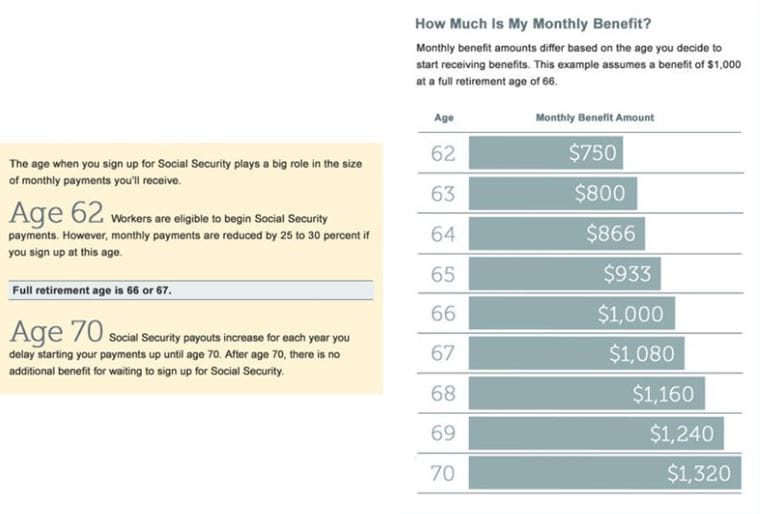
- Early Retirement: You can start receiving benefits as early as age 62. However, claiming before your FRA results in a permanent reduction of your monthly benefit. For example, if your FRA is 67, claiming at 62 means your benefit will be reduced by approximately 30%.
- Full Retirement Age (FRA): Your FRA depends on your birth year. For those born in 1943-1954, it’s 66. It gradually increases for later birth years, reaching 67 for anyone born in 1960 or later. Claiming at your FRA means you receive 100% of your PIA.
- Delayed Retirement: You can delay claiming benefits past your FRA, up to age 70. For each year you delay, your benefit increases by a certain percentage, known as Delayed Retirement Credits (DRCs). These credits amount to 8% per year for those born in 1943 or later, making it a compelling strategy for maximizing your monthly payout, even if you continue to work. After age 70, there’s no further benefit to delaying.
This decision — when to file — is one of the most important financial choices you’ll make in retirement, and it interacts directly with any earnings you might have.
The Earnings Test: How Working Affects Your Benefits
The “earnings test” is the mechanism the Social Security Administration uses to determine if your work income will reduce your Social Security benefits before you reach your Full Retirement Age (FRA). It’s a common source of confusion and concern for those planning to work in retirement.
The Annual Earnings Limit
The earnings test only applies if you are under your FRA for the entire year. Once you reach your FRA, the earnings limit disappears, and you can earn as much as you want without your Social Security benefits being reduced.
For those under their FRA, there are two distinct earnings limits, which are adjusted annually:
- If you will be under FRA for the entire year: The SSA will deduct $1 from your benefits for every $2 you earn above a specific annual limit. For example, in 2024, this limit is $22,320. If you earn $24,320, you’re $2,000 over the limit, so $1,000 (half of the excess) would be withheld from your benefits.
- In the year you reach FRA: A higher earnings limit applies, and the deduction rate is different. The SSA will deduct $1 from your benefits for every $3 you earn above a significantly higher limit (e.g., $59,520 in 2024), but only for the months before your FRA. Once you reach your FRA, the earnings test no longer applies, even if you earned more than the limit in prior months of that same year.
It’s crucial to note that “earnings” for this test refer to wages from employment or net earnings from self-employment. Pensions, annuities, investment income, and government retirement benefits generally do not count.
How Benefits Are Withheld
If your earnings exceed the limit, the SSA doesn’t necessarily send you a smaller check each month. Instead, they might withhold entire monthly benefit checks until the full amount of the reduction is met. For instance, if your annual benefit reduction is $3,000 and your monthly benefit is $1,500, they might withhold two full months of benefits. It’s also possible to work with the SSA to adjust your estimated annual earnings, though this often requires careful monitoring and communication.
The “Year of Retirement” Rule
There’s a special rule for the first year you start receiving benefits and are still working. This is often called the “year of retirement” rule or “monthly earnings test.” If you’re under FRA for that entire year, the SSA uses a monthly earnings limit for the initial months. Under this rule, you can receive a full Social Security benefit for any month you don’t earn above a specific monthly limit and don’t perform substantial services in self-employment, regardless of your total annual earnings. This rule is particularly beneficial for individuals who retire mid-year but had high earnings in the first part of the year, preventing those earlier earnings from disproportionately reducing their benefits. This monthly earnings test only applies in the first year you claim benefits. After that, only the annual earnings test applies until you reach your FRA.
Maximizing Your Social Security While Working
While the earnings test might seem like a disincentive to work, strategic planning can help you navigate its rules and maximize your combined income from work and Social Security.
Strategies for Delaying Benefits
One of the most effective strategies for maximizing your long-term Social Security benefits, even if you plan to work, is to delay claiming. If you can afford to live on your work income (and perhaps other savings) until your FRA or even age 70, you’ll benefit from two key advantages:
- Higher Monthly Payouts: Each year you delay past your FRA (up to age 70) earns you Delayed Retirement Credits, permanently increasing your monthly benefit. This can be a significant boost to your lifetime income.
- No Earnings Test: If you don’t claim benefits until your FRA, you completely avoid the earnings test. This means you can earn an unlimited amount from work without any reduction in your Social Security benefits. This offers immense flexibility and removes a layer of complexity from your financial planning.
Consider the trade-off: drawing a smaller, reduced benefit earlier subject to the earnings test, versus drawing a larger, unreduced benefit later with no earnings test limitations. For many, delaying provides a better long-term financial outcome, especially if they have strong earning potential.
Understanding Your Break-Even Point
When deciding whether to claim early and face the earnings test or delay, it’s helpful to consider the “break-even point.” This is the age at which the cumulative total of your higher, delayed benefits equals the cumulative total of the smaller, earlier benefits you would have received. While break-even points are often estimated to be in your late 70s or early 80s, these calculations are highly individual and depend on your health, family longevity, and other income sources. For example, if you claim at age 62 with a reduced benefit, you start receiving income earlier. If you delay until 70, your monthly check will be much larger, but you miss out on eight years of payments. A financial advisor can help you model your specific break-even point to inform your claiming strategy.
The Importance of Planning and Projections
Effective planning involves more than just understanding the rules; it requires projecting your future income and expenses.
- Estimate Your Earnings: If you plan to work, accurately estimate your annual earnings. Use this to project how the earnings test might impact your benefits. The SSA provides tools on their website (www.ssa.gov) to help with this.
- Monitor Your Work Income: If you are receiving benefits and working under your FRA, closely monitor your earnings throughout the year to avoid unexpected benefit reductions. If you anticipate exceeding the limit, you might consider adjusting your work hours or informing the SSA.
- Review Your Social Security Statement: Regularly review your annual Social Security statement, which provides an estimate of your future benefits based on your earnings record. This helps you track your progress towards eligibility and understand your potential PIA.
- Consult a Financial Advisor: A qualified financial advisor specializing in retirement planning can provide personalized advice. They can help you model different scenarios, taking into account your specific financial situation, tax implications, and goals, to create an optimal claiming strategy.
Beyond the Earnings Test: Other Considerations
While the earnings test is a primary concern for working beneficiaries, several other factors influence your overall financial picture when combining work and Social Security.
Taxation of Social Security Benefits
It’s a common misconception that Social Security benefits are tax-free. In reality, a portion of your benefits may be subject to federal income tax, and in some states, state income tax. The amount of benefits taxed depends on your “provisional income,” which is calculated as your adjusted gross income (AGI) + non-taxable interest + half of your Social Security benefits.
- If your provisional income is between $25,000 and $34,000 (for individuals) or $32,000 and $44,000 (for married couples filing jointly), up to 50% of your benefits may be taxable.
- If your provisional income exceeds $34,000 (individual) or $44,000 (married filing jointly), up to 85% of your benefits may be taxable.
Crucially, earnings from work contribute directly to your AGI, meaning that working while drawing benefits can push your provisional income higher, potentially subjecting more of your Social Security benefits to taxation. This is a critical factor to consider in your overall financial planning. Some states also tax Social Security benefits, so it’s important to understand your state’s rules.
Spousal and Survivor Benefits
The decisions you make about claiming your benefits can also impact your spouse’s or survivors’ benefits.
- Spousal Benefits: If your spouse claims benefits based on your work record, the amount they receive will be a percentage of your PIA. If you claim your benefits early and they are reduced, your spouse’s benefits may also be affected. If you delay your benefits, it can result in higher spousal benefits for your partner.
- Survivor Benefits: When you pass away, your surviving spouse or minor children may be eligible for survivor benefits based on your work record. The amount of these benefits is tied to your PIA. Delaying your claim to earn Delayed Retirement Credits not only increases your own lifetime benefits but also increases the potential survivor benefit for your loved ones.
These interconnected benefits highlight the importance of joint planning for couples, considering the long-term implications for both partners.
The Future of Social Security
While Social Security has been a bedrock of American retirement for decades, its long-term solvency is often a topic of discussion. The Social Security trust funds are projected to be able to pay 100% of promised benefits until a certain point (e.g., around the mid-2030s), after which they would be able to pay a significant percentage (e.g., about 80%) if Congress doesn’t act. While it’s highly unlikely that Social Security will disappear entirely, potential future adjustments—such as changes to the full retirement age, benefit formulas, or taxation—are always a possibility.
For those planning their retirement, this ongoing debate underscores the importance of a diversified financial plan. While Social Security should certainly be a component of your retirement income, relying solely on it, especially if you have significant working income potential, might not be the most prudent strategy. Complementing Social Security with personal savings, investments, and other income streams provides a more robust and adaptable financial future, regardless of potential program modifications.
Conclusion
Navigating the landscape of earning income while receiving Social Security benefits requires a clear understanding of the rules, careful planning, and often, a strategic approach. The interplay between your age, your work earnings, and the Social Security Administration’s earnings test can significantly impact the net benefits you receive. By understanding your Primary Insurance Amount, the intricacies of the earnings limits, and the crucial role of your filing age, you can make informed decisions that optimize your financial well-being in retirement.
Whether you choose to delay benefits to maximize your monthly payout and avoid the earnings test, or to claim earlier and strategically manage your work income, the key lies in personalized planning. Consider not only the direct impact on your benefits but also broader considerations such as taxation, the implications for spousal and survivor benefits, and the evolving economic landscape. Consulting with a financial advisor and regularly utilizing the resources provided by the Social Security Administration can empower you to confidently answer the question of how much you can earn and draw Social Security, ensuring a more secure and prosperous retirement.
aViewFromTheCave is a participant in the Amazon Services LLC Associates Program, an affiliate advertising program designed to provide a means for sites to earn advertising fees by advertising and linking to Amazon.com. Amazon, the Amazon logo, AmazonSupply, and the AmazonSupply logo are trademarks of Amazon.com, Inc. or its affiliates. As an Amazon Associate we earn affiliate commissions from qualifying purchases.