
For millions of Americans, Social Security represents the cornerstone of a stable retirement. Yet, despite its importance, the system remains one of the most misunderstood components of personal finance. The question “How much can I earn on Social Security?” does not have a single answer; rather, it is a variable figure determined by your lifetime earnings, the age at which you choose to claim benefits, and your ongoing employment status. Understanding these mechanics is essential for anyone looking to optimize their long-term financial health and ensure that their “golden years” are truly secure.
In the realm of personal finance, Social Security should be viewed not as a standalone windfall, but as a guaranteed, inflation-adjusted annuity that complements your private savings and investments. To accurately project your future income, you must delve into the specific formulas the Social Security Administration (SSA) uses and the strategic decisions that can increase your monthly check by significant margins.
Understanding the Mechanics: How Your Social Security Benefit is Calculated
The amount you receive from Social Security is primarily based on your earnings history throughout your working life. However, it is not a simple average of every paycheck you have ever received. The SSA uses a specific indexing process to ensure that your past earnings are adjusted for inflation and compared fairly to today’s economic environment.
The Role of Your 35 Highest-Earning Years
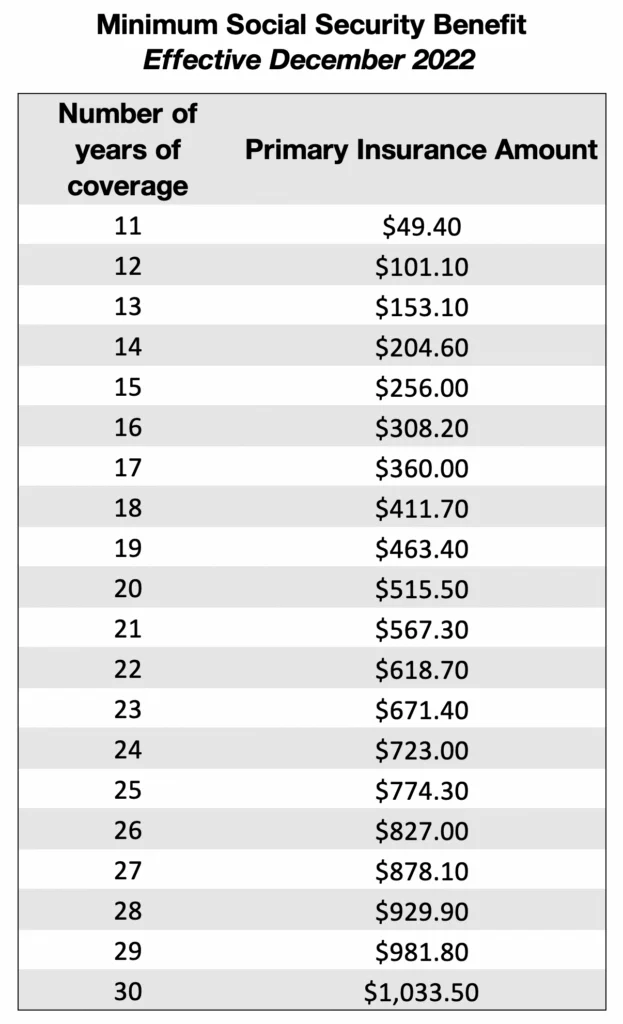
The SSA calculates your Primary Insurance Amount (PIA) by looking at your “Average Indexed Monthly Earnings” (AIME). This figure is derived from your 35 highest-earning years. If you worked for 40 years, the SSA will drop the lowest five years of income. Conversely, if you only worked for 25 years, the formula will include ten years of “zero” income, which significantly lowers your average and, subsequently, your monthly benefit. From a financial planning perspective, if you have gaps in your work history, working even a few extra years in your 60s can replace those “zero” years and provide a substantial boost to your eventual payout.
The Indexing Process and Bend Points
Once your average monthly earnings are established, the SSA applies a formula involving “bend points.” This formula is progressive, meaning it is designed to provide a higher replacement rate for lower-income workers than for high-income earners. While you pay Social Security taxes on income up to a certain limit (the Social Security Wage Base), the benefit calculation ensures that everyone receives a baseline of support, though those who contributed more into the system will receive a higher absolute dollar amount in their monthly check.
Credits and Eligibility
To even qualify for Social Security, you must earn “credits.” As of the current regulations, most workers need 40 credits to be eligible for retirement benefits, which typically equates to ten years of work. Each year, the amount of earnings required to earn one credit increases slightly with inflation. For most professionals, meeting this threshold is the easy part; the challenge lies in maximizing the value of those credits through consistent, high-level earnings.
The Strategy of Timing: Finding Your Ideal Retirement Window
Perhaps the most critical decision in personal finance regarding Social Security is when to start taking benefits. You can begin as early as age 62, or as late as age 70. The difference in the monthly amount between these two extremes is staggering, often resulting in a 76% increase for those who wait.
Filing at Age 62: The Cost of Early Retirement
While the allure of early retirement is strong, filing at age 62 comes with a permanent reduction in benefits. If your Full Retirement Age (FRA) is 67—which it is for everyone born in 1960 or later—claiming at 62 results in a 30% reduction in your monthly check. This is a “lock-in” effect; the reduction lasts for the rest of your life. From a money management perspective, claiming early is usually only advisable if you have an immediate health concern that limits your life expectancy or if you have no other assets to cover living expenses.
Full Retirement Age (FRA) as the Benchmark
Your Full Retirement Age is the point at which you are entitled to 100% of your calculated benefit. For most people currently approaching retirement, this age is between 66 and 67. Reaching your FRA is a significant milestone because it eliminates the “earnings test” penalty (discussed later) and serves as the baseline for all subsequent increases. When planning your retirement portfolio, the FRA is the figure you should use for your conservative projections.
Delaying Until Age 70: The 8% Annual Increase
For those who can afford to wait, delaying Social Security benefits beyond your FRA offers one of the best “guaranteed returns” available in the financial world. For every year you delay past your FRA, your benefit increases by approximately 8% in the form of “delayed retirement credits.” This increase stops at age 70. There is no financial incentive to wait past 70, as benefits do not increase further. In an era where market volatility can make 8% returns uncertain, the guaranteed nature of Social Security’s delayed credits is an incredibly powerful tool for long-term wealth preservation.
Working While Retired: The Impact of Earned Income on Your Benefits

A common point of confusion for many is whether they can continue to earn a salary while collecting Social Security. The answer is yes, but depending on your age, the government may temporarily withhold a portion of your benefits.
The Retirement Earnings Test Before FRA
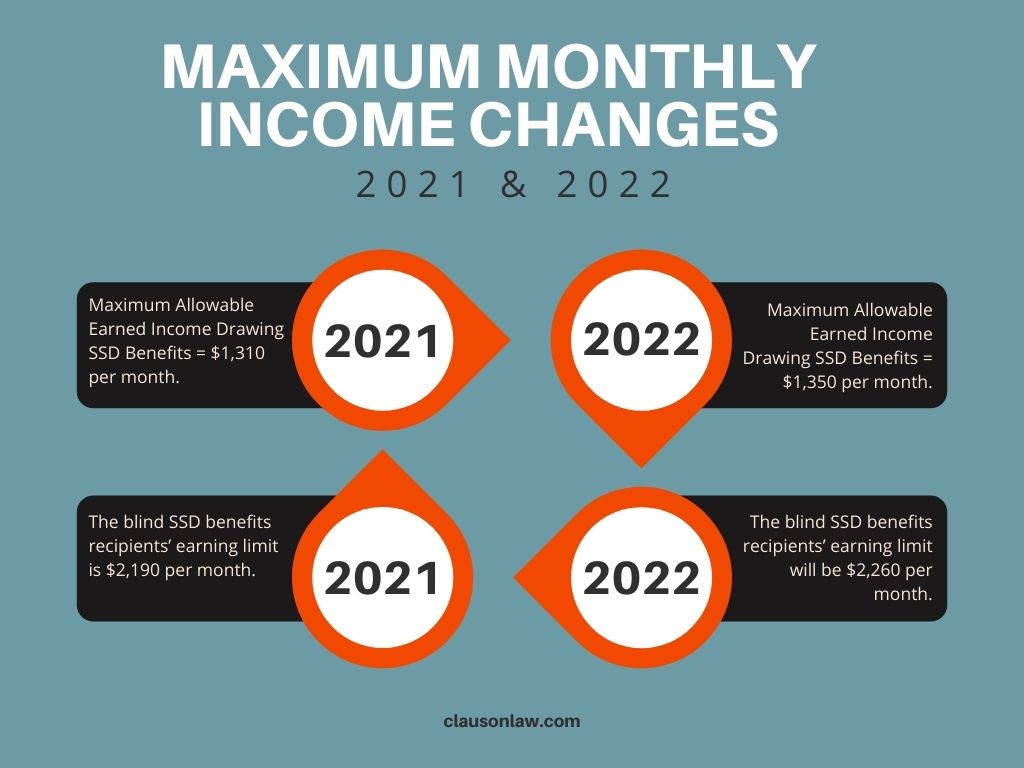
If you have not yet reached your Full Retirement Age and you continue to work while receiving benefits, your earnings are subject to a limit. If you earn over the annual threshold (which is adjusted yearly for inflation), the SSA will withhold $1 in benefits for every $2 you earn above that limit. In the year you actually reach your FRA, the rule becomes more lenient: the SSA withholds $1 for every $3 earned over a higher threshold.
The “Clawback” is Not a Permanent Loss
It is a common myth that the money withheld due to the earnings test is “lost” forever. In reality, once you reach your Full Retirement Age, the SSA recalculates your benefit amount to account for the months in which benefits were withheld. This effectively increases your monthly check for the remainder of your life. Therefore, while it may hurt your cash flow in the short term, the earnings test acts more like a forced delay of benefits rather than a tax.
Benefits After Full Retirement Age
The moment you hit your Full Retirement Age, the earnings test disappears entirely. You can earn a million dollars a year at a high-level executive job and still receive your full Social Security check every month. For high-earning professionals and business owners, this makes the FRA the most logical “sweet spot” to begin balancing career income with retirement benefits.
Spousal, Survivor, and Family Benefits: Expanding Your Financial Horizon
Social Security is not just an individual benefit; it is a family protection plan. Understanding how to leverage spousal and survivor benefits can significantly increase a household’s total lifetime income.
Maximizing Spousal Benefits
A spouse who did not work, or who earned significantly less, is entitled to up to 50% of the higher-earning spouse’s benefit at FRA. If you are the higher earner, your decision on when to claim will directly impact the total pool of money available to your household. Financial advisors often suggest that the higher-earning spouse delay until 70 to maximize the “base” benefit, which also maximizes the potential survivor benefit for the remaining spouse.
Survivor Benefits and Long-Term Security
If a spouse passes away, the survivor is entitled to 100% of the deceased spouse’s benefit (if they have reached their own FRA). The survivor can then choose to take the higher of the two benefits they were receiving as a couple. This makes Social Security a critical component of life insurance and estate planning. Ensuring the highest possible benefit through delayed filing acts as a form of “longevity insurance” for the surviving partner.
Benefits for Divorced Spouses
Interestingly, you may be eligible to claim benefits based on an ex-spouse’s work record if the marriage lasted at least ten years and you are currently unmarried. This does not impact the ex-spouse’s benefit or the benefit of their current spouse. This is an often-overlooked “side hustle” of the Social Security world that can provide unexpected financial relief to divorcees in retirement.
Taxation and Inflation: Protecting Your Purchasing Power
Even after you’ve calculated your gross benefit, you must account for two silent factors that affect your net income: taxes and inflation.
The Impact of Taxes on Benefits
Many retirees are surprised to learn that Social Security benefits can be taxable. If your “provisional income” (your adjusted gross income plus tax-exempt interest plus 50% of your Social Security benefits) exceeds certain thresholds, you may pay federal income tax on up to 85% of your benefits. For those with significant 401(k) withdrawals or investment income, this “tax torpedo” can reduce the effective value of your Social Security check. Strategic tax planning—such as utilizing Roth IRA conversions—can help manage this liability.
COLA: The Inflation Hedge
One of the most valuable features of Social Security is the Cost-of-Living Adjustment (COLA). Unlike most private pensions or fixed annuities, Social Security benefits are adjusted annually based on the Consumer Price Index (CPI-W). In years of high inflation, these adjustments can be substantial, ensuring that your purchasing power remains relatively stable even as the price of goods and services rises. When building a long-term financial model, the COLA is the primary reason why Social Security remains the most reliable part of a retirement plan.
Using Digital Financial Tools for Projections
To get an exact answer to “how much can I earn,” you should not rely on guesswork. The SSA provides a “My Social Security” portal where you can view your actual earnings history and see personalized estimates for claiming at ages 62, FRA, and 70. Integrating this data into your broader financial software or sharing it with a financial planner is the final step in moving from estimation to execution.
In conclusion, the amount you can earn on Social Security is a reflection of your career’s trajectory and your strategic patience. By understanding the 35-year calculation, the power of delaying until age 70, and the nuances of the earnings test, you can transform Social Security from a passive monthly check into a dynamic financial asset that provides security for both you and your family.
aViewFromTheCave is a participant in the Amazon Services LLC Associates Program, an affiliate advertising program designed to provide a means for sites to earn advertising fees by advertising and linking to Amazon.com. Amazon, the Amazon logo, AmazonSupply, and the AmazonSupply logo are trademarks of Amazon.com, Inc. or its affiliates. As an Amazon Associate we earn affiliate commissions from qualifying purchases.