
Retirement marks a significant life transition, often accompanied by a desire to continue working, whether for financial necessity, personal fulfillment, or simply to stay engaged. For many, Social Security benefits form a crucial part of their retirement income strategy. However, a common point of confusion and concern arises regarding how earned income can impact these benefits. The Social Security Administration (SSA) implements specific rules, known as the “earnings test,” that can reduce or even temporarily stop your benefits if you earn above certain thresholds before reaching your full retirement age.
Navigating these rules is essential for anyone planning to combine work with Social Security benefits. Understanding the nuances of the earnings test, how limits change with age, and what exactly counts as “earnings” can empower you to make informed decisions about your financial future. This comprehensive guide will demystify the Social Security earnings limits, helping you understand how much you can earn while still collecting your hard-earned benefits.
Understanding the Social Security Earnings Test
The Social Security system is designed to provide a safety net for retirees, the disabled, and survivors. While working during retirement is increasingly common, the SSA has rules in place to manage benefit payments, particularly for those who haven’t yet reached their “Full Retirement Age” (FRA). This is where the earnings test comes into play.
What is the Earnings Test?
The earnings test is a provision that allows the Social Security Administration to withhold a portion or all of your Social Security benefits if your earnings exceed specific annual limits. It’s crucial to understand that this test only applies to earned income – money you receive from wages or self-employment. It does not apply to income from investments, pensions, annuities, or other sources like rental income (unless you are actively involved in real estate as a business).
The primary goal of the earnings test is to target benefits towards those who have genuinely retired or reduced their work hours significantly. It ensures that individuals who are still working full-time or earning substantial income aren’t drawing full benefits intended for those who have stepped back from the workforce.
Who Does it Apply To?
The earnings test applies to you if you are receiving Social Security benefits and:
- Are under your Full Retirement Age (FRA) for the entire year. This is the age at which you are entitled to receive 100% of your primary insurance amount (PIA). Your FRA depends on your birth year, generally ranging from 66 to 67.
- Are in the year you reach your Full Retirement Age. A special, higher limit applies in this specific year.
Crucially, once you reach your Full Retirement Age, the earnings test no longer applies. You can earn an unlimited amount of money without any reduction to your Social Security benefits. This distinction is vital for planning your late-career and early-retirement income.
Earnings Limits Before Full Retirement Age (FRA)
For individuals who begin receiving Social Security benefits before their Full Retirement Age and continue to work, the earnings test can significantly impact their monthly payments. The rules in this category are the most restrictive.
The Annual Limit Explained
Each year, the Social Security Administration sets an annual earnings limit. For beneficiaries who are under their FRA for the entire year, if your earnings exceed this limit, the SSA will deduct a certain amount from your benefits.
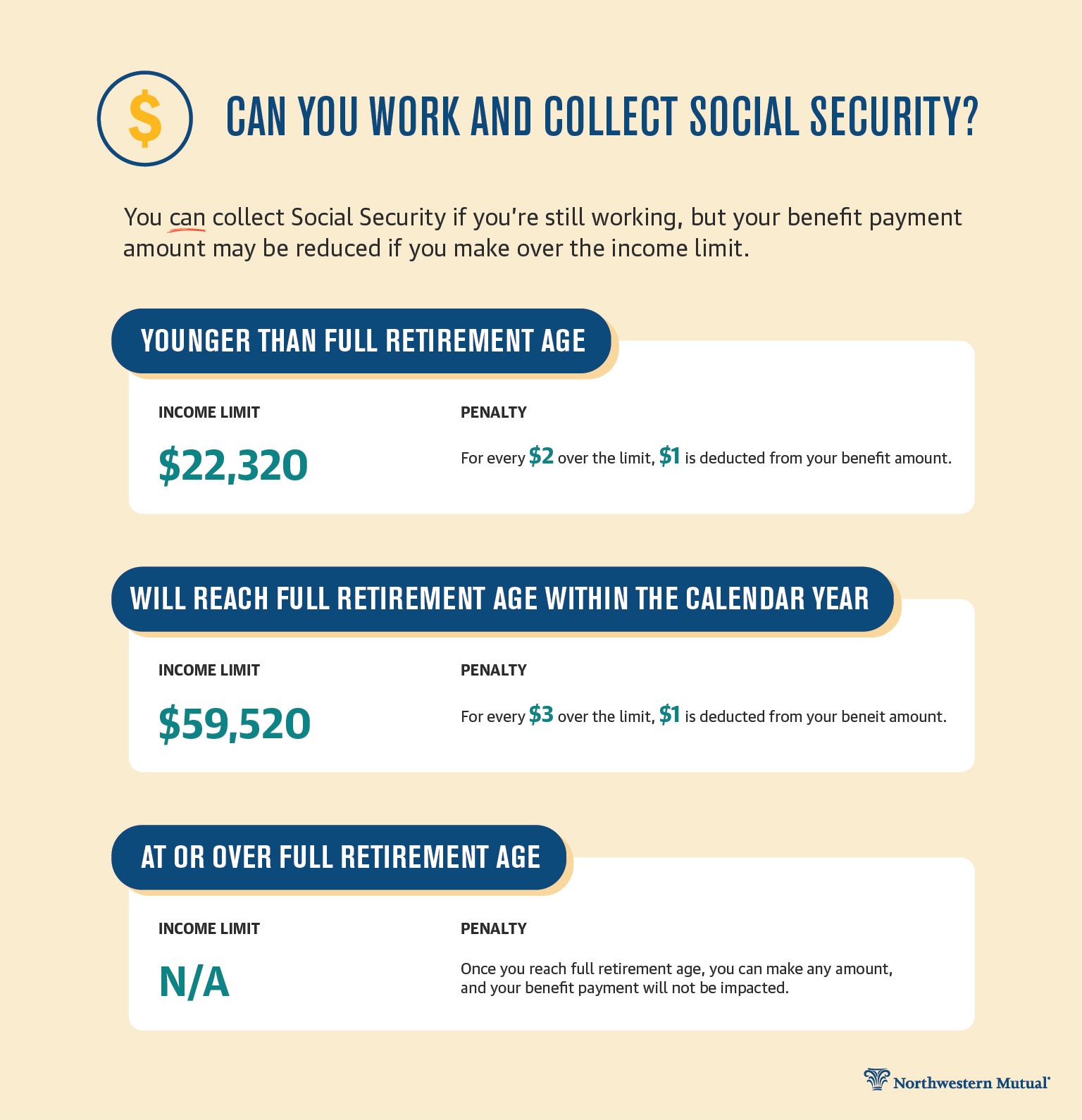
As an example, for 2024, if you are under your FRA for the entire year, the annual earnings limit is $22,320. For every $2 you earn above this limit, $1 will be withheld from your Social Security benefits.
This withholding is applied to your total annual benefits. So, if you earn $24,320 in 2024 (which is $2,000 over the limit), the SSA would withhold $1,000 from your total benefits for the year (half of the $2,000 excess). This $1,000 could be withheld by reducing several monthly payments or stopping payments entirely for a month or two, depending on the amount.
How Benefits are Withheld
The SSA doesn’t simply send you a bill. Instead, they will reduce your monthly benefit payments until the withheld amount is recovered. For instance, if your monthly benefit is $1,500 and you need to have $3,000 withheld due to excess earnings, you might not receive any benefits for two months. It’s an important consideration when budgeting, as unexpected earnings could lead to a temporary loss of your expected Social Security income.
It’s also important to remember that these withheld benefits are not permanently lost. When you reach your Full Retirement Age, the SSA will recalculate your benefit amount, giving you credit for the months in which benefits were withheld. This means your future monthly benefit could be slightly higher.
What Counts as “Earnings”?
Understanding what constitutes “earnings” for the purpose of the earnings test is critical. The SSA primarily focuses on:
- Wages: Money you receive from an employer for your work, reported on a W-2 form.
- Net earnings from self-employment: This is your profit if you own and operate your own business, reported on a Schedule C or Schedule SE.
What does not count:
- Pensions and annuities: These are generally considered passive income.
- Investment income: Dividends, interest, capital gains from stocks, bonds, or mutual funds.
- Rental income: Unless you are a real estate professional actively managing properties as a business.
- Interest from savings accounts.
- IRA or 401(k) distributions.
- Social Security benefits themselves.
This distinction is crucial. You can have a substantial passive income portfolio, draw significant funds from retirement accounts, or receive substantial pension payments without impacting your Social Security benefits, even if you are under your FRA. The earnings test is specifically designed to address active work income.
The Year You Reach Full Retirement Age
The year you attain your Full Retirement Age has a unique set of rules regarding the earnings test. This period acts as a bridge between the stricter limits before FRA and the unlimited earning potential after FRA.
A Higher Earning Threshold
In the year you reach your Full Retirement Age, the earnings limit is significantly higher than the limit for those who are under FRA for the entire year. For 2024, this higher limit is $59,520. The reduction rate is also more favorable: for every $3 you earn above this limit, $1 will be withheld from your benefits.
It’s important to note that this higher limit only applies to earnings made before the month you reach your Full Retirement Age. Once you hit your FRA month, the earnings test disappears entirely for all subsequent earnings.
Monthly vs. Annual Calculation (The “Monthly Earnings Test”)
A special provision, often overlooked, applies in the year you reach your FRA: the “monthly earnings test.” This test allows you to receive a full Social Security benefit for any month that you do not earn more than a certain amount and do not perform substantial services in self-employment, regardless of your annual earnings.
This is particularly beneficial for individuals who stop working mid-year or significantly reduce their hours in the months leading up to their FRA. For example, if you work full-time in January through June, earning well above the annual limit, but then retire in July (the month you reach FRA), you could still receive full benefits for July onwards, because you didn’t earn above the monthly limit in those specific months.
The monthly limit is generally 1/12th of the annual limit for those under FRA. For 2024, this would be $1,860 ($22,320 / 12). If you earn less than this amount in any month before your FRA month, you can receive benefits for that month. However, this monthly test is generally only applied in the first year you have a “non-service month,” which is a month you don’t earn above the monthly limit. After that, the annual test typically applies. It’s crucial to inform the SSA if you plan to use the monthly earnings test.
After Reaching Full Retirement Age (FRA)
This is the good news for many retirees: once you’ve officially reached your Full Retirement Age, the handcuffs of the earnings test are completely removed.
No Earnings Limit: Work Without Penalty
Once you’ve celebrated your Full Retirement Age, you can earn as much as you want from wages or self-employment without a single dollar being withheld from your Social Security benefits. This provides immense flexibility for those who wish to pursue a second career, work part-time for enjoyment, or simply supplement their retirement income without fear of benefit reductions.
This freedom allows individuals to truly define their retirement on their own terms, balancing work and leisure as they see fit, without financial penalties from Social Security. It’s a critical milestone to understand and plan for in your financial strategy.
Recalculation of Benefits (Getting Back Withheld Benefits)
It’s important to remember that any benefits withheld from you before you reached your Full Retirement Age due to the earnings test are not lost forever. When you reach your FRA, the Social Security Administration automatically recalculates your benefit amount.
This recalculation effectively credits you for the months in which benefits were withheld. What happens is that the SSA re-computes your benefit as if you had retired later. This means your monthly benefit amount for all future payments will likely be increased to account for the previous withholding. In essence, the money was deferred, not taken away permanently. It’s a mechanism designed to ensure fairness and adjust your benefit to reflect your actual retirement date. The exact increase will depend on how much was withheld and for how long.
Strategies for Managing Your Earnings and Benefits
Proactive planning is key to maximizing your Social Security benefits while maintaining your desired lifestyle and income during retirement.
Planning Your Retirement Income
A holistic approach to retirement income planning is essential. Consider the following:
- Estimate Your FRA: Know your exact Full Retirement Age based on your birth year. This is the cornerstone of your planning.
- Project Your Earnings: If you plan to work, estimate your annual earnings, especially for the years leading up to your FRA.
- Balance Work and Benefits: In the years before FRA, you might strategically reduce your work hours or shift income-generating activities to non-wage/self-employment sources (e.g., drawing more from investments).
- Delaying Benefits: If you can afford it, delaying your Social Security application until your FRA (or even age 70) allows your benefits to grow by earning delayed retirement credits, making your eventual monthly payment significantly higher and eliminating earnings test concerns.
- Utilize the Monthly Earnings Test: If you’re retiring mid-year in your FRA year, be sure to inform the SSA to take advantage of the monthly earnings test.
The Importance of Knowing Your FRA
Your Full Retirement Age is not just a number; it’s a critical determinant of how the earnings test impacts you. Mistaking your FRA, or not knowing it at all, can lead to unexpected reductions in your Social Security benefits. Use the SSA’s official website (ssa.gov) to find your specific FRA. This will typically be between age 66 and 67 for most people currently approaching retirement. Understanding this age allows you to strategically plan when to claim benefits and how to structure any continued work.
Consulting with Financial Professionals
Social Security rules can be complex, and individual situations vary greatly. Consulting with a qualified financial advisor or a Social Security specialist can provide invaluable guidance. They can help you:
- Analyze your specific earnings projections and benefit amounts.
- Develop a strategy to minimize benefit withholding.
- Integrate your Social Security claiming strategy with your broader retirement income plan, including pensions, investments, and other assets.
- Navigate the application process and communicate effectively with the SSA.
Their expertise can help ensure you make the most informed decisions, optimize your financial resources, and avoid costly mistakes.
Conclusion
The question of “how much can I earn and still receive Social Security” is a critical one for many Americans approaching or in retirement. While the Social Security Administration imposes an earnings test, it’s designed with specific thresholds and purposes. By understanding your Full Retirement Age, distinguishing between earned income and other forms of revenue, and knowing the specific earnings limits that apply to your situation, you can strategically manage your finances.
Remember, the goal is not to stop working if you don’t want to, but to work smarter within the system. For those under FRA, careful planning of earnings can prevent unexpected benefit reductions. For those at or past FRA, the freedom to earn without limit opens up significant opportunities. With proactive planning and, if necessary, professional guidance, you can seamlessly integrate continued work with your Social Security benefits, ensuring a financially secure and fulfilling retirement.
aViewFromTheCave is a participant in the Amazon Services LLC Associates Program, an affiliate advertising program designed to provide a means for sites to earn advertising fees by advertising and linking to Amazon.com. Amazon, the Amazon logo, AmazonSupply, and the AmazonSupply logo are trademarks of Amazon.com, Inc. or its affiliates. As an Amazon Associate we earn affiliate commissions from qualifying purchases.