
Bitcoin, often hailed as “digital gold,” has captivated the financial world since its inception. Its revolutionary design, which includes a fixed and predictable supply, stands in stark contrast to traditional fiat currencies managed by central banks. For anyone looking to understand Bitcoin’s value proposition, investment potential, or its role in the global economy, grasping the concept of its circulating supply is paramount. It’s not merely a technical detail; it’s the bedrock of its economic model, influencing everything from its perceived scarcity to its potential as a store of value. This article delves into the mechanics behind Bitcoin’s supply, its current circulation, and why these numbers are critical for every investor.
The Fixed Supply: Bitcoin’s Core Economic Principle
At the heart of Bitcoin’s appeal is its predefined and immutable monetary policy. Unlike government-issued currencies that can be printed in unlimited quantities, Bitcoin operates under a strict, programmatic cap. This scarcity is not an accident but a foundational design choice intended to emulate the properties of precious metals, specifically gold, which derive much of their value from their finite supply.
The 21 Million Cap
Satoshi Nakamoto, Bitcoin’s pseudonymous creator, hardcoded a maximum limit of 21 million bitcoins that will ever exist. This fixed supply is perhaps the most crucial economic feature distinguishing Bitcoin from conventional currencies. Fiat currencies, like the US dollar or Euro, are subject to the discretion of central banks, which can increase the money supply through various monetary policies. While such policies can stimulate economies, they also carry the risk of inflation, eroding purchasing power over time.
Bitcoin’s 21 million cap eliminates this risk of arbitrary inflation. It creates a deflationary pressure over the long term, making each unit potentially more valuable as demand increases against a static or diminishing effective supply. This fundamental difference positions Bitcoin as a potential hedge against inflation and a superior store of value in the eyes of many investors, drawing parallels to gold’s long-standing role as a crisis commodity.
Mining and Block Rewards
New bitcoins enter circulation through a process known as “mining.” Bitcoin mining involves powerful computers solving complex cryptographic puzzles to validate and add new blocks of transactions to the blockchain. When a miner successfully adds a new block, they are rewarded with a predetermined amount of newly minted bitcoins, known as the “block reward,” along with transaction fees from the included transactions.
This process is vital for two reasons: it secures the network by incentivizing participants to maintain the ledger, and it is the sole mechanism by which new bitcoins are introduced into the supply. The block reward ensures a steady, albeit decreasing, stream of new bitcoins, making the supply predictable. On average, a new block is added to the Bitcoin blockchain approximately every 10 minutes, meaning new bitcoins are constantly, yet gradually, being released into circulation. This predictable issuance schedule contrasts sharply with the often opaque and unpredictable issuance schedules of traditional assets.
Halving Events (Halvings)
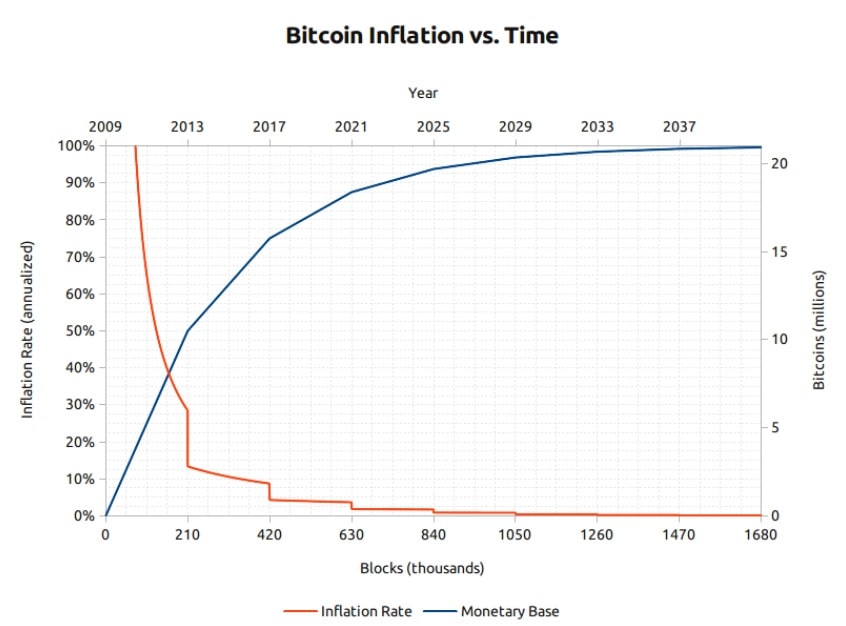
One of the most ingenious aspects of Bitcoin’s monetary policy is the “halving” (or “halvening”) event. Approximately every four years, or more precisely, every 210,000 blocks, the block reward is automatically cut in half. This mechanism ensures that the rate at which new bitcoins are created continually decreases over time.
For example, when Bitcoin launched in 2009, the block reward was 50 bitcoins. After the first halving in 2012, it dropped to 25 bitcoins. The second halving in 2016 reduced it to 12.5 bitcoins, and the most recent halving in 2020 brought it down to 6.25 bitcoins. The next halving is anticipated in 2024, which will further reduce the reward to 3.125 bitcoins. These halvings are critical for two reasons:
-
Supply Shock: Each halving effectively halves the new supply of bitcoins entering the market. Historically, these events have often preceded significant price rallies, as the reduced supply collides with persistent or increasing demand, creating a supply shock.
-
Deflationary Pressure: The recurring reduction in new supply reinforces Bitcoin’s deflationary characteristics, making it increasingly scarce over time. This predictable reduction in supply is a core reason why many investors view Bitcoin as a superior long-term store of value compared to assets with unpredictable or inflationary supply schedules.
Quantifying Current Circulation and Future Projections
Understanding the mechanics of Bitcoin’s supply is one thing; knowing the actual numbers in circulation and what the future holds is another. These figures provide a tangible representation of Bitcoin’s scarcity and its economic roadmap.
Current Circulating Supply
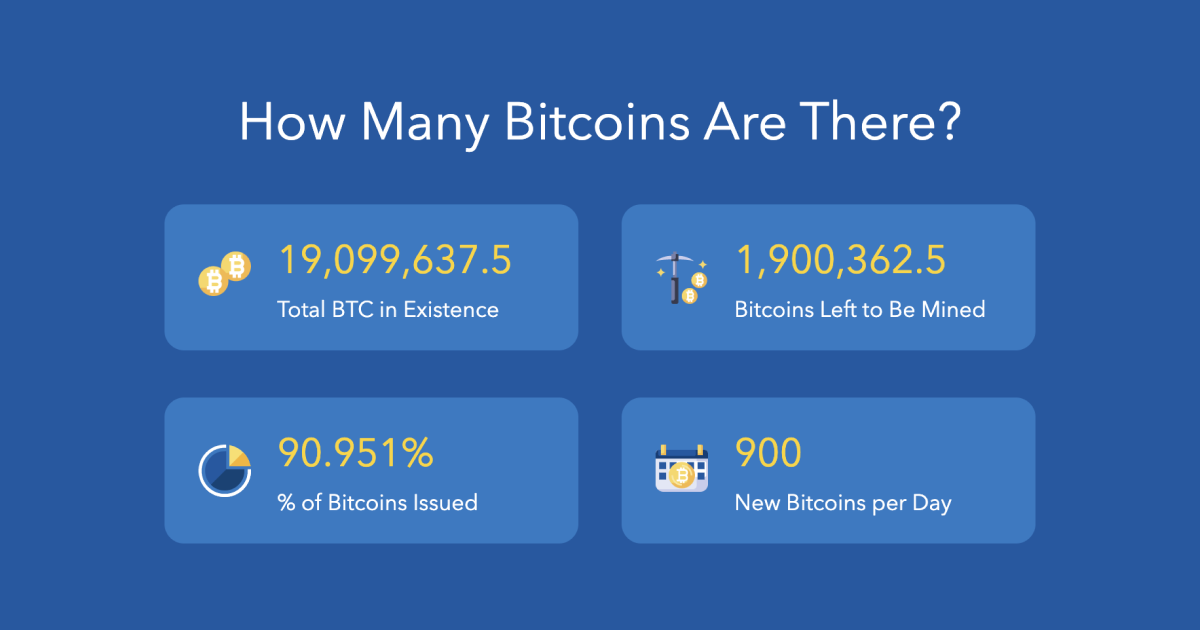
As of late 2023/early 2024, the circulating supply of Bitcoin is approximately 19.5 million BTC. This number is dynamic, increasing incrementally with every new block mined. You can find the most up-to-date figure on various blockchain explorers (like Blockchain.com or Blockchair) or cryptocurrency market data sites (like CoinMarketCap or CoinGecko). These platforms provide real-time data on the total number of bitcoins that have been mined to date, excluding the genesis block reward, which is considered unspendable.
This number represents the total bitcoins that have been released into the network, but it’s important to note that it doesn’t necessarily reflect the spendable supply, as a significant portion of bitcoins are believed to be lost forever.
The Remaining Supply and Mining Horizon
With approximately 19.5 million bitcoins already in circulation, this leaves roughly 1.5 million bitcoins (21 million – 19.5 million) yet to be mined. Given the halving schedule, the rate of new issuance will continue to slow down dramatically over the coming decades.
The last bitcoin is projected to be mined around the year 2140. After this point, no new bitcoins will ever be created. Miners will then be entirely compensated by transaction fees. This long-term horizon underscores Bitcoin’s finite nature and provides a clear trajectory for its supply, a stark contrast to the indefinite lifespan and supply expansion capabilities of fiat currencies. For investors, this predictable scarcity over such an extended period contributes significantly to Bitcoin’s long-term value proposition.
Understanding Bitcoin’s Inflation Rate

Bitcoin’s inflation rate is directly tied to its block reward schedule and halvings. Initially, its inflation rate was quite high due to the large block reward. However, with each halving, the inflation rate dramatically decreases. After the 2020 halving, Bitcoin’s annual inflation rate dropped to approximately 1.8%, putting it below the long-term inflation targets of many central banks (typically around 2%). The next halving in 2024 will reduce this further, making Bitcoin increasingly disinflationary over time, eventually becoming deflationary in terms of new supply after the final bitcoin is mined.
This decreasing inflation rate is a crucial argument for Bitcoin as “hard money.” In a world where central banks grapple with rising inflation, Bitcoin’s predictable and declining new supply offers a compelling alternative for preserving wealth. Its fixed monetary policy makes it an attractive asset for those concerned about the erosion of purchasing power inherent in fiat systems.
Factors Affecting “Effective” Circulation and Market Dynamics
While the mathematically verifiable circulating supply is a key metric, it doesn’t tell the whole story. Several practical factors further constrain the effective supply available for trading and investment, influencing market dynamics and price.
Lost Bitcoins
A unique characteristic of Bitcoin is the phenomenon of lost bitcoins. Due to forgotten private keys, lost hard drives, incorrect transactions to unspendable addresses, or simply poor security practices, a significant number of bitcoins have been permanently removed from circulation. Estimates vary widely, but it is believed that anywhere from 20% to 30% of all mined bitcoins may be irretrievably lost. This could mean between 3 to 6 million bitcoins are effectively gone forever.
These lost bitcoins further reduce the actual spendable supply, intensifying Bitcoin’s scarcity beyond its programmed 21 million cap. From an economic perspective, lost bitcoins act as a deflationary force, making the remaining circulating bitcoins even scarcer and potentially more valuable. This unplanned reduction in supply is a permanent feature of the Bitcoin economy, a stark reminder of the responsibility inherent in self-custody.
Hodling and Long-Term Investment
The term “Hodl” (a misspelling of “hold”) emerged from the Bitcoin community and refers to the strategy of buying and holding Bitcoin for the long term, regardless of short-term price fluctuations. A substantial portion of the circulating supply is held by long-term investors who have no intention of selling in the foreseeable future. These “hodlers” remove a significant amount of Bitcoin from active trading, creating a form of illiquidity in the market.
This long-term conviction, particularly among early adopters and institutional investors, means that the effective trading supply is much lower than the actual circulating supply. When new demand enters the market, it often faces a relatively constrained available supply, contributing to price volatility and upward pressure. The “supply shock” narrative often arises from this dynamic, where large buying interest meets an illiquid market dominated by hodlers.
Exchange Holdings and Institutional Investment
The amount of Bitcoin held on cryptocurrency exchanges provides an indicator of immediate selling pressure or available supply for trading. When exchange balances decrease, it often suggests that investors are moving their Bitcoin into cold storage for long-term holding, reducing market liquidity. Conversely, an increase in exchange balances could signal potential selling interest.
Furthermore, the rise of institutional investment vehicles, such as Bitcoin ETFs, Grayscale Bitcoin Trust, and corporate treasuries holding Bitcoin, has absorbed a notable portion of the circulating supply. These large holdings are often illiquid, as institutional investors typically have long-term investment horizons. Their entry into the market further consolidates supply and reduces the free float, potentially amplifying price movements when new demand enters the ecosystem.
Why Bitcoin’s Circulation Matters for Investors
Understanding Bitcoin’s circulating supply and its underlying monetary policy is not just academic; it has profound implications for investment strategy, valuation, and its role in a diversified portfolio.
Scarcity as a Store of Value
Bitcoin’s predictable scarcity is its strongest argument for being a superior store of value, akin to digital gold. In an era of increasing global debt and quantitative easing, investors are increasingly seeking assets that are resistant to inflation and political manipulation. Bitcoin’s 21 million hard cap, combined with its programmatic halvings, offers a credible alternative to traditional safe-haven assets. Its finite nature makes it an attractive vehicle for preserving wealth over the long term, especially for those concerned about the depreciating value of fiat currencies.
Price Discovery and Supply-Demand Dynamics
The interplay between Bitcoin’s fixed and decreasing new supply and ever-growing demand is a powerful driver of its price. Each halving event, by reducing the new supply, creates a supply shock that, when met with sustained or increasing demand, historically leads to significant price appreciation. Understanding these supply dynamics allows investors to anticipate potential market movements and make informed decisions. The scarcity model fundamentally influences how Bitcoin’s price is discovered, distinguishing it from assets whose supply can be arbitrarily increased.
Long-Term Investment Strategy
For investors, Bitcoin’s unique supply mechanism underscores the importance of a long-term investment perspective. Given the predictable reduction in new supply and the potential for increasing adoption and demand, Bitcoin’s value proposition strengthens over time. Incorporating Bitcoin into an investment strategy requires acknowledging its inherent scarcity and the potential for significant long-term growth as its economic model plays out over decades. As traditional financial systems face new challenges, Bitcoin’s robust and transparent monetary policy offers a compelling narrative for its enduring relevance and potential as a foundational asset in the digital age.
Conclusion
The question “how many bitcoins in circulation” opens a window into the core economic principles that define Bitcoin. Its finite supply of 21 million, governed by a transparent and immutable halving schedule, creates a unique monetary policy that stands apart from any other asset. This engineered scarcity, coupled with factors like lost bitcoins and long-term investor “hodling,” significantly impacts its effective availability and price dynamics. For investors, understanding these supply-side fundamentals is not merely an intellectual exercise but a critical component of assessing Bitcoin’s long-term potential as a store of value, an inflation hedge, and a transformative force in the global financial landscape. As the world continues to grapple with economic uncertainties, Bitcoin’s predictable scarcity remains a cornerstone of its appeal, cementing its place as an increasingly vital asset in a diversified investment portfolio.
aViewFromTheCave is a participant in the Amazon Services LLC Associates Program, an affiliate advertising program designed to provide a means for sites to earn advertising fees by advertising and linking to Amazon.com. Amazon, the Amazon logo, AmazonSupply, and the AmazonSupply logo are trademarks of Amazon.com, Inc. or its affiliates. As an Amazon Associate we earn affiliate commissions from qualifying purchases.