
The concept of “scarcity” has long been the cornerstone of value in the world of finance. From the gold standard to the limited minting of high-end collectibles, the relationship between supply and demand dictates the purchasing power of an asset. In the digital age, this principle has been codified into the world’s most successful cryptocurrency: Bitcoin. As investors and financial analysts look toward the future of decentralized finance, the most pressing question often revolves around the current supply: How much Bitcoin has been mined, and what does the remaining supply mean for the global economy?
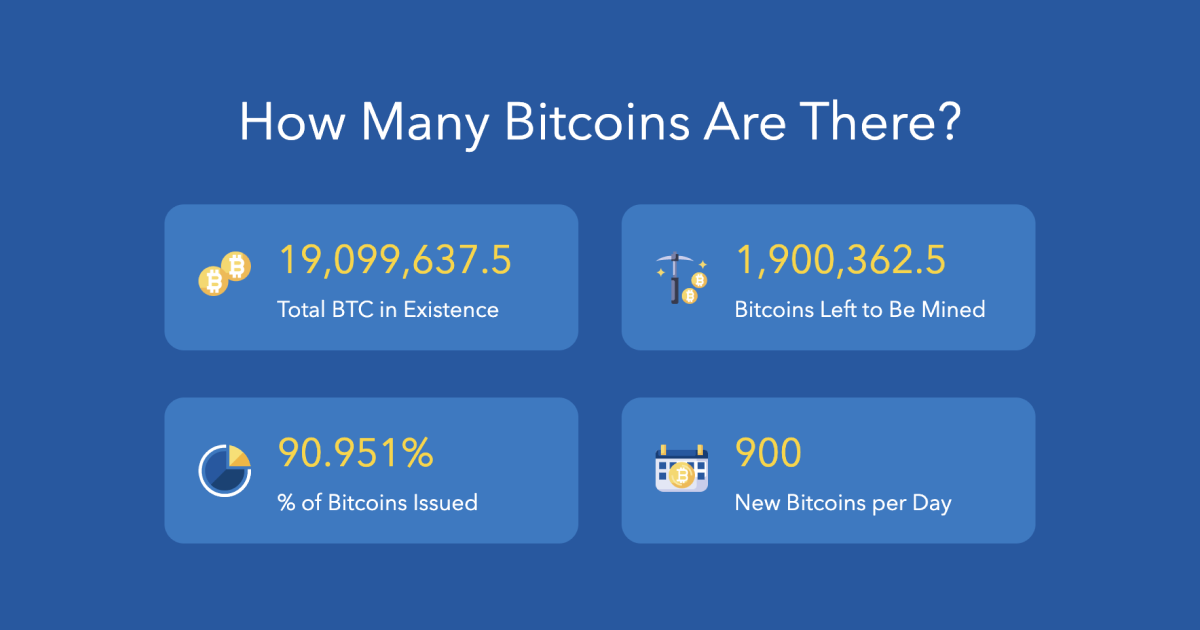
To date, approximately 19.7 million Bitcoins have been mined out of the total possible supply of 21 million. While this figure seems straightforward, the financial implications of this dwindling supply are complex. For the modern investor, understanding the rate of issuance, the impact of “lost” coins, and the institutional race for the remaining supply is essential for long-term wealth preservation.
The Economics of Finite Supply: Where the Bitcoin Count Stands Today
The brilliance of Bitcoin’s monetary policy lies in its predictability. Unlike fiat currencies, which can be printed at the discretion of central banks, Bitcoin’s supply is governed by an immutable code. This code dictates that only 21 million units will ever exist. As we approach the final 1.3 million coins, the narrative of Bitcoin as “Digital Gold” has transitioned from a fringe theory to a core thesis in personal finance and institutional investing.
The 21 Million Cap: Why Scarcity Matters in Modern Finance
In traditional economics, inflation is often a result of an expanding money supply. When more currency enters the system, the purchasing power of each individual unit tends to decrease. Bitcoin was designed as the antithesis to this inflationary model. By capping the supply at 21 million, the creator, Satoshi Nakamoto, introduced a deflationary (or disinflationary) pressure.
For the investor, this cap represents a “hard money” asset. Because the supply cannot be manipulated, the value of Bitcoin is purely a reflection of its adoption and utility. As the number of mined coins approaches the 21 million mark, the competition for the remaining coins intensifies, historically leading to significant price appreciation over long-term cycles.
Real-Time Supply: Tracking the 19.7 Million Mark
As of late 2024, over 93% of all Bitcoin has already been brought into existence. However, the distribution of these coins is not uniform. The remaining 6.4% of the supply—roughly 1.3 million BTC—is scheduled to be released over the next 116 years. This extreme “front-loading” of the supply means that the vast majority of the wealth in the Bitcoin ecosystem has already been distributed, leaving new entrants to compete for a rapidly shrinking pool of newly minted rewards.
The Mining Process as a Financial Mechanism
Mining is often misunderstood as merely a technical process for securing a network. In the realm of finance, however, mining is the mechanism of currency issuance. It is the process by which new “money” enters the economy. For individuals looking at Bitcoin as a side hustle or a business venture, mining represents a capital-intensive industry that serves as the backbone of the Bitcoin monetary system.
Block Rewards and the Halving Cycle
New Bitcoins are entered into circulation through “block rewards.” Every ten minutes, a new block of transactions is added to the blockchain, and the miner who successfully validates that block is rewarded with newly minted Bitcoin.
To ensure that the supply remains scarce, Bitcoin undergoes an event known as “The Halving” approximately every four years. During this event, the reward given to miners is cut in half. At the inception of Bitcoin in 2009, the reward was 50 BTC. Following the most recent halving in April 2024, that reward dropped to 3.125 BTC. From a financial perspective, the halving acts as a “supply shock,” reducing the daily production of Bitcoin and often acting as a catalyst for bull markets.
The Cost of Production: Mining as a Business Finance Metric
For institutional investors, the “cost of production” for a single Bitcoin is a vital metric. This includes the cost of electricity, hardware depreciation, and facility maintenance. As the block reward decreases, the cost to mine a single Bitcoin effectively doubles unless offset by increases in energy efficiency or a rise in the market price of the asset.
This creates a floor for the asset’s value. If the market price falls below the cost of production, inefficient miners are forced to shut down, reducing the “hash rate” until the market stabilizes. Understanding how much Bitcoin has been mined—and at what cost—allows investors to gauge the health of the network and the sustainability of its price levels.
The “Lost” Bitcoin: Why Circulating Supply Isn’t What It Seems
While the ledger shows that nearly 19.7 million coins have been mined, the effective supply is significantly lower. In the world of personal finance, liquidity is king. However, a substantial portion of the Bitcoin supply is illiquid or permanently lost, which further exacerbates the scarcity of the asset.

Satoshi’s Stash and Dormant Wallets
It is widely estimated that Satoshi Nakamoto, the anonymous creator of Bitcoin, holds approximately 1.1 million BTC across various wallets. These coins have not moved since the earliest days of the network. If these coins are considered permanently out of circulation, the total supply drops from 21 million to 19.9 million.
Furthermore, during the first five years of Bitcoin’s existence, the asset had little to no monetary value. Many early adopters lost access to their private keys, discarded hard drives containing thousands of coins, or passed away without leaving instructions for their heirs. Estimates from blockchain forensics firms like Chainalysis suggest that between 3 million and 4 million Bitcoins may be lost forever.
Estimating True Liquid Supply for Investors
For an investor calculating the potential upside of Bitcoin, the “liquid supply” is more important than the “mined supply.” When you subtract lost coins, Satoshi’s holdings, and long-term “HODLers” (investors who haven’t moved their coins in over five years), the amount of Bitcoin actually available for purchase on exchanges is remarkably small—likely less than 2 million BTC. This “liquidity crunch” is why small increases in institutional demand can lead to massive price swings; there simply isn’t enough supply to satisfy large-scale buyers without a significant price adjustment.
The Investment Implications of the Final 1.3 Million
We are currently in a unique era of financial history. We are witnessing the final stages of the primary issuance of a global, decentralized reserve asset. The race for the remaining 1.3 million Bitcoins is no longer just for hobbyists; it is now a priority for public companies, hedge funds, and even nation-states.
Institutional Accumulation and the ETF Effect
The landscape of Bitcoin investing changed forever in 2024 with the approval of Spot Bitcoin ETFs (Exchange-Traded Funds) in the United States. These financial tools allow pension funds, 401(k) providers, and retail investors to gain exposure to Bitcoin through traditional brokerage accounts.
As these institutions buy Bitcoin to back their ETF shares, they are absorbing the remaining supply at an unprecedented rate. In many months following the ETF launches, the institutional demand for Bitcoin exceeded the amount being mined by a factor of ten. This creates a supply-demand imbalance that favors long-term holders.
Post-2140: Life After the Last Bitcoin is Mined
A common question in financial circles is what happens when the 21-millionth Bitcoin is mined, which is projected to happen around the year 2140. When the block reward reaches zero, miners will no longer receive newly minted coins. Instead, they will be compensated entirely through transaction fees.
From a personal finance perspective, this marks the transition of Bitcoin from an “inflationary” discovery phase to a pure “store of value” phase. The network’s security will be funded by those using the network, similar to how a credit card network or a wire transfer service operates, but without a centralized authority taking a cut.
Integrating Bitcoin into a Diversified Financial Portfolio
Knowing how much Bitcoin has been mined is only the first step. The second step is determining how this data informs an investment strategy. In a world of rising debt and currency devaluation, Bitcoin offers a unique set of characteristics for the modern portfolio.
Risk Management and Asset Allocation
Financial advisors increasingly view Bitcoin as a “non-correlated asset”—one that does not always move in tandem with the stock market or bonds. Because its supply is fixed and its issuance is scheduled, it provides a hedge against the monetary expansion of fiat currencies.
Most financial experts suggest a “crawl, walk, run” approach to Bitcoin. This might involve a 1% to 5% allocation within a diversified portfolio. Because of its volatility, even a small amount of Bitcoin can significantly impact the total return of a portfolio without exposing the investor to catastrophic risk.

Bitcoin vs. Traditional Hedges
Historically, gold was the primary hedge against inflation. However, gold has several drawbacks in the digital age: it is difficult to transport, expensive to verify, and its total supply is actually unknown (as new deposits are discovered or mined every year).
Bitcoin addresses these financial inefficiencies. It is divisible to eight decimal places (Satoshis), can be sent anywhere in the world instantly, and most importantly, its supply is verifiable by anyone with an internet connection. As more of the 21 million supply is mined, the “Digital Gold” thesis strengthens, making Bitcoin an essential tool for 21st-century wealth management.
In conclusion, the fact that over 19.7 million Bitcoins have already been mined tells a story of a maturing financial asset. The scarcity is no longer a theory; it is a mathematical reality. As the world competes for the remaining 1.3 million coins, those who understand the mechanics of supply, the impact of lost coins, and the institutional demand will be best positioned to navigate the future of the global financial landscape.
aViewFromTheCave is a participant in the Amazon Services LLC Associates Program, an affiliate advertising program designed to provide a means for sites to earn advertising fees by advertising and linking to Amazon.com. Amazon, the Amazon logo, AmazonSupply, and the AmazonSupply logo are trademarks of Amazon.com, Inc. or its affiliates. As an Amazon Associate we earn affiliate commissions from qualifying purchases.