
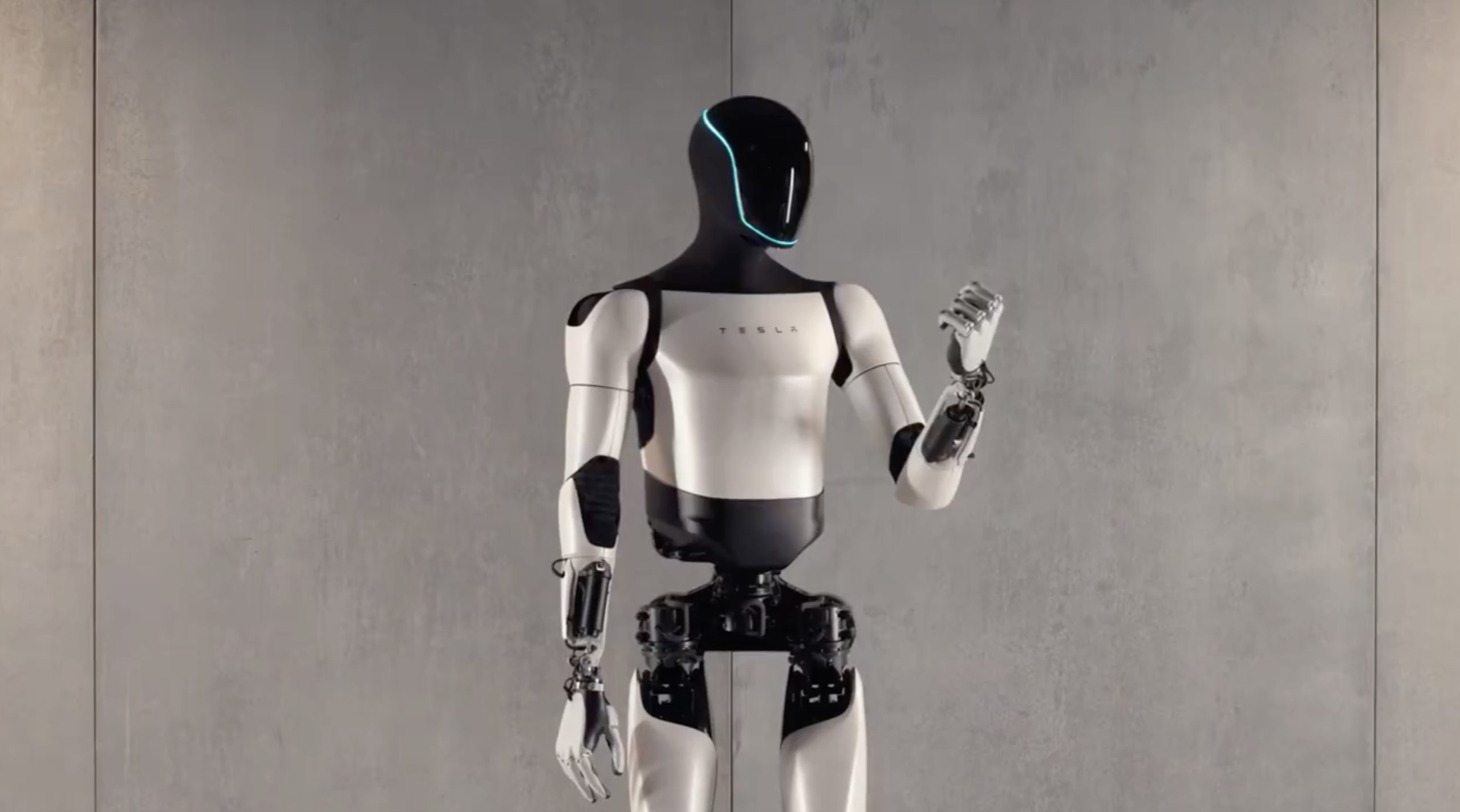
Tesla’s foray into humanoid robotics with Optimus has ignited imaginations worldwide, promising a future where general-purpose robots could alleviate labor shortages, perform dangerous tasks, and potentially even serve as companions. Yet, beyond the awe-inspiring technological demonstrations, a fundamental question persists: “How much are Tesla robots?” This isn’t a simple query seeking a sticker price, but rather a complex financial investigation into development costs, potential market pricing, investment implications for Tesla, and the broader economic ramifications of a commercially viable humanoid robot. For investors, economists, and even the curious public, understanding the financial landscape surrounding Optimus is crucial to grasping its true disruptive potential.

Deconstructing the “Cost” of Tesla’s Humanoid Ambition
Before we can discuss a potential selling price, it’s essential to understand the immense financial investment Tesla is pouring into bringing Optimus to life. This isn’t merely about assembling parts; it’s about pioneering a new frontier in artificial intelligence and mechanical engineering.
Billions in R&D: The Investment in Innovation
Developing a truly general-purpose humanoid robot from scratch demands an astronomical investment in research and development. Tesla, known for its audacious engineering goals, is dedicating significant capital, human talent, and computational resources to this endeavor. Consider the intricate challenges: creating a dexterous manipulator, developing sophisticated balance and locomotion, and, most importantly, training a robust artificial intelligence capable of understanding and navigating the complexities of the real world.
This R&D involves:
- Talent Acquisition: Hiring top-tier AI researchers, robotics engineers, material scientists, and software developers. These are highly sought-after professionals commanding premium salaries.
- Hardware Prototyping: Iterating through numerous physical designs, sensors, actuators, and power systems. Each prototype costs significant money in materials, manufacturing, and testing.
- AI Training Infrastructure: Building and maintaining massive supercomputing clusters (like Tesla’s Dojo for self-driving AI) to train complex neural networks for perception, decision-making, and motor control. The energy consumption alone for such operations is substantial.
- Testing and Validation: Rigorous testing in various environments to ensure safety, reliability, and performance, which often involves controlled simulations and real-world trials.
While Tesla doesn’t break down Optimus-specific R&D costs, its overall R&D expenditures (which include AI for FSD and other advanced projects) are in the billions annually. For example, in 2023, Tesla reported R&D expenses of approximately $3.96 billion. A significant portion of this is undoubtedly earmarked for cutting-edge projects like Optimus, indicating a long-term, multi-billion-dollar commitment before even a single commercial unit is sold. These upfront costs are the foundation upon which any future market price will be built.
Manufacturing at Scale: The Road to Cost Reduction
Tesla’s long-term vision is to produce Optimus at an unprecedented scale, leveraging its expertise in automotive mass manufacturing to drive down unit costs. Elon Musk has repeatedly stated that volume production is key to making advanced technology affordable.
The challenges in scaling Optimus production include:
- Supply Chain Development: Sourcing specialized components (e.g., custom actuators, sensors, high-density batteries) at automotive-grade volumes and prices.
- Automated Assembly Lines: Designing and building factories that can efficiently assemble complex humanoid robots, potentially employing robots to build robots.
- Material Costs: While some components might see price reductions with scale, others, particularly advanced materials for strength and lightness, could remain significant cost drivers.
- Quality Control: Ensuring consistency and reliability across millions of units will require sophisticated quality assurance processes.
Musk has expressed optimism that, eventually, Optimus could cost less than a car, perhaps in the range of $20,000. Achieving such a price point would necessitate revolutionary manufacturing techniques and economies of scale akin to, or even surpassing, those in the automotive industry. Initially, however, early production units will undoubtedly be far more expensive to produce as the company refines its processes and achieves higher volumes.
Operational Expenses and Ecosystem Development
Beyond manufacturing, the total cost equation for Optimus includes ongoing operational expenses and the development of a supportive ecosystem. These are crucial for long-term viability and customer satisfaction.
Key operational costs and ecosystem elements include:
- Software Updates and AI Enhancements: Continuous improvements to Optimus’s intelligence, capabilities, and safety will require ongoing software development and AI model retraining. This is a recurring cost akin to maintaining a cloud service.
- Maintenance and Repair Infrastructure: Establishing a network of technicians and facilities capable of servicing complex humanoid robots, which might involve specialized diagnostics and parts.
- Charging Infrastructure: While Optimus is designed for self-charging, widespread deployment might necessitate optimized charging solutions in various operational environments.
- Regulatory Compliance and Safety Certifications: Navigating global regulations for autonomous robots will involve significant legal and compliance expenditures.
These elements contribute to the overall total cost of ownership (TCO) for a future Optimus customer and represent ongoing financial commitments for Tesla.
Projecting Market Value: The Price Tag for a Robotic Workforce
Given the massive development and anticipated production costs, what could be the eventual market price or revenue model for Tesla’s robots? This depends heavily on their capabilities and target markets.
The Consumer Market: Aspirational, Not Yet Attainable (Financially)
While the dream of a personal home robot assistant is compelling, a mass-market consumer Optimus at an affordable price is a distant financial prospect. Early, less sophisticated home robots (like robotic vacuums) are affordable, but a general-purpose humanoid capable of complex domestic tasks would command an extremely high premium initially.
Consider current high-end robotic solutions: Boston Dynamics’ Spot robot dog, while not humanoid, sells for around $75,000. Humanoid robots from research institutions can cost hundreds of thousands, or even millions, of dollars. For Optimus to become a consumer product, its price would need to drop significantly, likely to the aforementioned $20,000 ballpark, which Musk suggests. Even at that price, it would be a significant household investment, equivalent to a mid-range car, making it a luxury item for most until further cost reductions are achieved.
Enterprise and Industrial Applications: The B2B Opportunity
The most immediate and financially viable market for Optimus is likely in enterprise and industrial settings, where the robot can perform repetitive, dangerous, or physically demanding tasks more efficiently and safely than humans. This B2B market offers clear economic incentives for adoption.
Potential enterprise applications include:
- Manufacturing and Logistics: Working in factories, warehouses, and distribution centers, moving materials, operating machinery, and sorting packages.
- Hazardous Environments: Performing inspections or operations in areas dangerous for humans (e.g., nuclear facilities, disaster zones, chemical plants).
- Retail and Hospitality: Assisting with inventory management, cleaning, or basic customer service tasks.
In these contexts, companies would evaluate Optimus based on its return on investment (ROI). If a robot can replace multiple human workers (whose average cost includes salary, benefits, training, and overhead) or significantly boost productivity, a higher upfront price becomes justifiable.
Potential pricing models in the B2B sector could include:
- Direct Sales: A straightforward purchase, with the price reflecting its capabilities, durability, and software features.
- Leasing/Subscription (Robot-as-a-Service – RaaS): Companies pay a recurring fee, which covers the robot’s use, maintenance, software updates, and support. This lowers the barrier to entry and shifts capital expenditure to operational expenditure, which is attractive for many businesses. This model also allows Tesla to generate recurring revenue.
- Performance-Based Pricing: Potentially, payments could be tied to the robot’s output or efficiency gains for the client.
Benchmarking against existing industrial robotics, which can range from tens of thousands to hundreds of thousands of dollars per unit, suggests that Optimus could initially fall into the higher end of this spectrum, especially given its general-purpose capabilities.
Valuing the Software and AI: Beyond the Hardware
A crucial financial component of Optimus’s market value isn’t just its physical form, but its intelligent software and advanced AI. This intellectual property (IP) is where much of the long-term value lies. Unlike traditional hardware, software can be replicated and updated infinitely with marginal cost, allowing for continuous improvements and new revenue streams.
Customers aren’t just buying a piece of metal and plastic; they are buying an evolving intelligent agent. This means:
- Software Licensing: Tesla could license Optimus’s AI capabilities or specific task-oriented software modules.
- Data Monetization: Anonymized operational data from Optimus units could be used to further refine the AI, creating a virtuous cycle that enhances the product’s value.
- Ecosystem Services: Future services built around Optimus (e.g., remote operation, specialized training modules for niche tasks) could become significant revenue generators.
Therefore, the market price for Optimus will reflect not only its bill of materials and manufacturing cost but also the immense value embedded in its continuously improving AI and software stack.
Optimus as an Investment Catalyst: Impact on Tesla’s Valuation
For investors, Optimus isn’t just another product; it represents a potentially massive new growth vector that could fundamentally alter Tesla’s investment thesis and valuation.
Diversification and New Revenue Streams
Currently, Tesla’s revenues are primarily driven by automotive sales and, to a lesser extent, energy storage and solar. Optimus offers the potential to diversify Tesla’s revenue streams into the vast and largely untapped robotics market. This diversification can reduce reliance on the cyclical automotive industry and open up new avenues for growth that are independent of car sales. A successful robotics division could add billions, or even trillions, to Tesla’s market capitalization over the long term.
Total Addressable Market (TAM) Expansion
Elon Musk frequently speaks of the “Total Addressable Market” (TAM) for Tesla’s products. While the global automotive market is immense, the TAM for general-purpose humanoid robots is arguably even larger. Human labor is a fundamental component of nearly every industry globally. If Optimus can perform a significant percentage of human tasks, its potential market extends to factories, homes, offices, hospitals, and beyond. This vastly expanded TAM narrative is incredibly appealing to growth-oriented investors, signaling decades of potential growth runway for Tesla.
Investor Sentiment and Future Growth Premium
Tesla’s stock often trades at a significant premium compared to traditional automakers, partly due to investor confidence in its future growth ventures, such as AI, autonomous driving, and now, robotics. The prospect of Optimus becoming a significant commercial success fuels this “future growth premium.” Investors are willing to value Tesla highly today based on the anticipated cash flows and market dominance that a successful robotics division could generate years or even decades down the line. Each positive update on Optimus’s development, every new capability shown, reinforces this sentiment, contributing to Tesla’s overall market valuation.
The Broader Economic Ripple: A New Financial Paradigm?
Beyond Tesla’s balance sheet, a widespread deployment of Optimus-like robots could trigger profound economic shifts, impacting everything from labor markets to the cost of goods.
Productivity Gains and Cost Savings for Businesses
The most immediate economic impact of a commercially viable humanoid robot workforce would be massive productivity gains for businesses. Robots can work tirelessly, consistently, and often more quickly and accurately than humans in repetitive tasks.
This translates to:
- Reduced Labor Costs: Companies could significantly lower their operational expenditures by replacing human labor with robots, especially in roles with high wages or chronic shortages.
- Increased Output: Factories could run 24/7 without breaks, leading to higher production volumes.
- Improved Safety: Robots could take on dangerous tasks, reducing workplace accidents and associated costs (insurance, medical leave).
- Enhanced Quality: Automated precision can lead to fewer errors and higher product quality.
These efficiencies would ultimately boost corporate profitability and potentially contribute to higher GDP growth on a national scale.
Labor Market Reallocation and Wage Dynamics
The prospect of widespread robotic labor inevitably raises concerns about job displacement. While some jobs, particularly routine and physically demanding ones, would likely be automated, history suggests that technological revolutions also create new types of jobs.
Economic impacts on labor could include:
- Job Displacement: Workers in manufacturing, logistics, retail, and other sectors might see their roles automated.
- Job Creation: New roles would emerge in robot manufacturing, maintenance, programming, supervision, and the development of new robot-enabled services.
- Wage Pressure: For roles that are easily automatable, competition with robots could depress wages. Conversely, highly skilled roles that robots cannot easily perform might see increased demand and wages.
- Societal Adaptation: Governments and educational institutions would need to invest in retraining programs and potentially explore new social safety nets (e.g., universal basic income) to manage the transition.
Understanding these dynamics is critical for policymakers to steer the economy through a potentially disruptive, yet ultimately transformative, period.
The Future of Goods & Services: Affordability and Accessibility
If a robotic workforce can drastically reduce the cost of production and service delivery, the long-term effect could be a significant decrease in the cost of goods and services across the board.
This could mean:
- More Affordable Products: Consumer goods, from electronics to clothing, could become cheaper as manufacturing costs plummet.
- Accessible Services: Services currently expensive due to labor costs (e.g., elder care, specialized cleaning, certain maintenance tasks) could become more affordable and widely available.
- Increased Purchasing Power: Lower costs for essentials could effectively increase the purchasing power of consumers.
- Deflationary Pressures: Widespread robot adoption could introduce strong deflationary pressures into the global economy, potentially altering monetary policy and investment strategies.
Such changes would represent a fundamental shift in economic structures, making many aspects of life more accessible and affordable, but also posing new challenges for economic management.

Conclusion
The question “How much are Tesla robots?” elicits a multifaceted financial answer, encompassing billions in R&D investment, speculative market pricing, the profound impact on Tesla’s valuation, and potentially revolutionary changes to the global economy. While a definitive price tag for Optimus remains elusive, its eventual cost will be a function of unprecedented manufacturing scale, ongoing software intelligence, and the immense value it creates by transforming labor. For investors, Optimus represents a high-stakes, long-term bet on diversifying Tesla’s empire and unlocking a trillion-dollar market. For the broader economy, the financial implications range from potential productivity booms and lowered consumer costs to significant labor market reallocations. As Tesla continues its ambitious journey into robotics, the financial world will be watching closely, ready to quantify the true cost and colossal value of a humanoid future.
aViewFromTheCave is a participant in the Amazon Services LLC Associates Program, an affiliate advertising program designed to provide a means for sites to earn advertising fees by advertising and linking to Amazon.com. Amazon, the Amazon logo, AmazonSupply, and the AmazonSupply logo are trademarks of Amazon.com, Inc. or its affiliates. As an Amazon Associate we earn affiliate commissions from qualifying purchases.