
Investing in the modern equity market requires more than just a passing glance at a ticker symbol. When individuals ask, “how much are shares of Tesla,” they are often seeking more than a simple numerical quote from the Nasdaq. They are inquiring about the underlying value, the potential for growth, and the financial mechanics of one of the most volatile yet rewarding companies in history. Tesla, Inc. (TSLA) has transformed from a speculative niche player into a dominant force in the S&P 500, making it a staple in both institutional portfolios and retail brokerage accounts.
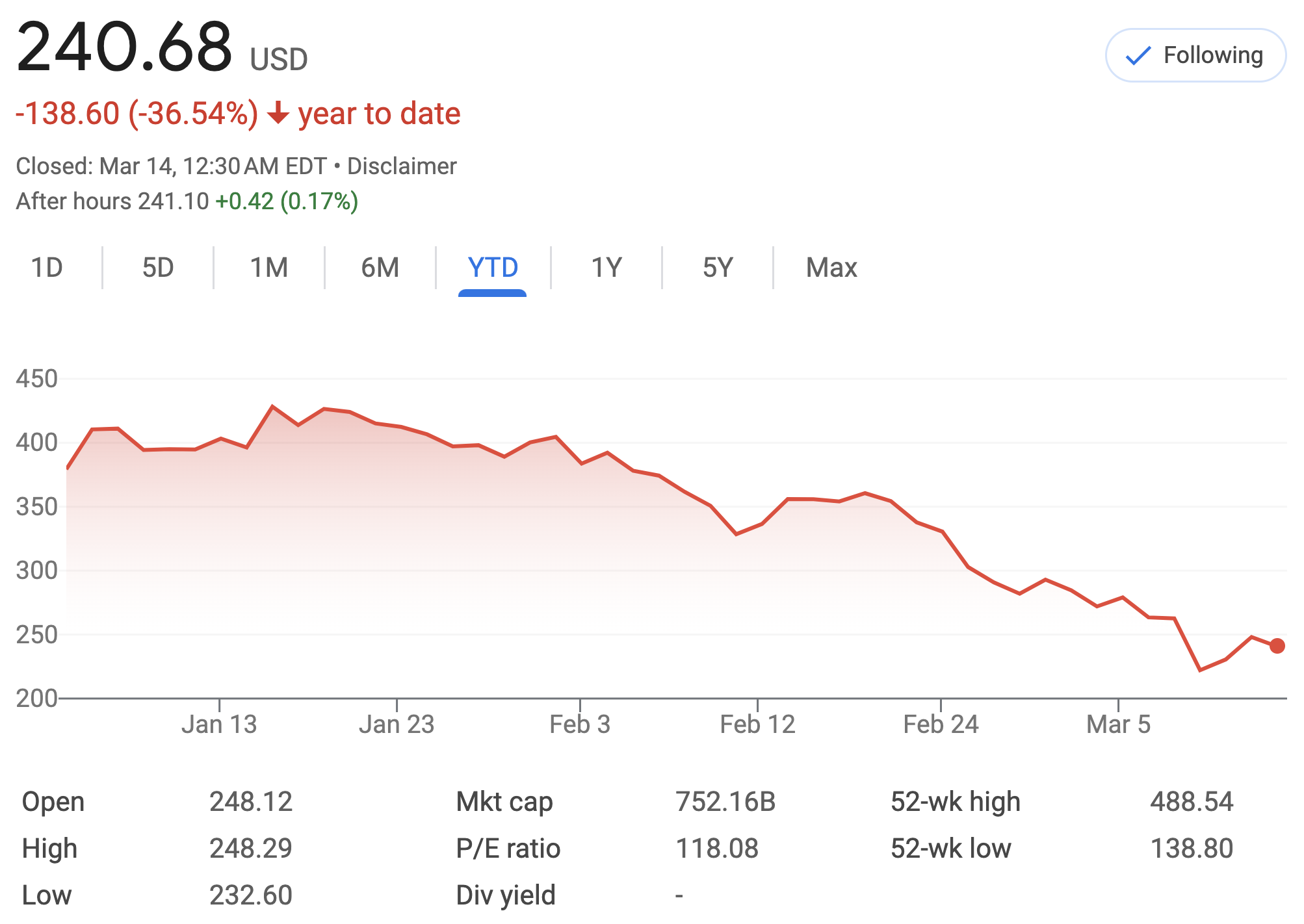
Understanding the price of a Tesla share requires an exploration of market capitalization, financial ratios, and the macroeconomic factors that move the needle. Whether you are a seasoned investor or a newcomer looking to purchase your first fractional share, this guide breaks down the financial reality of owning a piece of the world’s leading electric vehicle (EV) manufacturer.
The Mechanics of Tesla’s Share Price and Market Valuation
The nominal price of a single Tesla share—whether it is $150, $250, or $400—is only a small part of the story. In the world of finance, the “price” is simply the equilibrium point where a buyer and a seller agree to trade. To understand if that price is “expensive” or “cheap,” an investor must look at the broader context of the company’s valuation.
Real-Time Valuation vs. Intrinsic Value
The market price of Tesla is updated every second during trading hours, driven by supply and demand. However, professional investors focus on “intrinsic value”—an estimate of what the company is actually worth based on its future cash flows. Tesla often trades at a significant premium compared to traditional automakers like Ford or General Motors. This is because the market values Tesla not just as a car company, but as a high-growth software and energy entity. When you look at the share price, you are paying for today’s production plus the “option value” of future innovations like autonomous driving and robotics.
The Impact of Stock Splits on Accessibility
If you look at Tesla’s historical price charts, you might see points where the price appears to drop drastically overnight. These are usually the result of stock splits. Tesla has utilized stock splits (such as the 5-for-1 split in 2020 and the 3-for-1 split in 2022) to keep the share price accessible to retail investors. A stock split doesn’t change the total value of your investment; it simply divides the “pie” into more slices. For the individual investor, this increases liquidity and makes it easier to manage a portfolio without needing thousands of dollars to buy a single share.
Key Drivers Influencing Tesla’s Financial Performance
Tesla’s stock price does not move in a vacuum. It is hyper-responsive to specific financial metrics and external economic pressures. For an investor monitoring the “how much” of Tesla shares, staying informed on these drivers is essential for timing entries and exits.
Delivery Volume and Manufacturing Efficiency
The most critical metric for Tesla’s quarterly earnings is the “delivery report.” Because Tesla sells directly to consumers rather than through dealerships, their delivery numbers are a transparent look at real-world demand. When deliveries exceed analyst expectations, the share price typically rallies. Furthermore, Tesla’s industry-leading operating margins—often significantly higher than legacy competitors—allow the company to cut prices to gain market share while remaining profitable. Investors watch the “Cost of Goods Sold” (COGS) per vehicle closely, as any reduction in manufacturing costs directly inflates the value of each share.
Federal Policy and Macroeconomic Trends
As a high-growth “Money” asset, Tesla is sensitive to interest rate environments. When the Federal Reserve raises interest rates, growth stocks often see their valuations compressed because the “discount rate” applied to future earnings increases. Additionally, government incentives, such as the Inflation Reduction Act (IRA) in the United States, provide tax credits that effectively lower the price of Tesla’s vehicles for consumers. These subsidies act as a direct tailwind for Tesla’s revenue, often leading to a bullish sentiment in the stock price.
Evaluating Tesla as a Long-Term Investment Asset

Before committing capital to TSLA, an investor must perform a fundamental analysis. This involves looking beyond the daily price fluctuations to see if the company’s financial health justifies the investment.
Profitability Margins and Free Cash Flow
For years, the bear case against Tesla was that it couldn’t make money without selling regulatory credits. That narrative has shifted. Tesla now generates billions in Free Cash Flow (FCF), which provides the company with a “fortress balance sheet.” This liquidity allows Tesla to self-fund its massive Gigafactories in Texas, Berlin, and Shanghai without needing to take on predatory debt. For the personal finance-minded investor, a company that can grow using its own cash is a much safer long-term bet than one reliant on constant dilutive share offerings.
Price-to-Earnings (P/E) Ratio and Growth Expectations
Tesla historically carries a high P/E ratio, often exceeding 50x or even 100x. To a traditional value investor, this might seem overvalued. However, in the “Money” niche, growth investors argue that Tesla’s earnings are expected to compound at a much higher rate than the broader market. If Tesla successfully scales its “Energy” division (Megapacks and Powerwalls) and its “Full Self-Driving” (FSD) subscription software, the current share price might actually represent a bargain relative to its 2030 earnings potential.
Practical Steps for Purchasing and Managing Tesla Shares
Once you have decided that the current price of Tesla aligns with your financial goals, the next step is execution. How you buy and manage the asset is just as important as the price you pay.
Choosing the Right Brokerage and Account Type
In the modern financial landscape, you have numerous options for purchasing TSLA. For long-term wealth building, many investors choose to hold Tesla within a tax-advantaged account like a Roth IRA or a 401(k) brokerage link. This allows the capital gains to grow tax-free. If you are looking for more liquidity, standard taxable brokerage accounts provide instant access to your funds. Ensure your chosen platform offers “fractional shares,” allowing you to invest a specific dollar amount (e.g., $50) regardless of whether the full share price is $200.
Implementing Dollar-Cost Averaging (DCA)
Because Tesla is known for its high volatility—frequently swinging 5% to 10% in a single week—trying to “time the bottom” is a risky strategy. A more disciplined financial approach is Dollar-Cost Averaging. By investing a fixed amount of money at regular intervals (monthly or bi-weekly), you buy more shares when the price is low and fewer when the price is high. This reduces the psychological stress of price drops and lowers your average cost basis over time, a proven strategy for building significant positions in volatile growth stocks.
Risk Assessment and Navigating Market Volatility
No discussion of Tesla’s share price is complete without addressing the unique risks associated with the stock. High rewards always come with high risks, and TSLA is no exception.
CEO Influence and Sentiment Swings
Tesla is inextricably linked to its CEO, Elon Musk. His public statements, acquisitions (such as X/Twitter), and legal battles can cause sudden, sharp movements in the stock price that have nothing to do with the company’s underlying fundamentals. This “key person risk” means that investors must be prepared for “headline volatility.” For someone looking for a “set it and forget it” index fund experience, Tesla’s price action may be too turbulent for their risk tolerance.

Global Competition and Market Saturation
While Tesla was the first to scale EVs successfully, the landscape is changing. In China, companies like BYD are producing high-quality EVs at lower price points. In Europe and the US, legacy manufacturers are slowly catching up. If Tesla’s market share begins to erode significantly, its valuation premium may shrink. Investors must constantly monitor the “moat”—the competitive advantage—that Tesla holds. If the moat narrows, the price an investor is willing to pay for a share of Tesla should logically decrease.
In conclusion, the question of “how much are shares of Tesla” is the beginning of a deep financial journey. The price you see on your screen today is a reflection of current market sentiment, interest rates, and production numbers. However, the true value of the investment lies in the company’s ability to maintain its margins, innovate in software, and scale its energy business. By focusing on fundamental financial metrics and employing disciplined investment strategies like DCA, you can navigate the volatility of TSLA and potentially integrate it into a robust, long-term wealth-building portfolio.
aViewFromTheCave is a participant in the Amazon Services LLC Associates Program, an affiliate advertising program designed to provide a means for sites to earn advertising fees by advertising and linking to Amazon.com. Amazon, the Amazon logo, AmazonSupply, and the AmazonSupply logo are trademarks of Amazon.com, Inc. or its affiliates. As an Amazon Associate we earn affiliate commissions from qualifying purchases.