
Determining the cost of a flight to New York City is rarely as simple as looking at a fixed price list. Unlike retail goods with stable price tags, airline tickets are dynamic financial assets that fluctuate based on global oil prices, seasonal demand, algorithmic revenue management, and regional competition. For the fiscally conscious traveler or the business professional, understanding these price drivers is essential for optimizing a travel budget. New York remains one of the most expensive destinations in the world, not just for its real estate, but for the logistics required to enter its airspace.

To accurately answer the question of how much plane tickets cost, one must look beyond the initial search result and analyze the underlying financial variables that dictate the market rate.
The Financial Variables of Flight Pricing
The price of a ticket to New York is primarily dictated by the laws of supply and demand, but several micro-factors influence the final number on your credit card statement. Understanding these variables allows travelers to predict price drops and avoid unnecessary premiums.
Seasonal Surges and the Economics of Demand
New York City experiences massive price swings based on the calendar. From a personal finance perspective, timing your purchase is the single most effective way to reduce travel overhead. During peak seasons—specifically late November through December (the holiday corridor) and the summer months of June through August—prices can inflate by 50% to 100%. A domestic round-trip ticket that costs $250 in February might jump to $600 in mid-December. For those looking to maximize their travel ROI, the “shoulder seasons” of late April to early June and September to early November offer the best balance between manageable prices and favorable weather.
The Hub Effect: JFK vs. LaGuardia vs. Newark
New York is unique in that it is served by three major international hubs, each with its own cost structure. John F. Kennedy International (JFK) often hosts the most international competition, which can lead to lower fares on long-haul flights due to the volume of carriers. LaGuardia (LGA) is preferred by business travelers for its proximity to Manhattan, often resulting in higher premiums for domestic short-haul flights. Newark Liberty International (EWR) in New Jersey frequently offers competitive pricing, especially for travelers flying on United Airlines or those coming from the Western United States. When budgeting, one must also account for the “last mile” cost—the expense of getting from the airport to your final destination—as a cheaper ticket to Newark might be offset by a $90 Uber fare to Brooklyn.
Booking Windows and Revenue Management Algorithms
Airlines utilize sophisticated AI-driven revenue management systems that adjust prices in real-time. The “sweet spot” for domestic flights to New York is typically 21 to 45 days in advance. For international travelers, this window extends to 3 to 6 months. Purchasing too early can be just as financially inefficient as purchasing too late, as airlines often release lower-priced fare buckets once they have a clearer picture of the flight’s load factor.
Budgeting for Different Tiers of Travel
The “cost” of a ticket is also a reflection of the value of your time and comfort. When performing a cost-benefit analysis of your flight, you must decide which tier of service aligns with your financial goals and physical requirements.
Economy Class: The Baseline for Modern Travelers
For the budget-conscious traveler, “Basic Economy” has become the industry standard for the lowest entry price. However, these tickets often come with significant financial restrictions, such as no overhead bin access or the inability to select a seat. When calculating the true cost of an economy ticket to New York, it is vital to factor in these “hidden” costs. A $150 ticket might quickly become a $230 ticket once baggage fees and seat assignments are added.
Premium Economy and Business Class: Analyzing the ROI
For business professionals, the cost of a business class seat to New York—which can range from $2,500 to $7,000 for international routes—is often viewed through the lens of productivity. The ability to arrive in the city well-rested and ready for meetings can justify the 4x or 5x price increase over economy. From a financial planning standpoint, this is where “Value of Time” (VOT) calculations become relevant. If a premium seat allows for a full day of billable work that would otherwise be lost to jet lag, the higher ticket price serves as a business investment rather than a mere expense.
Low-Cost Carriers vs. Full-Service Airlines
The entry of low-cost carriers (LCCs) into the New York market has significantly lowered the average fare. Airlines like JetBlue, Spirit, and Southwest often drive down prices on competitive routes. However, a financial audit of these flights often reveals that the “unbundled” pricing model can be deceptive. A full-service airline like Delta or American might offer a higher base fare that includes amenities that LCCs charge for individually. For a comprehensive budget, always compare the “all-in” price rather than the “lead-in” price.
Financial Tools and Strategies to Lower Your Fare
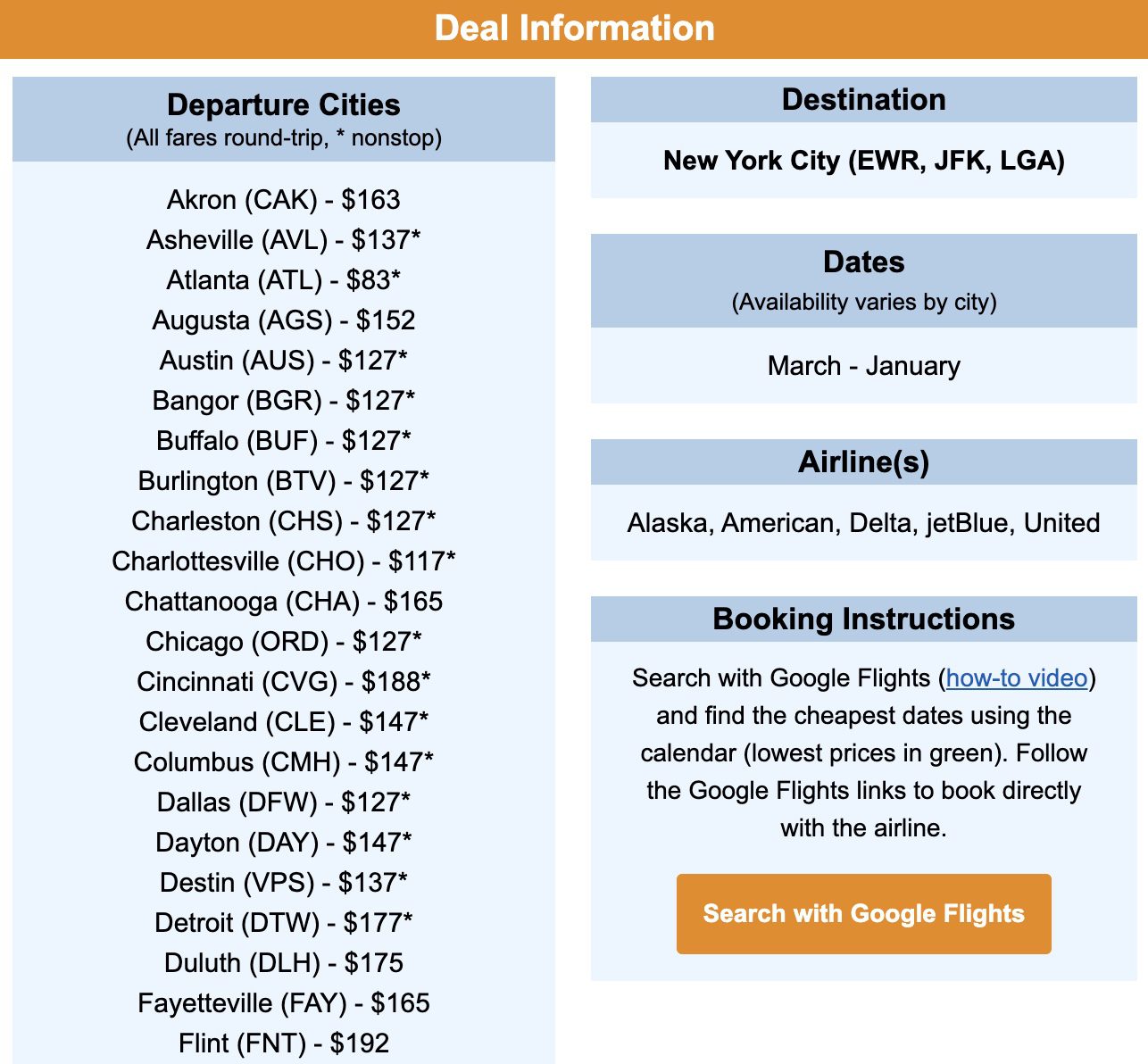
In the modern financial landscape, paying “retail” for a plane ticket is often unnecessary. There are several tools and strategies that can be used to mitigate the cost of travel to New York.
Leveraging Credit Card Points and Frequent Flyer Miles
Travel hacking is a legitimate financial strategy for reducing New York travel costs. By utilizing high-value rewards cards—such as those offered by Chase, American Express, or Capital One—travelers can earn points that are transferable to airline partners. In many cases, a “free” ticket to New York can be secured for 20,000 to 50,000 points plus minimal taxes. This turns everyday spending into a travel sinking fund, effectively lowering the out-of-pocket cost of the flight to nearly zero.
Using Dynamic Pricing Tools and Fare Aggregators
To find the best market price, investors in travel should use aggregators like Google Flights, Skyscanner, or Kayak. These tools allow for “price tracking,” which sends alerts when a fare on a specific route drops. Setting a “buy price” based on historical data allows you to act decisively when the algorithm dips in your favor. This disciplined approach to purchasing mirrors the “limit order” strategy used in stock trading.
Hidden City Ticketing and Multi-City Strategies
For the more advanced financial strategist, “hidden city ticketing” (booking a flight with a layover in New York and skipping the final leg) can sometimes result in lower fares. However, this carries risks, including potential bans from airlines and the inability to check luggage. A safer strategy is “multi-city” booking, where you fly into one New York airport and out of another, or include New York as a stopover on a longer itinerary, which can often be cheaper than a dedicated round-trip ticket.
Total Cost of Ownership: Beyond the Ticket Price
When budgeting for a trip to New York, the ticket price is only the beginning of the financial commitment. A “Total Cost of Ownership” (TCO) approach is necessary to avoid budget overruns.
Baggage Fees and In-Flight Ancillaries
Airlines have increasingly shifted toward an ancillary revenue model. Baggage fees at major carriers now range from $30 to $60 per bag. For a family of four, this adds nearly $500 to the total travel cost. Additionally, in-flight Wi-Fi, meals, and beverages can add another $50 to $100 per person. These are not optional expenses for many, and they must be integrated into the initial travel budget.
Transportation Costs from the Airport
New York’s airports are notorious for their ground transportation costs. A taxi or rideshare from JFK to Manhattan can easily cost $80 to $110 including tolls and tips. Budgeting for the AirTrain and Subway ($11.00 total) represents a significant saving, but it requires a trade-off in time and convenience. When evaluating the “cost” of your ticket, consider the airport’s location as a direct financial factor.
Managing Currency Exchange and International Transaction Fees
For international travelers flying to New York, the cost of the ticket is also impacted by currency fluctuations. If the US Dollar is strong, the ticket may cost significantly more in your local currency. Furthermore, using a credit card that charges a 3% foreign transaction fee to buy a $1,000 ticket adds an unnecessary $30 to the cost. Using a specialized travel card with no foreign transaction fees is a basic but essential financial move.
Long-Term Financial Planning for New York Travel
If New York is a frequent destination for business or personal reasons, it should be treated as a recurring line item in your financial plan rather than a spontaneous expense.
Setting Up a Travel Sinking Fund
The most effective way to manage the cost of plane tickets is to establish a sinking fund—a dedicated savings account where you deposit a set amount each month for travel. By automating this process, the “sticker shock” of a $600 flight is mitigated, as the capital has already been allocated. This prevents travel expenses from dipping into your emergency fund or long-term investments.

Timing Your Purchase for Maximum Value
Market data suggests that for New York travel, the cheapest days to fly are typically Tuesday and Wednesday. Shifting your travel dates by just 24 hours can result in savings of $100 or more. From a personal finance perspective, flexibility is a form of currency. If your schedule allows you to be flexible with your arrival and departure dates, you can consistently capture the lowest decile of available fares.
In conclusion, the price of a plane ticket to New York is a variable figure that depends on timing, airport selection, and financial strategy. By moving beyond a simple search and employing a comprehensive budgeting approach—utilizing rewards points, monitoring price trends, and accounting for ancillary costs—travelers can ensure they are getting the maximum value for their capital. New York is an expensive city, but the cost of getting there doesn’t have to be a barrier if you manage the purchase with the same rigor you apply to any other significant financial investment.
aViewFromTheCave is a participant in the Amazon Services LLC Associates Program, an affiliate advertising program designed to provide a means for sites to earn advertising fees by advertising and linking to Amazon.com. Amazon, the Amazon logo, AmazonSupply, and the AmazonSupply logo are trademarks of Amazon.com, Inc. or its affiliates. As an Amazon Associate we earn affiliate commissions from qualifying purchases.