
In the landscape of global finance, few names carry as much weight—both figuratively and literally—as Microsoft Corporation. As of mid-2024, the company has solidified its position in the exclusive “$3 Trillion Club,” frequently jostling with Apple and Nvidia for the title of the world’s most valuable public company. To answer the question of how much Microsoft is worth, one must look beyond a simple stock ticker price. Evaluating a conglomerate of this scale requires a deep dive into market capitalization, enterprise value, asset liquidity, and the speculative premium placed on its future in artificial intelligence.

Understanding Microsoft’s worth is not merely an exercise for Wall Street analysts; it is a case study in how a legacy software firm can successfully pivot through multiple industrial shifts to maintain financial dominance. From its origins as a basic software provider to its current status as an infrastructure and AI powerhouse, Microsoft’s valuation reflects a unique blend of stable cash flow and explosive growth potential.
Understanding Market Capitalization and Enterprise Value
The most common metric used to determine how much Microsoft is worth is “Market Capitalization.” This figure is calculated by multiplying the total number of outstanding shares by the current market price of a single share. When observers state that Microsoft is worth $3.1 trillion or $3.2 trillion, they are referring to this aggregate market value. However, for a professional investor, market cap is only the beginning of the story.
The Difference Between Stock Price and Total Worth
A company’s stock price is a reflection of market sentiment and perceived value, but it does not tell the whole story of its financial health. Microsoft’s worth is bolstered by its “Enterprise Value” (EV), which accounts for its market cap plus its total debt, minus its cash and cash equivalents. Because Microsoft maintains one of the most robust balance sheets in history—boasting tens of billions in cash reserves—its enterprise value often reflects a company that is essentially “self-funded” and carries a lower risk profile than its competitors who rely heavily on high-interest debt.
Historical Context: The Road to the $3 Trillion Club
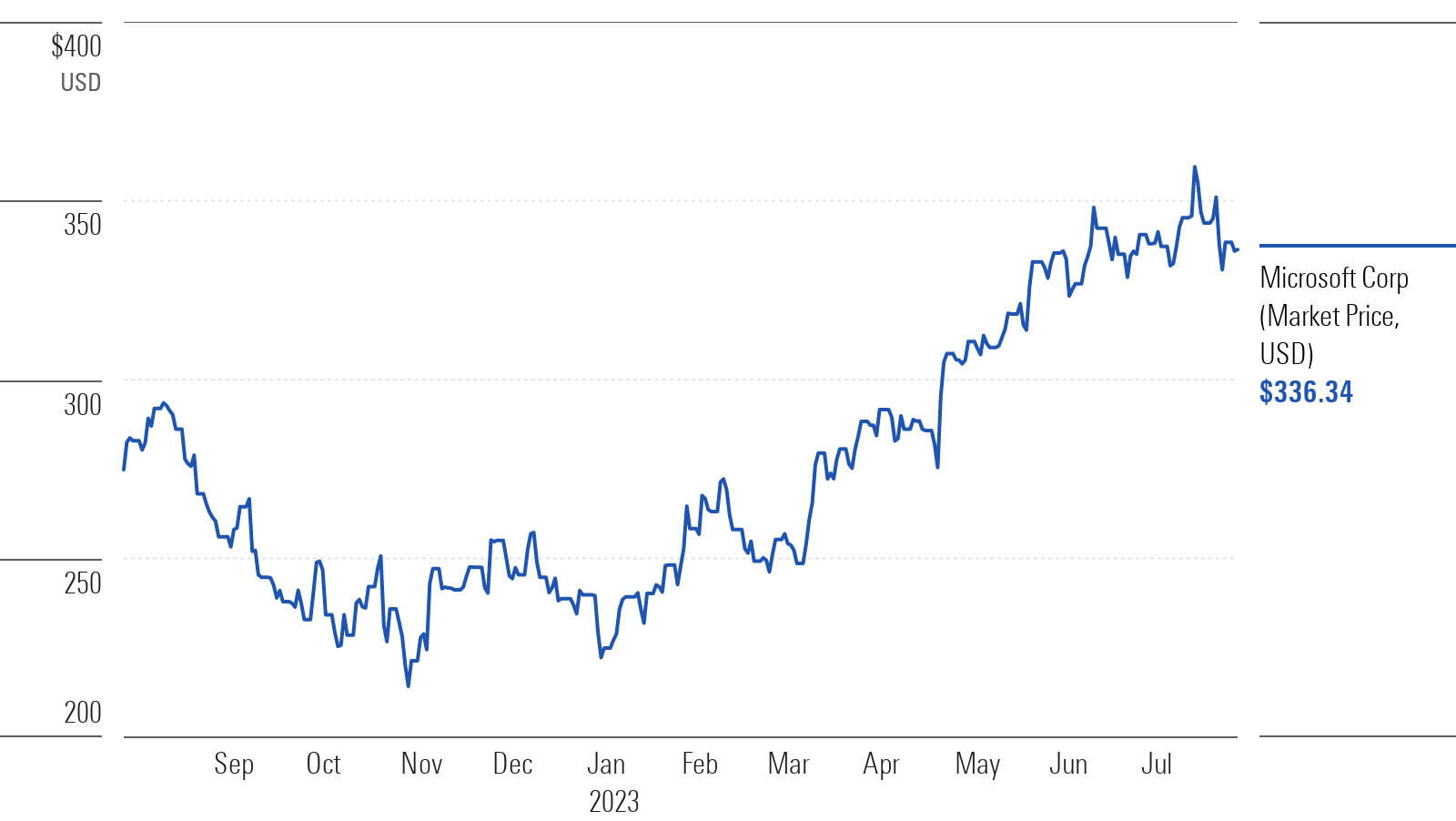
Microsoft’s financial trajectory has not always been a straight line up. After the dot-com bubble burst in the early 2000s, the company’s valuation stagnated for nearly a decade. At that time, its worth was tied heavily to the Windows operating system and the PC market. The dramatic surge in its valuation over the last ten years—rising from a market cap of approximately $300 billion in 2013 to over $3 trillion today—is largely attributed to the “Satya Nadella era.” By shifting the focus from physical software licenses to cloud-based subscriptions and consumption models, Microsoft unlocked a recurring revenue stream that investors value much more highly than one-off sales.
Diversified Revenue Streams: The Pillars of Microsoft’s Wealth
To understand why Microsoft is worth trillions, one must analyze where its money comes from. Unlike many tech companies that rely on a single revenue source (such as advertising for Meta or hardware for Apple), Microsoft has three distinct pillars that contribute roughly equally to its valuation.
Intelligent Cloud and the Azure Powerhouse
The “Intelligent Cloud” segment is currently the primary engine of Microsoft’s financial growth. This division includes Azure, the company’s public cloud platform. In the modern economy, data is often compared to oil, and Azure is the refinery. As businesses migrate their entire operations to the cloud, they pay Microsoft a continuous fee for computing power and storage. The high margins associated with cloud computing are a significant reason why Microsoft’s valuation has outpaced traditional industrial companies. Azure’s consistent double-digit growth rates justify the high Price-to-Earnings (P/E) ratio that investors are willing to pay.
Productivity and Business Processes (Office 365 and LinkedIn)
This segment represents the “sticky” part of Microsoft’s worth. Microsoft 365 (formerly Office) has transitioned from a product you buy once into a “Software as a Service” (SaaS) model. For millions of businesses worldwide, Microsoft’s suite of tools—Excel, Word, Teams, and Outlook—is non-negotiable infrastructure. Additionally, LinkedIn provides a unique social media revenue stream driven by professional networking and recruitment tools. The stability of these subscription-based revenues provides a safety net for the company’s valuation, ensuring that even during economic downturns, the cash continues to flow.
More Personal Computing: Windows, Gaming, and Devices
While no longer the primary driver of growth, the “More Personal Computing” segment remains a multi-billion dollar contributor. This includes Windows OEM licenses, Xbox gaming, and Surface hardware. The acquisition of Activision Blizzard for approximately $69 billion was a strategic move to increase the “worth” of the gaming division, turning Microsoft into the third-largest gaming company by revenue globally. This diversification protects Microsoft from being overly dependent on any single market trend, a financial trait that commands a premium in the eyes of investors.
The Financial Impact of the AI Revolution
In the last 24 months, the primary catalyst for Microsoft’s ballooning valuation has been Artificial Intelligence. Investors are no longer valuing Microsoft based solely on what it earns today, but on its perceived role as the toll-keeper of the AI era.
Investing in OpenAI and Generative AI Integration
Microsoft’s early and aggressive investment in OpenAI (the creators of ChatGPT) is perhaps one of the most lucrative strategic moves in corporate history. By securing a massive stake in the company and integrating its “Copilot” AI across its entire software stack, Microsoft has positioned itself ahead of competitors like Google and Amazon in the race for AI dominance. This “AI halo effect” has added hundreds of billions of dollars to Microsoft’s market cap as investors bet that AI will lead to a massive surge in productivity and, consequently, higher software prices and cloud usage.
Future Revenue Projections and Margin Expansion
The “worth” of a company is technically the present value of all its future cash flows. AI is expected to expand Microsoft’s profit margins significantly. By automating coding via GitHub Copilot or administrative tasks through Office Copilot, Microsoft can charge premium subscription tiers. Analysts suggest that AI could add an additional $20 billion to $30 billion in annual revenue by 2026. This anticipation of future wealth is baked into the current stock price, explaining why the company maintains a valuation that is many times its annual earnings.
Key Financial Metrics for Investors
When calculating how much Microsoft is worth from a fundamental perspective, analysts look at specific financial ratios that indicate the health and efficiency of the business.
Cash Flow, Dividends, and Share Buybacks
Microsoft is a “cash cow.” It generates massive amounts of Free Cash Flow (FCF), which is the money left over after paying all operating expenses and capital expenditures. In recent fiscal years, Microsoft has generated upwards of $60 billion in FCF annually. What the company does with this money adds to its intrinsic worth: it pays a consistent dividend and engages in aggressive share buybacks. By reducing the number of shares outstanding, the company increases the value of each remaining share, effectively “manufacturing” value for its owners.
Debt-to-Equity and Operational Efficiency
Despite its massive size, Microsoft is incredibly lean in terms of its debt obligations relative to its equity. It is one of only two U.S. companies (the other being Johnson & Johnson) to hold a AAA credit rating from Standard & Poor’s—a rating higher than that of the U.S. government itself. This high creditworthiness means Microsoft can borrow money at lower rates than almost anyone else, giving it a financial advantage when acquiring other companies or building massive data centers. Its Return on Equity (ROE) remains exceptionally high for a company of its size, indicating that management is highly efficient at turning investor capital into profit.
Conclusion: Is Microsoft’s Valuation Sustainable?
So, how much is Microsoft worth? Financially, it is worth the sum of its dominant market positions, its massive cash reserves, and its unparalleled lead in the AI revolution. While a $3 trillion valuation may seem astronomical, it is supported by hard data: industry-leading margins, a diversified revenue base, and a “moat” that makes it nearly impossible for competitors to displace it from the enterprise world.
However, the question of worth is always tied to the future. To maintain its current valuation, Microsoft must continue to prove that its investments in AI will translate into tangible bottom-line growth. For now, the market has voiced its confidence. Microsoft is not just a software company; it is a financial institution, a utility for the digital age, and a cornerstone of the global economy. Whether you measure it by market cap, enterprise value, or its influence on the S&P 500, Microsoft stands as a testament to the immense wealth-building power of the modern technology sector.
aViewFromTheCave is a participant in the Amazon Services LLC Associates Program, an affiliate advertising program designed to provide a means for sites to earn advertising fees by advertising and linking to Amazon.com. Amazon, the Amazon logo, AmazonSupply, and the AmazonSupply logo are trademarks of Amazon.com, Inc. or its affiliates. As an Amazon Associate we earn affiliate commissions from qualifying purchases.